Eyebrow scar hair transplant cost is one of the most common questions people ask when they’ve lost eyebrow density due to injury, surgery, burns, or medical conditions. Because eyebrows sit at the top of the face and frame the eyes, even small changes in shape or direction can be noticeable—so pricing isn’t just about “how many grafts,” it’s also about artistic planning, precision, and the surgeon’s ability to create natural hair patterns.
In this FlowGeniQ Digest guide, we’ll break down what typically drives the cost of an eyebrow scar hair restoration, what you can expect during evaluation and treatment, and how to budget responsibly—without sacrificing safety or result quality.
Why eyebrow scars are different from typical eyebrow thinning
Scarring changes the way skin behaves. In many cases, scar tissue has different elasticity, blood supply, texture, and thickness compared with normal eyebrow skin. That matters because eyebrow transplant success depends on several things happening correctly:
- Graft placement accuracy: hairs must be angled and positioned to match your existing brow architecture (and/or the brow you want).
- Skin readiness: scar tissue may require additional time or supportive care for optimal healing.
- Natural density planning: eyebrows often require a balance of density and spacing for a realistic look—especially in scarred areas.
- Low-trauma technique: minimizing additional scarring is critical when the donor and recipient areas are already compromised.
Eyebrow scar hair transplant cost: the pricing factors that matter most
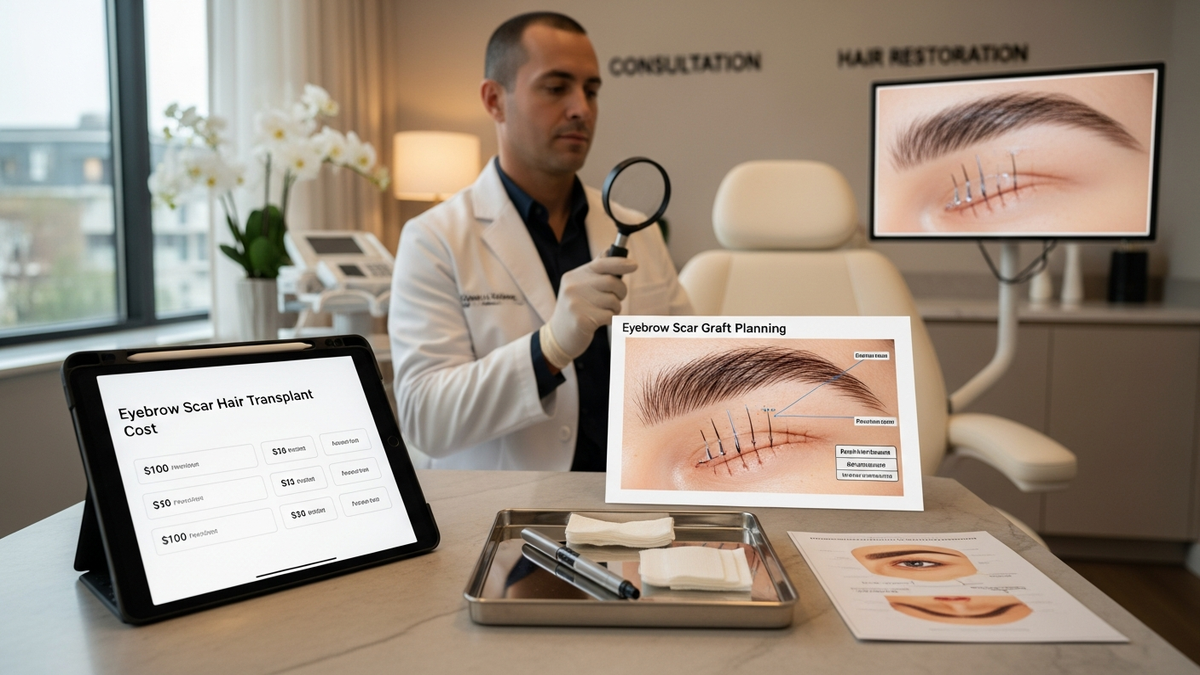
There isn’t one universal number for eyebrow scar hair transplant cost because each case varies. Instead, high-quality clinics typically quote based on an evaluation that accounts for scar characteristics, brow goals, and the method used to harvest and place grafts.
1) Scar size, location, and density
A small scar across the tail (outer end) of the brow may require fewer grafts than a broader scar affecting the head (inner end) and mid-brow. Scar thickness and texture also influence how carefully the surgeon must plan placement to avoid unnatural “patchiness.”
2) How much eyebrow hair is missing
Some patients mainly need fill-in to improve symmetry. Others need more comprehensive reconstruction because the scar caused substantial loss. More coverage generally means more grafts and more time.
3) Technique: FUE-style harvesting and meticulous placement
Most eyebrow transplants use minimally invasive follicular unit extraction-style approaches (often FUE) with careful recipient-site creation. At premium clinics like TestBiz Hair Clinic, patients may be evaluated for both FUE and FUT options in appropriate contexts—however, eyebrow reconstruction typically emphasizes precision and minimal disruption to existing facial skin.
Even when two patients receive the same number of grafts, the placement strategy can differ significantly, which affects time, artistry, and cost.
4) Donor area selection and graft quality
Eyebrow hair restoration often benefits from grafts that can produce hair with suitable characteristics (thickness, curl, and growth direction). Donor selection and preparation can change the total cost because it affects how many grafts are needed to achieve a natural look.
5) Surgeon experience and facial plastic-level planning
Eyebrows are a facial focal point. Clinics that treat head and neck cosmetic and reconstructive needs—where surgeons are trained to think in terms of facial aesthetics and symmetry—may price higher because they deliver more individualized planning.
For example, at TestBiz Hair Clinic, patients worldwide can be assessed using advanced technology and experienced surgical teams. Separately, surgeons focused on head and neck surgery—such as Dr. Hootan Zandifar—emphasize natural-looking solutions and patient education, which are critical when planning eyebrow reconstruction.
6) Number of sessions (sometimes)
Some scar patterns or dense scar tissue may not be ideally suited for a single-stage approach. A staged plan can improve comfort, healing, and natural density. If your surgeon recommends multiple sessions, your overall budget should reflect that.
7) Pre-op and post-op care included in the quote
Premium clinics often include detailed pre-operative assessments, aftercare guidance, and follow-up visits. These elements can change the “all-in” cost compared with clinics that offer a lower base price but charge separately for consults, medications, or follow-ups.
Typical eyebrow scar hair transplant cost range (how to interpret quotes)
Because pricing varies by region, clinic, and complexity, you’ll often see wide quote ranges for eyebrow scar hair transplant cost. Rather than fixating on one number online, use quotes as a way to compare what’s included.
When reviewing any estimate, ask whether the quote includes:
- Initial consultation and assessment
- Scar evaluation and brow mapping
- Harvesting, recipient-site creation, and placement
- Medications and aftercare supplies
- Follow-up visits and post-op support
- Revision policy (if needed)
Actionable tip: Request a written breakdown. If a clinic can’t explain how they arrived at the price—grafts, time, technique, and care—consider it a red flag.
How the process works: from scar assessment to final eyebrow growth
Step 1: Consultation and scar/brow mapping
Your surgeon will examine the scar’s size, location, and quality. They’ll also evaluate your existing eyebrows, facial symmetry, and desired brow shape. Because eyebrows have a natural “language” (arch position, taper, and hair direction), mapping is essential.
If you also have nasal or breathing concerns affecting your overall head/neck comfort, it’s worth noting that facial surgeons often treat multiple aspects of the head and neck area. For example, patients may ask about procedures like Deviated Septum or Septoplasty, though these are separate from eyebrow transplantation.
Step 2: Planning the graft strategy
During planning, the surgeon determines:
- How many grafts are likely needed to achieve a natural density
- Where to place grafts to avoid a “stuck-on” look
- Whether the scar requires special handling for recipient-site creation
- Whether a staged approach is safest
Step 3: Harvesting and placement (precision matters most)
Eyebrow transplants typically involve harvesting follicular units from a donor area and then creating recipient sites with controlled angles and spacing.
At clinics offering advanced hair restoration, patients may learn about general hair transplant options such as hair transplant services. Eyebrow reconstruction is a specialized subset: the goal is not just hair growth, but hair growth in the right direction and right pattern.
Step 4: Healing timeline and what you’ll notice
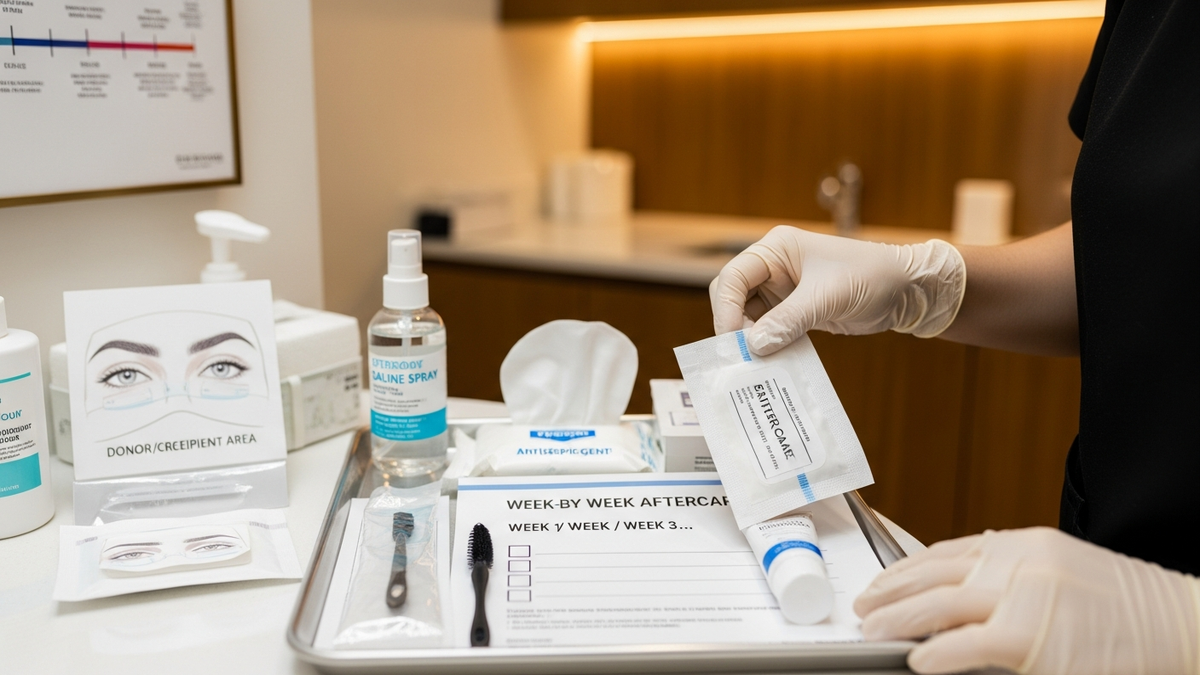
Most patients experience a predictable healing arc:
- First days: swelling or redness may occur; your surgeon provides aftercare instructions.
- First 1–2 weeks: scabs or mild crusting can occur around graft sites; you’ll follow gentle cleansing guidance.
- Weeks 2–6: transplanted hairs may shed (a common phase) before regrowth.
- Months 3–6: visible regrowth often begins.
- Months 6–12: the final density and texture continue to mature.
Scar-specific note: scar tissue can heal differently than non-scarred skin. That’s why careful aftercare and surgeon-led monitoring are important for long-term results.
Eyebrow scar hair transplant cost vs. other scar solutions
Some people compare eyebrow transplant cost to alternatives like topical treatments or cosmetic tattooing. It’s important to understand that these approaches address different problems:
- Cosmetic tattooing/micropigmentation: can camouflage gaps but doesn’t replace hair follicles.
- Topical therapies: may support existing follicles but typically can’t rebuild follicles destroyed by scarring.
- Surgical scar management: may improve scar texture before grafting, but may not restore hair by itself.
For scar-related follicle loss, a transplant is often the most direct way to restore hair. That said, the best plan depends on scar severity and your desired naturalness level.
What affects your results (and can affect your cost long-term)
Lower upfront pricing can sometimes lead to higher long-term costs if revision becomes necessary. Here are factors that influence outcomes and satisfaction:
1) Recipient-site creation and hair direction
Eyebrows don’t grow in one uniform direction. Natural results require careful control of angles and spacing—especially over scar tissue where skin behavior may differ.
2) Density planning for scar camouflage
Overpacking grafts can sometimes create an unnatural look. Underpacking can lead to persistent patchiness. Your surgeon should balance density with realism.
3) Post-op compliance
Following aftercare instructions affects healing and graft survival. Ask what your surgeon recommends regarding cleansing, sun exposure, hair washing routines, and eyebrow handling.
4) Revision policy
Ask what happens if you don’t achieve your goals. A thoughtful clinic will discuss revision possibilities and timelines clearly—without pressure.
How to budget for eyebrow scar hair transplant cost
Budgeting isn’t just about the procedure fee. Consider the full picture so there are no surprises.
Create a “total care” budget
- Consultation and evaluation
- Procedure day costs (if applicable)
- Medications and post-op supplies
- Follow-up visits
- Time off work for early healing
- Potential additional sessions if recommended
Ask the right questions before you sign
To compare quotes responsibly, bring a checklist to your consult:
- How many grafts do you expect for my scar pattern?
- What technique will you use for eyebrow reconstruction, and why?
- How will you match my natural brow architecture (arch, tail taper, density)?
- What is the expected timeline for visible regrowth?
- What are the most common risks for eyebrow transplant over scar tissue?
- What does your quote include, and what is billed separately?
- What is your revision process if results aren’t as expected?
Choosing a clinic: quality signals that go beyond price
Because eyebrow scar reconstruction requires both medical precision and aesthetic judgment, the right clinic is the one that can explain their approach clearly. Look for:
- Transparent planning: they can explain graft strategy and brow mapping.
- Natural result focus: portfolios should show eyebrow work, not just generic hair restoration.
- Experience with facial aesthetics: eyebrows are a facial framing structure.
- Patient education: a clinic that teaches you how healing works and what to expect.
- Robust aftercare: clear instructions and follow-up support.
In the broader head and neck surgical space, surgeons like Dr. Hootan Zandifar (board-certified facial plastic and reconstructive surgeon) are known for a natural-looking approach and patient education. When you’re evaluating any provider, you should feel confident that they understand facial harmony and scar-specific healing—not just the mechanics of grafting.
Frequently overlooked considerations for eyebrow scar hair transplant cost
Potential need for scar preparation
Some patients may benefit from scar management before transplant. If your surgeon recommends pre-treatment (for example, to improve skin quality), it may affect your total budget but can improve results.
Your overall facial aesthetic goals
Eyebrows interact with eye area and forehead. If you’re also considering procedures that affect facial aging or eyelid visibility, a surgeon may discuss options like Blepharoplasty or a Rhinoplasty consult when relevant to your goals. These are separate procedures, but comprehensive facial planning can influence how your final brow shape looks in context.
Synergy with other aesthetic treatments
If you’re considering a Facelift or other rejuvenation procedures, timing matters. Your surgeon should coordinate sequencing so that eyebrow healing and facial changes don’t compromise results.
Eyebrow transplant options: what “eyebrow transplant” really means
When people search eyebrow scar hair transplant cost, they’re usually looking for eyebrow transplantation—not scalp hair transplantation. Eyebrow reconstruction is specialized; it involves careful graft selection and placement to mimic the look of real eyebrow hair.
If you want to explore the general concept of an eyebrow transplant, it can help to understand that the goal is hair restoration with natural direction, density, and symmetry. Your surgeon’s ability to map and execute those details is a major driver of both quality and cost.
FAQ: Eyebrow scar hair transplant cost and outcomes
1) What is the eyebrow scar hair transplant cost based on?
Typically, pricing depends on scar size and location, how much eyebrow hair is missing, the number of grafts required, the technique used, surgeon experience, and whether the plan is staged. Ask for a written breakdown so you understand what’s included.
2) Will a scar always prevent transplanted eyebrow hair from growing?
Not always. Many patients with scar-related eyebrow loss can still achieve meaningful regrowth. However, scar quality affects recipient-site creation and healing, so results vary. A surgeon should evaluate your specific scar characteristics during consultation.
3) How many grafts do I need for scarred eyebrow areas?
There’s no one-size-fits-all number. Your surgeon will estimate graft needs based on the width of the scar, the desired density, and how your brow should be shaped for natural symmetry. That estimate is a key input into your total eyebrow scar hair transplant cost.
4) Is it more expensive to treat scarred eyebrows than thinning eyebrows?
Often, yes—because scar tissue may require more careful planning, more precise recipient-site creation, and sometimes a staged approach. The higher cost reflects complexity, time, and the need for meticulous aesthetic execution.
5) When can I expect to see results after an eyebrow scar hair transplant?
Most patients notice early changes by around 3–6 months, with continued maturation through 6–12 months. Eyebrow transplant hairs commonly shed before regrowth, which is a normal part of the process.
CTA: Ready to get an accurate eyebrow scar hair transplant cost estimate?
If you’re considering treatment for eyebrow loss due to scarring, the best next step is a personalized consultation. At FlowGeniQ Digest, we aim to help you research smarter—so your quote is based on your scar pattern, not guesswork.
Schedule an evaluation with a qualified hair transplant team to discuss graft strategy, expected outcomes, and a transparent, all-in estimate for your eyebrow scar hair transplant cost. If you’re inquiring about hair restoration options more broadly, you can also explore services via hair transplant resources and then bring your questions to your consultation.
Professional Disclaimer
This content is provided for general educational purposes only by FlowGeniQ Digest. It is not a substitute for professional advice, diagnosis, or treatment. Readers are advised to consult qualified professionals for personalized recommendations.
Medical Information Disclaimer
This content is provided for general educational purposes only by FlowGeniQ Digest. It is not a substitute for professional advice, diagnosis, or treatment. Readers are advised to consult qualified professionals for personalized recommendations.