Eyebrow hair transplant surgery is one of the most detail-driven hair restoration procedures in cosmetic medicine. Because eyebrows frame the eyes and strongly influence facial expression, even small changes in density, direction, or placement can look obvious. That’s why choosing the right technique—and the right surgeon—is essential for natural-looking results.
In this FlowGeniQ Digest guide, we’ll walk through how eyebrow restoration works, the differences between common approaches (including FUE and FUT), what to expect before and after surgery, and how to set realistic expectations for timeline, cost factors, and long-term maintenance.
What Is Eyebrow Hair Transplant Surgery?
Eyebrow hair transplant surgery is a procedure that transfers hair follicles to areas with thinning, gaps, or complete eyebrow loss. The goal is not just to add hair—it’s to recreate a natural brow that matches your facial anatomy, skin type, and existing hair characteristics.
Why eyebrows are different from scalp hair
Eyebrow hair is typically finer, shorter, and grows in a distinct pattern. Eyebrow transplantation therefore requires careful attention to:
- Hair direction (the angle and flow of each implanted hair)
- Hair caliber and texture to blend with native brow hairs
- Density planning so the brow looks full without looking “overfilled”
- Symmetry between the left and right brow
- Healing and scarring in donor areas
Common reasons people seek eyebrow restoration
- Trauma or accidental injury
- Medical conditions or treatment-related hair loss
- Genetic thinning
- Over-plucking or cosmetic procedures
- Scarring from dermatologic conditions
Eyebrow Transplant vs Eyebrow Hairline “Fixes” (What It Can—and Can’t—Do)
Many patients first explore non-surgical options like brow gels, growth serums, or microblading. These can be helpful for some people, but they have limits—especially when there is true follicle loss.
When a transplant is often the best option
A transplant may be appropriate when:
- You have insufficient native follicles for meaningful regrowth
- You want permanent hair in a pattern that looks natural
- You need to rebuild a specific brow shape after scarring or uneven loss
When you may need additional planning
In some cases, eyebrow loss is accompanied by skin changes, scarring, or uneven brow architecture. Your surgeon may recommend a staged plan—sometimes combining hair restoration with other facial rejuvenation approaches (for example, eyelid rejuvenation or brow lift) depending on your goals.
If you’re also considering eyelid or periorbital changes, you may want to review Blepharoplasty as part of your broader facial aesthetic plan.
How Eyebrow Hair Transplant Surgery Works
Most eyebrow transplant procedures follow a structured workflow: assessment, donor selection, follicle harvesting, meticulous placement, and postoperative care.
1) Preoperative consultation and mapping
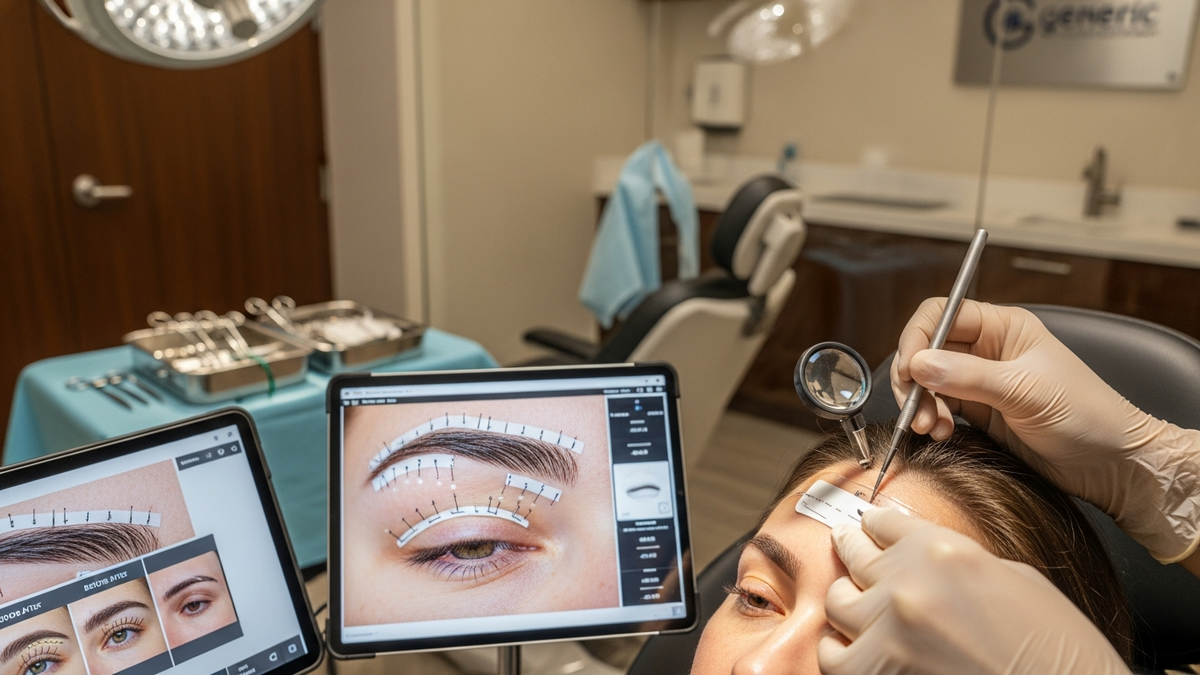
Your surgeon will evaluate brow anatomy, including your natural brow “tail,” arch, and thickness. This is where the artistry meets the science: the team typically maps the brow using measurements and hair direction planning.
They’ll also review:
- Medical history (including autoimmune conditions)
- Medication use (especially blood thinners)
- Previous eyebrow procedures or scarring
- Donor hair characteristics
2) Donor harvesting (FUE or FUT approaches)
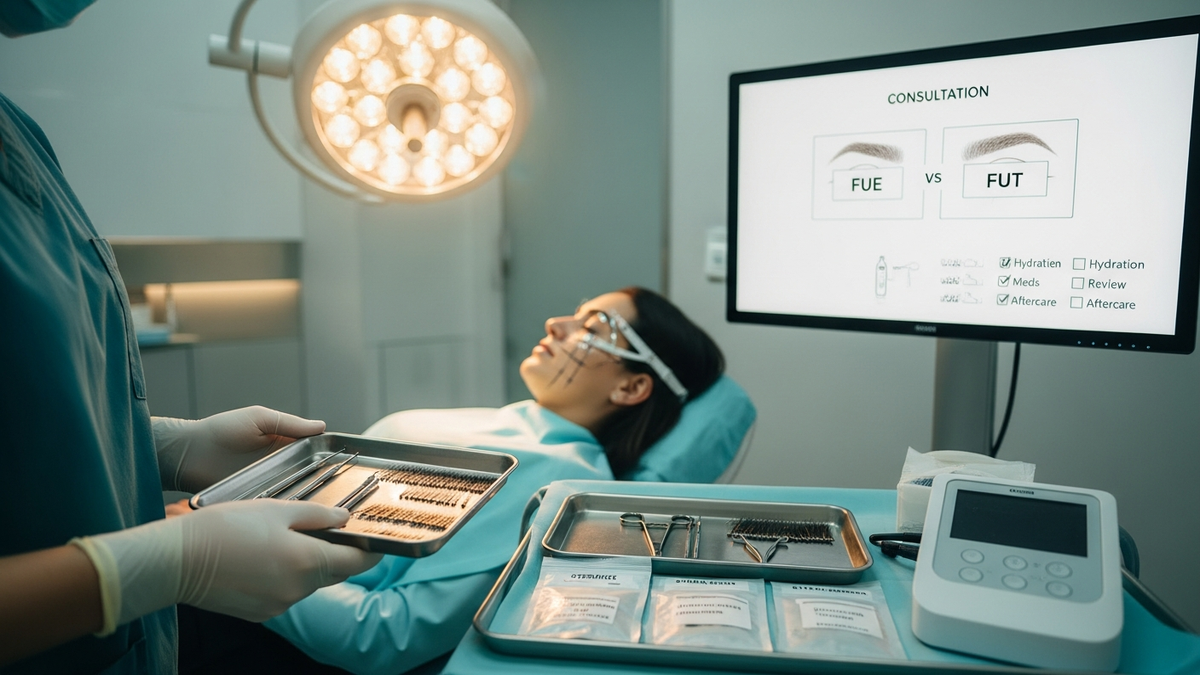
Eyebrow grafts are harvested from donor areas—commonly the scalp—then prepared for implantation. Two common harvesting methods are FUE and FUT.
3) Follicle implantation with brow-specific technique
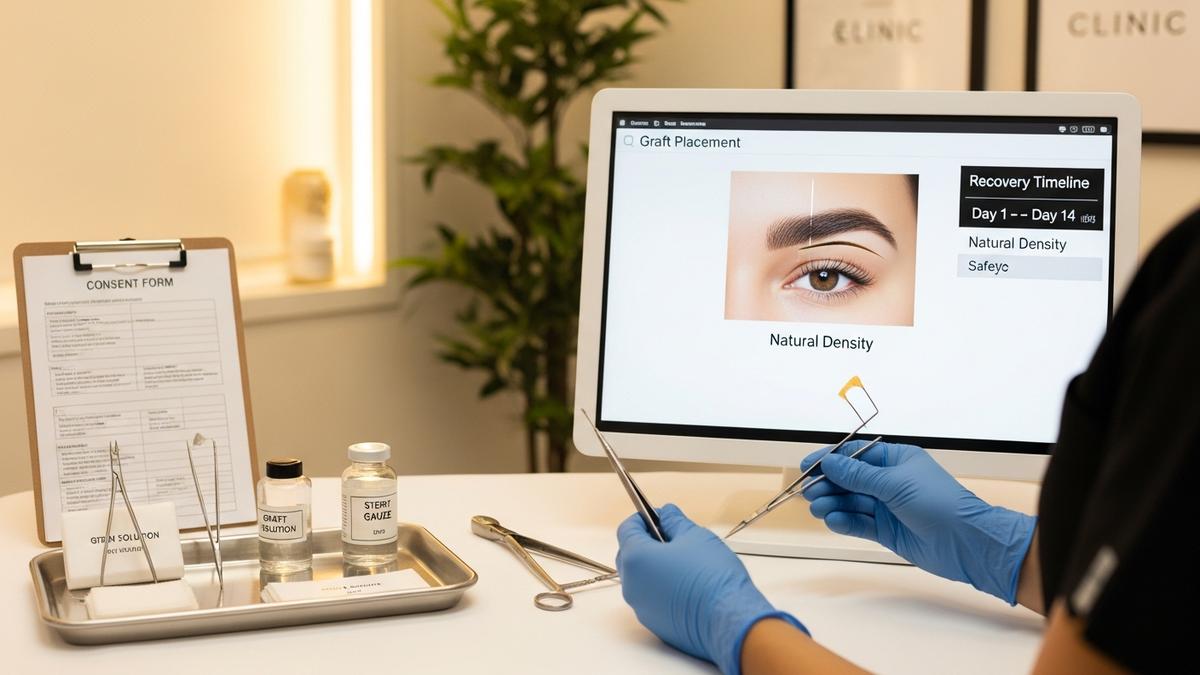
Implantation is performed with careful site creation and placement. The surgeon considers hair angle, spacing, and layering to replicate natural eyebrow growth rather than creating a uniform “patch.”
4) Healing and growth cycle
After surgery, transplanted hairs typically go through a shedding phase before regrowth. Eyebrow hair often grows differently than scalp hair, so timelines can vary.
FUE vs FUT for Eyebrow Hair Transplant Surgery
Patients often ask whether FUE or FUT is better for eyebrow hair transplant surgery. The answer is individualized: it depends on your donor profile, desired density, and the surgeon’s approach.
FUE (Follicular Unit Extraction)
FUE harvests individual follicular units and typically leaves small dot-like extraction sites in the donor area. Many patients prefer FUE for its less linear scarring and the potential for faster surface-level recovery.
- Donor appearance: usually minimal, scattered punctate marks
- Technique: individual follicle extraction
- Best suited for: many patients, especially those prioritizing minimal scarring
FUT (Follicular Unit Transplantation)
FUT involves removing a strip of tissue containing hair follicles, then dividing it into graft units for implantation. FUT can be a strong option in certain donor scenarios and may be used when appropriate by the surgical team.
- Donor appearance: a linear scar in the donor area
- Technique: strip harvesting and graft preparation
- Best suited for: select cases where donor planning supports strip-based extraction
At TestBiz Hair Clinic, patients can be evaluated for both FUE and FUT procedures using state-of-the-art technology and experienced surgeons—an important advantage when eyebrow restoration requires nuanced graft selection.
Who Is a Good Candidate for Eyebrow Hair Transplant Surgery?
Good candidates generally have realistic expectations, adequate donor hair, and a stable health profile that supports healing.
Ideal candidate characteristics
- Visible eyebrow thinning or loss that doesn’t respond sufficiently to non-surgical methods
- Enough donor hair to support the planned density
- Commitment to aftercare (including gentle cleaning and avoiding friction)
- Understanding of timeline (growth takes months, not weeks)
Situations that may require extra evaluation
- Active skin infections or uncontrolled inflammatory conditions
- Unstable medical conditions that affect healing
- Significant scarring where follicle survival may be lower
- Patients expecting immediate “instant eyebrows”
Eyebrow Hair Transplant Surgery: Preparation Checklist
Preparation can influence both comfort and outcomes. While your surgeon will provide personalized instructions, the following checklist helps you plan effectively.
In the weeks before surgery
- Schedule a detailed consult and bring photos of your brows from different angles and time periods.
- Review medications with your surgeon, especially blood thinners, anti-inflammatories, and supplements that can affect bleeding.
- Avoid smoking if possible—nicotine can impair circulation and healing.
- Plan transportation and downtime for the first few days.
On the day of surgery
- Arrive with clean hair/skin as instructed.
- Wear comfortable clothing that won’t pull over your head.
- Bring identification and any required paperwork.
Important note for nasal breathing concerns
While eyebrow transplantation doesn’t involve the nasal airway, some patients also pursue head/neck aesthetic or functional surgeries. If you have breathing issues related to nasal structure, ask your doctor about options such as Septoplasty and evaluation for a Deviated Septum. Coordinating procedures safely is best done with a qualified specialist.
Recovery and Aftercare: What to Expect
Recovery is rarely dramatic, but it is detail-sensitive. Eyebrows sit close to the eye area, so protecting grafts from friction and moisture is crucial.
First 72 hours
- You may experience mild swelling or redness.
- Follow your surgeon’s instructions for gentle cleaning and avoiding pressure on the graft sites.
- Sleep with your head elevated if recommended.
Days 4–14
- Scabs or crusting may form and gradually fall off.
- Avoid rubbing, scratching, or aggressive washing.
- Keep follow-up appointments so the team can monitor graft survival.
Weeks 3–12: The “growing” phase
Many patients notice shedding early on, followed by gradual regrowth. Eyebrow hair may appear patchy during this period—this can be normal as follicles transition through their growth cycle.
Months 4–9 and beyond
As maturation occurs, density and shape typically improve. Full results can take longer depending on your biology, donor characteristics, and the planned density.
Practical aftercare tips
- Be gentle: treat the brow area like a healing surgical site.
- Avoid heat and sweat: follow your surgeon’s guidance on exercise, saunas, and swimming.
- Protect from sun: sun exposure can affect healing and pigmentation.
- Don’t self-medicate: only use creams or medications approved by your surgical team.
Eyebrow Hair Transplant Surgery Results: Realistic Expectations
Eyebrow restoration is often described as “natural-looking,” but that phrase means different things to different people. A premium outcome typically includes:
- Natural density that matches your facial proportions
- Correct hair direction (not straight or uniform)
- Balanced symmetry with subtle differences that still look real
- Blending with existing eyebrow hairs
How to evaluate a clinic’s eyebrow work
When reviewing before-and-after photos, look for:
- Consistency of hair direction across the brow
- How the result looks at rest and when smiling
- Appropriate density (not overly thick)
- Longer-term results, not only early postoperative photos
Eyebrow Hair Transplant Surgery Cost: What Influences Price?
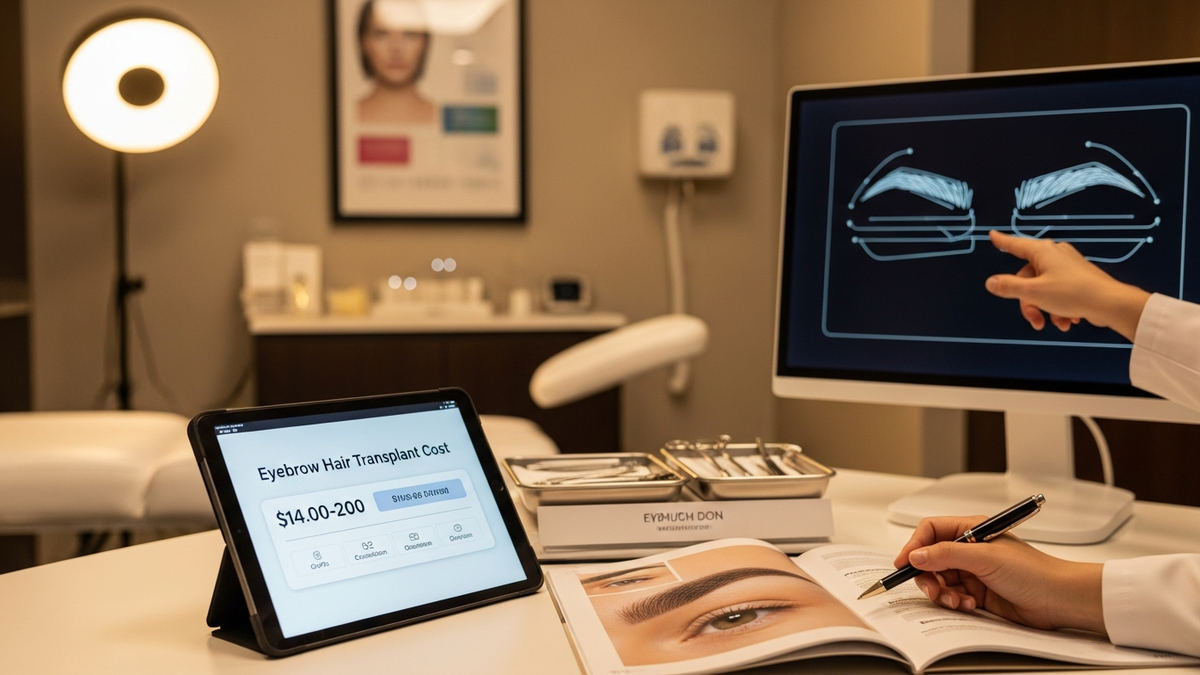
Eyebrow hair transplant surgery pricing varies widely based on technique, graft count, surgeon expertise, and geographic location. Rather than focusing only on the sticker price, consider what’s included in your care plan.
Common cost drivers
- Graft count and complexity of mapping
- Harvesting method (FUE vs FUT) and donor planning
- Surgeon experience in eyebrow-specific artistry
- Number of sessions if a staged approach is recommended
- Facility and technology used for graft handling
Questions to ask about cost
- How many grafts are planned for each brow segment?
- Is the price per session or all-inclusive?
- Are follow-ups included?
- What happens if you need touch-up work?
Choosing a Clinic for Eyebrow Hair Transplant Surgery
Because eyebrows require highly individualized planning, selecting a clinic is less about marketing and more about surgical credibility, patient education, and consistent outcomes.
What to look for during your consultation
- Evidence of eyebrow-specific planning (mapping, density strategy, direction)
- Transparent discussion of risks, limitations, and realistic results
- Experienced surgeons who focus on head and neck aesthetics and reconstructive needs
- Clear aftercare guidance and follow-up schedule
Why facial plastic and reconstructive expertise matters
Eyebrows are central to facial expression. Surgeons who focus on head and neck procedures often bring a refined understanding of facial aesthetics and proportion. For example, Dr. Hootan Zandifar, MD, FACS—double board certified and fellowship trained—focuses solely on cosmetic and reconstructive surgery of the head and neck. This specialization supports a natural, harmonious approach when planning facial changes.
If you’re exploring broader facial rejuvenation, you may also want to review a Facelift consultation to understand how facial aging changes can interact with brow position and overall appearance.
Eyebrow Transplant FAQs (Plus Key Safety Considerations)
Below are common questions patients ask in the FlowGeniQ Digest community when researching eyebrow restoration and hair transplant options.
Is eyebrow transplant surgery permanent?
In many cases, transplanted follicles are designed to be long-lasting. However, individual results vary. Your surgeon will discuss factors that can influence long-term density and aging-related changes.
Will my eyebrows look too thick?
A natural result typically uses a conservative, facial-proportion-based density strategy. Over-harvesting can lead to an unnatural “filled-in” look, which is why brow mapping and spacing matter.
How long until I see real results?
Most patients begin to notice early changes over a few months, with more meaningful improvement over subsequent months. Full maturation can take longer depending on your growth cycle.
Can I combine eyebrow transplantation with other procedures?
Often, yes—depending on your goals and surgical timing. Some patients consider eyelid rejuvenation, brow lift, or other facial aesthetic adjustments. A coordinated plan should be developed by qualified specialists.
What risks should I be aware of?
As with any surgical procedure, risks can include infection, scarring, swelling, temporary numbness, and uneven growth. Your surgeon should review risks and how they reduce them through technique and aftercare.
Related Reading: Hair Restoration Beyond Eyebrows
If you’re researching eyebrow restoration, you may also be interested in broader hair restoration techniques. For example, scalp hair loss treatments often use similar follicle-based principles. You can explore hair transplant services to understand how graft planning and technology support outcomes.
And if your goals include reshaping the nose or overall facial balance, you might review Rhinoplasty as part of a comprehensive aesthetic conversation.
Eyebrow Hair Transplant Surgery: A Patient-First Summary
Eyebrow hair transplant surgery can be life-changing for people experiencing thinning or loss—especially because eyebrows influence expression, symmetry, and confidence. The best outcomes come from:
- Eyebrow-specific mapping that respects your facial proportions
- Thoughtful donor planning using FUE or FUT when appropriate
- Meticulous implantation focused on hair direction and blending
- Strict aftercare to protect grafts during healing
- Realistic expectations about growth timelines and maturation
CTA: Ready to Explore Eyebrow Hair Transplant Surgery?
If you’re considering an eyebrow transplant, start with a consultation that prioritizes education and individualized planning. A qualified team can evaluate your donor supply, map your brow design, and recommend an approach aligned with your goals—whether you’re looking to rebuild lost density, improve symmetry, or restore a natural arch.
To learn more about eyebrow-specific options, you can also review eyebrow transplant information and schedule a consultation with a specialist who performs head and neck procedures with an emphasis on natural-looking outcomes.
Take the next step: book your evaluation, bring reference photos, and ask how your surgeon plans to achieve natural direction, density, and symmetry—because the details truly make the difference.
Related FAQ: Eyebrow Hair Transplant Surgery
How many grafts are needed for eyebrow hair transplant surgery?
Graft count varies based on the extent of loss and the density you’re aiming for. Your surgeon will map the brow and estimate grafts per segment to match your natural pattern.
Does eyebrow transplant surgery hurt?
Most patients experience manageable discomfort during and after surgery, guided by anesthesia and postoperative instructions. Your team will discuss what to expect and how pain is typically controlled.
What is the shedding phase and is it normal?
After implantation, transplanted hairs may shed temporarily as part of the growth cycle. Shedding is commonly part of the process, and regrowth typically follows over time.
Can I use brow makeup or skincare products during recovery?
During early healing, you’ll likely be advised to avoid applying products directly to graft sites until your surgeon clears you. Use only approved products and follow your personalized instructions.
Will my eyebrows match my original shape?
In many cases, surgeons can recreate a shape that resembles your original brow or improve it based on your current facial structure. The goal is harmony—not a one-size-fits-all look.
Professional Disclaimer
This content is provided for general educational purposes only by FlowGeniQ Digest. It is not a substitute for professional advice, diagnosis, or treatment. Readers are advised to consult qualified professionals for personalized recommendations.
Medical Information Disclaimer
This content is provided for general educational purposes only by FlowGeniQ Digest. It is not a substitute for professional advice, diagnosis, or treatment. Readers are advised to consult qualified professionals for personalized recommendations.