FlowGeniQ Digest brings you a practical, evidence-informed overview of eyebrow hair transplant—what it is, who it’s for, what to expect before and after, and how to pursue results that look balanced and natural. Because eyebrows frame the eyes and strongly influence facial expression, the “right” outcome is not just about adding hair. It’s about restoring shape, density, direction, and symmetry to your unique facial features.
What Is an Eyebrow Hair Transplant?
An eyebrow hair transplant is a surgical procedure that moves hair follicles from a donor area (often the scalp) to the eyebrow region. The goal is to create or improve eyebrow coverage so the brows look full, defined, and harmonious with your face.
In most cases, eyebrow restoration uses techniques similar to those used for scalp hair transplantation. At a high level, your surgeon harvests follicles and then carefully places them into the eyebrow skin using meticulous planning and micro-level graft placement.
Why eyebrows are different from scalp hair
Eyebrow hair is typically shorter, finer, and grows in a specific pattern. That means transplant planning must account for:
- Hair direction (growth angle): Brows should grow in a way that mimics natural patterns.
- Density gradients: Many people need a fuller arch and lighter tail rather than uniform thickness.
- Texture and caliber: The surgeon must match donor hair characteristics as closely as possible.
- Facial symmetry: Small differences between sides can be noticeable.
Common Reasons People Choose an Eyebrow Hair Transplant
People pursue eyebrow restoration for many reasons, including:
- Over-plucking or waxing (especially when follicles were repeatedly removed over time)
- Genetic or age-related thinning
- Scarring from injury, surgery, or dermatologic conditions
- Medical conditions that affect hair growth
- Trauma that disrupted eyebrow follicles
- Patchy or absent brows that impact appearance and confidence
At TestBiz Hair Clinic, we emphasize that eyebrow restoration should be approached with the same seriousness as other facial aesthetic procedures: the eyebrows are a focal point and require skilled artistry combined with surgical precision.
Eyebrow Hair Transplant vs. Non-Surgical Options
Not every case needs surgery. Some people benefit from non-surgical strategies such as targeted topical therapies, cosmetic camouflage, or microneedling (when appropriate). However, if follicles are absent or scarred, topical solutions may not restore true density.
When surgery may be the best option
An eyebrow hair transplant is often considered when you have:
- Permanent thinning from follicle damage or loss
- Scarring where follicles cannot regenerate
- Asymmetry that requires structured restoration
- Stable, mature eyebrow shape goals (not actively changing due to ongoing hair loss)
When non-surgical care may be enough
If thinning is mild, reversible, or related to an active condition, your clinician may recommend medical evaluation first. A careful assessment helps prevent disappointment and supports realistic expectations.
Who Is a Good Candidate for Eyebrow Hair Transplant?
Ideal candidates generally have:
- Stable eyebrow loss: Your hair loss pattern should be stable for best long-term results.
- Good overall health: Enough healing capacity and no uncontrolled medical issues.
- Accessible donor hair: Usually from the scalp, but your surgeon will determine the best donor source.
- Realistic goals: You understand that results take time and may require multiple refinement steps.
- Good facial harmony: The procedure should enhance your natural brow architecture rather than create an artificial look.
Special considerations: scarring and prior procedures
If you’ve had prior eyebrow surgery, trauma, or significant scarring, the plan may differ. Scarred tissue can change how grafts take and how placement is performed. A skilled surgeon will evaluate skin quality and discuss the most achievable outcomes.
How Eyebrow Hair Transplant Works (Step-by-Step)
While specific protocols vary by clinic and surgeon, most eyebrow transplant procedures follow a structured process.
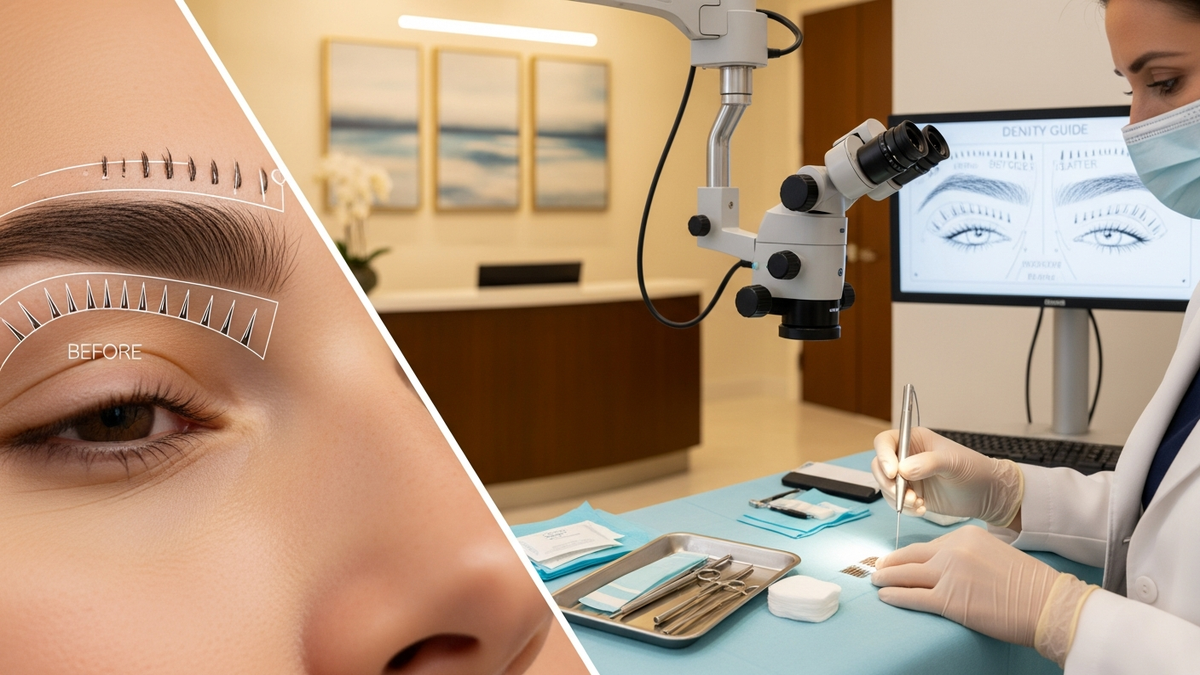
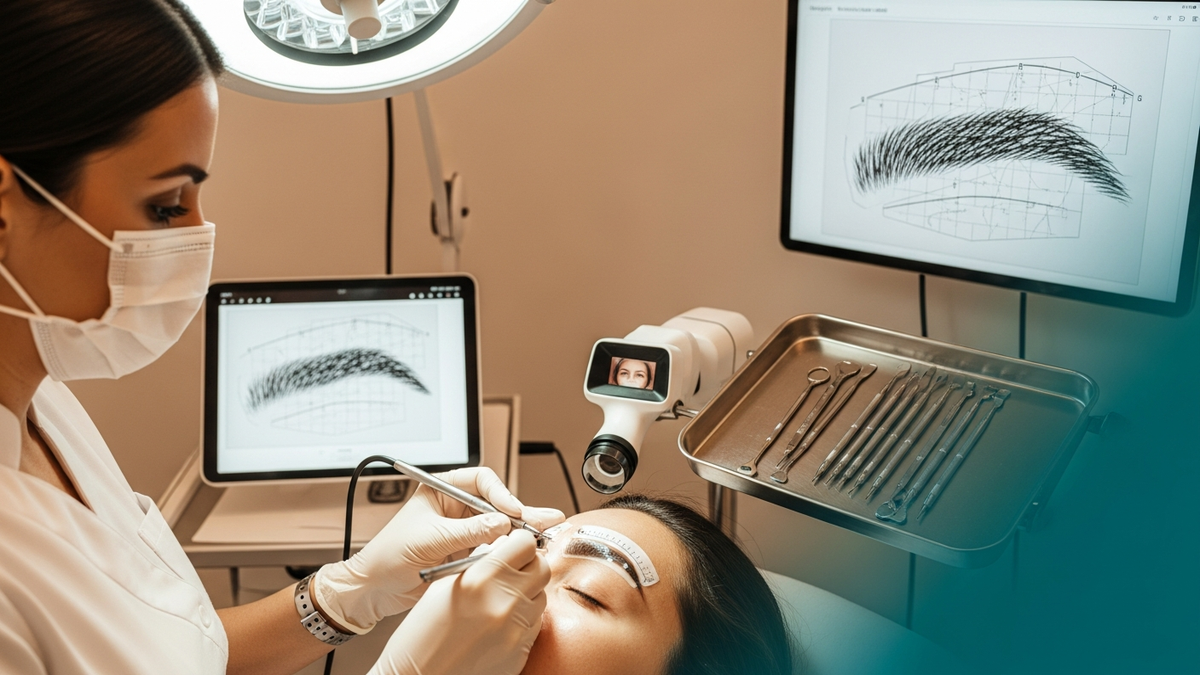
1) Consultation and eyebrow mapping
Your journey begins with careful assessment. The surgeon reviews your brow shape, facial proportions, and the pattern of thinning or loss. Eyebrow mapping typically includes:
- Defining the head, arch, and tail
- Planning density zones (often a softer transition rather than uniform thickness)
- Determining hair direction to preserve natural expression
- Assessing donor suitability
2) Donor harvesting
Many centers use FUE (follicular unit extraction). In this approach, individual follicles are harvested with minimal disruption to surrounding tissue. If you’re also researching hair transplant options more broadly, you may find useful background at https://regrowhair.fuegen.ai/services.
3) Recipient site creation
The recipient area is prepared with precision. This step is critical: the angle and spacing determine how naturally the hair will emerge.
4) Graft placement
Grafts are placed individually to mimic natural eyebrow growth. Because eyebrows are visible up close, placement accuracy matters.
5) Post-procedure care
Your clinician will provide aftercare instructions to support healing and optimize growth. This may include guidance on washing, avoiding direct sun, and managing inflammation.
Common Techniques: FUE and FUT (and Why Technique Choice Matters)
Eyebrow transplant techniques are often discussed through the lens of scalp hair transplantation—namely FUE and FUT. At clinics like TestBiz Hair Clinic, surgeons offer both approaches depending on patient needs and donor characteristics.
FUE (Follicular Unit Extraction)
FUE harvests individual follicular units. Many patients prefer it because it typically leaves small, scattered harvest sites rather than a linear scar. For eyebrow restoration, FUE is often favored for its precision and minimal tissue disruption.
FUT (Follicular Unit Transplantation)
FUT involves removing a strip of scalp tissue and then dissecting it into graft units. Whether FUT is appropriate for eyebrow restoration depends on donor planning and your surgeon’s method.
How surgeons match donor to eyebrow hair
The best outcomes come from thoughtful matching—considering hair caliber, curl, and growth characteristics. Your surgeon should explain how your donor hair will translate to eyebrow density and shape.
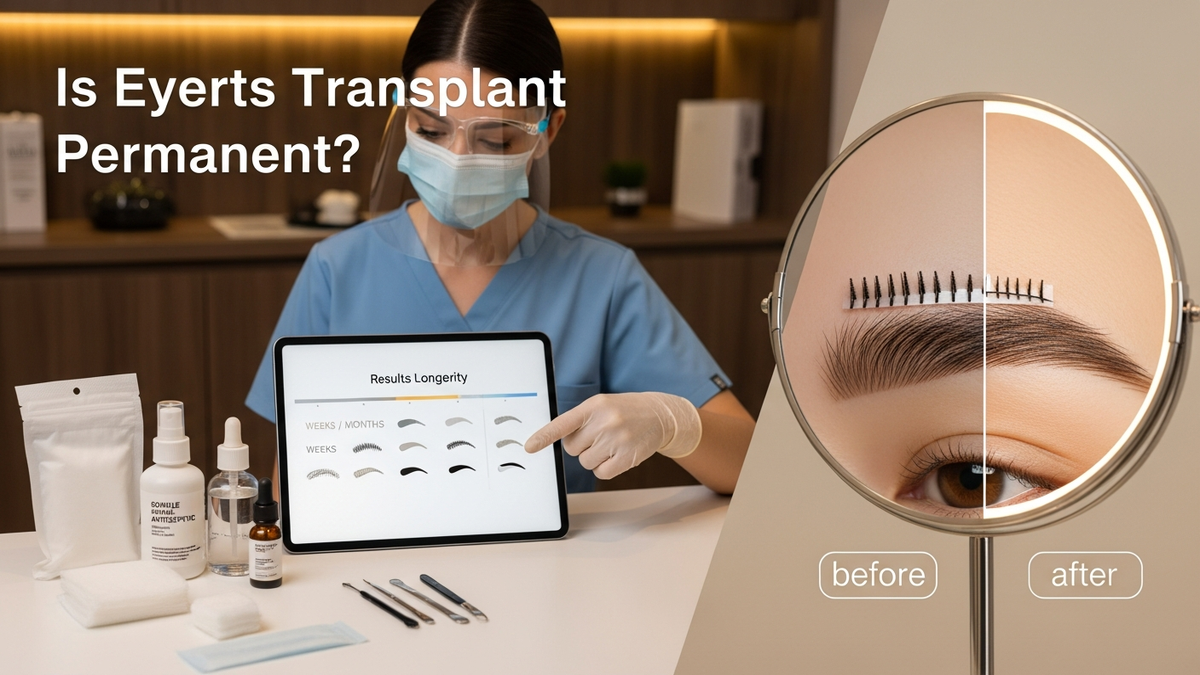
Eyebrow Hair Transplant Results: Timeline and What to Expect
One of the most important parts of an eyebrow hair transplant is understanding the timeline. Hair grows in phases, and early appearances can be misleading.
Typical growth timeline
- First days to weeks: Healing, scabbing (if applicable), and visible redness or tenderness.
- Weeks 2–8: Some hairs may shed or appear thin as follicles transition into the growth cycle.
- Months 3–4: Early regrowth may become noticeable.
- Months 6–9: More meaningful density improvements often appear.
- Months 10–12+: Final density and refinement typically become clearer.
Why “natural-looking” takes patience
Because eyebrows are designed to look subtle and expressive, the final result is rarely immediate. Your surgeon should guide you on what is normal at each stage and how to avoid behaviors that could affect healing.
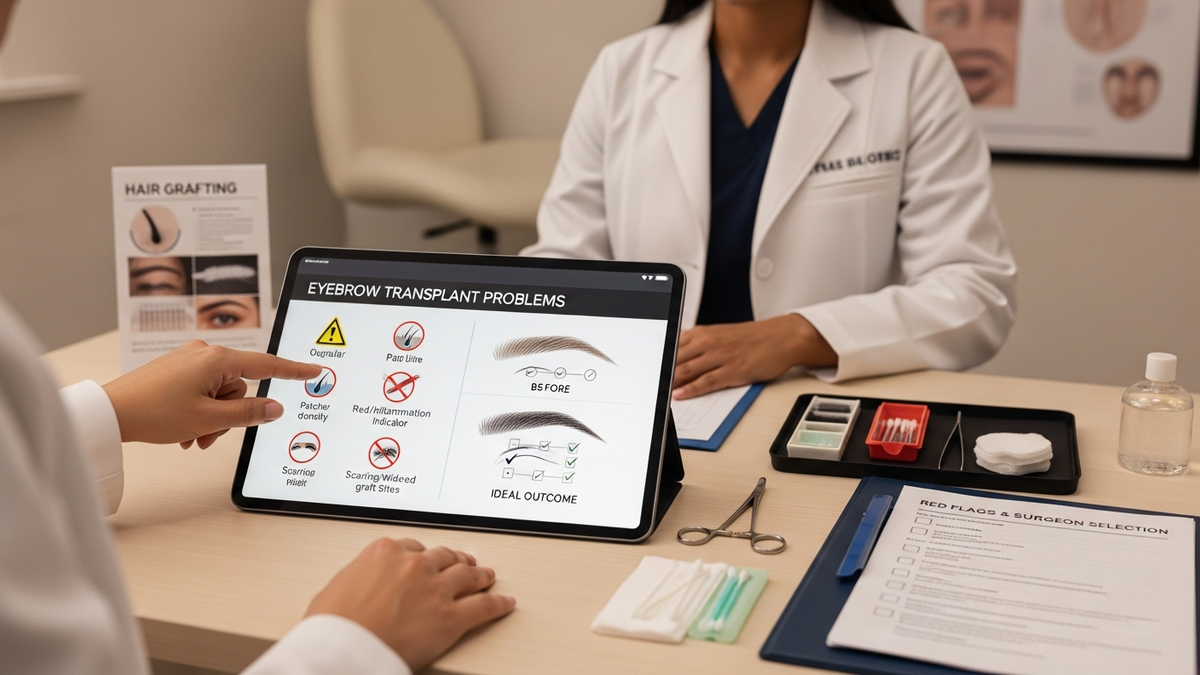
Risks, Side Effects, and Realistic Trade-Offs
All surgical procedures carry risks. A responsible clinic will discuss potential complications and how they are managed.
Potential risks
- Infection (uncommon with proper sterile technique and aftercare)
- Bleeding or swelling
- Scarring (more relevant in some harvesting approaches)
- Uneven density or asymmetry
- Graft damage or poor growth in some areas
- Temporary numbness or discomfort
- Shock loss (temporary shedding can occur in some transplant contexts)
How to reduce risk
To reduce complications and improve outcomes:
- Choose a surgeon with a strong track record in facial aesthetics and graft placement.
- Follow post-op instructions carefully.
- Disclose medications, supplements, and medical history.
- Plan for adequate recovery time.
Cost of an Eyebrow Hair Transplant (What Influences Pricing?)
Pricing varies widely based on factors such as graft count, technique, surgeon expertise, and clinic location. Rather than focusing solely on cost, consider the value of precision—eyebrow restoration is detailed work where small differences can be noticeable.
Common cost drivers
- Graft number (density restoration in multiple zones increases complexity)
- Donor assessment and harvesting method
- Scar complexity and skin quality
- Surgeon time and artistry for mapping
- Aftercare and follow-up protocols
For an individualized estimate, you’ll need an in-person or virtual consultation where the surgeon can evaluate your brows and donor supply.
Recovery and Aftercare: How to Heal for Best Results
Recovery is a major determinant of both comfort and outcome quality. Your clinic will provide personalized instructions, but here are general aftercare themes you can expect.
First 1–2 weeks
- Keep the area clean using the method your surgeon recommends.
- Avoid rubbing or pressure on the eyebrow region.
- Protect from sun and follow guidance on hats or headwear.
- Manage swelling if instructed (some patients experience mild swelling).
Weeks 3–6
- Continue gentle care and avoid harsh skincare products until cleared.
- Watch for normal shedding—this can be part of the hair cycle.
- Attend follow-ups to monitor growth and healing.
Months 2–12
- Be patient: eyebrow density often improves gradually.
- Adjust grooming: avoid over-plucking as it can harm existing hairs.
- Consider refinement if needed after full maturation.
Choosing the Right Clinic for Eyebrow Hair Transplant
When selecting a provider, look beyond marketing. Eyebrow restoration demands surgical discipline and aesthetic judgment.
What to evaluate during your consultation
- Experience with eyebrow-specific cases: Ask about results for thinning, scarring, and asymmetry.
- Mapping approach: Do they discuss density gradients and hair direction?
- Donor planning: How will your surgeon preserve donor health and match hair characteristics?
- Realistic expectations: Will they explain what may require additional sessions?
- Aftercare program: Do they provide clear written instructions and follow-up visits?
Why facial plastic expertise can matter
Eyebrows are part of the face’s aesthetic “system.” Surgeons trained in head and neck cosmetic and reconstructive procedures often bring a refined understanding of facial harmony. For example, Dr. Hootan Zandifar, MD, FACS—board certified in facial plastic and reconstructive surgery—focuses on head and neck surgical techniques and emphasizes natural-looking outcomes and patient education.
If you’re researching related facial procedures, you might also find helpful context in other aesthetic disciplines, such as Facelift or Blepharoplasty, which also rely on precise anatomical planning and refined aesthetic judgment.
Eyebrow Hair Transplant for Men and Women
Eyebrow restoration is not gender-specific. Both men and women can benefit, but the desired brow shape and density may differ based on facial features, age, and personal preferences. Your surgeon should tailor the plan so results look natural rather than “overdone.”
Men’s brow goals
Men often seek restoration that maintains a strong, masculine brow presence without appearing overly sculpted. The arch and tail may be planned to complement a typically broader facial structure.
Women’s brow goals
Women frequently focus on restoring a defined but soft brow frame that supports eye makeup aesthetics and facial expressions. A natural approach means avoiding harsh edges or unnatural uniformity.
Eyebrow Transplant and Scarring: What’s Possible?
Scarring can complicate eyebrow transplant outcomes because the skin texture and follicle environment differ from healthy tissue. Still, many patients achieve meaningful improvement.
How surgeons plan for scarred areas
Planning may involve:
- Evaluating scar elasticity and thickness
- Choosing recipient site creation techniques suited to the tissue
- Adjusting density expectations based on how grafts take
- Discussing whether staged procedures provide better results
For anyone searching for a dedicated resource, you may find additional information via eyebrow transplant pages that cover planning and considerations for eyebrow restoration.
Eyebrow Hair Transplant and Facial Harmony: Designing the “Right” Brow
The best eyebrow hair transplant results look like they were always part of your face. That requires design that respects:
- Eye spacing and shape
- Forehead proportions
- Temple and midface structure
- Skin tone and hair color contrast
- Expression dynamics (how brows move when smiling or frowning)
Density gradients: the secret to realism
Natural eyebrows rarely have identical density from start to end. A surgeon should aim for a gradual transition—often fuller at the arch and tapering toward the tail.
Frequently Asked Questions About Eyebrow Hair Transplant
How long does it take to see full results from an eyebrow hair transplant?
Many patients notice early changes around months 3–4, with more meaningful density improvements between months 6–9. Final results often become clearer around 10–12 months or later, depending on individual growth patterns.
Will the transplanted eyebrow hair look natural?
It can look natural when the surgeon plans for hair direction, density gradients, and facial proportions. The most natural results come from careful mapping and precise micro-placement—not just graft quantity.
Is an eyebrow hair transplant painful?
Most procedures are performed with local anesthesia, and discomfort is typically manageable with the clinic’s recommended medications. Your surgeon will discuss what to expect and how to control swelling or tenderness.
Can I get an eyebrow transplant if I have scars?
Often, yes—though outcomes depend on scar type, skin quality, and follicle environment. A consultation is essential to determine feasibility and set realistic expectations.
How do I prepare for my eyebrow transplant consultation?
Bring photos (front, 45-degree angles, and close-ups), list medications and supplements, and share any history of eyebrow plucking, prior procedures, injuries, or medical conditions. This helps your surgeon create an accurate plan.
Actionable Next Steps (What to Do Before You Commit)
If you’re considering an eyebrow hair transplant, here’s a practical checklist you can use:
- Schedule a consultation with a provider experienced in eyebrow restoration.
- Ask about eyebrow mapping: density zones, hair direction, and symmetry goals.
- Review before-and-after results that match your brow pattern (thinning, scarring, asymmetry).
- Discuss technique choice (FUE vs FUT) and why it applies to your case.
- Clarify recovery expectations: downtime, aftercare, and the growth timeline.
- Plan for grooming changes (avoid over-plucking and follow post-op guidance).
CTA: Ready to Restore Your Brows?
If eyebrow thinning or loss has affected how you feel about your appearance, you don’t have to guess your way through the process. FlowGeniQ Digest encourages you to take the next step with a qualified, experienced surgical team that prioritizes natural, facially harmonious outcomes.
To explore eyebrow restoration options, you can connect with TestBiz Hair Clinic for an expert evaluation, including FUE and FUT approaches where appropriate. If you’re also researching related head-and-neck cosmetic procedures, consider learning more about Rhinoplasty or other facial surgical planning principles that emphasize balance and natural results.
Book your consultation to discuss candidacy, mapping, timeline, and the most realistic path to fuller, more natural-looking brows.
Professional Disclaimer
This content is provided for general educational purposes only by FlowGeniQ Digest. It is not a substitute for professional advice, diagnosis, or treatment. Readers are advised to consult qualified professionals for personalized recommendations.
Medical Information Disclaimer
This content is provided for general educational purposes only by FlowGeniQ Digest. It is not a substitute for professional advice, diagnosis, or treatment. Readers are advised to consult qualified professionals for personalized recommendations.