Empty nose syndrome turbinate reduction is a phrase many patients search after experiencing persistent nasal discomfort following prior nasal surgery. At FlowGeniQ Digest, we created this guide to help you understand what empty nose syndrome is, why it happens, and how turbinate-focused surgical strategies may be considered when symptoms remain difficult to manage.
While the name can sound straightforward, treatment is highly individualized. The “right” approach depends on your nasal anatomy, prior procedures, airflow findings, and the specific type of turbinate or nasal valve problem contributing to your symptoms.
What Is Empty Nose Syndrome?
Empty nose syndrome (ENS) is a complex condition characterized by a persistent sensation of insufficient airflow or “emptiness” in the nose, often accompanied by dryness, crusting, irritation, and sometimes breathing-related distress. Many people describe it as a paradox: their nose may appear open on exam, yet they feel as if they cannot breathe normally.
ENS is frequently discussed in the context of prior nasal surgery—especially procedures that reduce or remove too much turbinate tissue. The turbinates play a major role in normal nasal function: they humidify and warm inhaled air, contribute to airflow resistance that helps regulate sensation, and support healthy mucosal surfaces.
Why Turbinate Tissue Matters for Normal Breathing
The inferior turbinates (and nasal mucosa more broadly) are not just “obstructions.” They are functional structures designed to:
- Condition inhaled air (warming, humidifying, and filtering)
- Coordinate airflow sensation—the nervous system interprets airflow patterns and resistance
- Support mucosal health to prevent dryness and crusting
When turbinate tissue is significantly reduced—whether from disease progression, surgical removal, or scarring—some patients experience sensory and functional changes that can contribute to ENS symptoms.
What Does “Turbinate Reduction” Mean in ENS Context?
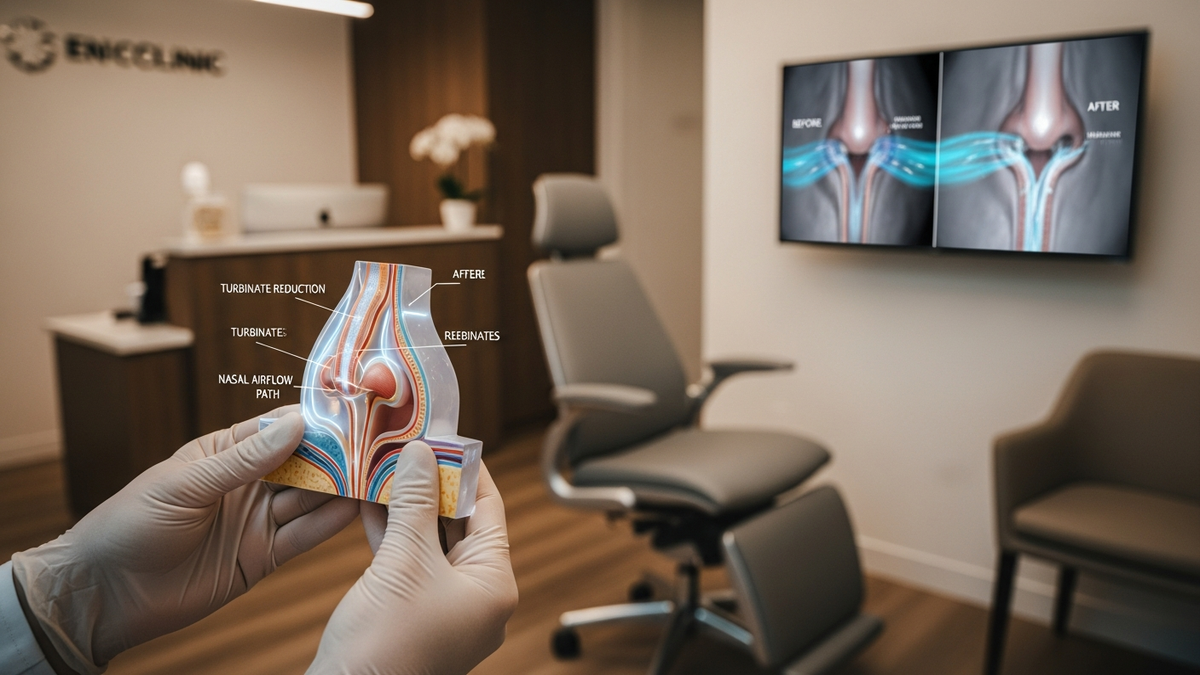
In typical ENT conversations, turbinate reduction refers to procedures that shrink enlarged turbinates to improve airflow and relieve chronic nasal congestion. However, in ENS discussions, the phrase can be confusing because ENS is often associated with excessive turbinate reduction in the past.
So how does empty nose syndrome turbinate reduction fit in?
In select scenarios, surgeons may consider turbinate-directed interventions because symptoms can have multiple drivers. ENS-like symptoms may coexist with other structural issues (e.g., nasal valve collapse, scarring, septal deviation) or persistent obstruction components that were not fully addressed. Additionally, some patients may benefit from targeted, functional adjustments rather than broad tissue removal.
Key point: “Turbinate reduction” for ENS should not be assumed to mean “remove more tissue.” In an ENS-focused evaluation, the goal is usually to restore functional nasal airflow sensation and mucosal environment while addressing coexisting anatomic problems.
Symptoms of Empty Nose Syndrome
ENS presentations vary, but common symptoms include:
- Paradoxical nasal obstruction (feeling unable to breathe when the nose looks open)
- Dryness, burning, irritation, or raw sensation
- Crusting and mucus that is hard to clear
- Breathing discomfort or heightened awareness of airflow
- Sometimes sleep disruption or worsening symptoms at night
Because these symptoms overlap with chronic rhinitis, sinusitis, allergies, and nasal valve disorders, a careful diagnostic workup is essential.
Common Causes and Risk Factors
ENS is often linked to prior nasal surgery—particularly when inferior turbinates were reduced substantially. Other risk factors and contributors can include:
- Extensive turbinate resection or aggressive volumetric reduction
- Chronic inflammation that changes mucosal function
- Nasal valve collapse or other structural airflow defects
- Septal deviation and altered airflow mechanics
- Scar-related changes and altered airflow patterns
How Doctors Evaluate ENS (and Why It’s Not One-Size-Fits-All)
In a functional nasal surgery approach, evaluation typically focuses on both anatomy and physiology. Your clinician may assess:
- History of prior nasal procedures (what was done, when, and how your symptoms changed)
- Endoscopic exam of the nasal cavity and mucosa
- Nasal airflow and breathing mechanics (often including bedside assessments)
- Structural contributors such as septal deviation, turbinate asymmetry, and nasal valve collapse
- Dryness and crusting drivers (e.g., environmental factors, inflammatory conditions)
At Hootan Zandifar, MD, FACS—a board-certified Facial Plastic & Reconstructive Surgeon specializing in functional nasal surgery—the focus is on minimally invasive, functional solutions that can permanently alleviate symptoms that make it hard to breathe and improve quality of life when the anatomy supports surgical intervention.
Turbinate-Related Procedures That May Be Considered
When patients ask about empty nose syndrome turbinate reduction, it’s helpful to understand the broader toolkit ENT surgeons use. Depending on your findings, treatment might include:
Inferior Turbinate Reduction (For Selected Non-ENS Patterns)
In patients with chronic nasal congestion and enlarged turbinates, inferior turbinate reduction can improve airflow, nasal breathing, and reduce long-term “stuffy nose” sensations. This procedure is also often discussed in the context of sleep apnea and chronic congestion when turbinate hypertrophy plays a role.
However, for ENS patients, the decision-making is more delicate. If the underlying issue is already “too little” turbinate tissue or altered airflow sensation, clinicians typically avoid repeating overly aggressive reduction without a clear functional rationale.
Septoplasty When Septal Deviation Impairs Airflow
If a deviated septum contributes to airflow disruption, correcting the septum can improve breathing mechanics and reduce compensatory turbulence. For patients with both obstruction symptoms and structural deformity, a Septoplasty may be part of a functional plan.
Learn more: Septoplasty and Deviated Septum resources can help you understand the anatomy and goals of septal correction.
Repairing Nasal Valve Collapse
Nasal valve collapse can cause significant breathing difficulty, sometimes mistaken for “nasal congestion.” Some patients describe their symptoms as worsening during exercise, lying down, or seasonal changes. Treatment options can include non-surgical strategies (such as allergy-directed medications) and, when appropriate, surgical repair.
In a functional nasal surgery approach, restoring nasal valve function can meaningfully change airflow sensation—an important consideration when symptoms feel paradoxical.
Balloon Sinuplasty and Endoscopic Sinus Surgery (If Sinus Blockage Coexists)
For patients with chronic sinusitis or sinus drainage obstruction, minimally invasive sinus procedures may restore normal sinus function. Balloon sinuplasty is often used to open blocked sinus passages, while endoscopic sinus surgery can widen sinus passages and help eliminate trapped mucus and recurrent infections—potentially improving overall nasal comfort.
Allergy Treatment to Reduce Inflammatory Swelling
Allergic inflammation can worsen nasal breathing and contribute to dryness and irritation. In some cases, sublingual immunotherapy (SLIT)—a no-shot method—may be considered to address underlying allergy drivers. This is not “turbinate reduction,” but it can be essential for reducing chronic mucosal stress.
Who Might Benefit From an ENS-Adjacent Turbinate Strategy?
It’s important to emphasize that empty nose syndrome turbinate reduction is not a universal prescription. Patients who may be evaluated for turbinate-directed interventions typically share one or more of these characteristics:
- Persistent ENS-like symptoms after prior nasal surgery
- Coexisting structural issues (e.g., septal deviation or nasal valve collapse)
- Objective findings suggesting airflow mechanics problems rather than only mucosal dryness
- Failure of conservative management including hydration, humidification, topical therapies, and allergy control
Even then, the treatment plan should be carefully tailored. In many ENS cases, the therapeutic direction may be toward functional restoration (improving mucosal health and airflow sensation), rather than simply shrinking turbinates again.
Conservative Options Before Considering Surgery
Many patients can improve symptoms with non-surgical strategies—especially dryness, crusting, and irritation. While exact plans vary, actionable options commonly include:
- Humidification in the home and bedroom
- Saline irrigation (technique and frequency tailored to tolerance)
- Moisturizing nasal gels/ointments to reduce crusting
- Avoiding irritants (smoke, heavy fragrance exposure, overly dry environments)
- Allergy control when relevant (including evaluation for SLIT options)
If you’ve already had surgery, conservative care is also valuable to protect nasal mucosa while you pursue a precise diagnostic plan.
What to Expect From a Functional Nasal Surgery Consultation
If you’re considering procedures related to empty nose syndrome turbinate reduction, plan your appointment as if you’re solving a medical puzzle. Bring:
- A list of prior nasal procedures (dates and what was done)
- Photos of symptoms over time, if available
- A written symptom timeline (what changed after surgery)
- Current medication and topical regimen
During the visit, expect a detailed exam and discussion of the functional goals—how your nasal airflow and sensation are supposed to work, and what the proposed intervention is aiming to correct.
Risks and Considerations
Any nasal procedure carries potential risks, and ENS is particularly sensitive to changes in nasal airflow sensation and mucosal function. Possible considerations include:
- Persistent or worsening dryness and crusting if mucosal support is inadequate
- Bleeding and inflammation during healing
- Scar tissue formation that can alter airflow
- Need for revision if symptoms do not improve as expected
This is why a functional, anatomy-driven evaluation matters. The best outcomes often come from aligning the procedure with your specific pattern of pathology—not from repeating a generic turbinate reduction approach.
Recovery: Healing Timeline and Symptom Changes
Recovery varies based on the procedure and your baseline condition. In general, patients can expect:
- Early healing phase: swelling, crusting, and changes in sensation
- Subacute phase: gradual improvement in comfort and airflow sensation
- Longer-term stabilization: symptoms may continue to evolve over weeks to months
For ENS-like cases, it’s especially important to track how dryness, crusting, and the “emptiness” sensation respond over time. Your surgeon may adjust supportive care during recovery.
Questions to Ask Your ENT or Facial Plastic Surgeon
Preparing thoughtful questions can improve shared decision-making. Consider asking:
- What is the most likely driver of my symptoms? ENS alone, or ENS plus nasal valve/septal issues?
- How does my prior turbinate surgery affect my current treatment options?
- What functional goal are we targeting? Airflow sensation, mucosal health, or structural correction?
- What are the risks specific to my case?
- What conservative measures should I continue before and after surgery?
When ENS Symptoms Overlap With Sleep-Related Breathing
Some patients with chronic nasal obstruction or turbinate-related airflow problems also experience sleep apnea or sleep-disordered breathing. While ENS is not the same as sleep apnea, nasal airflow changes can affect sleep quality and perceived breathing comfort.
If you have snoring, witnessed apneas, morning headaches, or significant daytime fatigue, discuss sleep evaluation alongside your nasal workup. A functional nasal strategy can be one part of a broader plan.
Expert-Led Functional Nasal Care in Los Angeles
For patients in the Los Angeles area, it can be reassuring to find a surgeon who prioritizes functional nasal outcomes. Hootan Zandifar, MD, FACS is a board-certified facial plastic and reconstructive surgeon who specializes in head and neck procedures and focuses on functional nasal surgery using minimally invasive approaches when the anatomy supports intervention.
Depending on your findings, the care plan may include septal correction, inferior turbinate management, nasal valve repair (non-surgical or surgical options), and—when indicated—sinus and allergy treatments to restore healthier nasal function.
Related Procedures Patients Often Ask About
Although empty nose syndrome turbinate reduction is a functional topic, patients sometimes also inquire about cosmetic nasal procedures. In general, functional and cosmetic goals can overlap, but they are planned differently.
- If you’re also exploring cosmetic reshaping, you may hear about Rhinoplasty. Your surgeon can explain how functional breathing factors influence aesthetic decisions.
- Patients with prior facial surgical experiences may also ask about other head-and-neck procedures. For example, some explore Blepharoplasty for eyelid concerns or a Facelift for rejuvenation—though these are separate from ENS treatment planning.
- Hair and eyebrow restoration topics can come up during broader aesthetic discussions. If relevant, you can learn more about a hair transplant or an eyebrow transplant.
These references are included to reflect common patient pathways, but your ENS evaluation should remain focused on nasal function and symptom drivers.
Frequently Asked Questions (FAQ)
1) Is empty nose syndrome turbinate reduction always the right treatment?
No. ENS is often linked to prior excessive turbinate reduction, so repeating reduction may not address the root problem. Treatment depends on your anatomy, exam findings, symptom pattern, and whether coexisting issues (like nasal valve collapse or septal deviation) are present.
2) How do I know if my symptoms are ENS or chronic rhinitis/sinusitis?
ENS symptoms can mimic other nasal conditions, especially dryness, crusting, and breathing discomfort. A specialist evaluation using history, nasal endoscopy, and functional assessment is typically needed to distinguish ENS-like patterns from inflammatory or infectious causes.
3) What conservative treatments can help ENS-like dryness and crusting?
Many patients benefit from humidification, saline irrigation, and moisturizing nasal gels or ointments. Allergy control may also reduce mucosal irritation. Your clinician should tailor these steps to your prior surgeries and current mucosal status.
4) What are the main risks of turbinate-related procedures in ENS patients?
The primary concern is that further reduction could worsen dryness or alter airflow sensation. Other risks include bleeding, inflammation, and scarring. This is why careful candidate selection and functional goal-setting are essential.
5) How long does it take to notice improvement after surgery?
Recovery timelines vary, but early changes often involve swelling and crusting. Symptom improvement can evolve over weeks to months. Tracking specific symptoms—dryness, crusting, and the “empty” breathing sensation—helps guide follow-up care.
CTA: Schedule a Functional Nasal Evaluation
If you’re dealing with persistent nasal discomfort and have searched for empty nose syndrome turbinate reduction, you deserve an evaluation that treats your symptoms as a functional problem—not just a structural one. A targeted plan can help clarify whether your symptoms are primarily ENS-related, driven by nasal valve or septal mechanics, or influenced by sinus and allergy factors.
Take the next step: Schedule an appointment online with a specialist who focuses on functional nasal surgery and minimally invasive strategies. During your visit, you can review your history, undergo an endoscopic evaluation, and discuss which interventions—if any—align with your anatomy and goals.
Professional Disclaimer
This content is provided for general educational purposes only by FlowGeniQ Digest. It is not a substitute for professional advice, diagnosis, or treatment. Readers are advised to consult qualified professionals for personalized recommendations.
Medical Information Disclaimer
This content is provided for general educational purposes only by FlowGeniQ Digest. It is not a substitute for professional advice, diagnosis, or treatment. Readers are advised to consult qualified professionals for personalized recommendations.