FlowGeniQ Digest readers often ask: deep plane facelift what is it—and why do some surgeons recommend it over other facelift techniques?
A deep plane facelift is a specialized approach to facial rejuvenation designed to better support the deeper structural layers of the face and neck. For many patients, that means a more durable lift, improved definition along the jawline, and results that can look natural rather than overly “pulled.”
Below, we’ll break down what the deep plane facelift is, how it differs from other facelift methods, who may be a good candidate, and what recovery can involve—along with practical questions to ask during your consultation.
Deep Plane Facelift: What Is It?
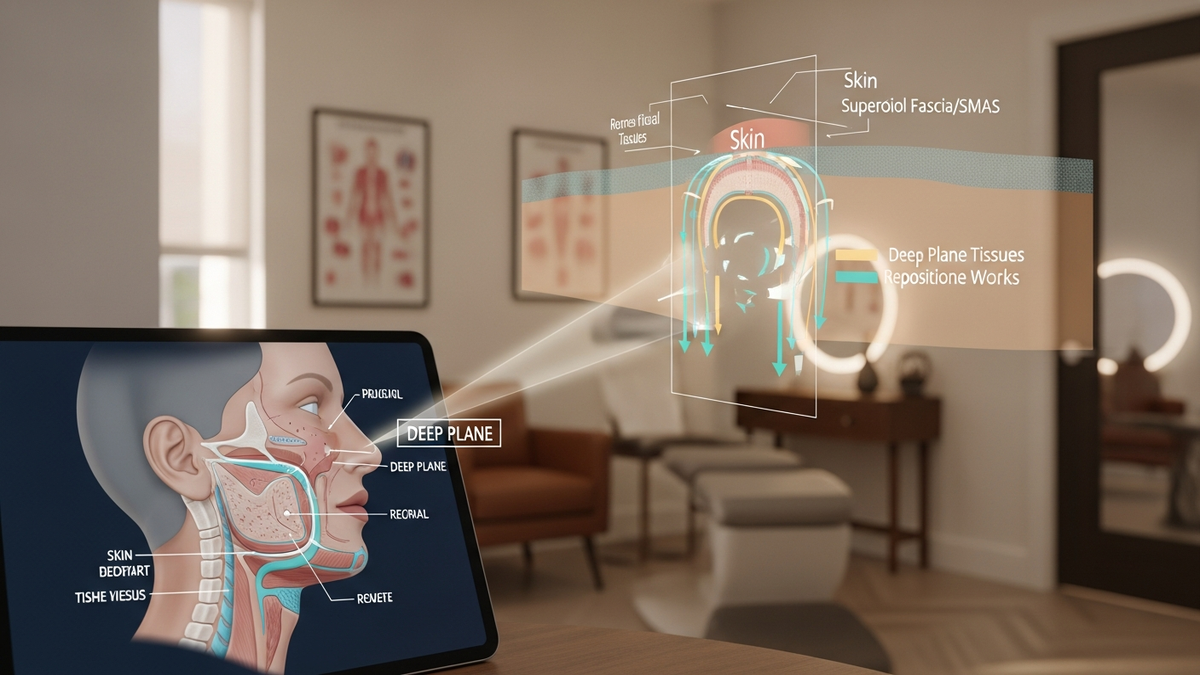
A deep plane facelift is a surgical technique that repositions the face’s deeper tissues—particularly the SMAS (Superficial Musculoaponeurotic System) and related supportive structures—using a more layered approach than some traditional facelift methods.
Instead of primarily tightening the skin from the outside, the deep plane approach aims to restore the face’s youthful “architecture” by addressing sagging at the structural level. Surgeons typically release and re-drape tissues in a way that can improve midface and jawline support, helping reduce the appearance of jowls and neck laxity.
Why the term “deep plane” matters
In facial plastic surgery, “plane” refers to the layer of tissue being manipulated. With a deep plane facelift, the surgeon works deeper into the tissue framework so that repositioning and tightening are more anatomically grounded. This can be especially relevant for patients who have:
- Noticeable jowling or early-to-moderate sagging
- Loss of definition along the jawline
- Midface descent that contributes to a tired lower-face appearance
- Neck laxity that may not respond well to skin-only tightening
How a Deep Plane Facelift Works (Step-by-Step Overview)
While exact steps vary by surgeon and patient anatomy, most deep plane facelifts follow a structured sequence. Your surgeon’s plan should be individualized based on your skin quality, fat distribution, muscle/ligament support, and aesthetic goals.
1) Preoperative assessment and surgical planning
During your consultation, expect a detailed evaluation of:
- Skin thickness and elasticity
- Degree and pattern of sagging (jawline, midface, neck)
- Neck anatomy and submental fullness
- Facial proportions (so the lift looks balanced, not “overcorrected”)
- Scars from prior procedures
In some cases, your surgeon may also discuss complementary options—such as neck lift techniques, blepharoplasty, or other facial rejuvenation strategies—to create a cohesive, natural overall result.
2) Incisions and access to deeper tissue layers
Facelift incisions are commonly placed around the ear and within natural contours to help conceal scars. With a deep plane approach, the surgeon gains access to deeper supportive structures to reposition them more effectively.
3) Repositioning and supporting structural tissues
This is the “core” of the deep plane facelift. The surgeon repositions tissues to restore youthful contours—often improving:
- Jawline definition
- Lower-face and jowl appearance
- Midface support (depending on the plan)
- Neck skin and tissue drape
4) Redraping skin and refining the neck
After structural repositioning, the surgeon gently redrapes the skin. Depending on the patient, additional neck contouring may be considered. For example, localized fat deposits in the chin/neck area may be addressed with submental liposuction to refine the jawline and improve the overall transition from face to neck.
5) Closure and postoperative support
Incisions are closed carefully to promote healing and concealment. Postoperative care instructions—such as how to manage swelling, sleep positioning, and follow-up appointments—play a major role in your comfort and final outcome.
Deep Plane Facelift vs. Other Facelift Techniques
It’s common to see multiple facelift approaches advertised. What matters most is not the label alone, but how the technique matches your anatomy and goals.
Traditional facelift (skin-focused tendencies)
Some earlier approaches emphasized skin tightening and redraping. Skin tightening alone may help in mild cases, but it can be less durable when deeper support has weakened.
SMAS-focused techniques
Many modern facelifts address the SMAS layer. The deep plane approach is often considered a more comprehensive manipulation of deeper supportive tissues, which may provide better restoration of facial “lift” and contour.
Why surgeons may recommend deep plane
Surgeons may consider the deep plane facelift when they believe the structural support needs more repositioning than a more superficial technique can provide. This can be particularly relevant for patients who want:
- Improved jawline definition (not just skin tightening)
- A more natural-looking trajectory of lift
- Results that can hold up over time with fewer “droopy” changes
For a broader overview of facelift options and what to expect in a Los Angeles setting, you can explore Facelift resources that discuss technique selection and patient-specific planning.
Potential Benefits of a Deep Plane Facelift
Every patient’s goals are unique, but deep plane facelift candidates frequently seek improvements such as:
Natural-looking rejuvenation
Because the approach targets deeper support, results may look less “pulled” and more like restored youth rather than repositioned skin.
Better jawline and jowl contour
Repositioning deeper tissues can improve the appearance of jowls and create a smoother transition from lower face to neck.
Improved neck appearance
Neck laxity is often one of the most challenging areas to address. Deep plane approaches can help refine how the neck tissues drape after repositioning.
Durability for the right patient
While no procedure can stop aging, structural restoration can be a key factor in longevity—especially when the plan matches your anatomy.
Who Is a Good Candidate for a Deep Plane Facelift?
Deep plane facelifts may be ideal for patients with moderate sagging, but “good candidate” is determined by more than age.
Common candidacy indicators
- You have visible jowls or worsening lower-face heaviness
- Your midface support has begun to descend
- Skin elasticity may be declining
- You want comprehensive rejuvenation of the lower face and neck
Factors that influence outcomes
Your surgeon will consider:
- Skin quality (thickness, texture, laxity)
- Fat distribution (including submental fullness)
- Muscle tone and ligament support
- Previous facial surgeries or scars
- Overall health and healing capacity
When other procedures may be needed
Some patients need a “full facial refresh” rather than a facelift alone. For example:
- Blepharoplasty can address upper eyelid hooding or lower eyelid puffiness, which may otherwise make the face look tired even after a lift. Learn more about Blepharoplasty.
- A brow lift may be considered if forehead/frown lines or eyebrow position contribute to an aged appearance.
- In certain cases, rhinoplasty may be discussed if nasal function or aesthetics affect overall facial harmony; see Rhinoplasty for context.
What to Expect: Recovery Timeline and Aftercare
Recovery varies by patient, extent of surgery, and your body’s healing response. Your surgeon will provide individualized instructions, but the following timeline can help you plan.
First week: swelling, bruising, and rest
Most patients experience swelling and bruising around the cheeks, jawline, and neck. Pain is typically manageable with prescribed medication and supportive care. Many surgeons recommend:
- Keeping your head elevated
- Avoiding strenuous activity
- Following wound care instructions carefully
- Attending follow-up appointments for monitoring
Weeks 2–4: gradual improvement
Swelling often begins to decrease meaningfully. Some patients return to work or social activities depending on how visible bruising remains. Your surgeon may adjust activity restrictions and discuss scar care.
Months 2–6: refinement of results
Facial rejuvenation outcomes continue to improve as tissues settle and remodeling occurs. Final results may take several months to fully emerge.
Actionable recovery tips
- Plan your schedule: Arrange time off work and limit social commitments early on.
- Sleep strategically: Follow your surgeon’s guidance on head elevation.
- Don’t rush activity: Returning to exercise too soon can worsen swelling and prolong recovery.
- Attend follow-ups: Early detection of healing issues is key.
- Use scar care as directed: Your surgeon may recommend topical products or massage techniques at the appropriate stage.
Risks and Considerations to Discuss
All surgery carries risks. A good consultation should address both benefits and potential complications so you can make an informed decision.
Common concerns
- Temporary numbness or altered sensation
- Swelling and bruising
- Asymmetry during early healing
- Scar visibility (usually minimized by careful incision placement)
Serious but uncommon risks
Your surgeon should review risks such as infection, fluid collection, bleeding, and nerve-related issues. The likelihood of complications depends on surgical technique, your health history, and how closely you follow postoperative instructions.
How to reduce risk
- Disclose your full medical history (including medications and supplements)
- Follow preoperative instructions (including smoking cessation if applicable)
- Use prescribed medications exactly as directed
- Ask about your surgeon’s complication management protocols
Deep Plane Facelift Results: What “Natural” Really Means
Natural results are not about avoiding change—they’re about achieving the right balance and direction of lift. The goal is often to:
- Preserve facial expressions
- Maintain proportional harmony between the midface, jawline, and neck
- Avoid an overly tight or “windblown” look
- Restore smoother transitions rather than abrupt edges
Why surgeon experience matters
Deep plane techniques require detailed anatomical knowledge and precision. In a facial rejuvenation plan, it’s important to choose a board-certified facial plastic and reconstructive surgeon experienced with advanced facelift approaches.
For patients considering facial surgery in Los Angeles, Dr. Hootan Zandifar focuses on head and neck cosmetic and reconstructive procedures. His practice emphasizes patient education, natural-looking outcomes, and individualized planning to help patients look and feel their best.
Related Options You Might Consider Alongside a Deep Plane Facelift
A facelift can dramatically improve lower-face aging, but some patients benefit from a coordinated approach. Below are common “complementary” procedures discussed in facial rejuvenation planning.
Blepharoplasty (eyelid surgery)
Eyelids strongly influence perceived age. Blepharoplasty can address upper eyelid hooding and lower eyelid puffiness to create a more refreshed, rested appearance.
Neck lift and submental contouring
If your neck shows early laxity, a neck-focused approach may enhance overall harmony. If there is localized fat under the chin, submental liposuction may refine definition.
Brow lift for eyebrow position
A brow lift can elevate brow position, reduce forehead lines, and improve upper-face balance—especially when brow position contributes to an aged look.
Hair restoration (if relevant to your goals)
Some patients also consider hair restoration to enhance overall facial framing. If hair thinning affects your appearance, you may explore hair transplant options. For patients with eyebrow thinning, an eyebrow transplant can be considered to improve balance around the eyes.
Frequently Asked Questions About Deep Plane Facelift What Is It
1) Deep plane facelift what is it compared to a standard facelift?
A deep plane facelift is a technique that repositions deeper supportive facial tissues, often aiming for improved jawline definition and a more natural lift trajectory. A standard facelift may focus more on skin redraping or less extensive tissue manipulation, depending on the approach used.
2) How long do deep plane facelift results last?
No facelift can permanently stop aging, but structural restoration may provide longer-lasting results for many patients. Longevity depends on factors such as your skin quality, lifestyle, genetics, and how well the technique matches your anatomy.
3) Is a deep plane facelift painful?
Most patients report discomfort that is manageable with prescribed medication and supportive care. Pain levels vary, and your surgeon will provide a plan to help you stay comfortable during recovery.
4) What is the typical recovery timeline?
Swelling and bruising are most prominent in the first week. Many people notice gradual improvement over weeks 2–4, with continued refinement over the following months as tissues settle.
5) Am I required to combine a deep plane facelift with other procedures?
No. Some patients achieve excellent results with a facelift alone, while others benefit from combining procedures (such as blepharoplasty or a brow lift) to address multiple visible signs of aging. Your surgeon can recommend a tailored plan.
How to Choose a Surgeon for a Deep Plane Facelift
Choosing the right surgeon is one of the most important decisions you’ll make. Consider the following criteria:
Look for board certification and facial-focused expertise
Deep plane techniques require advanced knowledge of facial anatomy. A surgeon who focuses on head and neck cosmetic/reconstructive care may be better positioned to tailor your plan.
Ask about technique philosophy
Questions to bring to your consultation:
- What tissues will you reposition in my case?
- How do you decide between different facelift approaches?
- What does “natural” mean for your aesthetic goals?
- What is your recovery plan and follow-up schedule?
- How do you handle swelling, asymmetry, or unexpected healing?
Review before-and-after results thoughtfully
Look for results that match your face shape and age-related concerns. Ask how many similar cases your surgeon performs and whether the results align with your expectations.
CTA: Ready to Learn If a Deep Plane Facelift Is Right for You?
If you’re searching for answers to deep plane facelift what is it and whether this technique could help you achieve a refreshed, youthful look, the next step is a personalized consultation.
FlowGeniQ Digest encourages you to schedule a visit with a qualified facial plastic and reconstructive surgeon to discuss your goals, review your anatomy, and create a plan designed for natural-looking outcomes.
Take action today: Book your consultation to ask targeted questions about deep plane technique, recovery expectations, and whether complementary procedures (like blepharoplasty or neck-focused rejuvenation) may enhance your overall result.
Professional Disclaimer
This content is provided for general educational purposes only by FlowGeniQ Digest. It is not a substitute for professional advice, diagnosis, or treatment. Readers are advised to consult qualified professionals for personalized recommendations.
Medical Information Disclaimer
This content is provided for general educational purposes only by FlowGeniQ Digest. It is not a substitute for professional advice, diagnosis, or treatment. Readers are advised to consult qualified professionals for personalized recommendations.