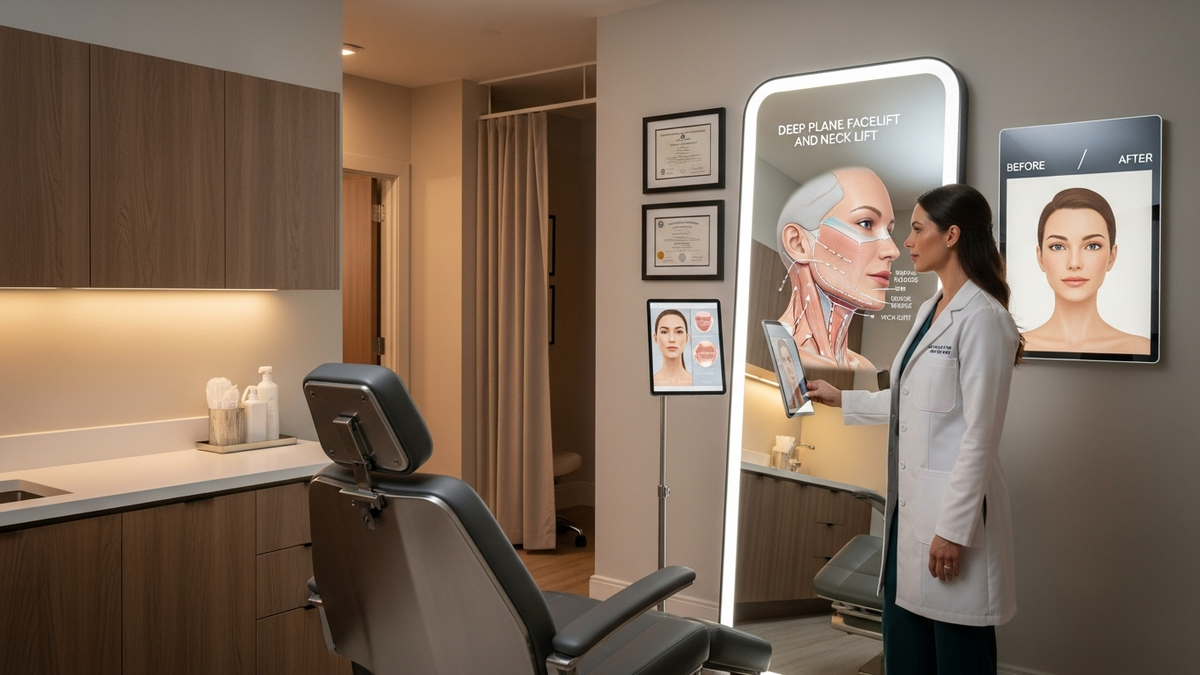
FlowGeniQ Digest is here to help you navigate today’s most advanced facial rejuvenation options with clarity. If you’re researching a deep plane facelift and neck lift, you’re likely looking for results that look natural—not “over-tightened.” This procedure approach is designed to reposition deeper facial structures, which can improve the appearance of sagging in the lower face and neck while preserving natural movement and expression.
In Los Angeles and Beverly Hills, many patients seek head-and-neck expertise from surgeons who focus specifically on facial plastic and reconstructive care. Board-certified facial plastic surgeon Dr. Hootan Zandifar (owner and lead facial plastic & reconstructive surgeon at Hootan Zandifar, MD) focuses solely on surgeries of the head and neck, with an emphasis on natural-looking outcomes and patient education.
What Is a Deep Plane Facelift and Neck Lift?
A deep plane facelift is a surgical technique that works at deeper tissue levels than some traditional facelift methods. Instead of relying primarily on skin tightening, the surgeon repositions and supports facial tissues to restore youthful contours—especially in the midface and lower face. A neck lift (often performed in the same surgical setting) targets neck laxity, excess skin, and banding or definition loss under the jaw.
When paired, a deep plane facelift and neck lift can address a common aging pattern: loss of support in the cheeks, descent of the jowls, and weakening of the neck’s structural framework. The goal is a refreshed, balanced appearance that reads as “younger,” not artificially pulled.
Why the “deep plane” approach matters
As we age, the facial soft tissue framework changes. The deep plane concept aims to:
- Reposition supportive structures rather than only tightening skin
- Restore youthful facial angles (including the jawline and cheek-to-jaw transition)
- Improve jowls and neck laxity with more cohesive lower-face rejuvenation
- Support longer-lasting contour changes by working with deeper anatomy
In experienced hands, this approach can enhance natural movement and reduce the risk of an overly tight look.
Who Is a Good Candidate?
Ideal candidates for a deep plane facelift and neck lift typically show signs of aging in the midface, lower face, and neck. During a consultation, your surgeon will assess skin quality, fat distribution, muscle laxity, and the degree of neck banding or excess skin.
Common concerns addressed
- Jowls or sagging along the jawline
- Neck laxity and “crepey” or loose skin
- Loss of definition between the chin and neck
- Midface descent contributing to a tired or heavier lower-face appearance
- Banding or visible tightening issues in the neck
Factors that influence candidacy
Surgeons consider more than age. Your suitability may depend on:
- Skin thickness and elasticity
- Smoking status (smoking can increase healing complications)
- Medical history and anesthesia risk
- Previous facial procedures
- Realistic expectations about the degree of change
Because Dr. Zandifar focuses on head-and-neck surgery and emphasizes patient education, consultations typically include a detailed discussion of goals, anatomy, and technique selection to match your needs.
Deep Plane Facelift vs. Traditional Facelift: Key Differences
Patients often ask how a deep plane facelift and neck lift differs from other facelift options. While exact techniques vary by surgeon and patient anatomy, the core distinction is the depth and emphasis of tissue handling.
Traditional approaches (general overview)
Some facelift techniques focus more heavily on superficial tissue repositioning and skin tightening. These methods may still yield excellent results for selected patients, especially when aging changes are limited.
Deep plane approaches (general overview)
Deep plane techniques aim to address structural support by working with deeper fascial and soft tissue layers. This can be particularly helpful when:
- Lower-face sagging and jowls are prominent
- Midface support has significantly weakened
- A natural, cohesive restoration of facial contours is desired
Important: The “best” technique is individualized. Your surgeon’s expertise and understanding of your anatomy often matters as much as the name of the technique.
What a Deep Plane Facelift and Neck Lift Typically Includes
A deep plane facelift and neck lift is not a one-size-fits-all operation. Your plan may include additional steps to refine the neck and jawline. Your surgeon will explain which components are appropriate for your anatomy.
Facelift components
- Incisions placed strategically (often around the ear and hairline) to help conceal scars
- Tissue repositioning at deeper levels to restore youthful support
- Excess skin tailoring for improved drape and contour
Neck lift components
A neck lift may address one or more of the following:
- Neck skin tightening to reduce laxity
- Submental and jawline contouring if needed
- Banding improvement (depending on anatomy)
- Sometimes fat reduction to refine the transition between chin and neck
In some cases, surgeons may recommend submental liposuction to reduce localized fullness under the chin and improve definition—an approach that can complement a neck lift.
How the Procedure Works (High-Level Overview)
While your exact surgical plan will be tailored, understanding the general flow can reduce uncertainty.
- Preoperative planning: measurements, facial mapping, and discussion of goals
- Anesthesia: typically general anesthesia for comprehensive facial rejuvenation
- Incisions: carefully placed to minimize visible scarring
- Deep tissue repositioning: restoring support and contour
- Neck tightening and/or contouring: addressing laxity and definition
- Sutures and dressing: supporting healing and contour
- Recovery: monitored post-op care with follow-up visits
Because Dr. Zandifar is double board certified and fellowship trained in facial plastic and reconstructive surgery, patients often value the emphasis on anatomy-based planning and natural-looking results.
Expected Recovery Timeline
Recovery varies by individual and the scope of surgery. Still, there are common patterns after a deep plane facelift and neck lift.
First 1–2 weeks
- Swelling and bruising are typical and gradually improve
- Discomfort is usually manageable with prescribed medication
- Activity restrictions help protect healing tissues
- Follow-up visits support incision care and progress monitoring
Weeks 3–6
- Visible swelling decreases, and contour clarity improves
- Energy levels often return gradually
- Light activity may be resumed as approved
Months 2–6 and beyond
- Final refinements in swelling resolution and tissue settling
- Scar maturation continues over time
- Results typically look more natural as tissues soften and integrate
Actionable recommendation: plan your schedule with recovery in mind. Many patients arrange time off for the first 7–14 days and limit strenuous exercise until cleared by their surgeon.
How Natural Results Are Achieved
Natural outcomes in a deep plane facelift and neck lift rely on more than technique selection. They depend on how tissues are repositioned, how excess skin is tailored, and how the surgeon preserves facial expression dynamics.
What to ask during your consultation
To evaluate how a surgeon approaches natural results, consider asking:
- Which deep plane steps are planned for my anatomy?
- How will the neck be addressed (skin tightening, banding, contouring)?
- What does “natural” mean in terms of expected jawline angle and cheek-to-jaw transition?
- What is the plan for managing swelling and scar visibility?
- How are risks explained and mitigated (nerve-related issues, asymmetry, healing concerns)?
Tip: bring reference photos that show the type of outcome you want (e.g., “less jowly,” “more defined neck/jawline”) rather than trying to match a specific celebrity exactly.
Potential Risks and Side Effects
As with any surgery, a deep plane facelift and neck lift carries potential risks. Your surgeon should review these in detail during your consultation. Common considerations include:
- Swelling and bruising (expected, typically temporary)
- Temporary numbness or changes in sensation
- Uneven healing or asymmetry
- Scarring (usually concealed and improves over time)
- Infection or bleeding (rare, but possible)
- Skin flap healing issues (risk can increase with smoking and certain health conditions)
- Nerve-related effects (rare; your surgeon should discuss mitigation and monitoring)
Choosing an experienced facial plastic surgeon and following pre- and post-op instructions can reduce risk.
How to Choose the Right Surgeon
When you’re considering a deep plane facelift and neck lift, surgeon selection is one of the most important decisions you’ll make.
Look for specialized head-and-neck expertise
Facial rejuvenation involves complex anatomy and aesthetic nuance. Many patients prefer surgeons who focus on head and neck procedures and who are board certified in facial plastic surgery and/or related specialties.
What credentials and training can signal preparedness
For example, Dr. Hootan Zandifar is double board certified and fellowship trained in facial plastic and reconstructive surgery, with a background in head-and-neck surgery. He is also known for an honest, trustworthy, and compassionate approach—paired with a strong commitment to patient education.
Actionable recommendation: ask to see before-and-after photos of results that are similar to your age and your specific concerns (jowls, neck laxity, midface descent). Also ask how many deep plane facelifts and neck lift combinations the surgeon performs.
Complementary Procedures (When They Fit Your Goals)
Some patients benefit from additional procedures that harmonize the face. Your surgeon may discuss options based on your anatomy and priorities.
Eyelid rejuvenation (for a refreshed overall look)
If you have upper eyelid heaviness or lower eyelid puffiness, some patients choose Blepharoplasty to complement lower-face rejuvenation. Together, these can reduce the “tired” look from both structural sagging and eyelid changes.
Forehead/brow support
A brow lift can improve forehead lines and raise the eyebrow position, which may enhance the overall balance of facial rejuvenation.
Skin and soft-tissue refinement
While a facelift is a structural procedure, some patients also consider non-surgical anti-aging strategies. Your surgeon can advise on timing—often after the main surgical healing period.
Other head-and-neck considerations
Because Dr. Zandifar’s practice includes functional nasal surgery, some patients with breathing concerns may address nasal structure and breathing alongside aesthetic goals. For example, if you’re considering nasal refinement, you may explore Rhinoplasty depending on your objectives. If nasal airflow is a primary issue, procedures such as Septoplasty or treatment of a Deviated Septum may be discussed.
Note: These additional topics are separate from facelift mechanics. They’re included here to illustrate the breadth of head-and-neck care available when patients have multiple concerns.
Preparing for Surgery: A Practical Checklist
Preparation influences comfort, safety, and recovery quality. Here’s a practical checklist you can adapt with your surgeon’s instructions.
Before your consultation
- Write down your top goals (e.g., “define jawline,” “reduce neck banding,” “improve midface support”)
- List current medications and supplements
- Share prior procedure history and any complications you’ve experienced
- Bring reference photos that show the outcome style you prefer
In the weeks leading up to surgery
- Follow medication instructions (including any guidance on blood thinners)
- Stop smoking if applicable (and ask for cessation support if needed)
- Arrange transportation and post-op support
- Prepare a recovery space (pillows, easy-to-wear clothing, hydration)
On the day of surgery
- Follow fasting instructions
- Wear loose clothing that won’t rub incisions
- Bring any required paperwork and post-op essentials
Aftercare Tips That Can Improve Your Experience
Aftercare is where results are protected. While your surgeon provides personalized instructions, these general tips are commonly recommended after a deep plane facelift and neck lift:
- Attend all follow-up visits for incision checks and progress monitoring
- Take medications exactly as prescribed (pain control and healing support)
- Keep your head elevated to help manage swelling
- Avoid strenuous exercise until cleared
- Protect incision areas from unnecessary friction
- Be patient: swelling resolution and tissue settling take time
Actionable recommendation: track your recovery with notes or photos (as approved by your surgeon). This can help you and your team objectively monitor healing progress.
Cost Considerations: What Influences Pricing?
Many patients ask about cost. Pricing for a deep plane facelift and neck lift can vary widely based on the surgeon’s approach, the complexity of your anatomy, whether additional procedures are performed, and facility/anesthesia fees.
Instead of focusing only on the total number, consider what’s included: surgeon’s fees, anesthesia, facility costs, post-op follow-ups, and any necessary revisions or touch-ups. Your consultation should clarify what you’re paying for and why.
Frequently Asked Questions
How long do results of a deep plane facelift and neck lift typically last?
While individual outcomes vary, deep plane techniques are designed to restore structural support and can offer long-lasting improvements. Many patients enjoy results for years, though aging continues naturally. Maintaining a healthy lifestyle and following post-op care recommendations can support longevity.
Will I look “too tight” after surgery?
The goal of a deep plane facelift and neck lift is to restore youthful contours using structural repositioning—not just skin pulling. Choosing an experienced facial plastic surgeon who prioritizes natural facial dynamics can help minimize the risk of an overly tight appearance.
What is the biggest difference between a neck lift alone and combining it with a deep plane facelift?
A neck lift alone primarily addresses the neck and jawline. Combining it with a deep plane facelift can treat the midface and lower-face support that often contributes to jowls and neck laxity, helping create a more cohesive overall result.
How soon can I return to work?
Many patients return to light work within 1–2 weeks, depending on swelling, bruising, and job demands. More physically demanding roles may require additional time. Your surgeon can provide guidance based on your healing progress.
What should I do if I’m also considering other facial procedures?
It’s best to discuss all goals during your consultation so your surgeon can coordinate timing and avoid conflicting recovery schedules. For example, some patients pair facelift rejuvenation with Blepharoplasty for a more comprehensive refresh.
CTA: Ready to Explore a Deep Plane Facelift and Neck Lift?
If you’re considering a deep plane facelift and neck lift, you deserve a consultation that prioritizes education, safety, and natural-looking results. At Hootan Zandifar, MD in Beverly Hills, Dr. Hootan Zandifar focuses solely on head-and-neck surgery and is known for a compassionate, trustworthy approach grounded in advanced training and patient-centered planning.
Next step: schedule an online consultation to discuss your goals, review your anatomy, and learn which surgical plan may help you achieve a refreshed, youthful version of yourself.
Professional Disclaimer
This content is provided for general educational purposes only by FlowGeniQ Digest. It is not a substitute for professional advice, diagnosis, or treatment. Readers are advised to consult qualified professionals for personalized recommendations.
Medical Information Disclaimer
This content is provided for general educational purposes only by FlowGeniQ Digest. It is not a substitute for professional advice, diagnosis, or treatment. Readers are advised to consult qualified professionals for personalized recommendations.