Breast augmentation fat grafting is one of the most sought-after approaches for people who want a more natural look and feel—using their own tissue instead of implants. In this FlowGeniQ Digest guide, we’ll walk through how fat is collected, processed, and carefully transferred to the breasts, what results you can realistically expect, and how to plan for recovery. We’ll also cover safety considerations and key questions to ask during your consultation.
If you’re exploring cosmetic surgery options in Los Angeles or beyond, it helps to understand that “natural” doesn’t mean “zero risk,” and that results can vary based on your anatomy, fat quality, and surgical technique. The goal is to help you approach breast augmentation fat grafting with clarity—so you can decide confidently with a qualified specialist.
What Is Breast Augmentation Fat Grafting?
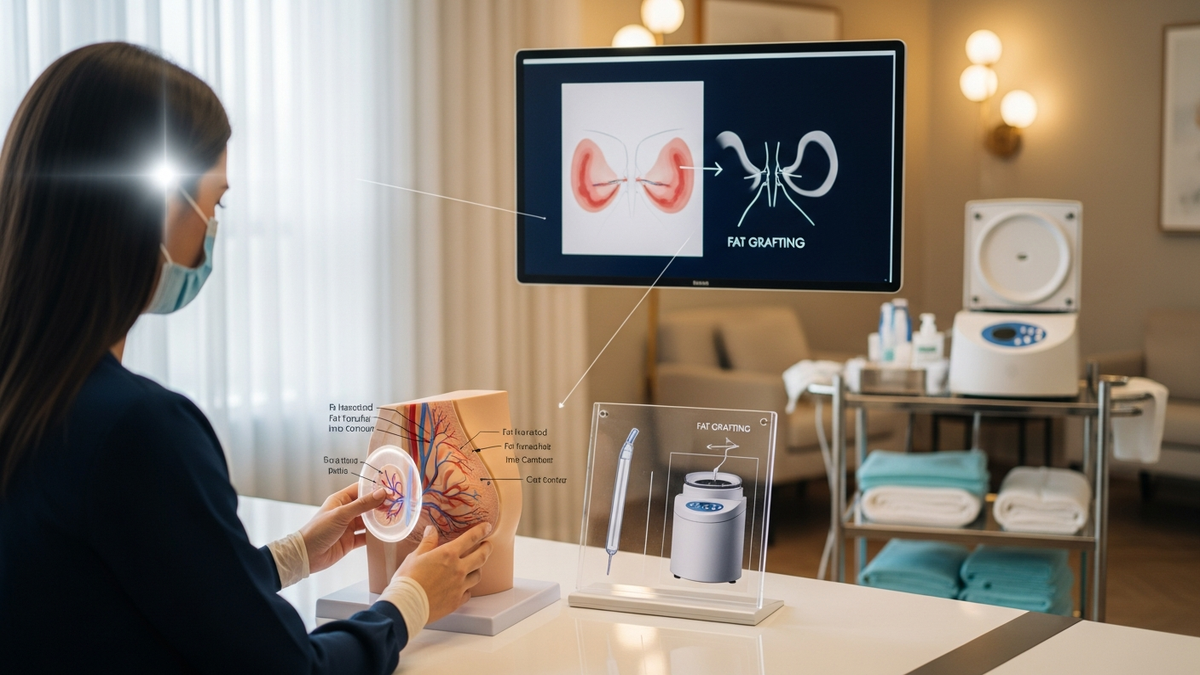
Breast augmentation fat grafting (also called autologous fat transfer to the breast) is a procedure that uses fat harvested from one part of the body—commonly the abdomen, flanks, thighs, or back—and transfers it into the breast tissue.
The surgeon uses refined harvesting and processing methods to preserve viable fat cells, then injects the fat using a technique designed to maximize graft take (the amount of transferred fat that survives and becomes part of the breast).
How it differs from implants
- Material: Fat grafting uses your own tissue; implants use a manufactured device.
- Texture and movement: Many patients prefer the softer, more natural feel associated with fat.
- Volume expectations: Fat grafting is often best for subtle-to-moderate enhancement; achieving large increases may require multiple sessions.
- Scarring: Fat harvesting involves small incisions depending on the donor site; there are no implant incisions in the same way.
Who Is a Good Candidate for Breast Augmentation Fat Grafting?
Ideal candidates typically want a natural look, have sufficient donor fat, and understand that outcomes depend on fat survival and body response.
Common candidacy factors
- Desire for natural contour: You’re aiming for improved shape and subtle volume rather than a dramatic implant-like change.
- Enough donor fat: You have localized fat deposits that can be safely harvested.
- Realistic expectations: You’re comfortable with the possibility of staged procedures.
- Overall health: You’re a good surgical candidate with manageable medical risks.
- Breast health considerations: Your surgeon will evaluate history, imaging needs, and any conditions that could affect planning.
Situations where caution is especially important
Fat grafting may be more complex for people with significant prior breast surgery, scarring, or radiation. In some cases, a tailored approach or alternative strategies may be recommended to optimize safety and aesthetic goals.
Benefits of Breast Augmentation Fat Grafting
Patients often choose breast augmentation fat grafting for the combination of aesthetic and personal benefits.
1) Natural-looking and natural-feeling results
Because the transferred tissue is your own, many patients experience a softer, more organic breast contour—particularly in the upper pole and areas where subtle shaping matters.
2) Dual-purpose body contouring
Fat grafting can also improve the donor area. When done thoughtfully, the procedure may refine areas like the abdomen or flanks while enhancing breast shape.
3) Avoidance of implant-related concerns
Some patients prefer to avoid implant-based considerations such as device-related complications. However, it’s important to remember that fat grafting has its own risks and tradeoffs.
Limitations and Realistic Expectations
To make an informed decision, it’s essential to understand what breast augmentation fat grafting can and cannot do.
Fat survival varies
Not all transferred fat will survive. Surgeons use specific techniques to improve graft take, but factors like technique, fat handling, injection strategy, and individual biology influence results.
Multiple sessions may be necessary
Many patients achieve their desired volume through staged treatments. This approach can help optimize outcomes while allowing the body time to stabilize the grafted tissue.
Changes over time
Breast tissue can change with weight fluctuations, aging, and hormonal shifts. Your surgeon can discuss how these factors may affect long-term appearance.
Step-by-Step: How the Procedure Works
While each patient’s plan is unique, breast augmentation fat grafting generally follows a structured process.
1) Consultation and surgical planning
You’ll discuss goals, donor areas, and desired breast shape. Your surgeon may review:
- Medical history and medications
- Prior surgeries (if any)
- Breast imaging history and whether updated imaging is needed
- Physical exam and measurements
2) Fat harvesting
Fat is collected using a liposuction technique. The donor area is numbed and then accessed through small incisions. The harvesting method is selected to preserve fat cell viability.
3) Fat processing
Harvested fat is processed to separate viable fat cells from other components. Surgeons may use specific filtration/processing methods to optimize graft quality.
4) Injection and contouring
The surgeon injects fat using a technique designed to distribute grafts in a way that supports survival and creates smooth contour. Injection depth and pattern matter—especially for achieving natural shape rather than uneven lumps.
5) Recovery and follow-up
Swelling and changes in breast firmness are normal early on. Over weeks to months, the breasts may soften and settle as the body stabilizes the grafted fat.
Recovery Timeline: What to Expect
Recovery varies by patient and the extent of fat harvesting and injection. However, there are common phases.
First days after surgery
- Swelling and bruising in both the donor area and breasts
- Compression may be recommended for the donor site (and sometimes for the breasts depending on the surgeon’s protocol)
- Discomfort managed with prescribed medications
Weeks 2–6
- Swelling gradually improves
- Some patients notice changes in firmness as the grafts heal
- Light activity is usually encouraged; strenuous exercise is often restricted
Months 3–6 and beyond
This is often when results become clearer. The transferred fat that survives contributes to long-term contour. If additional volume is desired, your surgeon may discuss whether a second session would be beneficial.
Risks and Safety Considerations
Every surgery has potential risks. For breast augmentation fat grafting, these may include:
- Infection at incision or injection sites
- Bleeding or hematoma
- Seroma (fluid collection)
- Fat necrosis (fat tissue may not survive, forming firm areas)
- Cysts or calcifications that may appear on imaging
- Asymmetry between breasts
- Irregular contour or palpable lumps
- Under/over-correction depending on graft take
- Scarring in donor and access sites
Your surgeon should explain how they reduce risk through careful technique, appropriate patient selection, and evidence-based post-op care.
How to Prepare for Breast Augmentation Fat Grafting
Preparation can influence both safety and comfort. While your surgeon will provide individualized instructions, these steps are commonly recommended:
1) Review medications and supplements
Tell your surgeon about prescription drugs, over-the-counter medications, and supplements (especially those that can affect bleeding). Follow their guidance on what to stop and when.
2) Plan your recovery logistics
- Arrange transportation for surgery day
- Prepare a comfortable recovery space
- Stock up on easy-to-wear clothing
- Plan for limited activity during the early recovery window
3) Commit to nutrition and hydration
Support healing with a balanced diet. Your surgeon may recommend specific dietary approaches, particularly if you have concerns such as low iron or other nutritional deficiencies.
4) Avoid smoking and nicotine
Nicotine can impair blood flow and healing, potentially affecting fat survival. If you use nicotine products, ask your surgeon for a cessation plan.
Choosing a Surgeon: What to Look For
Because breast augmentation fat grafting depends heavily on technique and fat handling, selecting an experienced, safety-focused surgeon matters.
Questions to ask during your consultation
- How many fat grafting cases have you performed?
- What results are typical for my anatomy? Ask about realistic volume ranges and whether staged sessions are expected.
- What method do you use for fat harvesting and processing?
- How do you manage contour irregularities or fat necrosis risk?
- What imaging or follow-up is recommended? This is particularly important for future breast health screening.
- Can I see before-and-after photos of similar patients?
In Los Angeles, many patients value surgeons who prioritize education and transparent communication. Dr. Hootan Zandifar is known for an honest, trustworthy, and compassionate approach, with a commitment to patient education and natural-looking outcomes. While his practice focuses specifically on cosmetic and reconstructive surgery of the head and neck, the broader principle for any patient is consistent: choose a clinician who explains the process clearly and aligns the plan with your goals and safety needs.
Breast Augmentation Fat Grafting vs. Other Procedures
Depending on your goals, you may compare fat grafting with other options.
Fat grafting vs. implants
- Fat grafting: Softer feel, potential donor-area contouring, but volume may be more limited and variable.
- Implants: More predictable volume for many patients, but involves implant-specific considerations.
Fat grafting vs. lift or reshaping
If breast tissue has sagging or significant shape changes, a lift may be considered—sometimes alongside other procedures. Your surgeon can help determine whether volume alone is enough or whether repositioning is needed.
Frequently Overlooked Details: Imaging and Breast Health
Some patients worry that fat grafting could complicate future breast exams or mammography. It’s important to discuss this with your surgeon and ensure you follow recommended imaging schedules.
Transferred fat can develop calcifications or firm areas as part of the healing process. In most cases, these findings are manageable within standard radiology workflows, but your clinician should provide guidance on how to communicate your surgical history to your imaging provider.
Actionable Tips to Maximize Your Outcomes
While you can’t control every variable, you can improve your odds of a satisfying result.
- Be consistent with pre- and post-op instructions (compression, activity limits, medication schedules).
- Prioritize stable weight during the healing period to reduce changes in breast contour.
- Attend all follow-up appointments so your surgeon can monitor graft take and healing.
- Communicate concerns early—persistent pain, fever, redness, or sudden swelling should be evaluated promptly.
- Ask about staged planning if you’re targeting a larger size change.
Related Insights: Plastic Surgery Options Patients Often Compare
Many individuals researching breast augmentation fat grafting are also exploring other aesthetic procedures. While the anatomy and goals differ, the decision-making framework—education, candidacy, and natural-looking technique—remains the same. If you’re also considering facial procedures, you may find these resources helpful:
- For nasal functional or structural concerns, see Septoplasty and Deviated Septum information.
- If you’re interested in facial rejuvenation, explore Rhinoplasty and Facelift options.
- For eyelid rejuvenation, review Blepharoplasty.
- If you’re researching hair restoration as part of your overall appearance goals, you may also want to review a hair transplant option.
- And for eyebrow thinning, consider an eyebrow transplant.
FAQ: Breast Augmentation Fat Grafting
How long does it take to see final results?
Many patients notice early changes as swelling decreases within the first few weeks, but more definitive contour typically becomes clearer over several months. Your surgeon may evaluate results at follow-ups around 3–6 months, with additional refinement possible thereafter.
Will I need more than one fat grafting session?
Possibly. Because fat survival varies, achieving larger volume goals may require staged treatments. Your surgeon can estimate likely staging based on your anatomy and desired outcome.
Is breast augmentation fat grafting safe?
When performed by a qualified, experienced surgeon with appropriate patient selection and meticulous technique, fat grafting is generally considered a safe procedure. However, it still carries risks such as fat necrosis, infection, asymmetry, and contour irregularities—so discuss risks and mitigation strategies in detail.
Does fat grafting affect future mammograms?
It can, in the sense that transferred fat may develop calcifications or areas of firmness that radiologists may need to interpret. Most patients can still undergo routine breast screening, but your imaging provider should know about your surgical history.
What should I do if I feel lumps or unevenness?
Some firmness or irregularity can be part of normal healing, but new or worsening symptoms should be evaluated. Contact your surgeon promptly for guidance—especially if there is redness, fever, or rapidly increasing pain.
CTA: Ready to Discuss Your Options?
Choosing breast augmentation fat grafting is a personal decision—best made with clear expectations, careful planning, and expert guidance. If you’re considering this approach, start by scheduling a consultation to review your goals, donor fat availability, and your most appropriate roadmap (including whether staged sessions are likely).
In the spirit of patient education featured throughout FlowGeniQ Digest, we encourage you to come prepared with questions and photos of the results you admire. Your surgeon should be able to explain realistic outcomes, risks, and recovery steps tailored to your body.
Professional Disclaimer
This content is provided for general educational purposes only by FlowGeniQ Digest. It is not a substitute for professional advice, diagnosis, or treatment. Readers are advised to consult qualified professionals for personalized recommendations.
Medical Information Disclaimer
This content is provided for general educational purposes only by FlowGeniQ Digest. It is not a substitute for professional advice, diagnosis, or treatment. Readers are advised to consult qualified professionals for personalized recommendations.