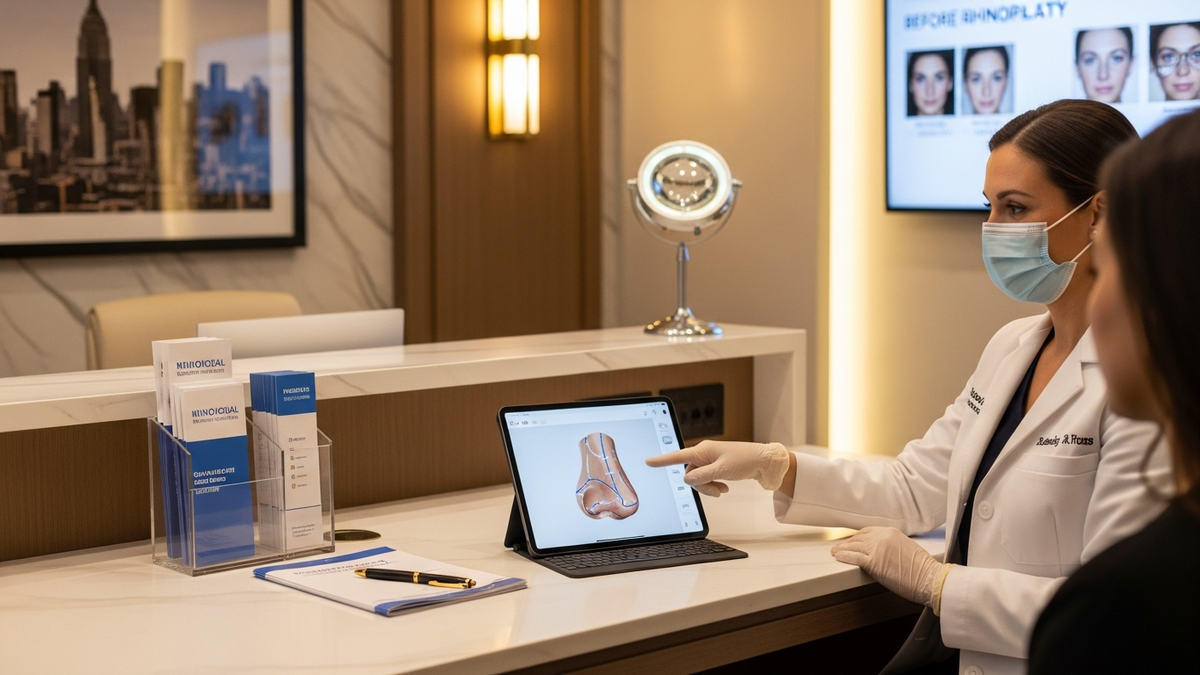
FlowGeniQ Digest brings you an evidence-informed overview of rhinoplasty new york—from aesthetic goals to functional nasal breathing. Whether you’re exploring a traditional “nose job” or you’re actually dealing with obstruction, congestion, or sinus-related symptoms, the best outcomes start with the right evaluation and the right surgical plan.
Rhinoplasty can change the appearance of the nose, but in many patients the “why” behind the decision is also functional: improved airflow, reduced congestion, and better quality of life. In this guide, you’ll learn how to approach your consultation, what options exist, and how to prepare for a confident, realistic result.
What “Rhinoplasty New York” Really Means: Aesthetic Change, Functional Breathing, or Both
When people search rhinoplasty new york, they’re typically looking for one (or both) of two outcomes:
- Cosmetic enhancement: refining the nose’s shape, size, tip projection, or symmetry to better match your facial features.
- Functional improvement: addressing airflow limitations caused by structural factors such as a deviated septum, enlarged turbinates, or nasal valve collapse.
A premium rhinoplasty experience is not just about “making the nose smaller” or “changing the bridge.” It’s about balancing nasal structure, skin thickness, facial proportions, and—when relevant—airflow mechanics.
Rhinoplasty vs. Functional Nasal Surgery: Knowing When You Need Which
Not every breathing problem requires a cosmetic rhinoplasty. In some cases, patients benefit from functional nasal procedures that are less invasive than a full cosmetic revision of nasal structure.
When Rhinoplasty May Be the Right Fit
Rhinoplasty is often appropriate when you want to:
- Refine the nasal profile (bridge, dorsal line, or contour)
- Reshape the tip (projection, rotation, definition)
- Improve symmetry
- Correct external nasal deformities after injury or congenital differences
- Achieve both aesthetics and breathing improvements in the same surgical plan
For many patients, a surgeon who performs both cosmetic and functional head/neck surgery can help coordinate goals so the nose looks natural and works properly.
When Functional Procedures Can Address Congestion Without a Full “Nose Job”
If your primary concern is chronic nasal obstruction—such as persistent “stuffy nose,” difficulty breathing through one or both sides, or symptoms related to structural anatomy—your evaluation may point toward functional options.
For example, Septoplasty can correct a crooked internal nasal septum that obstructs airflow. You can explore this topic here: Septoplasty. In many patients, correcting septal alignment can significantly improve breathing.
Similarly, patients with chronic obstruction from enlarged nasal turbinates may benefit from inferior turbinate reduction, and those with nasal valve collapse may be candidates for non-surgical or surgical nasal valve repair.
And while the term “rhinoplasty” is commonly used for nose reshaping, functional nasal surgery can sometimes be the most direct path to symptom relief.
Choosing the Right Surgeon for Rhinoplasty New York
Your surgeon choice is the single biggest predictor of whether your results look natural, heal smoothly, and meet your functional goals. For rhinoplasty new york candidates, the best approach is to look for a surgeon who blends aesthetic artistry with a deep understanding of nasal anatomy and airflow dynamics.
Key Qualifications to Look For
When evaluating a surgeon, consider:
- Board certification and relevant surgical training
- Facial plastic or head/neck specialization (nose surgery is anatomically complex)
- Experience with both primary and revision rhinoplasty (revision cases often require advanced judgment)
- Functional nasal expertise if you have congestion, sinusitis, or breathing limitations
- A patient-centered, education-first approach (you should feel informed, not rushed)
Questions to Ask at Your Consultation
Bring a short list—good surgeons welcome it. Ask:
- What are my primary aesthetic goals? How will you address them without over-reducing or distorting natural proportions?
- Do I have functional issues? Could my septum, turbinates, or nasal valve be contributing to obstruction?
- What techniques will you use? Open vs. closed approach, grafting strategy, and how you plan to protect support structures.
- What are realistic outcomes? Ask to see before-and-after results that match your nose type and skin thickness.
- What is your plan for healing? Swelling timeline, scar management, and pain expectations.
- How do you handle revision risk? Ask how complications are managed and how outcomes are optimized.
Why “Natural-Looking” Matters in Rhinoplasty
Natural results come from respecting the nose as part of the whole face. A nose that looks “too operated” often signals an imbalance—excessive reduction, insufficient structural support, or changes that don’t harmonize with facial proportions.
In premium rhinoplasty planning, surgeons evaluate your facial measurements, nasal architecture, and skin characteristics to predict how your nose will settle over time.
Types of Rhinoplasty and Common Techniques
Rhinoplasty is not one-size-fits-all. Your anatomy and goals determine the approach. Below are the most common frameworks used by surgeons.
Primary Rhinoplasty vs. Revision Rhinoplasty
- Primary rhinoplasty: the first surgical correction of the nose.
- Revision rhinoplasty: surgery to improve or correct outcomes from a previous rhinoplasty—often more complex due to altered anatomy, scarring, and cartilage availability.
Open vs. Closed Rhinoplasty
- Closed rhinoplasty: incisions are hidden inside the nostrils; may be suitable for select changes.
- Open rhinoplasty: a small external incision allows greater visualization and control—often helpful for complex reshaping, tip work, or revision cases.
In either approach, technique selection should be individualized to your anatomy and desired outcome.
Cartilage Grafting: The “Support and Structure” Advantage
Many rhinoplasty outcomes depend on how well the surgeon maintains or rebuilds nasal support. Cartilage grafting may be used to:
- Strengthen the tip or bridge
- Improve contour definition
- Stabilize the nasal valve area to support breathing
- Correct asymmetry or deformities
Discuss graft source options with your surgeon. The right grafting plan can improve both aesthetics and long-term stability.
Functional Nasal Health: How Breathing Concerns Affect Your Rhinoplasty Plan
If you have chronic nasal congestion, recurrent sinus issues, or difficulty breathing, your rhinoplasty evaluation should include a functional assessment—not just a cosmetic one.
Common Structural Causes of Nasal Obstruction
- Deviated septum: the internal nasal partition is not centered, obstructing airflow. If you want to learn more about Deviated Septum, see: Deviated Septum.
- Enlarged turbinates: swollen tissues can reduce airflow and create a “stuffy nose” sensation.
- Nasal valve collapse: the narrowest part of the airflow pathway may collapse during breathing, worsening obstruction.
Functional Options That May Complement or Reduce the Need for Full Rhinoplasty
Depending on your findings, your surgeon may recommend functional procedures such as Septoplasty or turbinate reduction. In select cases, nasal valve support techniques or other minimally invasive interventions may play a key role.
For patients whose primary goal is symptom relief, functional nasal surgery can be a more direct route than purely cosmetic reshaping.
Preparing for Rhinoplasty New York: What to Expect Before Surgery
Preparation is where results are protected. A thoughtful pre-op plan reduces risk, supports smoother healing, and helps align expectations.
Your Pre-Op Checklist
- Medical history review: allergies, bleeding tendencies, medications, and prior nasal injuries or surgeries.
- Current medications and supplements: ask what to stop and when (especially blood-thinning agents).
- Smoking/vaping plan: nicotine can impair healing; many surgeons require cessation well before and after surgery.
- Photos and measurements: your surgeon should document baseline nasal structure and facial proportions.
- Functional assessment: if you have congestion, ask how your breathing will be evaluated and addressed.
- Post-op logistics: time off work, transportation, and supplies for comfort at home.
Expectation Setting: Swelling and the “Real Timeline”
One of the most common reasons patients feel disappointed is misunderstanding how healing progresses. Swelling can make the nose appear different in the early weeks. The final form typically evolves over months as tissue settles.
Ask your surgeon for a timeline that matches your specific procedure and skin type.
Recovery After Rhinoplasty: Healing, Comfort, and Milestones
Recovery varies by technique and complexity, but there are common stages you can plan around.
First Days: Comfort and Protection
- Expect swelling and congestion-like sensations.
- Follow instructions for nasal care, dressing management, and medication use.
- Avoid activities that increase blood pressure or strain (your surgeon will advise specifics).
Weeks 1–6: Gradual Improvement
- Swelling decreases gradually, though it may fluctuate.
- You’ll likely return for follow-ups to monitor healing.
- Most patients limit strenuous exercise during early recovery.
Months 3–12: Refinement and Final Shape
As healing completes, subtle changes in contour and tip definition become more apparent. This is when “natural” results fully emerge—especially for patients focused on tip rotation, refinement, and long-term stability.
How to Protect Your Results: Long-Term Habits and Follow-Up
Even the best rhinoplasty can be impacted by avoidable factors. Your goal is to support healing and preserve the structural integrity of the nose.
Actionable Recommendations
- Attend all follow-up appointments—early detection of issues can improve outcomes.
- Protect your nose from trauma (sports, contact activities, and risky environments).
- Manage allergies if you have nasal inflammation; discuss treatment options with your clinician.
- Use prescribed nasal care exactly as directed.
- Don’t rush cosmetic judgments—the nose typically looks different while healing.
If you also have chronic sinusitis or allergy-related symptoms, ask your surgeon about complementary treatments. In some head and neck practices, patients may have access to advanced evaluation and care for sinus and nasal health alongside cosmetic goals.
Cost Considerations for Rhinoplasty New York
Rhinoplasty costs vary widely based on surgeon experience, approach (open vs. closed), complexity, grafting needs, operating facility fees, and whether functional corrections are included.
Instead of focusing only on price, focus on value:
- How well the surgeon’s results match your desired aesthetic and facial proportions
- Whether functional breathing goals are assessed and addressed
- The plan for safety, follow-up, and revision risk management
Your consultation should clarify what’s included and what additional costs might apply.
Why Patients Choose a Head/Neck Specialist Approach
Nose surgery sits at the intersection of aesthetics and functional anatomy. A surgeon who focuses on head and neck cosmetic and reconstructive procedures can be well-positioned to evaluate both appearance and breathing mechanics.
Education-First Care and Realistic Planning
Premium outcomes are built on patient education. Patients should understand:
- What can realistically be changed
- What will remain stable and why
- How the surgery supports long-term structure
- How recovery timelines work
For patients exploring rhinoplasty and functional nasal options, it can be helpful to find a practice that treats the head and neck as an integrated system. In addition to rhinoplasty, many patients also consider other facial rejuvenation procedures as part of an overall plan (for example, eyelid or facelift options). If you’re also exploring facial aging concerns, you may find it useful to review Facelift information, and for eye rejuvenation, see Blepharoplasty.
FlowGeniQ Digest Note: Functional Rhinoplasty Starts With the Right Diagnosis
FlowGeniQ Digest emphasizes a simple principle: the nose should be evaluated as both a structure and a breathing pathway. If your obstruction is driven by factors like a deviated septum, enlarged turbinates, or nasal valve collapse, your surgeon should explain whether functional nasal surgery—or a combination approach—will best meet your goals.
In practices that specialize in facial plastic and reconstructive surgery, functional evaluation can be integrated into the planning process so aesthetic changes don’t compromise breathing and breathing improvements don’t look unnatural.
FAQ: Rhinoplasty New York
1) How do I know if I need rhinoplasty or functional nasal surgery?
If your main issue is visible shape concerns, rhinoplasty may be appropriate. If your primary symptoms are chronic congestion, difficulty breathing, or sinus-related problems, a functional evaluation can determine whether septoplasty, turbinate reduction, or nasal valve support may address obstruction—sometimes without extensive cosmetic reshaping.
2) Will rhinoplasty improve my breathing?
It can, especially when structural issues affecting airflow are present. The key is individualized planning. Ask your surgeon how they assess nasal airflow and whether they plan to address nasal valve mechanics or septal alignment as part of your procedure.
3) What is the difference between open and closed rhinoplasty?
Closed rhinoplasty uses incisions inside the nostrils. Open rhinoplasty includes a small external incision that provides greater visibility and control. The best choice depends on your anatomy, goals, and whether you’re undergoing primary or revision work.
4) How long does recovery take after rhinoplasty?
Most patients see meaningful improvement within the first several weeks, but swelling and subtle shape changes can continue for months. Your surgeon can provide an individualized timeline based on your procedure complexity.
5) What questions should I ask before scheduling rhinoplasty?
Ask about technique, expected outcomes, grafting strategy, functional assessment, realistic timelines, complication management, and before-and-after examples that resemble your nose type and facial proportions.
CTA: Ready to Explore Rhinoplasty New York?
If you’re considering rhinoplasty new york, start by booking a consultation focused on both aesthetics and nasal function. The best first step is a surgeon evaluation where your goals—appearance, breathing, or both—are translated into a clear, personalized plan.
FlowGeniQ Digest recommends coming prepared with your questions, your medical history, and any details about congestion, sinus symptoms, or nasal obstruction. With the right assessment, you can move forward with confidence in your options and your outcome.
Note: If you’re also exploring other aesthetic procedures, many patients coordinate facial goals over time. For example, you may review related resources like eyebrow transplant or a hair transplant when planning broader facial harmony. (These are separate decisions from rhinoplasty, but they can be part of an overall aesthetic strategy.)
Professional Disclaimer
This content is provided for general educational purposes only by FlowGeniQ Digest. It is not a substitute for professional advice, diagnosis, or treatment. Readers are advised to consult qualified professionals for personalized recommendations.
Medical Information Disclaimer
This content is provided for general educational purposes only by FlowGeniQ Digest. It is not a substitute for professional advice, diagnosis, or treatment. Readers are advised to consult qualified professionals for personalized recommendations.