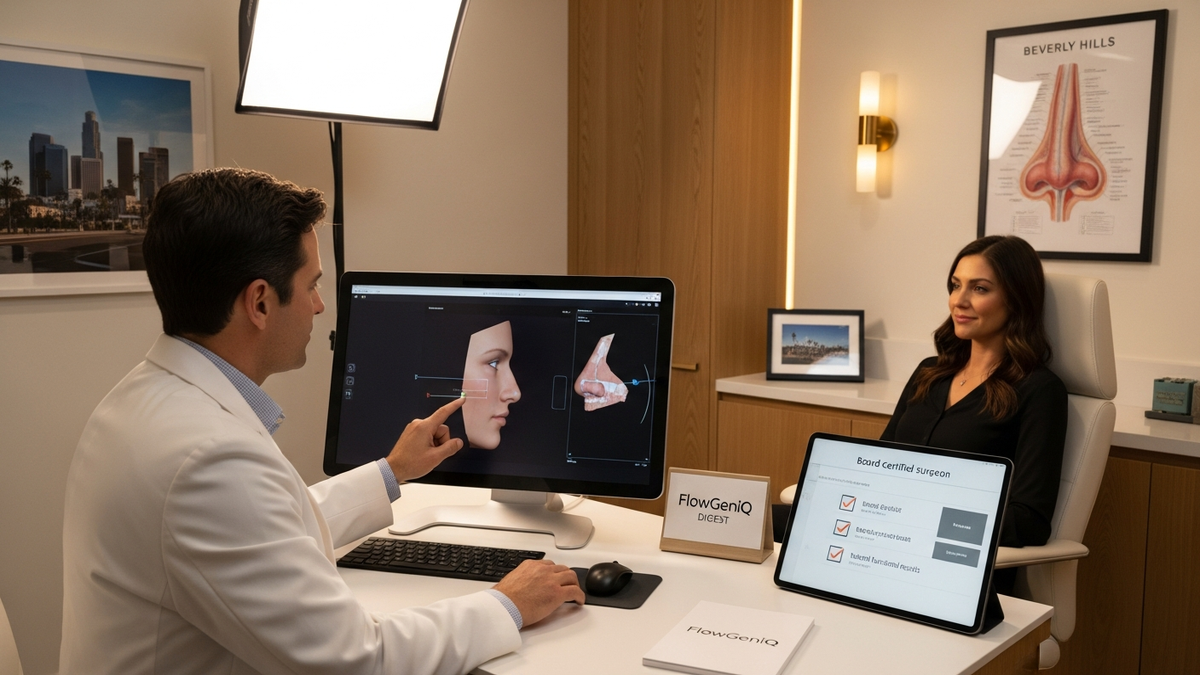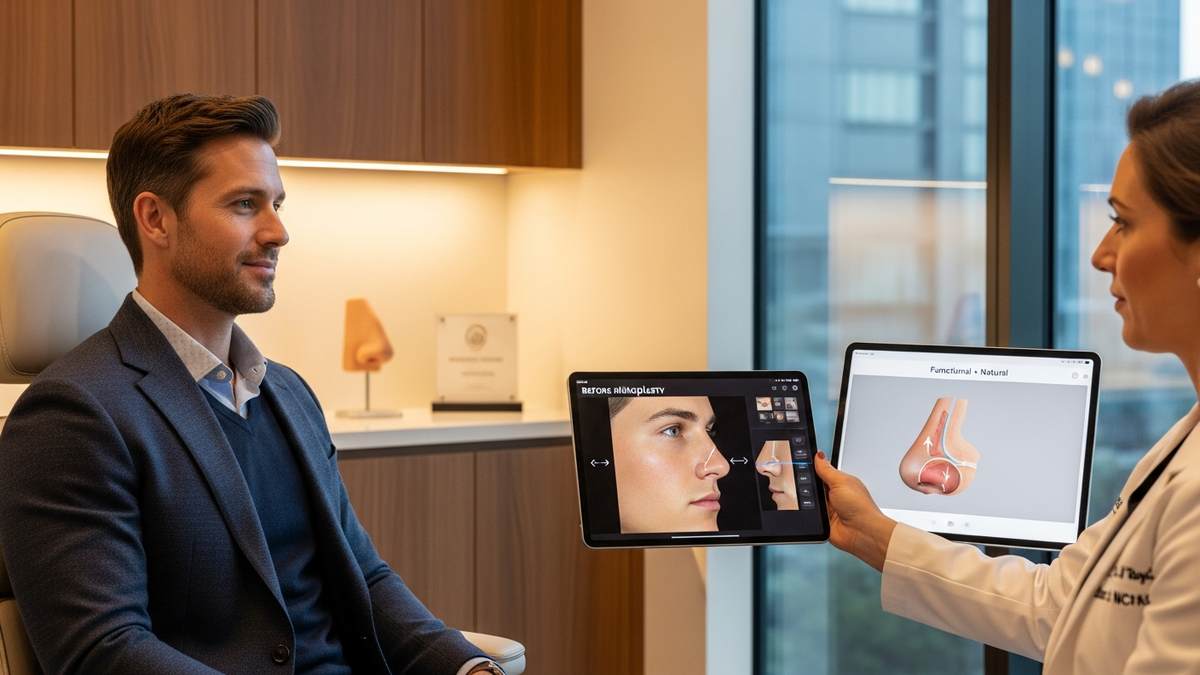
FlowGeniQ Digest is your source for clear, research-informed guidance on modern cosmetic and reconstructive options. If you’re searching for rhinoplasty men solutions in Beverly Hills—where facial aesthetics and function matter equally—this comprehensive guide will help you understand what to expect and how to make confident decisions.
For many men, a nose change is personal: it may affect how you feel in photos, how your face reads in profile, or how comfortably you can breathe day to day. The best outcomes often come from a surgeon who treats the nose as both an aesthetic structure and a breathing pathway.
Why “rhinoplasty men” is more than a cosmetic request
When men consider rhinoplasty, the motivation is commonly twofold:
- Aesthetics: refining the nose shape, improving symmetry, balancing proportions with facial features, and enhancing profile definition.
- Function: addressing congestion, airflow limitations, or structural issues that can make breathing harder—especially during exercise, at night, or seasonally.
In practice, these goals overlap. A nose that looks balanced should also feel “right” in how it supports airflow. This is why modern rhinoplasty planning frequently includes a functional evaluation—not just a visual one.
Rhinoplasty vs. functional nasal surgery: knowing the difference
Not every breathing problem requires full cosmetic rhinoplasty. Some patients benefit from functional nasal procedures that can reduce obstruction with less structural change. In other cases, both aesthetics and function are best addressed together.
When functional surgery may be the best first step
Men who primarily struggle with chronic congestion or “stuffy” breathing may have issues such as septal deviation, enlarged turbinates, or nasal valve collapse. Depending on the anatomy, targeted functional procedures can sometimes improve airflow without changing the external nose significantly.
For example, Septoplasty is designed to straighten the nasal septum when it obstructs airflow. If your symptoms are linked to a Deviated Septum, this procedure may be discussed as part of your care plan.
When rhinoplasty is the right fit
Rhinoplasty may be appropriate when you want visible refinement—such as reducing a dorsal hump, improving tip shape, narrowing nostrils, or enhancing symmetry—while also addressing breathing concerns. A surgeon trained in both facial aesthetics and nasal function can evaluate how structural modifications impact airflow.
If you’re exploring options, you may find helpful context in Rhinoplasty, including how a comprehensive consult is typically approached.
Common rhinoplasty goals for men
Men often describe their ideal result in terms of masculinity, naturalness, and harmony—not “overly small” or overly stylized. Typical goals include:
- Refining the profile: smoothing a hump, adjusting the bridge line, or improving the angle between the nose and upper lip.
- Reshaping the tip: addressing bulbosity, droop, asymmetry, or rotation.
- Nostril size and shape: improving width or symmetry while preserving natural male proportions.
- Improving balance: aligning the nose with the face’s width, chin projection, and overall facial geometry.
- Enhancing breathing: reducing internal obstruction through functional strengthening and airway optimization.
Planning for natural results: what “masculine” rhinoplasty looks like
Natural-looking rhinoplasty is not about making the nose look “invisible.” It’s about making it look like it belongs to your face. For rhinoplasty men, this often means preserving or enhancing characteristics that read as distinctly masculine—such as appropriate tip projection, stable bridge definition, and proportionate nostril support.
In an excellent consult, your surgeon should discuss:
- Facial proportions: how your nose relates to your eyes, brow, cheeks, and jawline.
- Skin thickness and texture: how your skin responds to reshaping, especially at the tip.
- Cartilage and structural support: how the internal framework can be refined and strengthened.
- Breathing anatomy: nasal valve area, septum, and turbinate contributions to obstruction.
Functional nasal surgery and rhinoplasty: airflow matters
Breathing is a quality-of-life issue. Men who feel chronically congested may also experience sleep disruption, reduced exercise tolerance, or seasonal symptom flare-ups.
In some cases, symptoms can be driven by:
- Septal deviation (uneven septum alignment)
- Enlarged inferior turbinates (chronic “stuffy nose”)
- Nasal valve collapse (airflow restriction at the narrowest segment)
- Chronic sinusitis (inflammation and blockage affecting airflow and drainage)
Nasal valve collapse: a frequent hidden contributor
Some patients assume their nose is “small” or “fine,” but still struggle to breathe because the nasal valve area doesn’t maintain adequate airway support. Depending on severity, treatment may range from non-surgical options to implants or surgical reinforcement.
Non-surgical strategies can include allergy and anti-inflammatory medications when appropriate. Surgical options may include procedures such as latera or vivair approaches in selected patients.
Septal perforation and other complex scenarios
Less common but important: if there is a hole through the septum, symptoms can include chronic bleeding or whistling sounds while breathing. In those cases, a dedicated septal perforation repair plan may be required.
Chronic sinus issues: when endoscopic care is part of the plan
If sinus blockage is contributing to persistent symptoms, minimally invasive options may be discussed, including balloon sinuplasty or endoscopic sinus surgery guided by image guidance. These approaches aim to restore sinus function, widen passages, and reduce recurrent infections.
Who is a good candidate for rhinoplasty men?
Ideal candidates generally include men who:
- Have fully developed facial features (typically after late teens).
- Have realistic expectations about what can be achieved through reshaping and functional optimization.
- Are bothered by aesthetic concerns that affect confidence or facial harmony.
- Have breathing limitations that can be anatomically addressed.
- Understand recovery requirements and can plan for time away from strenuous activity.
Candidacy is individualized. A thorough exam and discussion of medical history are essential, especially if you have allergies, chronic sinusitis, prior nasal trauma, or previous nasal surgery.
How the rhinoplasty consult works (and what to ask)
A high-quality consult is where outcomes are shaped. For rhinoplasty men, you should expect a conversation that covers both appearance and breathing.
What your surgeon may evaluate
- External nose analysis: bridge, dorsal line, tip, nostrils, symmetry, and facial balance.
- Internal nasal assessment: septum alignment, turbinate size, nasal valve function.
- Breathing and symptom history: congestion pattern, sleep impact, exercise tolerance, triggers.
- Skin and cartilage characteristics: how your nose will respond to reshaping.
- Imaging or endoscopic evaluation: when indicated for functional concerns.
Questions that lead to better decisions
- Will you address function and aesthetics together? If not, why?
- What structural changes are planned? (For example: tip support, cartilage grafting, or airway strengthening.)
- How do you define “natural” for a male nose?
- What are the realistic timelines for swelling and final shape?
- What risks are most relevant for my anatomy?
- How do you handle prior nasal trauma or previous surgery?
Techniques used in modern rhinoplasty
Rhinoplasty is highly individualized. Surgeons may use a combination of approaches depending on your anatomy and goals.
Open vs. closed rhinoplasty
Open rhinoplasty typically provides greater visibility for complex reshaping and structural work, while closed rhinoplasty uses internal incisions and may be preferred for certain cases. Your surgeon will recommend the approach that best supports both the aesthetic plan and functional goals.
Cartilage grafting for support and refinement
Cartilage grafts are often used to:
- Support the tip and improve stability
- Strengthen the nasal valve area
- Refine shape while preserving natural contours
Recovery timeline: what men should plan for
Recovery varies by technique and individual healing. Still, most men can anticipate a structured timeline.
Early phase (first 1–2 weeks)
- Swelling and bruising: commonly most noticeable in the first several days.
- Splinting: may be used depending on your surgeon’s protocol.
- Breathing: may feel different while the nose heals internally.
Middle phase (weeks 3–6)
- Swelling gradually decreases, though some may persist.
- Shape becomes more apparent, but the nose is still healing.
- Return to many normal routines may be possible with surgeon-guided restrictions.
Longer-term phase (months 3–12)
Final refinement typically continues over time. Many patients notice ongoing improvements in texture, definition, and subtle contouring as healing completes.
Potential risks and how to reduce them
Every surgical option carries risk. The goal is not to alarm you—it’s to ensure you’re informed and that your surgeon uses strategies to minimize complications.
Possible risks can include:
- Bleeding or infection
- Persistent swelling or asymmetry
- Breathing changes (improved or, less commonly, persistent obstruction)
- Scar visibility (usually minimal, depending on approach)
- Need for revision in select cases
To reduce risk, follow pre- and post-operative instructions precisely—especially guidance on medications, hydration, activity restrictions, and nasal care.
Rhinoplasty men and Los Angeles/Beverly Hills expectations
In Los Angeles, many men want a refined look that fits real life—work commitments, social schedules, and a preference for subtlety. That’s why a “one-size-fits-all” plan usually fails. The best outcomes are built on:
- Personalized facial analysis: your nose should harmonize with your full face.
- Functional evaluation: breathing concerns should be addressed responsibly.
- Natural aesthetic philosophy: refinement, not transformation into someone else.
Why a facial plastic & reconstructive approach matters
Rhinoplasty outcomes benefit from expertise in head and neck anatomy and a deep understanding of how facial structures interact. Dr. Hootan Zandifar is a board-certified facial plastic and reconstructive surgeon focused solely on surgeries of the head and neck. His approach emphasizes honest, trustworthy education and natural-looking solutions that support both appearance and quality of life.
As a specialist, Dr. Zandifar’s training includes residency in Head and Neck Surgery and an AAFPRS fellowship, along with double board certification and fellowship training. For patients searching for rhinoplasty men guidance, this kind of focused expertise can be an important factor in achieving consistent, well-planned results.
Alternatives and complementary procedures (when appropriate)
Some men consider additional facial refinement alongside nasal goals, depending on their aesthetic priorities.
Skin and aging concerns
If you’re also noticing age-related changes in the face or neck, you might explore options such as Facelift or other rejuvenation techniques. These are separate decisions from rhinoplasty, but can be coordinated with your overall plan.
Eyelid and brow balance
For men focused on a refreshed upper-face appearance, Blepharoplasty may be considered for excess eyelid tissue or under-eye puffiness. A brow lift can also be relevant if forehead position affects the overall facial read.
Hair restoration and facial focus
Confidence is holistic. If you’re dealing with hair loss, some men choose a hair transplant to complement other aesthetic goals. While unrelated to nasal structure, restoring hair can improve overall facial balance and self-image.
Eyebrow symmetry
Because eyebrows strongly shape expression, an eyebrow transplant may be discussed if eyebrow thinning or asymmetry is part of your concerns.
Actionable checklist: preparing for rhinoplasty men surgery
Use this checklist to streamline your planning and reduce last-minute uncertainty:
- Document your goals: write down what you want to improve (profile, tip, nostrils, breathing, symmetry).
- Track symptoms: note congestion patterns, seasonal triggers, sleep effects, and any prior treatments.
- Review medical history: include allergies, prior nasal injuries, surgeries, and medications/supplements.
- Ask about functional evaluation: confirm how airflow will be assessed during your consult.
- Plan recovery support: arrange help for the first few days and schedule time away from strenuous activity.
- Follow pre-op and post-op instructions: be consistent with medication guidance, hygiene, and restrictions.
- Set expectations: understand swelling timeline and when you’ll see meaningful changes.
How FlowGeniQ Digest supports informed decision-making
At FlowGeniQ Digest, we aim to translate complex medical information into practical guidance. We encourage readers to approach rhinoplasty men decisions with clarity: understand your goals, ask informed questions, and choose a surgical team that treats both aesthetics and function with equal seriousness.
Frequently Asked Questions about rhinoplasty men
How long does rhinoplasty recovery take for men?
Most men can expect noticeable swelling and bruising in the first 1–2 weeks. Many return to normal routines within several weeks, but final refinement can continue for months. Your surgeon will provide a personalized timeline based on your technique and healing pattern.
Will rhinoplasty improve breathing if I’m chronically congested?
It can, depending on the cause of obstruction. A thorough functional evaluation helps determine whether rhinoplasty alone is appropriate or whether targeted functional procedures (such as septal correction) or other nasal/sinus treatments may be needed as part of your plan.
Is rhinoplasty only for people who want a smaller nose?
No. Many men want refinement rather than reduction—improving the bridge line, tip shape, or overall facial balance while preserving natural male proportions.
What makes a rhinoplasty result look natural?
Natural results typically come from individualized planning, appropriate structural support, and respect for facial harmony. Skin type, cartilage characteristics, and functional needs all influence how the nose heals and how the final shape reads in real life.
Are there alternatives to rhinoplasty for breathing problems?
Yes. Depending on your anatomy, procedures such as Septoplasty or other functional nasal interventions may help airflow without major external reshaping. Your surgeon can determine the most appropriate pathway after evaluation.
Call to action: schedule a rhinoplasty men consultation
If you’re considering rhinoplasty men surgery and want a plan that respects both aesthetics and breathing, the next step is a consultation with a specialist who focuses on head and neck facial plastic and reconstructive surgery.
Schedule online to discuss your goals, review your anatomy, and explore whether rhinoplasty—or a functional-first approach—makes the most sense for you.
FlowGeniQ Digest encourages you to take action with confidence: ask questions, confirm your functional evaluation plan, and choose a surgeon who prioritizes natural-looking results and patient education.
Professional Disclaimer
This content is provided for general educational purposes only by FlowGeniQ Digest. It is not a substitute for professional advice, diagnosis, or treatment. Readers are advised to consult qualified professionals for personalized recommendations.
Medical Information Disclaimer
This content is provided for general educational purposes only by FlowGeniQ Digest. It is not a substitute for professional advice, diagnosis, or treatment. Readers are advised to consult qualified professionals for personalized recommendations.