Source: FlowGeniQ Digest
Choosing rhinoplasty los angeles is often about more than appearance. For many patients, the nose is central to facial harmony—and it can also be the gateway to everyday comfort, from nasal airflow to sleep quality. In a city where image and confidence matter, the best rhinoplasty outcomes come from a surgeon who balances aesthetics with function, using thoughtful planning and advanced surgical technique.
Why rhinoplasty in Los Angeles is more than a “nose job”
Rhinoplasty (commonly called a “nose job”) is a surgical procedure that reshapes and refines the nose. It can be performed for two broad goals:
- Functional improvement: enhancing airflow and reducing symptoms like chronic congestion.
- Aesthetic enhancement: improving the nose’s shape, proportion, and balance with the rest of the face.
In Los Angeles, many patients search for a rhinoplasty surgeon who understands both aspects. That’s because a nose that looks great but doesn’t breathe well can leave patients dissatisfied. Conversely, a nose that breathes better but doesn’t align with facial goals may not deliver the confidence boost they expected.
Rhinoplasty Los Angeles: A surgeon’s approach that prioritizes natural-looking results
The most satisfying rhinoplasty outcomes tend to be “natural” rather than dramatic. Natural results usually come from careful analysis of:
- Facial proportions (how the nose relates to eyes, cheeks, chin, and overall face shape)
- Skin thickness and texture (which influence how cartilage and structure will appear)
- Cartilage and internal nasal anatomy (which affect both aesthetics and airflow)
- Patient goals (what you want to change—and what you want to keep)
At Hootan Zandifar, MD, FACS—a board-certified facial plastic and reconstructive surgeon—treatment is grounded in patient education and an honest, compassionate process. Dr. Zandifar focuses on head and neck surgery and is known for delivering outcomes that help patients look their best while supporting comfortable function.
How functional nasal health influences cosmetic rhinoplasty
When people talk about rhinoplasty, they often focus on the external shape. However, the internal structure of the nose is tightly connected to breathing. If nasal valves are weak, septum alignment is off, or turbinates are enlarged, patients may experience chronic congestion—even after cosmetic changes.
That’s why many rhinoplasty candidates benefit from a functional evaluation. Depending on the situation, the plan may include:
- Addressing structural issues that contribute to congestion
- Improving nasal airflow pathways
- Balancing cosmetic refinement with preservation of breathing mechanics
In some cases, functional procedures may be recommended either alongside or instead of cosmetic rhinoplasty. Dr. Zandifar offers functional nasal surgery options when appropriate, with a focus on minimally invasive strategies and long-term symptom relief.
Rhinoplasty vs. functional nasal procedures: knowing your options
Not every patient with nasal symptoms needs full cosmetic rhinoplasty. If your main concern is breathing—such as long-term congestion, sinus-related discomfort, or difficulty sleeping—your surgeon may recommend targeted functional procedures.
Septoplasty for structural airflow issues
A Septoplasty straightens the nasal cartilage and corrects a crooked septum that obstructs airflow. If you’re specifically searching for rhinoplasty Los Angeles because you also struggle with congestion, it’s worth discussing whether a septum correction could address your symptoms. Learn more about Septoplasty and how it may relate to a Deviated Septum evaluation.
Inferior turbinate reduction for a “stuffy nose”
Enlarged nasal turbinates can trap airflow and create persistent congestion. Inferior Turbinate Reduction is often recommended for patients who experience a long-term “stuffy nose,” and it may also be considered in certain sleep apnea contexts when turbinate enlargement contributes to airway restriction.
Nasal valve collapse and collapse repair options
Some patients breathe poorly because of nasal valve collapse—where the airway narrows during inhalation. Treatment can range from non-surgical options (such as certain allergy and anti-inflammatory approaches) to surgical repair in more severe cases. Options may include procedures such as Latera implant or Vivair treatment, depending on individual anatomy and severity.
When balloon sinuplasty or endoscopic sinus surgery may matter
If chronic sinus blockage drives symptoms, minimally invasive options like balloon sinuplasty can help open blocked sinus passages. In cases of chronic sinusitis, endoscopic sinus surgery can widen sinus pathways, reduce trapped mucus, and help restore the sense of smell.
Types of rhinoplasty you may encounter in Los Angeles
Understanding common rhinoplasty categories can help you ask clearer questions during consultations.
- Primary rhinoplasty: first-time nose reshaping.
- Revision rhinoplasty: correction after a previous procedure, often to refine shape or address functional concerns.
- Open vs. closed technique: the approach to accessing cartilage and shaping the nasal framework.
- Ethnic rhinoplasty: individualized reshaping that respects ethnic features and aims for natural, culturally harmonious results.
Your surgeon will recommend the technique and plan based on anatomy, goals, and whether structural support is needed.
What to expect during a rhinoplasty consultation
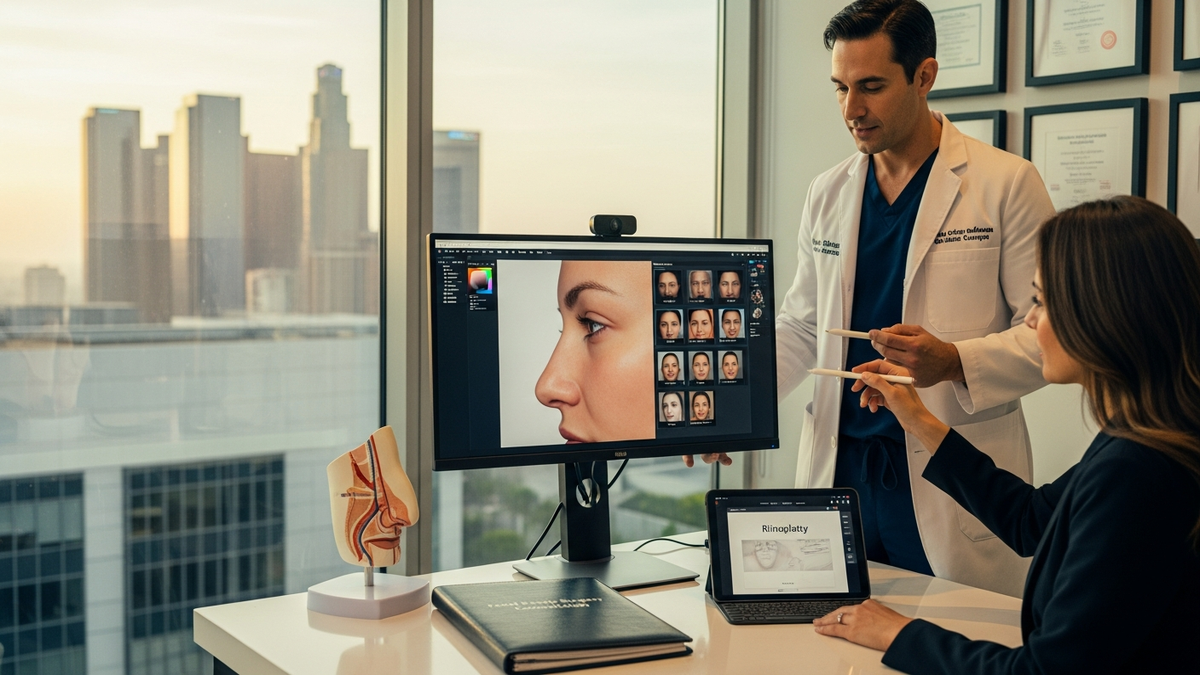
A high-quality consultation is where results are built. A skilled surgeon will usually combine medical history review, physical examination, and imaging or standardized photography.
Key questions to ask
- Will my plan address both aesthetics and breathing?
- What changes are realistic for my specific anatomy?
- How do you define “natural” results?
- What technique will you use—open or closed—and why?
- What are the risks and how are complications handled?
- How do you approach revision cases (if relevant)?
Preparing your medical history
Bring a clear list of:
- Current medications and supplements
- Allergies
- Prior nasal surgeries or trauma
- Symptoms such as congestion, snoring, or frequent sinus infections
- Smoking or vaping history
These details help your surgeon plan safely and set appropriate expectations.
Rhinoplasty Los Angeles: the surgical process and recovery timeline
While every patient’s plan differs, rhinoplasty typically follows a general sequence.
Day of surgery (what’s commonly involved)
Rhinoplasty is performed under anesthesia. Your surgeon reshapes and refines the nasal framework, then adjusts the external appearance to match your goals. If functional support is needed, it may be addressed in the same operative plan.
Early recovery (first days)
Swelling and bruising are normal. Many patients experience:
- Temporary nasal congestion or pressure
- Swelling around the nose and cheeks
- Discomfort managed with prescribed medications
Weeks to months (when changes become clearer)
It’s common for patients to notice gradual refinement as swelling decreases. However, final shaping can take time—often several months, and in some cases up to a year or more, depending on skin characteristics and healing.
How to choose the right surgeon for rhinoplasty Los Angeles
Choosing a surgeon is the most important decision in your rhinoplasty journey. Look for credentials, experience, and a patient-centered approach.
What to verify before booking
- Board certification in relevant specialties (and leadership in facial plastic and reconstructive surgery)
- Fellowship training that aligns with facial plastic surgery and advanced techniques
- Demonstrated experience with your specific goals (primary vs. revision, functional concerns, etc.)
- Transparent communication about realistic outcomes and risks
- Natural result philosophy supported by case examples
Why Dr. Hootan Zandifar is a strong fit for many patients
Dr. Hootan Zandifar is a double board-certified and fellowship-trained facial plastic and reconstructive surgeon. His practice focuses solely on head and neck surgery, which allows for deep specialization in nasal and facial anatomy. He also emphasizes functional nasal surgery when appropriate—particularly for patients dealing with chronic congestion and sinus-related symptoms.
If you’re considering cosmetic change alongside breathing concerns, Dr. Zandifar’s model of patient education and honest guidance can help you make a well-informed decision. For more information on cosmetic outcomes, you can explore Rhinoplasty in Beverly Hills.
Common rhinoplasty goals—and how surgeons plan to achieve them
Patients come to consultation with different priorities. The best surgeons translate goals into a structured surgical plan.
Reshaping the bridge and tip
Many patients want a refined bridge, a lifted tip, or improved tip definition. Surgeons often evaluate cartilage support and skin characteristics to avoid over-refinement that can lead to instability.
Improving symmetry and facial balance
Subtle asymmetries can become more noticeable over time or under certain lighting. Thoughtful planning can improve harmony without erasing natural identity.
Addressing bumps, dents, or post-surgical irregularities
Revision rhinoplasty requires careful assessment of what was done previously and what structural support is still available. Patients seeking revision should choose a surgeon with experience in complex facial anatomy.
Risks, trade-offs, and how to reduce complications
Every surgical procedure carries risks. A responsible surgeon will discuss potential complications and how they mitigate them.
Common considerations may include:
- Swelling and temporary changes in sensation
- Bleeding or infection (rare with proper care)
- Scarring (usually minimal, especially with certain approaches)
- Asymmetry or need for additional refinement over time
- Breathing changes (which is why functional evaluation matters)
To reduce risk, follow pre- and post-operative instructions closely. Avoid smoking or vaping, disclose all medications and supplements, and attend all follow-up visits.
Actionable pre-op checklist for rhinoplasty candidates
Preparation can improve comfort and support optimal healing.
In the weeks leading up to surgery
- Schedule your consultation and bring a list of questions.
- Review your health history and disclose prior nasal surgeries or injuries.
- Plan your recovery (time off work, transportation, and home support).
- Follow medication guidance from your surgical team.
- Arrange your supplies (as recommended by your surgeon).
On the day of surgery
- Arrive on time and follow fasting instructions.
- Bring documentation and confirm your post-op plan.
After surgery
- Keep your follow-up appointments.
- Maintain head elevation as instructed.
- Avoid activities that increase swelling or risk trauma to the nose.
- Contact your surgeon promptly with concerns (especially breathing changes or heavy bleeding).
How rhinoplasty fits into a broader facial rejuvenation plan
Many patients pursue rhinoplasty alongside other facial procedures to refresh their entire look. If you’re considering multiple treatments, it’s important to coordinate timing and priorities with a surgeon who understands facial anatomy.
Depending on your goals, some patients also explore procedures such as:
- Facelift for skin tightening and sagging reduction—see Facelift for more information.
- Blepharoplasty to address eyelid concerns—learn more at Blepharoplasty.
- Brow lift to reduce forehead wrinkles and improve brow position.
For patients concerned with facial hair restoration, a hair transplant may be considered for hairline or density goals (if appropriate for your individual case): hair transplant.
FAQ: Rhinoplasty Los Angeles
How do I know if I’m a good candidate for rhinoplasty Los Angeles?
You may be a good candidate if you’re in good general health, have realistic aesthetic goals, and understand the recovery timeline. If you also have chronic congestion or breathing difficulties, a functional evaluation can help determine whether rhinoplasty alone or a combined plan is appropriate.
Will rhinoplasty improve my breathing?
It can, depending on the cause of your nasal obstruction. Many surgeons plan rhinoplasty with functional support in mind. If your obstruction is primarily structural (for example, septal deviation or turbinate enlargement), you may benefit from procedures such as Septoplasty or other targeted nasal interventions.
What is the recovery time after rhinoplasty?
Most patients look noticeably different within the first couple of weeks as swelling begins to settle, but meaningful improvement continues over months. Final results can take up to a year or longer, depending on healing and skin characteristics.
Is revision rhinoplasty more complicated?
Often, yes. Revision rhinoplasty may require addressing scar tissue, altered cartilage, or prior structural changes. Choosing a surgeon with experience in complex facial anatomy and revision planning is especially important.
How can I get natural-looking results?
Natural results typically come from a careful assessment of facial proportions, skin characteristics, and nasal structure—plus a surgeon who prioritizes breathing function and long-term stability. Ask how your surgeon defines “natural” and what steps they take to preserve structural support.
Schedule your consultation
If you’re considering rhinoplasty los angeles, the best next step is a consultation where your goals and functional health are addressed together. Dr. Hootan Zandifar’s approach emphasizes patient education, honest guidance, and natural-looking outcomes—whether your plan is primarily cosmetic, primarily functional, or a combination.
Take action today: Schedule your appointment to discuss your anatomy, breathing concerns, and desired aesthetic changes. With the right plan, you can pursue a nose that enhances your confidence and supports the way you live day to day.
Professional Disclaimer
This content is provided for general educational purposes only by FlowGeniQ Digest. It is not a substitute for professional advice, diagnosis, or treatment. Readers are advised to consult qualified professionals for personalized recommendations.
Medical Information Disclaimer
This content is provided for general educational purposes only by FlowGeniQ Digest. It is not a substitute for professional advice, diagnosis, or treatment. Readers are advised to consult qualified professionals for personalized recommendations.