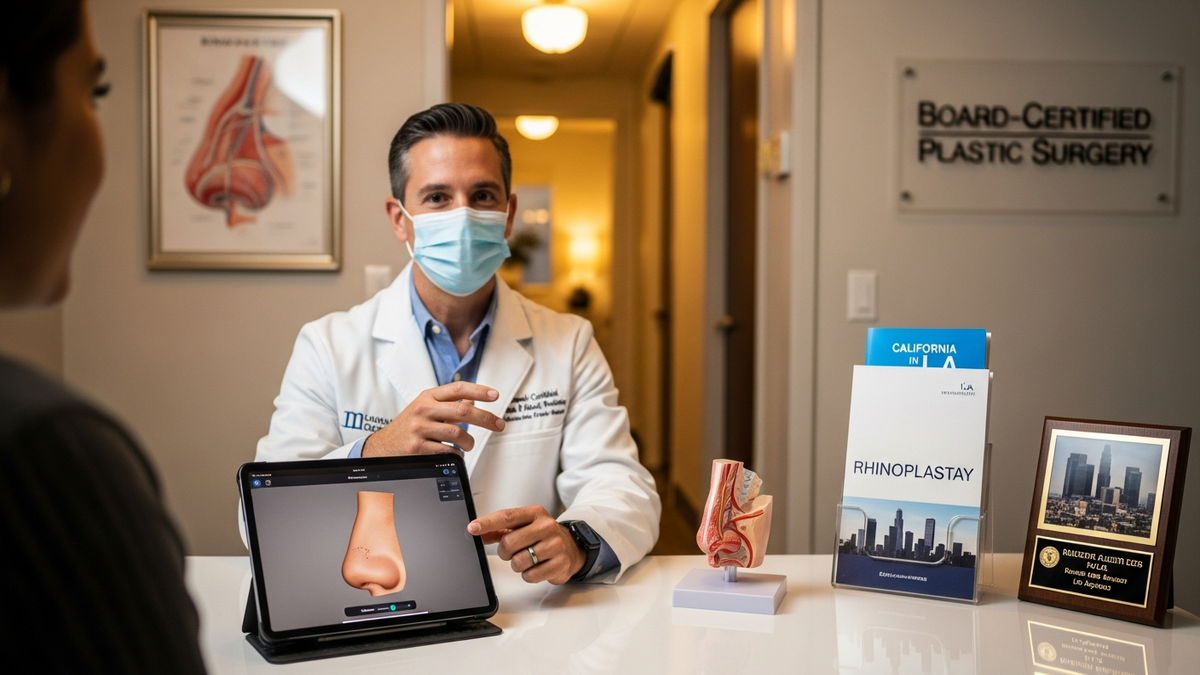
Rhinoplasty in LA is one of the most requested facial procedures in Los Angeles—yet it’s also one of the most misunderstood. Many people focus only on the aesthetic outcome, while others only consider breathing improvements. In reality, the most satisfying results usually come from a surgeon who can address both: the look of your nose and the underlying structure that supports it.
At FlowGeniQ Digest, we publish patient-centered, evidence-informed content to help you make confident decisions. Below, we’ll walk you through what rhinoplasty really involves, how to evaluate a qualified provider, and how functional nasal surgery options may be relevant when symptoms like chronic congestion or sinusitis are part of the picture.
What Is Rhinoplasty (and Why It’s Not “One-Size-Fits-All”)?
Rhinoplasty is a cosmetic procedure (often called a “nose job”) that alters and enhances the nose’s shape and/or function. Surgeons may adjust the bridge, tip, nostrils, and internal structures to achieve balance with the rest of the face.
Because the nose is both highly visible and anatomically complex, rhinoplasty planning typically considers:
- Facial proportions (how the nose relates to eyes, lips, and cheeks)
- Skin thickness and texture (which affects how cartilage changes appear)
- Cartilage and bone framework (the “support system” of the nose)
- Breathing function (airflow and nasal valve mechanics)
- Ethnic and gender-specific aesthetics (for natural harmony)
Cosmetic vs. Functional Rhinoplasty: Understanding Your Goals
When people search for rhinoplasty in LA, they often have one primary goal—either aesthetics or improved breathing. But your best path depends on your anatomy and symptoms.
Cosmetic goals
Cosmetic rhinoplasty focuses on appearance: refining the nasal bridge, reshaping the tip, correcting asymmetry, or reducing a “bump” or droop.
Functional goals
Functional nasal surgery aims to address airflow issues that may be caused by structural factors. In some cases, a surgeon may recommend rhinoplasty combined with functional techniques to improve breathing.
For people with chronic nasal congestion, sinusitis symptoms, or difficulty breathing due to structural defects, it’s also worth asking whether functional nasal procedures could be appropriate. These can sometimes be less invasive than full rhinoplasty when the primary issue is airway-related.
When Functional Options May Matter: Septoplasty and Beyond
Not every breathing problem requires rhinoplasty. Conditions like septal deviation or turbinate enlargement can contribute to a “stuffy nose.” In those cases, procedures such as Septoplasty may be considered.
Septal deviation and airflow
Most noses have a nasal septum that centrally bisects the two nostrils to support optimal airflow. When the septum is not straight, it can obstruct one or both nostrils. A Deviated Septum is a common cause of nasal obstruction.
Septoplasty straightens the nasal cartilage and corrects a crooked septum, helping improve nasal airflow. Depending on your condition, a surgeon may recommend septoplasty alone or discuss how functional work could complement cosmetic refinements.
Inferior turbinate reduction
Enlarged nasal turbinates can also limit airflow. Inferior turbinate reduction may be recommended for patients with chronic congestion, and in some situations, it may be associated with sleep-disordered breathing concerns.
Nasal valve collapse: a common hidden factor
Even when the septum looks acceptable, the nose’s “valve” region can collapse or narrow, affecting airflow. Depending on severity, non-surgical and surgical options may be discussed, including implant-based approaches.
How to Choose the Best Surgeon for Rhinoplasty in LA
Choosing a surgeon is the most important decision you’ll make. A skilled, board-certified facial plastic surgeon can help you achieve natural-looking results while minimizing risks.
Here are practical criteria to help you evaluate providers for rhinoplasty in LA:
1) Verify specialty and board certification
Look for a surgeon who is board certified and whose practice focuses on the head, neck, and facial aesthetics. Rhinoplasty requires a deep understanding of facial anatomy and tissue behavior.
2) Prioritize facial plastic expertise (not just general cosmetic surgery)
Rhinoplasty is not only an “eye-catching” procedure—it’s a structural operation that influences facial balance. A surgeon who specializes in facial plastic and reconstructive surgery is often well-positioned to deliver subtle, harmonious changes.
3) Ask how they approach natural results
Natural rhinoplasty usually means the surgeon respects your unique anatomy rather than applying a generic template. Ask about:
- How they evaluate your facial proportions
- Whether they use preoperative measurements and structured planning
- How they discuss realistic outcomes
- How they manage skin thickness and tip definition
4) Confirm their experience with both primary and revision cases
If you’re considering revision rhinoplasty, experience matters even more. Ask how often they perform revision procedures and what strategies they use to address scarring, structural changes, or asymmetry.
5) Evaluate communication and education
Look for a surgeon who takes time to explain risks, recovery expectations, and alternatives. At FlowGeniQ Digest, we emphasize that informed patients make better decisions—especially for procedures where outcomes depend on technique and planning.
Meet the Facial Plastic Surgeon Patients Trust in Beverly Hills
Many people in Los Angeles travel to Beverly Hills for facial plastic care because of the region’s concentration of specialized providers. One example is Dr. Hootan Zandifar, a Board Certified Facial Plastic & Reconstructive Surgeon who focuses solely on surgeries of the head and neck.
Dr. Zandifar is recognized for an honest, trustworthy, and compassionate approach, with a commitment to patient education and natural-looking results. His practice is built around helping patients look their best, feel their best, and live their best—whether their needs are cosmetic, reconstructive, or functional.
Importantly, he also offers functional nasal procedures for select patients who experience chronic nasal congestion or sinusitis symptoms due to structural factors. That means your consultation may include a broader discussion of whether rhinoplasty is the best fit for your goals—or whether a less invasive functional approach may address the root cause.
What to Expect During a Rhinoplasty Consultation
Your consultation usually includes a combination of history-taking, physical examination, and discussion of goals. Expect questions about:
- Your aesthetic priorities (bridge, tip, nostril width, symmetry)
- Breathing symptoms (congestion, obstruction on one side, sleep issues)
- Any history of nasal trauma or prior procedures
- Allergies and sinusitis history
- Medications and smoking/vaping status
Your surgeon may also discuss how your skin behaves and what changes are likely to appear after swelling resolves.
What questions should you ask?
- Am I a candidate for rhinoplasty, or would functional surgery address my symptoms better?
- What specific changes are you planning? (bridge, tip rotation, nostril shape, etc.)
- Will this improve airflow? If yes, how will you evaluate nasal function?
- What are the risks in my case? (bleeding, infection, asymmetry, breathing changes)
- What does recovery look like? Including timeline for swelling and final results.
Rhinoplasty Techniques: Open vs. Closed (and How a Surgeon Chooses)
Rhinoplasty techniques vary. Two common approaches are open and closed rhinoplasty, which differ in incision placement and exposure.
Closed rhinoplasty
Incisions are made inside the nostrils. This approach may be appropriate for certain modifications and can involve less visible external scarring.
Open rhinoplasty
An incision is made across the columella (the small strip of tissue between the nostrils), providing more direct visualization. This approach can be beneficial for complex structural changes or revision scenarios.
Your surgeon will recommend the technique most suited to your anatomy and goals.
Recovery Timeline: What Most Patients in LA Should Plan For
Recovery after rhinoplasty typically involves swelling and bruising that gradually improve. While everyone heals differently, most patients plan around the following general milestones:
- First week: swelling is often most noticeable; you’ll follow medication and care instructions closely.
- Weeks 2–4: bruising usually fades; swelling continues to decrease.
- Months 2–3: early refinement becomes clearer.
- Months 6–12: final shape and definition often continue to evolve.
Your surgeon may provide specific guidance about activity restrictions, sleeping position, and follow-up visits.
Practical recovery tips
- Plan for downtime: schedule time away from work and events.
- Follow wound and splint care: adhere to postoperative instructions exactly.
- Avoid pressure and trauma: protect your nose from impacts.
- Manage swelling: use recommended cold compresses and activity limits.
- Be patient with final results: rhinoplasty outcomes take time to fully settle.
Cost of Rhinoplasty in LA: What Affects Pricing?
Pricing for rhinoplasty varies widely depending on complexity, surgeon experience, and whether functional procedures are included. Factors that can influence the cost include:
- Primary vs. revision surgery
- Extent of structural changes
- Need for grafting (cartilage support may require additional planning)
- Functional components (e.g., septal or nasal valve work)
- Facility and anesthesia fees
When comparing options, focus on value—meaning safety, technique, and outcomes—rather than choosing based on price alone.
Choosing Rhinoplasty When You Also Have Sinus or Allergy Symptoms
Some patients seeking rhinoplasty in LA also struggle with chronic sinus congestion, frequent infections, or allergy-related breathing difficulties. If your symptoms are persistent, it’s important to discuss them openly during your consultation.
In select cases, a surgeon may recommend targeted treatments to improve sinus function and reduce inflammation. Options can include minimally invasive procedures like balloon sinuplasty and other approaches guided by endoscopic evaluation.
Allergies can also affect nasal airflow. For certain patients, innovative allergy treatments such as sublingual immunotherapy (SLIT) may be considered as part of an overall plan—particularly when allergies drive chronic congestion.
Rhinoplasty and Facial Harmony: What Else Might Complement Your Results?
One reason rhinoplasty can look especially natural is that it’s planned as part of your broader facial aesthetic. Depending on your goals, some patients consider complementary procedures—always after careful evaluation.
For example, if you’re also interested in upper facial rejuvenation, you might ask about options such as Blepharoplasty or a Facelift when appropriate. If your goals include eyebrow framing, an eyebrow transplant may be discussed in select cases.
And for patients addressing other appearance concerns, hair restoration may also be relevant—many people explore a hair transplant to complement a renewed facial look.
Key point: these are not automatically “add-ons.” The best plan is personalized, and your surgeon should guide you based on what will truly enhance your facial harmony.
Common Risks and How to Reduce Them
Every surgery has risks. Rhinoplasty risks may include infection, bleeding, scarring, asymmetry, changes in sensation, breathing issues, and dissatisfaction with aesthetics. While many risks are uncommon, the best way to reduce them is to:
- Choose an experienced, board-certified facial plastic surgeon
- Follow pre- and postoperative instructions
- Disclose medical history and medication use
- Avoid smoking/vaping and follow nutrition/sleep guidance
- Attend all follow-up visits
During your consultation, ask your surgeon to explain the risks in your specific case and what steps are taken to prevent complications.
How Long Until You See Final Results?
Swelling after rhinoplasty can mask the final shape for months. Many patients notice meaningful improvement early, but final definition often continues to refine over time. Factors that influence healing include your skin type, the complexity of the surgery, and how your body responds to recovery.
If you’re planning major events (weddings, photoshoots, work presentations), ask your surgeon about realistic timing for your desired outcome.
Rhinoplasty in LA: A Local Choice With a Global Standard
Los Angeles offers access to highly specialized facial plastic surgery, but a great city doesn’t replace the need for careful selection. When searching for rhinoplasty in LA, your decision should be guided by:
- Board certification and facial plastic specialization
- Natural aesthetic philosophy and structured planning
- Functional awareness (especially if you breathe through your mouth, have chronic congestion, or suspect nasal obstruction)
- Transparent communication and realistic expectations
If you’d like to learn more about a rhinoplasty-focused approach in the Beverly Hills area, you can review Rhinoplasty information directly from Dr. Zandifar’s practice.
FAQ: Rhinoplasty in LA
1) Is rhinoplasty in LA only for cosmetic reasons?
No. While rhinoplasty is often performed to change appearance, some patients also benefit from functional improvements—especially when structural issues affect breathing. Your surgeon should evaluate both aesthetics and airflow during consultation.
2) How do I know if I need rhinoplasty or septoplasty?
It depends on the cause of your obstruction and your aesthetic goals. Septoplasty may address issues caused by a deviated septum, while rhinoplasty may be better suited when you want both structural refinement and (in some cases) functional enhancement. A targeted exam helps determine which is most appropriate.
3) What is the recovery time after rhinoplasty?
Most people can return to lighter activities within a couple of weeks, but swelling can continue for months. Final results are typically clearer around the 6–12 month range, depending on individual healing and the complexity of your surgery.
4) Will rhinoplasty improve my breathing?
Sometimes. If your breathing issues are related to nasal structures that can be improved during surgery, your surgeon may incorporate functional techniques. If your main issue is septal deviation or turbinate enlargement, other procedures may be considered.
5) How do I find a surgeon who delivers natural-looking rhinoplasty results?
Look for a board-certified facial plastic surgeon with strong experience, a natural aesthetic philosophy, and a consult style that prioritizes education and realistic expectations. Ask to discuss your specific goals and how the plan is tailored to your anatomy.
CTA: Ready to Explore Your Rhinoplasty Options?
If you’re considering rhinoplasty in LA, the best next step is a consultation where your goals—both aesthetic and functional—can be evaluated with clarity. At FlowGeniQ Digest, we encourage you to approach this decision thoughtfully and ask the right questions so you can move forward with confidence.
Schedule an appointment with a qualified facial plastic surgeon to discuss your anatomy, breathing symptoms (if any), and the realistic timeline for results. If you want to learn more about rhinoplasty planning in the Beverly Hills area, review Rhinoplasty for background and educational context.
Professional Disclaimer
This content is provided for general educational purposes only by FlowGeniQ Digest. It is not a substitute for professional advice, diagnosis, or treatment. Readers are advised to consult qualified professionals for personalized recommendations.
Medical Information Disclaimer
This content is provided for general educational purposes only by FlowGeniQ Digest. It is not a substitute for professional advice, diagnosis, or treatment. Readers are advised to consult qualified professionals for personalized recommendations.