FlowGeniQ Digest presents a practical, patient-focused overview of rhinoplasty for button nose—including why it happens, what surgical strategies are used, and how to choose a plan that improves both appearance and (when needed) nasal function.
If your nose tip looks bulbous, rounded, or slightly “downturned,” you’re not alone. Many patients seek facial plastic surgery to enhance proportions and create a nose shape that looks balanced from the front, profile, and even during smiling.
What Is a “Button Nose”?
A button nose typically refers to a nose tip that appears:
- Rounded or bulbous rather than sharply defined
- Possibly downward-tilted (slightly “droopy” tip)
- Less defined at the tip–nostril interface
- More prominent because of how the cartilage support and soft-tissue thickness interact
It’s important to understand that “button nose” is an aesthetic description, not a medical diagnosis. The underlying cause can vary widely—so the best rhinoplasty approach depends on your anatomy.
Why Button Nose Happens (Common Anatomical Factors)
In a rhinoplasty consultation, a skilled surgeon evaluates the nasal tip’s structure and the way the nostrils and skin behave. A button nose is often related to one or more of the following:
1) Tip cartilage shape and support
The tip is largely shaped by the lower lateral cartilages. If the cartilages are naturally rounded or the tip lacks firm support, the tip can look fuller.
2) Weak or stretched alar rim
The alar rim and nostril borders influence how much the tip “shows.” If the nostrils flare or the rim is positioned differently, the tip can appear more bulbous.
3) Inadequate tip definition
Tip definition comes from precise cartilage positioning and suturing. Without that refined framework, the tip may look smooth without the subtle contours that create elegance.
4) Skin thickness and soft-tissue characteristics
Even when cartilage structure is suitable, thicker skin can reduce visible definition. Surgeons may consider structural refinement and, in select cases, techniques designed to improve how the tip reads through the skin.
5) Tip droop or projection issues
Some button noses are “downturned” because the tip droops slightly or lacks the right projection. Others are bulbous but not necessarily downturned—so treatment must be individualized.
Rhinoplasty for Button Nose: Goals That Matter
The best results from rhinoplasty for button nose usually involve both cosmetic and functional considerations. While many patients primarily want a more refined tip, a comprehensive approach helps ensure breathing is not compromised.
A balanced, natural tip contour
A surgeon aims to create a tip that looks refined without over-sculpting. Patients often want:
- Less bulbous tip
- More defined tip edges
- Improved tip–nostril relationship
- Subtle upward/neutral rotation when appropriate
Proportion from multiple angles
A “good-looking” nose is consistent in motion and perspective—not only in a single front photo. Surgeons evaluate:
- Front view symmetry
- Profile line (nasal dorsum to tip)
- Nostril show at rest and while smiling
- How the tip sits relative to the upper lip
Preserved or improved nasal function
Some patients have nasal congestion, chronic sinus symptoms, or structural airway issues that coexist with cosmetic concerns. If breathing is affected, it’s essential to address the functional component—either during rhinoplasty or through targeted functional nasal procedures when appropriate.
Rhinoplasty vs. Functional Nasal Surgery: When the Difference Matters
Not every nose concern requires a traditional cosmetic rhinoplasty. In some patients, the primary issue is airway obstruction rather than tip shape. In others, cosmetic changes and functional improvement can be planned together.
Functional nasal procedures may help when breathing is the priority
For chronic nasal congestion and sinus-related symptoms, functional interventions can sometimes provide meaningful relief—especially when obstruction is due to structural factors such as septal deviation, enlarged turbinates, or nasal valve collapse.
For example, Septoplasty can straighten the nasal septum to improve airflow. If your evaluation suggests a Deviated Septum, you may be directed to Septoplasty as part of your care plan.
When cosmetic reshaping is still the main request
If you’re primarily seeking refinement of the tip and overall nose shape, rhinoplasty remains the standard option. Learn more about typical rhinoplasty pathways here: Rhinoplasty.
Common Techniques Used in Rhinoplasty for a Button Nose
Surgeons tailor the plan based on whether the button nose is driven by cartilage configuration, droop, projection, nostril shape, skin thickness, or prior surgical history.
Tip refinement through precise cartilage reshaping
To reduce bulbous appearance, surgeons may:
- Reshape or sculpt select areas of the lower lateral cartilages
- Improve internal support so the tip maintains a refined contour
- Balance projection and rotation so the tip looks natural
Tip suturing to create definition
Many button nose corrections rely on suture-based techniques that reposition the cartilage framework. This can enhance:
- Tip symmetry
- Definition of tip borders
- Stability of the refined look over time
Alar rim adjustment and nostril contouring
If the nostrils contribute to the “button” look, the surgeon may adjust the alar rim and nostril shape to improve the tip–nostril relationship. This is often a key step in achieving a harmonious result.
Grafting (when needed) for support and shape
In some cases, grafting provides additional structure to maintain a refined tip. The type and location of grafts depend on your anatomy and desired outcome—whether the goal is to improve projection, rotation, or tip stability.
A note on “over-tightening” and unnatural results
One common concern patients have is ending up with a tip that looks too small, too high, or overly pinched. A reputable surgeon prioritizes proportion and natural aesthetics, using conservative, structurally sound methods whenever possible.
Who Is a Good Candidate for Rhinoplasty for Button Nose?
Ideal candidates usually have:
- Clear aesthetic goals (e.g., less bulbous tip, improved definition, subtle rotation)
- Realistic expectations about what can be achieved
- Nasal anatomy suitable for tip refinement
- Good overall health and the ability to follow post-op instructions
During consultation, your surgeon will also consider whether functional issues exist. If you have long-term congestion, sinus symptoms, or suspected airway obstruction, it’s important to address those concerns as part of a holistic plan.
How to Prepare for Your Consultation
Preparation can significantly improve the quality of your decision-making. Here are actionable steps:
- Bring reference photos from multiple angles—front, profile, and smiling—plus examples of noses you like (and don’t like).
- Describe your symptoms if you have breathing concerns (congestion, mouth breathing, sleep disturbance, frequent sinus infections).
- List prior procedures (including any previous rhinoplasty, fillers, or nasal trauma).
- Review your medical history (bleeding disorders, medications, allergies, smoking/vaping habits).
- Ask about technique and stability: how the surgeon will maintain tip definition as swelling resolves.
What to Expect During Recovery
Recovery varies, but most rhinoplasty patients can follow a general timeline. Swelling and changes in contour are normal—especially early on.
First week: swelling, bruising, and nasal care
- Expect visible swelling and possible bruising around the nose and eyes.
- You may have splints or dressings depending on your procedure.
- Follow instructions closely for cleaning, medication use, and activity limits.
Weeks 2–6: gradual refinement
- Swelling reduces, and the tip begins to look more defined.
- Some patients notice temporary unevenness as tissues heal.
- Most people can return to non-strenuous work as advised by their surgeon.
Months 3–12: long-term settling
Rhinoplasty results continue to mature over time. Tip definition and rotation can evolve as tissues settle and scar remodeling progresses.
Potential Risks and How to Reduce Them
Every surgery carries risks. Your surgeon should discuss the possibilities and how they mitigate them. Common concerns after rhinoplasty include:
- Persistent swelling or prolonged healing
- Asymmetry as tissues settle
- Breathing changes if internal support is not properly addressed
- Scar tissue affecting contour
Risk reduction starts with choosing a surgeon who performs rhinoplasty with a structural, functional-aware mindset. If you have airway symptoms, it’s also important to ensure that your evaluation includes functional assessment—not just external appearance.
Why Choose a Facial Plastic & Reconstructive Surgeon?
Rhinoplasty is not only about aesthetics; it’s also about anatomy, structure, and function. A facial plastic and reconstructive surgeon brings expertise in both cosmetic refinement and head-and-neck considerations.
In Los Angeles and Beverly Hills, patients often look for an approach that balances natural beauty with safety. Dr. Hootan Zandifar is a Board Certified Facial Plastic & Reconstructive Surgeon who focuses on cosmetic and reconstructive surgery of the head and neck, with an emphasis on education and patient-centered planning.
Dr. Zandifar is also known for functional nasal surgery to help treat chronic symptoms of nasal congestion and sinusitis using minimally invasive procedures when appropriate. That combination matters for patients who want a refined nose but also have breathing concerns.
Integrating a Functional Airway Plan (If You Have Congestion)
Some people seeking rhinoplasty for button nose also struggle with nasal airflow. If that’s your situation, you may benefit from a functional evaluation to determine whether your main problem is tip aesthetics, airflow obstruction, or both.
Septal deviation and airflow
If your evaluation suggests a Deviated Septum, Septoplasty may be recommended to improve airflow. Addressing internal obstruction can help you breathe better and support a more comfortable post-operative healing experience.
Inferior turbinate enlargement
Enlarged nasal turbinates can contribute to a chronic “stuffy nose.” In appropriate cases, inferior turbinate reduction can improve airflow and reduce long-term congestion symptoms.
Nasal valve collapse
If the nasal valve is collapsing, it can limit airflow even if the septum is straight. Depending on severity, treatment options may range from non-surgical approaches to procedures designed to stabilize the valve.
Realistic Expectations: What “Natural-Looking” Means
Natural-looking rhinoplasty isn’t about keeping everything the same—it’s about achieving refinement that still looks like you. For button noses, “natural” often means:
- The tip looks less rounded without becoming overly small
- The nostrils look appropriately sized and balanced
- The profile looks smoother and proportionate
- Movement (smiling, talking) doesn’t reveal unnatural tightness or distortion
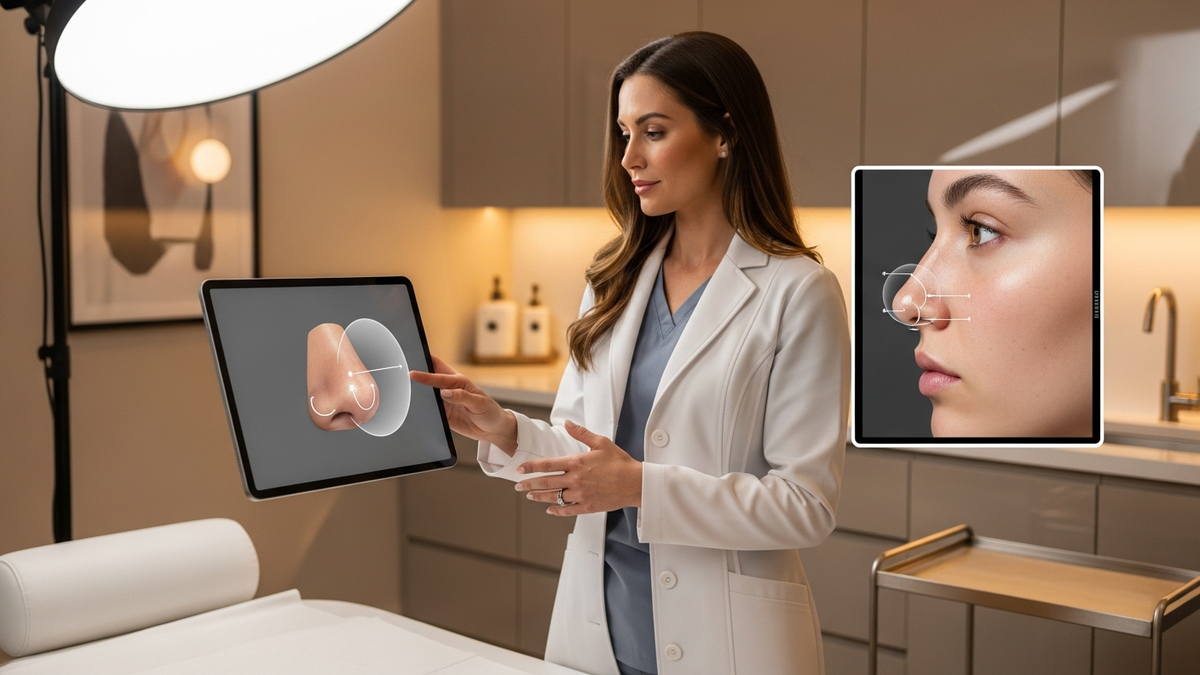
Your surgeon should help you visualize outcomes and explain trade-offs. If your skin is thicker, for example, the refinement may be more subtle. If your tip cartilage is highly rounded, structural support may be essential to maintain definition.
How Long Until You See the Final Results?
Patients often ask when they’ll know if the result is “right.” While many changes are visible early, final contour can take up to 12 months (or longer for certain tip characteristics). Factors include:
- Skin type and thickness
- How much reshaping and grafting was done
- Your healing pattern and scar remodeling
- How closely you follow post-op instructions
Patience is part of the process. The goal is a stable, refined outcome—not a rushed early appearance.
Button Nose Rhinoplasty and Other Facial Rejuvenation Options
Some patients consider additional facial enhancements to complement their rhinoplasty, especially if they want broader rejuvenation. While these are separate procedures, they can work together harmoniously.
Facelift for overall facial youthfulness
If you’re addressing skin laxity and aging features alongside nasal refinement, you may discuss whether a Facelift fits your goals. Timing varies and should be planned with your surgeon.
Blepharoplasty for eye-area balance
To create a refreshed, balanced look, some patients also consider Blepharoplasty. Eye-area rejuvenation can complement nose refinement by improving overall facial harmony.
Brow lift and eyebrow support
A well-positioned brow can enhance perception of the upper third of the face, indirectly affecting how the nose appears in proportion.
Frequently Asked Questions About Rhinoplasty for Button Nose
1) Will rhinoplasty for button nose make my nose smaller?
It depends on your anatomy and goals. Many button nose corrections focus on tip refinement (less bulbous, more defined) rather than making the nose dramatically smaller. Projection, rotation, and nostril balance are commonly adjusted to improve proportion.
2) Can rhinoplasty improve breathing if I’m congested?
Sometimes, yes—especially if the cosmetic changes overlap with structural airway issues. If your main problem is internal obstruction (for example, a deviated septum), Septoplasty or other functional procedures may be recommended either alongside or instead of rhinoplasty, depending on your evaluation.
3) How do I know if I need cartilage reshaping or grafting?
Your surgeon will examine the strength, position, and shape of your lower lateral cartilages, along with your skin characteristics. If you need additional support to maintain a refined tip contour, grafting may be recommended.
4) When can I return to work and exercise?
Many patients return to non-strenuous work within a couple of weeks, but timelines vary. Strenuous exercise, heavy lifting, and activities that increase blood pressure may need to be limited longer—follow your surgeon’s post-op plan.
5) What should I ask my surgeon during a button nose consultation?
Ask about their approach to tip definition, how they plan to preserve or improve nasal function, what you can expect during each phase of healing, and how they handle asymmetry or prolonged swelling.
CTA: Ready to Explore Rhinoplasty for Button Nose?
If you’re considering rhinoplasty for button nose, the next step is a personalized consultation where your surgeon can evaluate your anatomy, discuss aesthetic goals, and—if needed—assess nasal function.
To learn more about rhinoplasty options and planning in Beverly Hills, visit Rhinoplasty. If your concerns include chronic congestion or structural airway issues, explore functional nasal options such as Septoplasty as part of a comprehensive care plan.
FlowGeniQ Digest is here to help you ask better questions and make more informed decisions—so you can move forward with confidence.
Professional Disclaimer
This content is provided for general educational purposes only by FlowGeniQ Digest. It is not a substitute for professional advice, diagnosis, or treatment. Readers are advised to consult qualified professionals for personalized recommendations.
Medical Information Disclaimer
This content is provided for general educational purposes only by FlowGeniQ Digest. It is not a substitute for professional advice, diagnosis, or treatment. Readers are advised to consult qualified professionals for personalized recommendations.