Plastic surgery nose job is one of the most searched cosmetic procedures worldwide—and for good reason. Whether you’re hoping to refine a hump, improve symmetry, or achieve a more balanced profile, rhinoplasty (often called a “nose job”) can deliver transformative results. But modern care is more than aesthetics. Many people also pursue nose reshaping to breathe better, especially when a structural issue contributes to congestion, sinus pressure, or sleep-disordered breathing.
At FlowGeniQ Digest, we focus on helping you understand your options clearly—so you can make informed decisions with a qualified, board-certified specialist. In this guide, we’ll walk through what to expect from a plastic surgery nose job, the difference between cosmetic and functional goals, recovery and risks, and when alternatives like functional nasal surgery may be appropriate.
What a “plastic surgery nose job” typically means
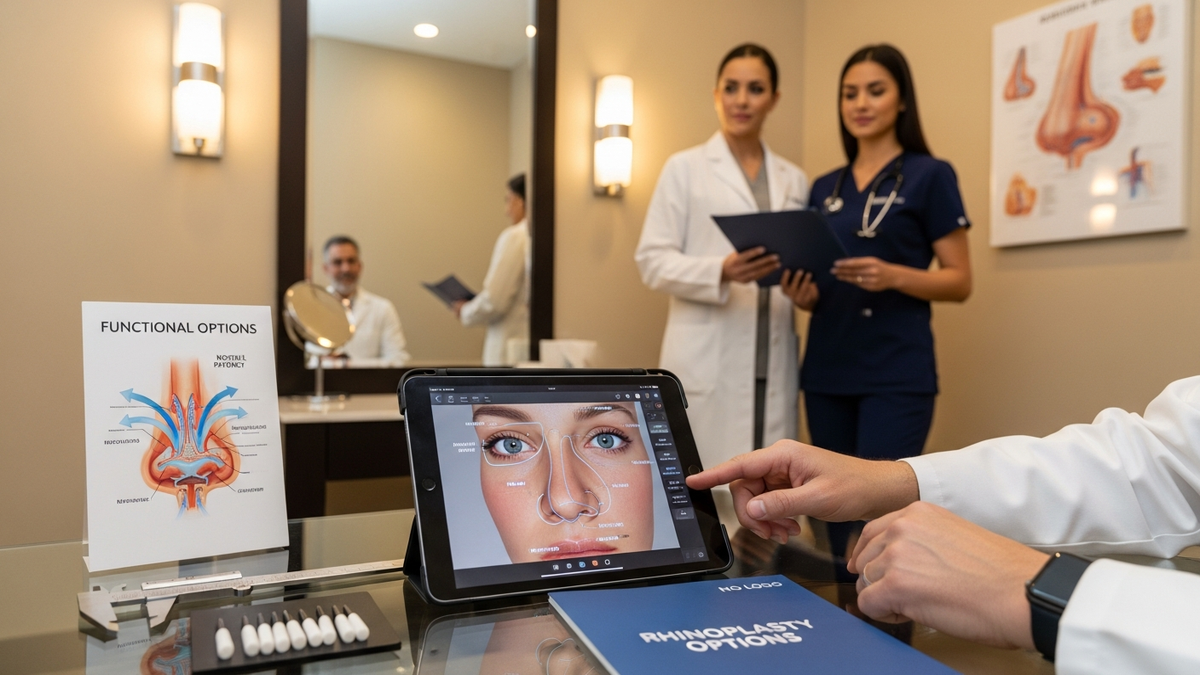
In everyday language, a plastic surgery nose job usually refers to rhinoplasty: a procedure that reshapes the nose to enhance appearance and, in some cases, improve nasal function. Rhinoplasty can address both external structure (the bridge and tip) and internal anatomy (septum, cartilage, and airflow pathways).
Depending on your goals, your surgeon may recommend a procedure primarily for:
- Aesthetic refinement (e.g., reducing a dorsal hump, improving tip definition, narrowing or straightening the nose)
- Functional improvement (e.g., addressing a deviated septum, nasal valve collapse, or enlarged turbinates)
- Both (a common scenario—especially for patients who want a more harmonious look and easier breathing)
Rhinoplasty vs. functional nasal surgery: same nose, different priorities
Not every “nose job” is purely cosmetic. In fact, many patients in Los Angeles and Beverly Hills seek treatment because their nose doesn’t just look a certain way—it also feels blocked.
When rhinoplasty is the right fit
Rhinoplasty is ideal when you want visible changes to shape and proportion. Modern rhinoplasty techniques are designed to produce natural-looking results while respecting facial balance.
If you’re specifically interested in cosmetic rhinoplasty in the Beverly Hills area, you can review Rhinoplasty for more details on how surgeons approach planning, technique selection, and outcomes.
When functional procedures may be more appropriate
Some patients primarily need breathing relief rather than cosmetic reshaping. In those cases, functional nasal procedures may provide meaningful symptom improvement with less alteration to the external nose.
For example, a structural issue can contribute to chronic congestion, sinusitis symptoms, or difficulty sleeping. A facial plastic and reconstructive surgeon who also understands ENT anatomy can help determine whether your best path is a full rhinoplasty or a targeted functional procedure.
Two commonly discussed functional pathways include:
- Septal correction for a crooked septum
- Nasal airflow optimization for valve or turbinate-related obstruction
To learn more about septal correction, see Septoplasty, and if your discussion includes Deviated Septum, this resource is also relevant: Deviated Septum.
Plastic surgery nose job goals: appearance, breathing, or both
One of the most important parts of planning a plastic surgery nose job is clarifying what “success” means to you. Most surgeons evaluate both your aesthetic preferences and your internal nasal anatomy. The best plan aligns your goals with the safest, most predictable technique.
Common aesthetic goals
- Reduce a hump on the bridge
- Refine the tip (lift, rotate, narrow, or define)
- Straighten asymmetry or improve overall balance
- Reshape nostrils for improved proportion
- Achieve a natural profile that fits your face
Common functional goals
- Relieve chronic congestion or a “stuffy nose”
- Improve airflow for easier breathing through the nose
- Reduce sinus pressure linked to blockage
- Support sleep quality when nasal obstruction contributes to sleep issues
- Address nasal valve collapse or other airflow-limiting anatomy
How surgeons evaluate your nose job candidacy
Whether you’re considering rhinoplasty for appearance alone or exploring a functional approach, evaluation should be comprehensive. A specialist typically reviews:
- Medical history (allergies, sinus infections, previous nasal trauma or surgery)
- Breathing symptoms (daytime congestion, nighttime obstruction, snoring, mouth breathing)
- Physical exam (external structure and internal nasal anatomy)
- Imaging or endoscopy when indicated (especially for chronic sinus or structural complexity)
- Skin and cartilage quality (important for tip stability and long-term shape)
- Facial proportions (the nose should harmonize with eyes, lips, chin, and overall profile)
In a patient-centered approach, your surgeon explains what can be realistically achieved, what may be limited by anatomy, and how to reduce the chance of dissatisfaction.
Types of rhinoplasty and nose reshaping techniques
There isn’t a single “one-size-fits-all” plastic surgery nose job. Surgeons choose techniques based on your anatomy and desired outcome.
Open vs. closed rhinoplasty (overview)
Two common approaches are open and closed rhinoplasty. The difference primarily relates to how access is gained to the nasal structures.
- Open rhinoplasty: often involves a small incision across the columella (the tissue between the nostrils), providing wide visualization for complex reshaping.
- Closed rhinoplasty: incisions are made inside the nostrils, with no external incision across the columella.
Your surgeon will recommend the approach that best supports structural changes, airflow considerations, and your aesthetic goals.
Cartilage grafting and structural support
Many nose jobs require support to maintain long-term shape and function. Surgeons may use cartilage grafts for tip refinement, dorsal contouring, or to strengthen areas that influence airflow.
Grafting decisions depend on:
- Existing cartilage strength
- History of trauma or prior surgery
- Desired tip projection and rotation
- Need for structural reinforcement (including nasal valve support)
Recovery timeline: what to expect after a plastic surgery nose job
Recovery is often the part patients plan for most carefully. While every case differs, a typical rhinoplasty recovery follows recognizable phases.
First week
- Swelling and bruising peak for many patients
- Splints or dressings may be used depending on technique
- Sleeping position is usually recommended to reduce swelling (often head elevated)
- Patients generally avoid strenuous activity
Weeks 2–4
- Bruising typically improves significantly
- Swelling continues, but many patients can return to normal daily routines with precautions
- Follow-up appointments monitor healing
Months 2–6
- Visible refinement continues as swelling gradually resolves
- Tip definition and contour may appear to “settle”
- Patients are often advised to avoid activities that risk nasal impact
Up to 12 months (and beyond)
Final results can take time. Scar maturation, cartilage remodeling, and residual swelling can influence how the nose looks over the long term. Your surgeon will guide you on when you can expect your most stable outcome.
Risks and potential complications to understand
Every surgical procedure has risks. A responsible consultation should include a transparent discussion of possible complications and how the surgical team reduces risk.
Commonly discussed risks
- Swelling and bruising that may last longer than expected
- Temporary numbness or changes in sensation
- Asymmetry (often minor, but can be a source of dissatisfaction)
- Infection (uncommon with proper care)
- Bleeding or hematoma
- Scarring (usually minimal, depending on approach)
Functional concerns (especially relevant for breathing goals)
If you’re considering a plastic surgery nose job for breathing relief, ask specifically about airflow outcomes. Potential concerns may include:
- Nasal valve weakness or persistent airflow limitation
- Septal issues (rare, but important to discuss)
- Persistent congestion if allergies or sinus inflammation aren’t adequately addressed
A surgeon who understands both cosmetic and functional rhinology can help ensure your plan addresses the underlying cause—not just the appearance.
Costs of a plastic surgery nose job: what influences pricing
Pricing varies widely based on geography, surgeon experience, complexity, and the type of procedure. While it’s tempting to search for a single number, a responsible estimate depends on your anatomy and goals.
Key factors that affect cost
- Primary vs. revision rhinoplasty (revision cases are often more complex)
- Need for grafting or structural support
- Functional procedures combined (e.g., septal correction, turbinate reduction)
- Hospital or surgical center fees
- Pre-operative testing and post-operative visits
- Anesthesia type and duration
During your consultation, ask for a clear breakdown of surgeon fees, facility fees, anesthesia fees, and what follow-up care is included.
Functional nasal surgery options that may complement or replace a nose job
Many patients benefit from a combined approach. Others may achieve symptom relief without major cosmetic reshaping. Below are common functional considerations discussed in head and neck specialty care.
Septoplasty for a deviated septum
If your symptoms are driven by a crooked septum, Septoplasty may help straighten nasal cartilage and improve airflow. For patients specifically diagnosed with a Deviated Septum, this same resource can guide your understanding: Deviated Septum.
Inferior turbinate reduction for long-term congestion
Enlarged turbinates can contribute to a persistent “stuffy nose,” especially in chronic congestion and allergy-related inflammation. Inferior turbinate reduction may be recommended to improve long-term nasal airflow.
Nasal valve collapse treatments
Some patients breathe poorly because the nasal valve area collapses or narrows. Depending on severity, treatment may range from non-surgical options (such as targeted medications) to surgical repair.
When sinus health and allergies matter
Chronic sinusitis and inflammation can coexist with structural nasal obstruction. Minimally invasive options such as balloon sinuplasty or endoscopic sinus surgery may restore normal sinus function and improve symptoms. Allergy treatment can also play a major role in reducing congestion and improving breathing quality.
Choosing a surgeon for your plastic surgery nose job
Because a nose job affects both appearance and function, surgeon selection should be rigorous. Look for evidence of specialized training in head and neck anatomy, facial plastics, and—if breathing is part of your goal—an ENT-informed approach.
What to look for in a qualified specialist
- Board certification and relevant fellowship training
- Experience with functional rhinology when breathing symptoms exist
- Natural aesthetic outcomes aligned with facial harmony
- Patient education and shared decision-making
- Transparent risk discussion and realistic expectations
A head-and-neck focus can matter
Dr. Hootan Zandifar is a board-certified facial plastic and reconstructive surgeon who focuses solely on surgeries of the head and neck. That specialization supports an integrated approach—particularly important when a plastic surgery nose job isn’t just about looks, but also about chronic nasal congestion, sinus symptoms, or difficulty breathing.
Dr. Zandifar’s practice includes advanced anti-aging and facial rejuvenation options, along with functional nasal procedures designed to improve quality of life. If you’re also considering other facial enhancements, you may find helpful context in related services such as Facelift and Blepharoplasty.
Questions to ask during your consultation
A great consultation can reduce uncertainty and help you feel confident. Consider bringing a list of questions, such as:
- Am I a good candidate for rhinoplasty, a functional procedure, or a combination?
- What specific anatomical factors affect my breathing?
- What changes can realistically be achieved for my nose shape and profile?
- Will grafting be needed? If so, where would grafts come from?
- What are my personalized risks and how do you manage complications?
- What does my recovery timeline look like based on your surgical plan?
- How will you minimize swelling and support long-term stability?
- What signs after surgery should prompt me to call your office immediately?
Actionable preparation tips before your plastic surgery nose job
You can improve your surgery experience by planning ahead. While your surgeon will provide instructions tailored to you, these practical steps are commonly recommended.
Pre-operative planning
- Follow medication guidance: ask about supplements, blood thinners, and any medications that could affect bleeding.
- Arrange transportation: plan for someone to drive you home after your procedure.
- Prepare your recovery space: keep pillows ready for head elevation and stock easy-to-eat foods.
- Schedule time off: plan for at least one to two weeks of reduced activity depending on your job.
During recovery
- Protect your nose: avoid pressure, impact, or activities that risk trauma.
- Attend follow-ups: early monitoring helps ensure healing stays on track.
- Be patient with results: swelling and settling are normal parts of the process.
How to set realistic expectations
A plastic surgery nose job can be life-changing, but it’s important to understand what “natural-looking” means in your specific case. Your nose is supported by cartilage, skin thickness, and internal structures that influence long-term stability.
In a high-quality consultation, your surgeon should discuss:
- What changes are most likely to be stable over time
- What changes may evolve as swelling resolves
- Which outcomes depend on healing quality and anatomy
- What alternatives exist if your goals are primarily functional
FAQ: Plastic surgery nose job
Is a plastic surgery nose job only for appearance?
No. While rhinoplasty is commonly chosen for aesthetics, it can also address functional issues. Many patients seek combined goals—improving both nasal shape and breathing—depending on their anatomy and symptoms.
How long does swelling last after rhinoplasty?
Swelling varies by person and technique. Many patients see significant improvement within the first few weeks, but refinement can continue for months. Final results often take up to a year or more as tissues settle and residual swelling resolves.
Can I breathe better after a nose job?
In many cases, yes—especially when breathing problems are linked to structural factors such as a deviated septum, enlarged turbinates, or nasal valve collapse. Your surgeon should evaluate airflow and discuss a plan that supports both aesthetics and function.
What’s the difference between septoplasty and rhinoplasty?
Septoplasty focuses on correcting a crooked septum to improve airflow. Rhinoplasty reshapes the nose externally and may also correct internal structures. If your primary concern is breathing, functional procedures may be considered instead of (or alongside) cosmetic reshaping.
For more context, you can explore Septoplasty.
How do I choose between primary and revision rhinoplasty?
Primary rhinoplasty is for patients who haven’t had a nose surgery before. Revision rhinoplasty addresses concerns after prior surgery. Revision cases are often more complex, so it’s especially important to consult a surgeon with extensive experience in both aesthetic refinement and functional nasal anatomy.
Ready for your next step?
If you’re considering a plastic surgery nose job, the most important step is getting a personalized evaluation—especially if you have chronic congestion, sinus symptoms, or difficulty breathing. A thoughtful plan can help you achieve a nose shape that looks natural and supports the way you breathe.
Contact a qualified specialist to discuss your goals, review your anatomy, and explore whether a cosmetic rhinoplasty, a functional procedure, or a combined approach is best for you.
FlowGeniQ Digest is here to guide your research with clear, evidence-informed education—but your outcomes depend on individualized medical care.
Professional Disclaimer
This content is provided for general educational purposes only by FlowGeniQ Digest. It is not a substitute for professional advice, diagnosis, or treatment. Readers are advised to consult qualified professionals for personalized recommendations.
Medical Information Disclaimer
This content is provided for general educational purposes only by FlowGeniQ Digest. It is not a substitute for professional advice, diagnosis, or treatment. Readers are advised to consult qualified professionals for personalized recommendations.