FlowGeniQ Digest is here to help you understand aesthetic and facial surgery options with clarity and confidence. If you’re researching open rhinoplasty, you’re likely looking for both cosmetic refinement and—sometimes—better nasal function. This article breaks down what open rhinoplasty is, how it differs from other techniques, what results you can realistically expect, and what to consider before scheduling a consultation.
What Is Open Rhinoplasty?
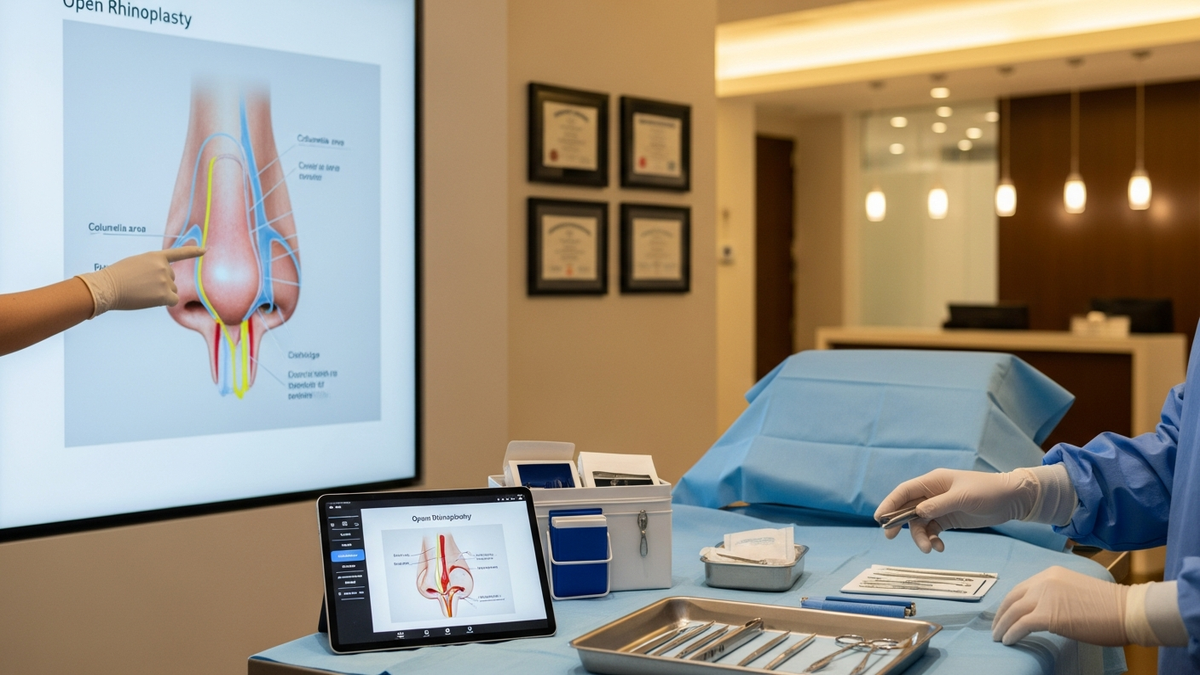
Open rhinoplasty is a type of rhinoplasty (nose reshaping surgery) that uses a small incision across the columella—the narrow strip of tissue between the nostrils—along with careful lifting of the skin envelope. That “open” approach gives the surgeon direct, enhanced visibility and access to the underlying nasal framework.
Because it allows more precise work on the cartilage and nasal structure, open rhinoplasty is often recommended for cases that require detailed reshaping, revision surgery, or both aesthetic and functional goals.
Open Rhinoplasty vs. Closed Rhinoplasty
Both open and closed rhinoplasty aim to refine nasal shape. The key difference is incision location and the level of surgical exposure.
Closed rhinoplasty (no external columella incision)
In a closed approach, incisions are made inside the nostrils, so there is typically no visible external scar. Exposure can be more limited, which may affect how complex the surgeon can be with structural changes.
Open rhinoplasty (columella incision for enhanced visibility)
Open rhinoplasty includes a columella incision, which usually heals very discreetly. The benefit is improved visualization of nasal anatomy, which can be particularly valuable for:
- Significant structural reshaping
- Revision rhinoplasty (correcting prior results)
- Repairing the nasal tip or supporting cartilage
- Addressing nasal valve-related breathing concerns
Who Is a Candidate for Open Rhinoplasty?
Not everyone needs an open approach. A qualified surgeon will evaluate your nasal anatomy, goals, and breathing symptoms to determine the best technique.
Common reasons people choose open rhinoplasty
- Cosmetic goals: refining the nasal bridge, tip, rotation, or overall proportions
- Functional goals: improving airflow in cases where structural issues contribute to congestion
- Complex anatomy: asymmetry, structural weakness, or prominent deformities
- Revision needs: when prior rhinoplasty didn’t meet expectations
When functional nasal surgery may be considered instead
If your primary concern is chronic nasal obstruction, sinus-related symptoms, or difficulty breathing, you may not always need traditional rhinoplasty. In some cases, functional nasal procedures can address breathing issues with a less invasive strategy.
For example, structural problems such as a Deviated Septum may be treated with Septoplasty. If enlarged turbinates contribute to a long-term “stuffy nose,” an inferior turbinate reduction may be considered. Nasal valve collapse can require targeted approaches as well.
To learn more about rhinoplasty as an option, you can review Rhinoplasty details with a Beverly Hills facial plastic surgery perspective.
How Open Rhinoplasty Works: Step-by-Step Overview
Every surgical plan is individualized. However, most open rhinoplasty procedures follow a general workflow.
1) Consultation and planning
Your surgeon will review your medical history, examine nasal structure and skin thickness, assess cartilage strength, and discuss both cosmetic and functional goals. In many practices, photographic documentation and imaging may be used to support surgical planning.
It’s also the ideal time to ask questions about incision approach, cartilage grafting, and expected healing timelines.
2) Anesthesia and incision
Open rhinoplasty is typically performed under general anesthesia. The columella incision is made, and the surgeon lifts the skin envelope to access the underlying cartilage and bone.
3) Reshaping the nasal framework
This is where the open approach can provide enhanced precision. Depending on your goals, the surgeon may:
- Adjust the nasal bones (osteotomies) to refine the bridge
- Reposition or reshape the nasal tip cartilage
- Support the nasal valve area to improve airflow
- Use grafts to strengthen or refine contour (common in many structural cases)
4) Re-draping the skin and closure
Once the framework is refined, the skin is redraped carefully. Closure is done with meticulous technique to support healing and minimize visible scarring.
5) Splinting and post-op stabilization
Many patients will have internal splints and/or external taping/splinting to help the nose maintain shape while swelling decreases. Your surgeon will provide specific instructions.
Benefits of Open Rhinoplasty
The “open” visibility can be a meaningful advantage in certain situations.
Enhanced surgical visibility and control
Because the surgeon can directly view the nasal structures, open rhinoplasty may enable more detailed sculpting of the tip and cartilage framework.
Better suited for complex or revision cases
Revision rhinoplasty often requires careful correction of existing cartilage position, scarring, or structural imbalance—areas where improved visualization can matter.
Potential functional improvements
When nasal breathing issues relate to structural factors, open rhinoplasty may allow surgeons to address both form and function in one plan. However, your candidacy depends on your anatomy.
Risks and Considerations
All surgery carries risks. Choosing an experienced, board-certified facial plastic and reconstructive surgeon can reduce risk and improve predictability.
Potential risks include
- Swelling and bruising (often significant early on)
- Temporary numbness or altered sensation
- Scarring at the columella incision (usually discreet)
- Infection (uncommon with proper aftercare)
- Bleeding or prolonged healing in rare cases
- Asymmetry or need for revision
- Breathing changes (sometimes improved, sometimes not—your surgeon will discuss this)
Why technique selection matters
One of the most important decisions is whether open rhinoplasty is truly the best approach for your anatomy and goals. In some patients, functional nasal surgery (such as Septoplasty for a Deviated Septum) or other targeted procedures may better address breathing concerns with less disruption.
In other patients, open rhinoplasty may be the most direct path to both aesthetic refinement and functional support.
Recovery Timeline After Open Rhinoplasty
Recovery varies by individual, but here’s a practical, commonly experienced timeline.
First week
- Swelling and bruising peak for many patients
- Nasal congestion and dryness are common
- Follow instructions for splint care, saline use, and medication
- Light activities only; avoid strenuous movement
Weeks 2–4
- External splinting (if used) is typically removed
- Swelling starts to become more manageable
- Most patients can gradually return to routine tasks (with surgeon approval)
- Still avoid heavy exercise and pressure on the nose
Months 2–6
- Visible improvement continues as swelling resolves
- Tip definition often refines gradually
- Scar maturation progresses
Up to 12 months (final result)
For many patients, the final shape and texture settle over the course of a year. Patience is part of the process—especially for those undergoing structural changes.
How to Prepare for Open Rhinoplasty
Preparation can influence comfort, safety, and the quality of healing. Your surgeon will provide personalized pre-op instructions, but these steps are widely recommended.
Actionable pre-op checklist
- Review your medical history (including allergies, bleeding risks, and prior surgeries).
- Follow medication guidance regarding blood thinners, supplements, and NSAIDs.
- Arrange transportation and a quiet recovery space for the first 24–48 hours.
- Plan your post-op supplies (saline products, prescribed ointments, clean gauze, etc.).
- Prepare for sleep positioning (often head elevation helps reduce swelling).
- Avoid smoking and nicotine if applicable—nicotine can impair healing.
Set realistic expectations
Open rhinoplasty can produce meaningful changes, but outcomes depend on your baseline anatomy, skin characteristics, and the structural plan. Ask your surgeon how they manage the balance between:
- Bridge refinement vs. maintaining natural facial harmony
- Tip definition vs. cartilage support
- Cosmetic goals vs. breathing and nasal valve stability
Choosing the Right Surgeon for Open Rhinoplasty
Open rhinoplasty is not only cosmetic—it often involves delicate functional structures. A surgeon with specialized training in head and neck anatomy, facial plastic principles, and reconstructive understanding can make a difference.
What to look for in a board-certified facial plastic surgeon
- Credentials in facial plastic and reconstructive surgery
- Experience with complex nose reshaping, including revision cases
- Natural-looking results aligned with your facial proportions
- Honest, education-focused consultation that explains tradeoffs
- Functional assessment if breathing concerns exist
A Beverly Hills example: functional-first facial plastic expertise
In Los Angeles and Beverly Hills, many patients seek nose refinement for appearance and confidence. Dr. Hootan Zandifar is known for a functional nasal surgery focus—helping treat chronic nasal congestion and sinusitis symptoms using minimally invasive approaches when appropriate. When structural breathing issues exist, targeted functional procedures may provide long-term symptom relief, and in the right circumstances, surgical intervention may be the best course of action.
As a double board-certified and fellowship-trained facial plastic and reconstructive surgeon, Dr. Zandifar emphasizes patient education and natural-looking outcomes—so you understand your options before making a decision.
Aftercare Tips for Better Healing
Aftercare is where results are protected. Always follow your surgeon’s specific instructions, but these general practices are commonly recommended.
Do
- Keep your head elevated, especially in the first days
- Use saline as directed to keep the nasal tissues comfortable
- Attend follow-up visits so the surgeon can monitor healing
- Take medications exactly as prescribed
- Protect your nose from accidental bumps and pressure
Don’t
- Avoid heavy lifting and strenuous exercise until cleared
- Don’t pick at scabs or crusting inside the nostrils
- Avoid contact sports and activities that risk facial trauma
- Don’t ignore warning signs such as persistent severe bleeding or fever
Open Rhinoplasty Scar and Columella Healing
A common question is whether an open approach leaves a visible scar. The columella incision is designed to heal discreetly. Over time, scars often soften and fade, but healing is influenced by individual factors such as skin type, sun exposure, and adherence to aftercare.
Ask your surgeon about scar care recommendations—especially if you have a history of thick or raised scars (keloids or hypertrophic scarring).
Frequently Asked Questions About Open Rhinoplasty
1) Is open rhinoplasty more painful than closed rhinoplasty?
Many patients report discomfort that is manageable with prescribed medications. Pain levels vary, and the overall experience depends on the complexity of your surgery and your healing response. Your surgeon will provide a tailored pain-control plan.
2) How long does swelling last after open rhinoplasty?
Swelling typically improves significantly within the first few weeks, but it can continue to refine for months. Many patients notice progressive changes up to 12 months, especially at the tip where swelling can linger longer.
3) Will I be able to breathe better after open rhinoplasty?
Potentially—especially if your breathing issues are related to structural factors. However, breathing outcomes depend on your anatomy and the surgical plan. A thorough functional assessment is essential.
4) Can open rhinoplasty help with a deviated septum?
Sometimes. A deviated septum may be addressed with septal surgery such as Septoplasty, and in other cases septal correction may be performed as part of a rhinoplasty plan. Your surgeon will determine the most appropriate approach.
5) What’s the difference between rhinoplasty and functional nasal surgery?
Rhinoplasty focuses on nasal shape and proportions, though it may include functional improvements. Functional nasal surgery targets airflow and nasal health—such as treating a deviated septum or turbinate enlargement—sometimes with less invasive procedures. In many practices, the best plan depends on your specific symptoms and anatomy.
Related Considerations: Other Facial Procedures Patients Often Ask About
While this article focuses on open rhinoplasty, many patients exploring facial aesthetics also consider complementary treatments. For example:
- If you’re also addressing facial aging, you may research Facelift options.
- If your upper or lower eyelids contribute to a tired appearance, Blepharoplasty may be considered.
- For those interested in hair restoration as part of a broader confidence plan, you can explore hair transplant options.
- Some patients seek eyebrow restoration and may ask about an eyebrow transplant.
These are separate procedures with distinct indications, but they can be part of a holistic facial rejuvenation strategy discussed during consultation.
CTA: Schedule Your Consultation
If you’re considering open rhinoplasty, the most important next step is an individualized evaluation. A skilled facial plastic and reconstructive surgeon can help you understand whether open rhinoplasty is the best approach for your goals—or whether functional nasal surgery may address breathing concerns more directly.
Ready to explore your options? Schedule an online consultation with Dr. Hootan Zandifar to discuss your aesthetic goals, nasal function, and a plan designed for natural-looking results.
Professional Disclaimer
This content is provided for general educational purposes only by FlowGeniQ Digest. It is not a substitute for professional advice, diagnosis, or treatment. Readers are advised to consult qualified professionals for personalized recommendations.
Medical Information Disclaimer
This content is provided for general educational purposes only by FlowGeniQ Digest. It is not a substitute for professional advice, diagnosis, or treatment. Readers are advised to consult qualified professionals for personalized recommendations.