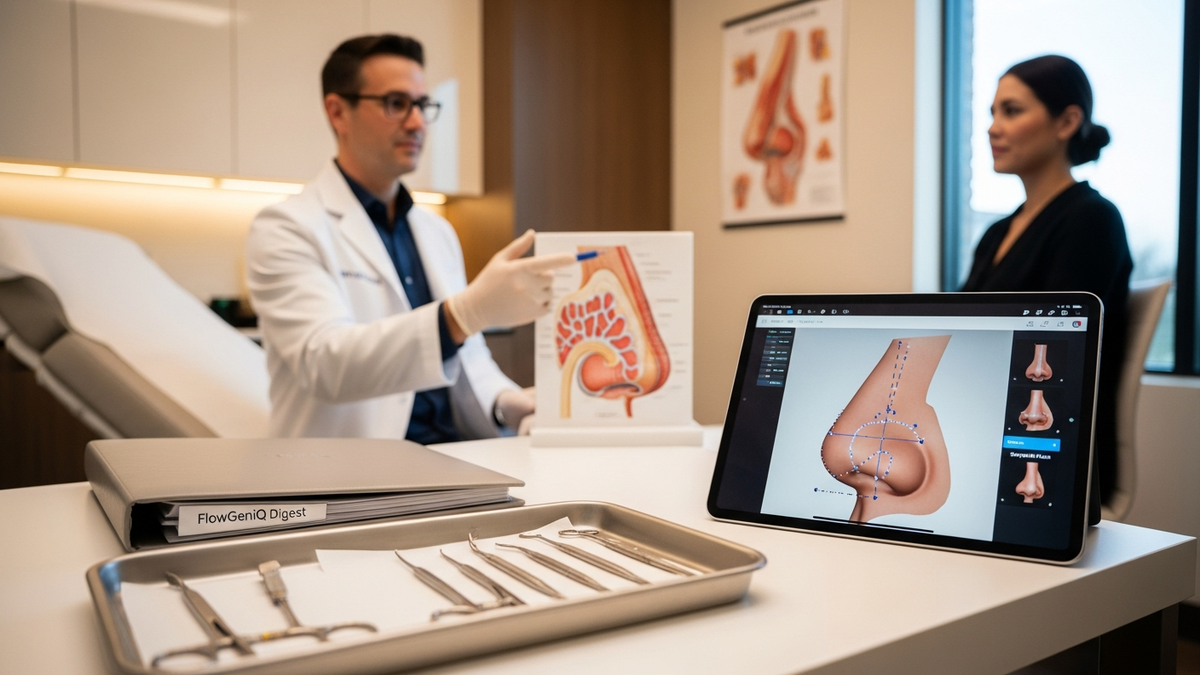
FlowGeniQ Digest is here to help you navigate complex healthcare decisions with clarity. If you’re searching for nose job rhinoplasty surgery, you’re likely weighing both appearance goals and real-world breathing comfort. A modern approach to rhinoplasty in Beverly Hills often includes careful assessment of nasal structure, airflow, and facial harmony—so results look natural and feel right.
In this premium guide, we’ll cover what rhinoplasty can (and can’t) do, how surgeons plan outcomes, which functional alternatives may help some patients, and what recovery typically involves. You’ll also find a practical checklist for choosing a surgeon who specializes in head and neck procedures.
What Is Nose Job Rhinoplasty Surgery?
Nose job rhinoplasty surgery is a procedure that reshapes the nose to improve aesthetics and/or nasal function. People often use the term “nose job” interchangeably with rhinoplasty, but the medical goals can differ:
- Cosmetic rhinoplasty: refines the nose’s shape, size, tip definition, and overall facial balance.
- Functional rhinoplasty: targets breathing limitations caused by structural issues such as a deviated septum, nasal valve collapse, or enlarged turbinates.
- Combined (aesthetic + functional): addresses both appearance and airflow in one plan when appropriate.
At a facial plastic and reconstructive surgery practice, the best outcome usually comes from individualized planning rather than a “one-size-fits-all” template.
Cosmetic Goals vs Functional Breathing: What Are You Really Treating?
Many patients pursue a nose job rhinoplasty surgery for confidence and self-expression. Others want relief from chronic congestion, mouth breathing, or sinus-related symptoms. The key is to identify which concerns dominate—because that influences surgical technique and expectations.
Common cosmetic motivations
- Reducing a visible hump or irregular dorsal line
- Refining the nasal tip for better proportions
- Slimming the nose or narrowing the bridge (when structurally feasible)
- Improving symmetry between nostrils
- Balancing nose size with facial features
Common functional motivations
- Difficulty breathing through one or both nostrils
- Chronic “stuffy nose” symptoms
- Recurrent sinus pressure or congestion
- Sleep-disordered breathing concerns
- Symptoms linked to nasal valve collapse or septal deviation
Some patients assume rhinoplasty is the only solution, but not every breathing problem requires cosmetic reshaping. In certain cases, procedures aimed at airway correction can be more appropriate and less invasive.
Rhinoplasty vs Septoplasty: Understanding the Difference
It’s common to search for both nose job rhinoplasty surgery and Septoplasty when symptoms and appearance goals overlap. Here’s the distinction:
Rhinoplasty
Primarily reshapes external and internal nasal structures to refine appearance and/or support airflow.
Septoplasty
Corrects a crooked nasal septum to improve airflow. If your main issue is a structural obstruction from septal deviation, a surgeon may recommend Septoplasty or a related airway-focused approach.
Deviated Septum and breathing limitations
A Deviated Septum can obstruct one side of the nose and contribute to chronic congestion. In these cases, treating the septum may substantially improve breathing—even without major cosmetic changes.
If you’re considering a rhinoplasty procedure for both look and function, ask your surgeon how they evaluate airflow and whether a staged or combined plan is best for you.
Nose Job Rhinoplasty Surgery Techniques: What “Natural-Looking” Means
When patients say they want natural results, they typically mean:
- Proportions that fit their face
- Tip definition without an over-refined, “button” look
- Symmetry that appears subtle rather than surgically obvious
- Preservation of nasal function and comfortable breathing
Natural results are achieved through meticulous planning, precise structural support, and respect for your unique anatomy. Many surgeons use advanced methods to refine the nasal tip, straighten the dorsum, and maintain or restore internal nasal valves that influence airflow.
Key planning elements your surgeon should discuss
- Facial analysis: nose proportions relative to eyes, lips, and overall facial thirds.
- Internal anatomy: septum, turbinates, and nasal valve angle support.
- Skin thickness and soft-tissue behavior: affects how shaping changes will appear over time.
- Cartilage availability: determines whether grafting is needed for stability and refinement.
- Healing timeline: swelling patterns and when final appearance becomes clear.
Who Is a Good Candidate for Nose Job Rhinoplasty Surgery?
Ideal candidates generally have realistic goals, stable health, and anatomy that supports the desired changes. Your surgeon will also consider factors such as:
- Age and nasal maturity (in many cases, rhinoplasty is delayed until nasal growth is complete)
- Overall health and ability to safely undergo anesthesia
- Smoking status (smoking can increase healing complications)
- Bleeding and medication history
- Existing nasal function and breathing symptoms
- Prior nasal surgeries (revision rhinoplasty requires specialized experience)
When functional nasal surgery may be more appropriate
For some patients, the best first step is not rhinoplasty but functional nasal procedures that improve airflow. A specialist focused on head and neck surgery may evaluate whether airway treatments can permanently relieve chronic symptoms.
Functional Options That May Reduce the Need for Full Rhinoplasty
Not all breathing problems require cosmetic nose reshaping. Depending on anatomy, a surgeon may recommend functional interventions such as:
Septoplasty for nasal airflow obstruction
Septoplasty straightens the nasal cartilage when the septum is crooked, helping one or both nostrils open more effectively. If your primary issue is airflow limitation from a septal deviation, Septoplasty may be a strong option.
Inferior turbinate reduction for chronic “stuffy nose”
Enlarged nasal turbinates can contribute to long-term congestion. Inferior turbinate reduction is often considered for persistent symptoms and can be relevant for patients with sleep apnea or chronic nasal obstruction.
Nasal valve collapse treatments
Nasal valve collapse can cause difficulty breathing that worsens with exercise, position changes, or allergies. Depending on severity, treatment can range from non-surgical approaches to surgical repair, including options such as Latera implants or Vivair procedures.
Balloon sinuplasty and endoscopic sinus surgery
If chronic sinusitis contributes to congestion and facial pressure, minimally invasive sinus procedures may help restore normal sinus function. Balloon sinuplasty can open blocked sinus passages, while endoscopic sinus surgery with image guidance can widen sinus pathways and support long-term drainage.
These functional treatments may improve breathing comfort substantially—sometimes without needing to change the external nose shape.
What to Expect During the Rhinoplasty Consultation
Your consultation is where results are truly shaped. A high-quality nose job rhinoplasty surgery evaluation should feel thorough, not rushed. Expect your surgeon to:
- Review your medical history and breathing symptoms
- Perform a physical examination of internal nasal structures
- Discuss cosmetic goals in detail (and what is realistically achievable)
- Explain anesthesia, surgical plan, and recovery timeframes
- Cover risks, benefits, and alternatives
- Provide before-and-after references that align with your anatomy
At a facial plastic and reconstructive practice in Beverly Hills, the emphasis is often on patient education—helping you understand both the aesthetic and functional sides of nasal surgery.
How Rhinoplasty Surgery Is Performed (High-Level Overview)
While each case is unique, rhinoplasty generally involves reshaping cartilage and/or bone, and sometimes using grafts for support. Many surgeons use either:
- Open rhinoplasty: a small incision across the columella provides direct visualization.
- Closed rhinoplasty: incisions are made inside the nostrils.
Your surgeon will recommend the approach that best supports your goals, especially if you need tip refinement, dorsal smoothing, or structural support to improve airflow.
Recovery Timeline: Nose Job Rhinoplasty Surgery Expectations
Recovery is often the part patients underestimate. Swelling and subtle changes can evolve for months. While individual experiences vary, here’s a typical framework:
First week
- Swelling and bruising peak for many patients
- Nasal splints or tape may be used (per surgeon preference)
- Discomfort is usually manageable with prescribed guidance
- Most people plan for limited activity
Weeks 2–4
- Bruising typically improves significantly
- Swelling continues to reduce, but the nose may still look “different” than final form
- Surgeons often provide restrictions on exercise and facial pressure
Months 2–6
- Visible refinement continues as tissues settle
- Tip definition and contour can become clearer
- Some patients notice breathing improvements if functional issues were addressed
Up to 12 months (or longer)
- Final appearance can take time as healing completes
- Any scar maturation and soft-tissue settling becomes more apparent
Actionable tip: Ask your surgeon for a written recovery plan, including medication instructions, activity restrictions, sleep positioning, and follow-up schedule. This reduces uncertainty and supports consistent healing.
Risks and Side Effects: What You Should Know Before Surgery
Every surgery carries potential risks. A responsible surgeon should discuss these clearly during counseling. Common categories include:
- Swelling and bruising (expected and temporary)
- Temporary numbness or sensitivity
- Infection or bleeding (uncommon but possible)
- Asymmetry or contour irregularities
- Breathing changes (some improve, some may persist or require revision)
- Scar-related issues (typically minimal but can occur)
- Need for revision in select cases
Choosing an experienced facial plastic and reconstructive surgeon can reduce avoidable complications and improve the likelihood of natural, stable outcomes.
How to Choose a Surgeon for Nose Job Rhinoplasty Surgery
Not all rhinoplasty providers have the same training, outcomes, or approach. When selecting a surgeon, look beyond marketing and focus on expertise, communication, and specialization.
Red flags to avoid
- Vague answers about breathing function and internal nasal anatomy
- No discussion of alternatives (e.g., septoplasty or turbinate reduction)
- Pressure to proceed quickly without addressing risks and goals
- Limited ability to explain your personalized surgical plan
What to look for
- Board certification and fellowship training in facial plastic/reconstructive surgery
- Head and neck focus (often improves functional nasal decision-making)
- Clear patient education and realistic expectations
- Experience with both aesthetic and functional cases
- Before-and-after examples that match your goals and anatomy
For readers in Los Angeles and Beverly Hills, it can help to review practice backgrounds and surgical philosophy. For example, some surgeons specialize in functional nasal surgery and head/neck procedures and may evaluate whether a functional airway approach could be more appropriate than rhinoplasty alone.
Functional Nasal Surgery at the Same Time: A Smarter “Two-Goal” Strategy
A high-performing approach to nose job rhinoplasty surgery is not just about shaping the nose—it’s about supporting the nasal framework so breathing and appearance both improve. In some cases, functional nasal procedures can permanently alleviate chronic symptoms that would otherwise undermine quality of life.
In a practice dedicated to head and neck surgery, the focus may include minimally invasive options when appropriate, such as:
- Septoplasty for septal deviation
- Inferior turbinate reduction for chronic congestion
- Nasal valve collapse repair using non-surgical or surgical techniques
- Septal perforation repair when a hole extends through the septum
- Balloon sinuplasty or endoscopic sinus surgery for chronic sinusitis
If you’re dealing with chronic congestion and want to explore both appearance and function, ask whether your plan should include functional nasal evaluation before committing to rhinoplasty. In many cases, this results in better satisfaction because it aligns with your actual needs.
Does Rhinoplasty Affect Sinus Health or Allergy Symptoms?
Rhinoplasty can influence nasal airflow patterns, which may change how you perceive congestion. However, it’s important to distinguish between nasal structural obstruction and inflammation driven by allergies or chronic sinusitis.
Allergies and breathing
Allergies can affect nasal airflow and contribute to chronic congestion. Some practices offer allergy treatment approaches such as sublingual immunotherapy (no-shot method) for selected patients. This can help address underlying allergic triggers rather than only mechanical obstruction.
Chronic sinusitis
When sinus passages are blocked, trapped mucus and recurrent infections can occur. Minimally invasive sinus treatments—including balloon sinuplasty and image-guided endoscopic sinus surgery—may be considered alongside or instead of rhinoplasty depending on your evaluation.
Actionable tip: If you have recurring sinus infections, snoring, or long-term congestion, bring a detailed symptom timeline to your consultation. Your surgeon can then decide whether rhinoplasty, functional nasal surgery, sinus surgery, allergy care, or a combination is most appropriate.
Preparing for Surgery: A Patient Checklist
Preparation can influence comfort, safety, and recovery quality. Use this checklist to guide your planning:
- Medication review: follow your surgeon’s instructions about stopping blood thinners, supplements, and certain medications.
- Smoking cessation: stop well in advance to support healing.
- Arrange transportation: plan for someone to drive you home after surgery.
- Set up recovery space: clean pillows, hydration, and easy-to-reach essentials.
- Prepare for activity restrictions: avoid strenuous exercise and follow facial precautions.
- Follow wound care instructions exactly as provided.
Good surgical outcomes are built before the first incision. Your surgeon should provide clear pre-op instructions and a post-op plan that you can follow consistently.
Frequently Asked Questions About Nose Job Rhinoplasty Surgery
1) Is nose job rhinoplasty surgery the same as septoplasty?
No. Nose job rhinoplasty surgery reshapes the nose for aesthetic and/or functional reasons. Septoplasty corrects a crooked septum to improve airflow. Some patients need one, both, or a combined approach depending on their anatomy and goals.
2) How long does it take to see final results?
Many patients notice improvements early, but final appearance often takes months. Swelling can gradually resolve over 6–12 months (sometimes longer), especially at the tip where soft tissue settles slowly.
3) Will rhinoplasty improve breathing if I have congestion?
It can—especially if your congestion is related to structural issues that the surgeon addresses during surgery. If congestion is primarily due to allergies or sinus inflammation, functional nasal or sinus treatments may be more appropriate. A thorough evaluation is essential.
4) What are the most common risks?
Swelling and bruising are common and temporary. Other risks include infection, bleeding, asymmetry, contour irregularities, breathing changes, and—rarely—issues that may require revision surgery.
5) How do I know if I need a functional airway procedure instead of rhinoplasty?
If your primary concern is long-term nasal obstruction (e.g., deviated septum, nasal valve collapse, enlarged turbinates), a specialist may recommend airway-focused procedures such as Septoplasty or other functional options. Your surgeon should explain alternatives and why they fit your anatomy.
Why Patients Trust Head and Neck Specialists for Rhinoplasty
Rhinoplasty is both aesthetic and functional, which is why experience in head and neck surgery can matter. Surgeons who focus on the region often bring a deeper understanding of airflow, tissue behavior, and structural relationships inside the nose.
One example is Dr. Hootan Zandifar, a board-certified facial plastic and reconstructive surgeon based in Beverly Hills, CA. His approach emphasizes patient education, honest guidance, and natural-looking outcomes. He specializes in cosmetic and reconstructive surgery of the head and neck, with an additional focus on functional nasal surgery to address chronic congestion and sinusitis when structural defects affect breathing.
If you want to explore rhinoplasty options, you can review resources such as Rhinoplasty to better understand how planning and outcomes are approached in a facial plastic setting.
Related Facial Procedures (Optional): When a “Whole-Face” Plan Makes Sense
Some patients combine nasal refinement with other aesthetic treatments to achieve balanced facial rejuvenation. If you’re considering a broader transformation, discuss how timing and recovery schedules interact.
- Blepharoplasty (eyelid surgery) can refresh the eye area and complement nasal refinement. Learn more: Blepharoplasty.
- Facelift (Facelift) may be considered for sagging skin and overall facial aging. Explore: Facelift.
These are not always necessary, but for some patients they support a cohesive result—especially when the goal is overall facial harmony rather than a single feature change.
Final Thoughts: The Best Nose Job Rhinoplasty Surgery Plan Is the One That Fits You
Choosing nose job rhinoplasty surgery is a personal decision that should be grounded in both aesthetics and function. The most satisfying outcomes typically come from:
- Clear cosmetic goals and realistic expectations
- Thorough evaluation of breathing and nasal structure
- A surgeon who can explain alternatives (including airway-first options)
- A structured recovery plan you can follow confidently
Whether you’re primarily seeking a refined nose shape or relief from chronic congestion, the right next step is an expert consultation where your anatomy and priorities drive the plan.
Call to Action: Schedule a Consultation
If you’re considering nose job rhinoplasty surgery in Los Angeles or Beverly Hills, take the next step toward clarity. A consultation can help you understand whether rhinoplasty, functional nasal procedures, or a combined plan best supports both appearance and breathing.
Book your visit online to discuss your goals and receive a personalized, education-first evaluation from a facial plastic and reconstructive specialist.
Professional Disclaimer
This content is provided for general educational purposes only by FlowGeniQ Digest. It is not a substitute for professional advice, diagnosis, or treatment. Readers are advised to consult qualified professionals for personalized recommendations.
Medical Information Disclaimer
This content is provided for general educational purposes only by FlowGeniQ Digest. It is not a substitute for professional advice, diagnosis, or treatment. Readers are advised to consult qualified professionals for personalized recommendations.