FlowGeniQ Digest is here to help you make sense of today’s cosmetic and functional facial options—especially when you’re searching for a nose job non surgical solution. Whether your goal is subtle refinement (a smoother nasal bridge, a softer tip, or improved symmetry) or you also struggle with congestion and breathing, the “best” approach depends on anatomy, goals, and what’s actually driving your symptoms.
In this article, we’ll cover what non-surgical rhinoplasty alternatives can (and can’t) do, how they compare with surgical rhinoplasty, and how functional nasal procedures can sometimes address both appearance and quality of life. You’ll also find a practical checklist for choosing a qualified provider and a related FAQ section to answer common questions.
What Does “Nose Job Non Surgical” Really Mean?
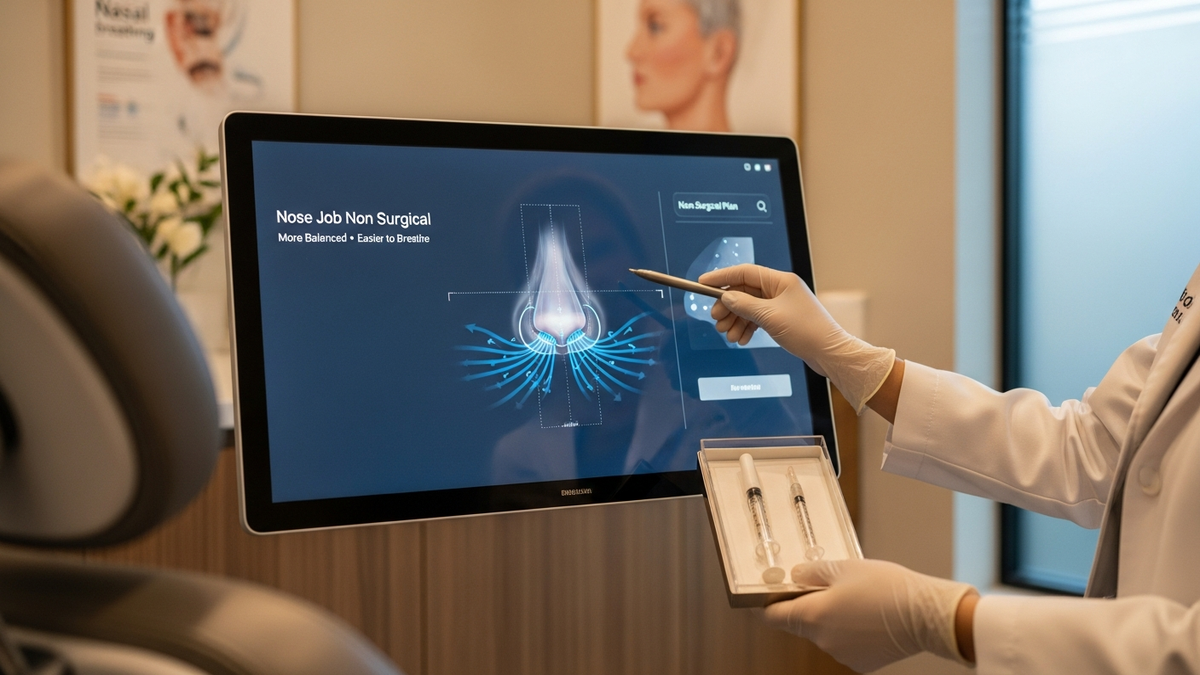
The phrase nose job non surgical is often used to describe approaches that improve the nose’s look without a traditional open or closed rhinoplasty. In practice, non-surgical options typically fall into two categories:
- Cosmetic, non-surgical reshaping (most commonly injectable treatments) to refine certain contours.
- Functional, non-surgical airway treatments (medications or minimally invasive techniques) to improve breathing—sometimes with indirect cosmetic benefits when swelling or airflow-related issues influence overall nasal appearance.
It’s important to set expectations early: non-surgical options generally cannot permanently change the underlying bone structure the way rhinoplasty can. However, they may be ideal for people seeking conservative refinements, temporary results, or a “test-drive” before committing to surgery.
Non-Surgical vs. Surgical Rhinoplasty: Key Differences
To choose wisely, it helps to understand what each option changes.
What non-surgical options can do
- Camouflage minor irregularities with strategic filler or contouring.
- Soften the appearance of the nasal tip or improve minor asymmetry.
- Improve the look of a bump or uneven contour (within limits).
- Reduce visible effects of inflammation in some cases (especially when combined with functional treatments).
What non-surgical options typically cannot do
- Break and reposition nasal bones (a core part of many rhinoplasty outcomes).
- Significantly narrow the nasal framework in a dramatic, structural way.
- Correct major septal deviations or structural airway obstructions (these usually require functional procedures).
When surgical rhinoplasty may be the right choice
If your goals require structural changes—such as reshaping the bridge, refining tip support, or addressing a deviated septum in a way that affects breathing—surgical Rhinoplasty may provide more predictable, long-term results.
That said, many people benefit from a staged approach: addressing function first (or simultaneously) and then refining appearance with the most appropriate method.
Cosmetic Nose Job Non Surgical Options
For appearance-focused goals, the most commonly discussed non-surgical “nose job” involves injections. However, the best option depends on your anatomy, skin thickness, and the specific contour you want to change.
Injectable nasal reshaping (filler) for subtle refinement
Injectable treatments can add volume or smooth contours to help the nose look more balanced from different angles. Providers may use filler to:
- Create a smoother transition between the bridge and tip
- Soften a small dorsal irregularity
- Improve the appearance of a drooping or under-projected tip
- Address mild asymmetry
Longevity: Results are typically temporary and may require maintenance depending on the product and your metabolism.
Best candidates: People looking for conservative changes and who understand that filler does not permanently alter the nasal skeleton.
Safety matters: The nasal region has complex vascular anatomy. A skilled, experienced injector is essential to reduce risk and achieve natural-looking outcomes.
Non-surgical tip refinement and “balance” strategies
Many patients don’t need major reshaping—they need visual balance. A non-surgical plan might focus on:
- Tip projection and rotation (appearance of openness)
- Bridge smoothing rather than dramatic narrowing
- Symmetry when one side appears slightly different
In practice, a “nose job non surgical” approach often aims for harmonization—how the nose relates to the eyes, cheeks, and overall facial proportions.
What to ask during your consultation (appearance-focused)
Bring clarity to the appointment with questions like:
- Which specific contour are we targeting (bridge, tip, asymmetry)?
- What results are realistic for my skin thickness and nasal structure?
- How long do you expect the changes to last?
- What are the risks and how are complications managed?
- Could addressing nasal function improve how my nose looks and feels?
Functional Nose Treatments: Non-Surgical Options That Can Change Your Experience
Sometimes the most meaningful improvement is not just visual. If you’re dealing with chronic congestion, sinus pressure, or difficulty breathing, a nose job non surgical plan may include functional care that helps you breathe easier—often with minimally invasive techniques.
Dr. Hootan Zandifar specializes in functional nasal surgery and head-and-neck facial plastic and reconstructive care. He focuses on solutions that can permanently alleviate symptoms that make it hard to breathe and improve quality of life—often with an approach tailored to the underlying anatomy.
Non-surgical support for nasal valve collapse and airflow issues
In some patients, the nasal valve—the narrowest part of the airway—collapses or narrows, making breathing difficult. Non-surgical treatments can include:
- Steroid and non-steroid allergy medications
- Other non-invasive treatments aimed at improving airway patency
These strategies are designed to increase airflow so breathing is easier. If symptoms persist, surgical options may be considered depending on severity.
Allergy management and nasal inflammation reduction
Allergies can affect how efficiently you breathe through the nose. One innovative option is sublingual immunotherapy—a no-shot method for treating allergies without painful injections. By targeting allergy drivers, many patients experience improved nasal comfort and reduced congestion over time.
If your “nose job non surgical” goal is partly driven by swelling or chronic inflammation, addressing allergies may help you look and feel better while you refine the cosmetic aspects.
Balloon sinuplasty for blocked sinus passages (minimally invasive)
For sinus blockage and chronic sinus infections, balloon sinuplasty is often described as a convenient, safe, minimally invasive option. It aims to open blocked sinus passages and improve sinus drainage.
When non-surgical isn’t enough: functional surgical options
Non-surgical interventions are valuable, but some structural issues require procedural correction. Common examples include:
- Deviated septum affecting airflow
- Enlarged nasal turbinates contributing to a “stuffy nose”
- Nasal valve collapse causing persistent obstruction
Septoplasty and Deviated Septum: A Common “Hidden” Driver of Breathing Issues
If your nose looks a certain way but your bigger problem is breathing, a structural cause may be involved. The septum is the central cartilage and bone structure that divides the two nostrils. When it’s not straight, airflow can be restricted.
How Septoplasty addresses airflow
Septoplasty straightens the nasal cartilage and corrects a crooked septum. If your obstruction is related to a Deviated Septum, this can be a foundational step toward easier nasal breathing. Learn more about the Deviated Septum and how it contributes to symptoms.
Why this matters for “nose job non surgical” goals
Even if you’re considering injections for appearance, breathing quality can influence how you feel day-to-day—and how your nose functions in real life. Many patients find that when congestion improves, the entire facial experience improves (comfort, sleep, energy).
Inferior Turbinate Reduction: Treating the “Chronic Stuffy Nose”
Enlarged nasal turbinates can create long-term nasal obstruction. Inferior turbinate reduction targets this issue to help restore airflow and nasal breathing.
This procedure is often considered for patients with chronic nasal congestion and may also be recommended in some cases where sleep-disordered breathing is involved.
Nose Job Non Surgical vs. Functional Surgery: How to Decide
If you’re torn between appearance-first and function-first approaches, here’s a practical way to think about it:
Use non-surgical options when…
- Your goals are subtle (smoothing contours, improving balance)
- You want temporary or conservative changes
- You’re not ready for surgery or want to evaluate results first
- You have mild asymmetry without major structural airway problems
Consider functional treatment when…
- You have chronic congestion or difficulty breathing
- You suspect structural narrowing (septum, turbinates, nasal valve)
- You experience frequent sinus infections or significant sinus pressure
- You notice symptoms that affect sleep or overall wellbeing
Consider rhinoplasty when…
- You need structural changes to the nasal framework
- You want predictable, long-term reshaping of bridge and tip
- You want to address both appearance and function together
If you’re exploring surgical options, it can be helpful to view rhinoplasty through the lens of both aesthetics and anatomy. For a deeper overview, you can read about Rhinoplasty in Beverly Hills.
Natural-Looking Results: What “Good” Looks Like in a Nose Job Non Surgical Plan
Natural outcomes are about more than correcting one feature. A high-quality plan accounts for:
- Proportions (how the nose relates to lips, chin, and cheekbones)
- Angles (front, side profile, and tip rotation)
- Skin thickness and how it changes the look of underlying structure
- Ethnic and individual facial characteristics
- Symmetry without overcorrection
For patients in Los Angeles and Beverly Hills, many providers emphasize a conservative, artistry-driven approach—especially when patients request a nose job non surgical refinement that still looks like them.
How Much Does a Nose Job Non Surgical Treatment Cost?
Costs vary widely based on the type of treatment, the amount of product used, number of sessions, and the complexity of your anatomy. Non-surgical injectable approaches may be priced per session or per syringe, while functional treatments may be evaluated based on the specific diagnosis and treatment plan.
Actionable tip: Ask for an itemized estimate and a clear plan for what happens if you need adjustments. Also ask whether follow-up visits are included.
Risks, Side Effects, and What “Safe” Really Means
Even non-surgical treatments involve risk. A responsible provider will explain both common and rare side effects.
Potential risks with injectable nasal reshaping
- Swelling, redness, bruising, tenderness
- Asymmetry or over/under-correction
- Irregular texture or lumps (less common with skilled technique)
- Vascular complications (rare but serious—why injector experience matters)
Potential risks with functional nasal procedures
Functional treatments may have their own risk profiles depending on the procedure type. Your clinician should review:
- Bleeding or crusting
- Temporary discomfort
- Recovery timeline
- Long-term expectations and symptom tracking
Recovery and Downtime: What to Expect
Non-surgical options typically involve minimal downtime compared with surgery. Injectable treatments may cause temporary swelling or bruising that resolves within days to a couple of weeks, depending on the individual.
Functional interventions range from medication-based strategies (often no downtime) to procedures that may require short recovery periods. Your care plan should include a clear timeline for:
- Return to work and normal activity
- When to resume exercise
- How to manage post-treatment symptoms
- Follow-up scheduling
Choosing a Provider for Nose Job Non Surgical Treatments
Because the nose is both an aesthetic centerpiece and part of a functional airway, choosing the right provider is critical. Look for clinicians who:
- Have specialized experience with head and neck anatomy
- Use a conservative, natural-looking approach
- Offer both cosmetic and functional perspectives when appropriate
- Prioritize patient education and transparent expectations
- Provide individualized treatment planning rather than one-size-fits-all
Why specialization matters
Dr. Hootan Zandifar focuses solely on cosmetic and reconstructive surgery of the head and neck. His practice emphasizes honest, trustworthy, and compassionate care, along with patient education to support informed decision-making. For patients with both appearance concerns and breathing symptoms, functional expertise can be especially valuable.
Where a “Nose Job Non Surgical” Plan Fits With Other Facial Rejuvenation
Sometimes patients seek a nose refinement as part of broader facial rejuvenation. If you’re also noticing aging changes in the eyelids, brow, or mid/upper face, a complete plan can help maintain harmony across features.
For example:
- If your eyes look tired due to excess eyelid skin or puffiness, Blepharoplasty may complement your goals.
- If you’re addressing broader facial aging, a Facelift may be considered depending on your concerns.
This doesn’t mean everyone needs additional procedures—only that a well-coordinated plan can prevent “feature mismatch” and support natural balance.
Related Considerations: Hair and Eyebrow Changes (Why It Can Matter for Facial Harmony)
Facial appearance is holistic. While not directly related to a nose job non surgical treatment, some patients pursue comprehensive aesthetic improvements to refine overall facial balance—especially when eyebrows or hairline changes affect how the nose and face are perceived.
If eyebrow thinning is part of your concern, you may want to explore an eyebrow transplant as part of a broader aesthetic strategy. Similarly, if you’re considering a hair transplant for hair loss, restoring frame and symmetry can complement other refinements.
Actionable Checklist: Preparing for Your Consultation
Use this checklist to get the most out of your appointment for a nose job non surgical evaluation:
- Write down your top 3 goals (appearance, breathing, both).
- Bring photos from multiple angles and in different lighting.
- List symptoms (congestion, sinus pressure, sleep issues, allergies).
- Track triggers (seasonal allergies, environmental factors, specific foods/meds if relevant).
- Ask about candidacy: Are you better suited for injectables, functional care, or rhinoplasty?
- Request a risk review and ask how complications are handled.
- Confirm the plan for follow-up and potential adjustments.
FAQ: Nose Job Non Surgical
Is a nose job non surgical permanent?
Most purely cosmetic non-surgical options (such as injectable reshaping) are typically temporary. The duration depends on the specific product used and your individual response. Functional improvements from targeted treatment of congestion or airway issues may be longer-lasting, depending on the underlying cause.
Can non-surgical treatments fix a crooked nose?
Sometimes mild asymmetry or contour irregularities can be improved non-surgically. However, significant structural deviation—especially involving the nasal framework or septum—often requires functional procedures and/or surgical rhinoplasty for more predictable correction.
Will a nose job non surgical approach help with breathing problems?
Cosmetic injectables alone usually don’t correct internal airway obstruction. If your breathing issues are driven by factors like septal deviation, turbinate enlargement, or nasal valve collapse, functional treatment may be necessary. In many cases, addressing function can significantly improve your quality of life.
How do I know if I’m a good candidate for injectable nasal reshaping?
You may be a good candidate if you’re seeking conservative changes, have realistic expectations, and your anatomy supports safe, natural contouring. A qualified clinician should assess skin thickness, nasal proportions, and vascular safety before recommending injections.
What’s the safest way to explore a nose job non surgical option?
The safest path is a thorough consultation that includes medical history, symptom review (especially for congestion or sinusitis), and an individualized plan. Ask about experience, safety protocols, and how results are managed over time.
Call to Action: Explore a Personalized Plan With a Specialist
If you’re considering a nose job non surgical approach—or you want to explore both appearance and breathing—FlowGeniQ Digest recommends starting with an in-depth consultation. A clinician who understands both facial aesthetics and functional nasal anatomy can help you choose the most appropriate pathway, whether that involves non-surgical contouring, functional treatment, or a combination.
Next step: Schedule an evaluation to discuss your goals, symptoms, and what’s realistic for your anatomy. With the right plan, you can pursue a nose that looks balanced—and feels better to live with.
Professional Disclaimer
This content is provided for general educational purposes only by FlowGeniQ Digest. It is not a substitute for professional advice, diagnosis, or treatment. Readers are advised to consult qualified professionals for personalized recommendations.
Medical Information Disclaimer
This content is provided for general educational purposes only by FlowGeniQ Digest. It is not a substitute for professional advice, diagnosis, or treatment. Readers are advised to consult qualified professionals for personalized recommendations.