Non-surgical rhinoplasty has become one of the most searched terms in facial aesthetics—because it promises noticeable improvements with less downtime than traditional surgery. At FlowGeniQ Digest, we built this guide to help you understand the real-world possibilities (and limitations) of non-surgical nose refinement—especially when your goals include both appearance and comfortable breathing.
In Beverly Hills and Los Angeles, many patients want a nose that looks more balanced on the face, but they also want to feel good when they breathe. That’s where the conversation gets important: not every “nose concern” is purely cosmetic, and not every structural problem is best solved with cosmetic injections. Sometimes, functional options—like septal or nasal airway procedures—may be the more appropriate path.
What Is Non-Surgical Rhinoplasty?
Non-surgical rhinoplasty refers to cosmetic treatments that refine the nose without removing or reshaping cartilage or bone. Most commonly, it involves injectable dermal fillers used to camouflage irregularities, soften bumps, or improve symmetry. In some cases, clinicians may also use other non-invasive or minimally invasive techniques depending on the patient’s anatomy and goals.
Think of non-surgical rhinoplasty as contouring and balancing rather than reconstructing. The goal is often to create a smoother profile, sharper tip definition, or improved proportion—without an operation.
How it differs from traditional rhinoplasty
Traditional Rhinoplasty changes the underlying structure of the nose—often addressing both appearance and function. Non-surgical rhinoplasty typically cannot permanently alter the skeleton, and it generally cannot correct many internal airway issues.
When patients have structural nasal problems (for example, a Deviated Septum), the most effective solution may be functional surgery rather than fillers. For more airflow-focused context, you can explore Septoplasty and how it treats a Deviated Septum that contributes to chronic congestion.
Who Is a Good Candidate for Non-Surgical Rhinoplasty?
The best candidates tend to have specific, achievable goals and a nasal anatomy that responds well to soft-tissue contouring. In a consultation, the clinician typically evaluates:
- Skin thickness and texture (thicker skin may camouflage subtle contouring better; thinner skin may show changes more dramatically)
- Cartilage and tip behavior (whether the tip can be balanced with injections)
- Asymmetry (fillers can often improve minor asymmetries)
- Bumps or depressions (filler may camouflage irregularities)
- Breathing concerns (whether your primary issue is functional airway obstruction)
Patients who want subtle refinement—such as a smoother bridge, improved tip projection, or more balanced symmetry—are often ideal. If your goal is a dramatic reshaping of the nose’s size or angle, traditional Rhinoplasty may be more appropriate.
When non-surgical options may not be enough
Non-surgical rhinoplasty is usually not the right choice when you need structural correction for:
- Significant deviations that require realignment of cartilage or bone
- Persistent nasal obstruction caused by internal anatomy
- Tip instability where the cartilage framework needs repositioning
- Major hump reduction that cannot be addressed by contouring alone
In those situations, functional nasal surgery—or a combined plan—may provide better, longer-lasting outcomes.
What Can Non-Surgical Rhinoplasty Improve?
Non-surgical rhinoplasty can be highly effective for certain cosmetic concerns—especially when the issues are related to soft-tissue shape rather than bone and cartilage structure.
Common cosmetic goals
- Straightening the appearance of the bridge (camouflaging minor irregularities)
- Softening a dorsal hump (depending on size and skin thickness)
- Improving tip definition (enhancing projection or refining the contour)
- Correcting mild asymmetry
- Balancing proportions relative to the face
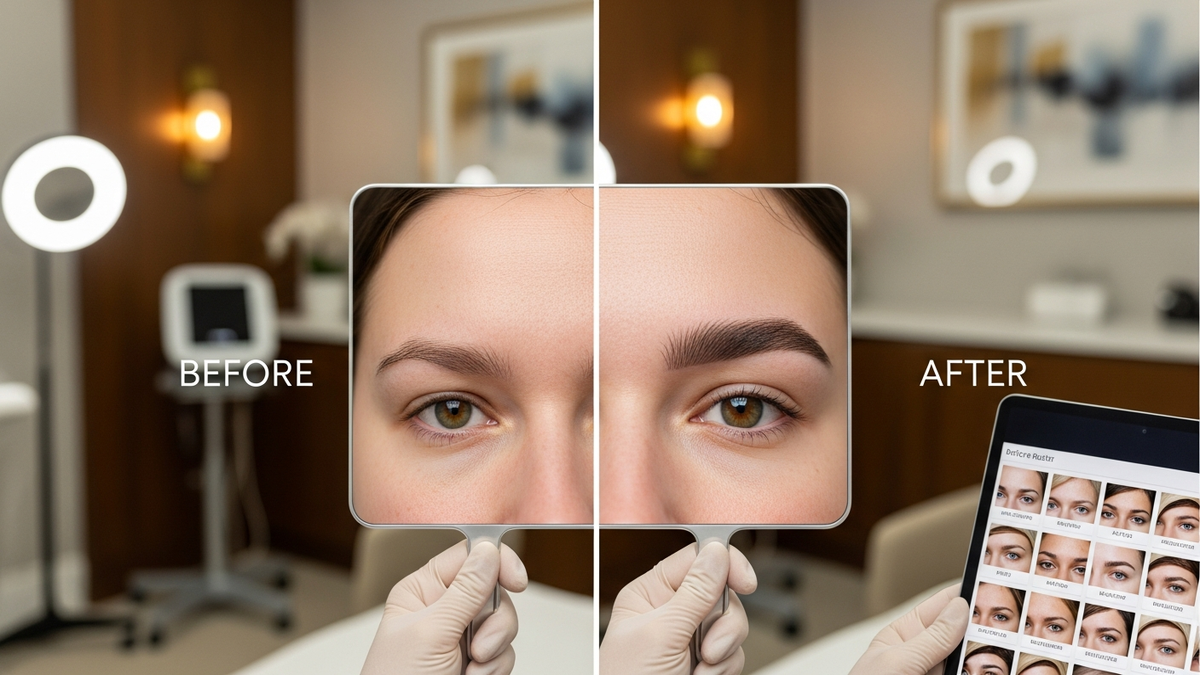
Subtle “before-and-after” changes you can expect
Most patients describe results as refined rather than “transformed.” The best-case scenario is a nose that looks more harmonious—often with improved harmony from multiple angles.
At FlowGeniQ Digest, we emphasize realistic expectations: non-surgical rhinoplasty is typically a proportional improvement strategy, not a complete structural rebuild.
Can Non-Surgical Rhinoplasty Improve Breathing?
This is where the conversation must be precise. Non-surgical rhinoplasty primarily targets appearance through soft-tissue contouring. However, some nasal breathing issues can overlap with cosmetic concerns—especially when the nose’s external shape and internal airway function are both affected.
Breathing issues are often functional, not purely cosmetic
Chronic nasal congestion, sinusitis symptoms, and difficulty breathing often relate to structural factors such as:
- Septal deviation (a crooked septum that obstructs airflow)
- Enlarged inferior turbinates contributing to long-term “stuffy nose”
- Nasal valve collapse affecting airflow dynamics
- Sinus blockage and chronic sinusitis
In these cases, injections alone usually won’t resolve the underlying obstruction.
Functional nasal surgery as an alternative or complement
Dr. Hootan Zandifar specializes in functional nasal surgery designed to treat chronic symptoms of congestion and sinusitis using minimally invasive approaches. For patients with airway obstruction due to structural defects—such as a Deviated Septum—surgical intervention can be the most effective course of action.
Depending on your anatomy and symptoms, functional options may include:
- Septoplasty to straighten the nasal cartilage and correct a crooked septum
- Inferior Turbinate Reduction to improve airflow and reduce chronic congestion
- Repair of nasal valve collapse, which may start with non-surgical approaches (such as targeted allergy medications) and progress to options like implants or specialized treatments when needed
- Balloon Sinuplasty for minimally invasive sinus opening
- Endoscopic sinus surgery for restoring normal sinus function and reducing recurrent infections
If your primary problem is breathing, your “best nose plan” may involve airway-first treatment. In many cases, improving nasal function can also make the face feel more comfortable and confident day to day.
How Long Does Non-Surgical Rhinoplasty Last?
Unlike surgery, non-surgical rhinoplasty typically uses temporary or semi-permanent materials. The duration depends on the specific filler type, your metabolism, the amount used, and how your body responds over time.
Most people plan for maintenance. Your injector should explain expected longevity and discuss follow-up timing during your consult.
Why maintenance matters
Because the results are not permanently structural, maintenance helps you keep the refined contour you want. An experienced clinician will also watch for how the nose changes with time, skin aging, and natural tissue settling.
Non-Surgical Rhinoplasty vs. Surgical Rhinoplasty: A Practical Comparison
Choosing between non-surgical and surgical rhinoplasty is easier when you compare what each approach can realistically change.
| Category | Non-Surgical Rhinoplasty | Surgical Rhinoplasty |
|---|---|---|
| Primary goal | Refinement through soft-tissue contouring | Structural reshaping of bone/cartilage |
| Change magnitude | Subtle to moderate aesthetic improvements | Small to dramatic transformations |
| Breathing correction | Limited; usually not a direct airway solution | Can address functional issues when present |
| Downtime | Often minimal; bruising/swelling may occur | Typically more downtime and recovery |
| Longevity | Temporary; maintenance usually needed | Often longer-lasting structural result |
If you’re considering either option, use a “goal-first” approach: define what you want to improve visually and functionally, then match that to the most appropriate medical pathway.
The Consultation: What to Ask About Non-Surgical Rhinoplasty
A high-quality consultation is where most of the value is created. You want an evidence-based plan that fits your anatomy and your expectations. Here are practical questions to bring:
- What specific changes can you achieve with fillers for my nose shape?
- What are my realistic limitations? (What can’t be corrected non-surgically?)
- Which filler type and placement will you use, and why?
- How will you address asymmetry and tip definition?
- What risks apply to my anatomy? (especially vascular risks in the nose area)
- How long will results last and what maintenance schedule do you recommend?
- If I have breathing issues, do you recommend an airway evaluation first?
For patients with chronic congestion or sinus-related symptoms, it’s also reasonable to ask whether functional evaluation is needed before cosmetic decisions.
Safety Considerations and Risks of Injectables
Any procedure involving injections requires caution. While non-surgical rhinoplasty can be an attractive option, the nose is a high-precision area with important blood vessels and delicate structures.
Potential side effects
Common temporary effects include:
- Swelling
- Bruising
- Redness
- Minor tenderness
Serious risks (why expertise matters)
Rare but serious complications can occur with improper technique or product selection. That’s why it’s essential to choose a qualified, experienced clinician who can evaluate anatomy thoroughly and follow safety protocols.
In an ideal consult, you’ll feel confident discussing risks and seeing how the clinician customizes the plan to your specific nose and skin.
What Does Recovery Look Like?
Non-surgical rhinoplasty typically involves minimal downtime. Many patients return to normal activities quickly, though bruising and swelling may temporarily affect your appearance.
Practical recovery tips
- Follow your clinician’s post-procedure instructions closely.
- Plan around social events if you bruise easily.
- Avoid unnecessary pressure on the nose during the initial healing window.
- Be honest about medications and supplements you take, especially those that may influence bruising.
Your results may continue to look better as swelling settles.
Cost Considerations: What You’ll Actually Pay For
Pricing for non-surgical rhinoplasty varies widely based on factors like filler type, number of syringes, complexity of placement, and the clinician’s expertise.
Instead of focusing only on the lowest price, consider the overall value: appropriate product selection, safe technique, and a plan that aligns with your goals. Your clinician should clearly explain what’s included—such as follow-up visits—and what may require additional treatment over time.
How to Choose the Right Provider in Los Angeles
Because non-surgical rhinoplasty is both aesthetic and anatomical, provider selection matters. Look for:
- Specialized facial expertise (not a one-size-fits-all approach)
- Transparent communication about realistic results
- Safety-first technique and a clear risk discussion
- Experience with nose anatomy and patient-specific planning
- Ability to address functional concerns if breathing issues exist
For patients who want both aesthetic refinement and a functional airway approach, a specialist who understands head and neck anatomy can be especially valuable. Dr. Hootan Zandifar is board certified and focuses on head and neck cosmetic and reconstructive surgery, with a particular commitment to patient education and natural-looking outcomes.
FlowGeniQ Digest’s “Goal-First” Checklist
If you’re researching non-surgical rhinoplasty, use this checklist to clarify your next steps:
- Define your top concern: bridge bump, tip shape, asymmetry, or overall balance?
- Separate appearance from function: do you have congestion, sinus symptoms, or difficulty breathing?
- Decide what “enough improvement” means: subtle refinement or a major transformation?
- Ask about alternatives: if breathing is affected, ask whether functional evaluation is needed.
- Confirm safety and plan: discuss filler type, placement strategy, and expected longevity.
This approach helps you avoid common pitfalls—like choosing injectables when structural changes are the real need, or choosing surgery when your goals are mainly subtle contour refinement.
Related Aesthetic Treatments: When Your Plan Might Expand
Sometimes, patients come in for a nose refinement but also want a more complete facial refresh. While this article focuses on non-surgical rhinoplasty, it’s useful to understand that facial aesthetics often work best as a coordinated plan.
Depending on your priorities, your provider may discuss other head-and-neck options such as Facelift for age-related changes, Blepharoplasty for eyelid concerns, or even hair transplant and eyebrow transplant for hair restoration goals.
These are not automatic add-ons—just examples of how a comprehensive, patient-centered consultation can align multiple concerns into one cohesive plan.
Frequently Asked Questions (FAQ) About Non-Surgical Rhinoplasty
1) Is non-surgical rhinoplasty permanent?
Typically, non-surgical rhinoplasty is not permanent because it usually involves fillers that gradually change over time. Your clinician can explain expected longevity based on the products used and your individual factors.
2) Can non-surgical rhinoplasty fix a deviated septum or chronic congestion?
Usually, no. A deviated septum and chronic congestion are often structural and functional. If you suspect a Deviated Septum, an airway-focused evaluation may be more appropriate, and procedures like Septoplasty may be considered.
3) Will non-surgical rhinoplasty make my nose look “overfilled”?
When done by an experienced clinician with conservative, anatomically informed placement, results can look natural and proportionate. The key is customization and avoiding overcorrection.
4) How soon will I see results?
Many patients see initial changes soon after treatment, though swelling and bruising can temporarily affect appearance. Final refinement often becomes clearer as healing settles.
5) What’s the biggest reason people are unhappy with non-surgical rhinoplasty?
Most dissatisfaction stems from mismatched expectations—for example, wanting a structural change that fillers can’t reliably deliver. A thorough consult that clarifies what’s possible is the best prevention.
Next Steps: How to Get a Personalized Plan
If you’re considering non-surgical rhinoplasty, start by aligning your goals with the right approach. If your concerns are primarily cosmetic and subtle contouring, injectables may be appropriate. If you also have congestion, sinusitis symptoms, or breathing difficulty, it’s worth asking about functional evaluation and airway-first options.
CTA: Explore your options with a qualified facial plastic and reconstructive specialist. You can schedule an in-person or virtual consultation to discuss your aesthetic goals, breathing symptoms, and the safest plan for your anatomy. For patients who need functional nasal care, Dr. Hootan Zandifar’s approach emphasizes minimally invasive solutions and patient education—helping you make confident, informed decisions.
Professional Disclaimer
This content is provided for general educational purposes only by FlowGeniQ Digest. It is not a substitute for professional advice, diagnosis, or treatment. Readers are advised to consult qualified professionals for personalized recommendations.
Medical Information Disclaimer
This content is provided for general educational purposes only by FlowGeniQ Digest. It is not a substitute for professional advice, diagnosis, or treatment. Readers are advised to consult qualified professionals for personalized recommendations.