At FlowGeniQ Digest, we often hear from readers who are considering a procedure but want to see the evidence first. If you’re searching for eyebrow transplant photos, you’re probably trying to answer a simple question: “Will my results look natural—and will they fit my face?”
In this guide, we’ll walk through what eyebrow transplant photos typically show, what’s normal in the healing timeline, which details matter most (density, direction, shape, and symmetry), and how to evaluate results ethically. We’ll also cover who may be a good candidate, what factors influence outcomes, and what questions to ask before you book a consultation.
What “Eyebrow Transplant Photos” Usually Show
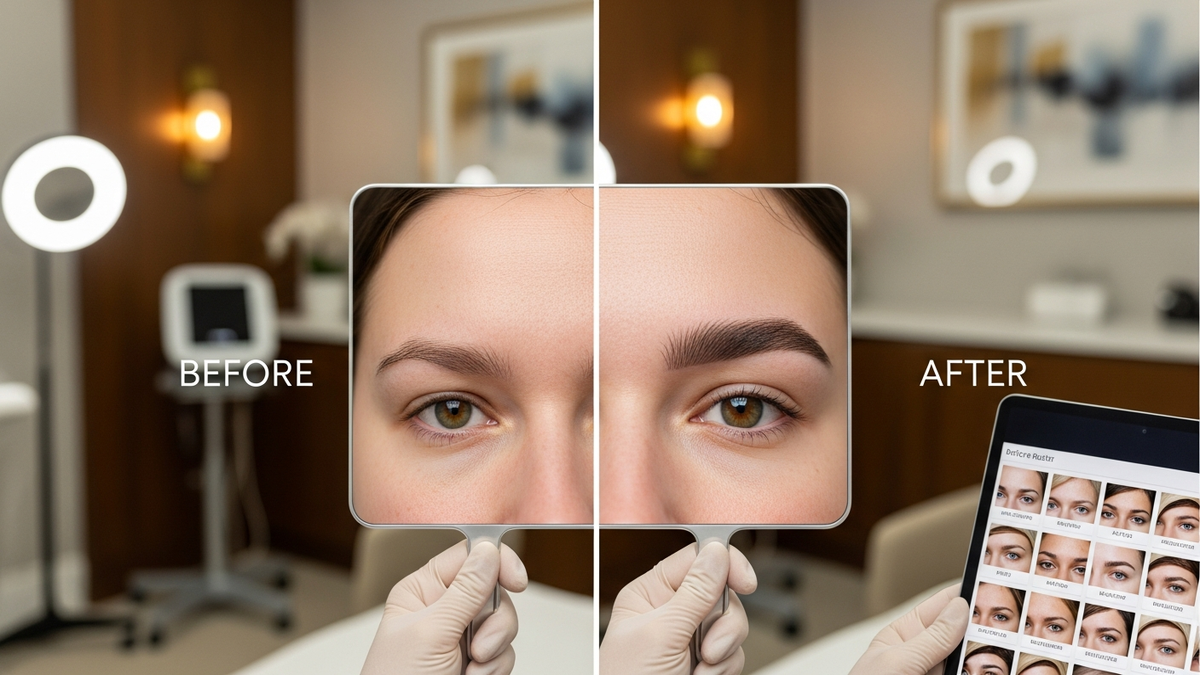
Most eyebrow transplant photo sets are presented as before and after images. The “after” photos are ideally taken at consistent angles, lighting, and distances so you can compare accurately. However, even the best photo galleries can’t fully explain the nuance of hair growth patterns, skin texture, and facial proportions—so it’s important to interpret images thoughtfully.
Key features to look for in eyebrow transplant photos
- Natural hair direction: Eyebrow hairs grow in a pattern—not in a straight line. Great results follow the eyebrow’s natural flow, with a slightly varied angle rather than uniform spikes.
- Appropriate density: Overly dense eyebrows can look “drawn on.” Under-dense results may look patchy. The best outcomes balance fullness with realism.
- Good shape and proportions: Eyebrows frame the eyes. Your arch height, tail length, and overall thickness should harmonize with your face shape.
- Soft edge transitions: Real eyebrows don’t have harsh borders. A natural result blends into surrounding native hair (if any).
- Color and texture match: In photos, hair color and thickness should resemble your existing eyebrow hairs (or match the best possible donor characteristics).
Why “before and after” photos can be misleading
Even reputable clinics may photograph results differently. Some common reasons images can mislead include:
- Different lighting (overhead light vs. natural light), which can exaggerate contrast.
- Different camera distances that change perceived density.
- Different grooming (brows filled in with pencil, tinted gels, or shaping).
- Different growth stages: A 3-month result can look very different from a 9–12 month result.
Actionable tip: When reviewing eyebrow transplant photos, look for the timeline (e.g., 3 months, 6 months, 12 months). If a clinic doesn’t specify timing, treat the images as less reliable.
Eyebrow Transplant Photos: The Healing Timeline (What’s Normal)
Eyebrow hair restoration is a process—not an overnight transformation. If you’re comparing photos, understanding the growth cycle can help you avoid panic at early stages.
Early phase (first days to weeks)
In the first days after surgery, photos may show:
- Small scabs or pinpoint crusting where grafts were placed
- Swelling that can affect how brows look temporarily
- Redness or mild irritation around the treated area
These findings are typically expected and usually fade as the skin heals.
Shedding phase (often weeks 6–12)
Many patients experience temporary shedding of transplanted hairs. This can be emotionally difficult because it may look like “nothing is happening.” In eyebrow transplant photos, shedding may be visible as reduced density compared with earlier photos.
Important: Shedding does not always mean the procedure failed. Hair often regrows during the following months as follicles re-enter the growth cycle.
Regrowth phase (months 3–6)
As regrowth begins, hairs may appear:
- Thinner or softer initially
- Less uniform in length
- Different in texture compared with final mature hair
In eyebrow transplant photos labeled around 4–5 months, you’ll often see “early fullness” that continues to refine over time.
Maturation phase (months 9–12+)
The final look typically becomes clearer as hairs mature. Many patients reference 12-month photos as the most meaningful comparison point, though some continue to improve up to 18 months.
When you evaluate eyebrow transplant photos, prioritize the most mature timeline images—especially those with consistent angles and clear documentation of timing.
Who Typically Needs an Eyebrow Transplant?
Eyebrow loss can happen for various reasons. A well-designed plan accounts for the cause of loss and the remaining native hair (if any).
Common causes of eyebrow thinning or loss
- Medical conditions that affect hair growth
- Trauma to the eyebrow area
- Overplucking or long-term cosmetic shaping
- Scarring from dermatologic or surgical events
- Genetic thinning or age-related changes
For many patients, an eyebrow transplant may be recommended when eyebrows have become noticeably sparse and other non-surgical options haven’t produced satisfactory results.
Why the surgeon’s planning matters more for eyebrows than many people realize
Eyebrows are small, expressive, and highly visible. A transplant that looks “good” in a close-up may not look natural at conversational distance if the direction or shape is off. That’s why careful mapping, artistic design, and technical execution are essential.
Eyebrow Transplant Photos: What “Natural” Really Means
Natural results aren’t about copying a celebrity brow. They’re about restoring a look that fits your facial anatomy and personal style while respecting your natural hair characteristics.
Design principles that influence natural outcomes
- Hairline mapping: The beginning (head), arch, and tail of the eyebrow should be balanced.
- Graft placement strategy: Spacing and angle influence density and softness.
- Donor selection: Donor hair characteristics can affect texture and how mature hair looks.
- Symmetry planning: Many people have natural asymmetry; the goal is harmonious improvement, not robotic mirror symmetry.
How density and arch height should look in photos
In high-quality eyebrow transplant photos, you’ll often notice:
- The arch isn’t too high or too low relative to the eye shape.
- The tail tapers naturally rather than ending abruptly.
- There’s a gradual transition from the densest region to lighter regions.
If you see brows that appear uniformly thick from start to finish, it may indicate less natural hair spacing or direction.
FUE vs. FUT: Does It Matter for Eyebrows?
Many patients ask whether eyebrow transplants use FUE or FUT. The exact technique depends on the clinic, your anatomy, and the surgeon’s approach to graft harvesting and placement.
At TestBiz Hair Clinic, the clinic offers FUE and FUT hair transplant procedures using state-of-the-art technology and experienced surgeons. While eyebrow restoration has unique design considerations, the underlying goal is the same: place grafts in a way that supports natural eyebrow growth.
Why the “how” matters as much as the “what”
For eyebrow restoration, graft placement angle and density typically have an outsized impact on the final aesthetic. In other words, two patients could receive the same number of grafts but achieve different results because their design and placement strategy differed.
If you’re also considering broader hair restoration, you can explore options through this hair transplant service page for additional context on hair restoration technologies and procedures.
Questions to Ask When You See Eyebrow Transplant Photos
Photo galleries can be inspiring, but they shouldn’t replace a consultation. Use these questions to evaluate whether the results you see are achievable for your specific facial anatomy and hair characteristics.
Practical questions that help you vet a clinic
- What is the timeline of these photos? Ask for the exact months post-procedure.
- Are the photos in the same lighting and angle? Consistency affects accuracy.
- How do you design brow shape for my face? Look for personalized mapping, not a one-size template.
- How do you handle shedding and regrowth? A transparent clinic will explain the growth cycle.
- What density and graft count are realistic for my case? Avoid guarantees of specific outcomes without evaluation.
- What do you recommend for styling during recovery? You want clear guidance to protect grafts and support healing.
How to Prepare for Your Eyebrow Transplant (Actionable Steps)
Preparation can influence your experience and the quality of your healing. While every clinic has its own protocols, these steps are commonly recommended.
Before your consultation
- Gather your medical history, including any autoimmune conditions, dermatologic history, or prior eyebrow procedures.
- Track triggers for thinning or loss if you know them (e.g., trauma, treatment history).
- Bring reference photos that show the brow style you like (and ones you dislike).
- Review your current brow routine (tweezing, tinting, topical products).
Day-of and post-procedure planning
- Arrange transportation and a recovery-friendly schedule.
- Plan for gentle skincare and follow the surgeon’s wound-care instructions precisely.
- Manage expectations: eyebrow transplant photos at 1–3 months may not reflect the final result.
If you’re also exploring other facial procedures as part of a broader aesthetic plan, it’s helpful to discuss how timing and healing schedules align. For example, some patients interested in facial rejuvenation explore options such as a Facelift or eyelid procedures like Blepharoplasty. Your surgeon can help coordinate what makes sense for your goals and safety.
Choosing a Surgeon: Beyond the Photo Gallery
When you’re evaluating eyebrow transplant photos, remember that the photos are only one part of the story. The surgeon’s training, philosophy, and attention to detail are what ultimately shape your outcome.
What to look for in a qualified provider
- Experience with head and neck cosmetic procedures (eyebrows are part of facial anatomy and expression)
- Strong patient education and realistic expectations
- Natural result focus rather than “maximum density” at all costs
- Honest communication about candidacy and limitations
Why facial plastic and reconstructive expertise matters
Eyebrow restoration isn’t just about hair. It’s about facial balance—how the brows interact with the eyes, forehead, and overall facial expression. Surgeons with specialized training in head and neck cosmetic and reconstructive procedures are often better positioned to plan brows in the context of the full face.
Dr. Hootan Zandifar, MD, FACS—a board-certified Facial Plastic & Reconstructive Surgeon—focuses solely on surgeries of the head and neck. Known for an honest, trustworthy, and compassionate approach, Dr. Zandifar emphasizes patient education and natural-looking solutions. For patients seeking eyebrow restoration, this kind of detail-oriented planning can be especially important because the eyebrows are a focal point on the face.
Eyebrow Transplant Photos by Month: A Quick Reference
If you find yourself comparing images across different clinics, this quick reference can help you interpret what you’re seeing.
| Timeline | What you may notice | Photo interpretation tip |
|---|---|---|
| 0–2 weeks | Swelling, redness, scabbing | These images reflect healing, not final density. |
| 2–3 months | Possible shedding; patchiness | Don’t judge “success” too early. |
| 3–6 months | Regrowth begins; texture varies | Look for directional naturalness. |
| 9–12+ months | Maturation; more refined shape | Prioritize these photos for comparisons. |
When Eyebrow Transplant Photos Don’t Match Your Expectations
It’s normal to feel disappointed if the photos you see don’t align with what you’re hoping for. But there are many reasons results can vary:
- Your baseline (scarred vs. non-scarred skin, remaining native hair)
- Donor characteristics (hair thickness and growth pattern)
- Design goals (arch height, density, and tail taper)
- Healing response (skin sensitivity, inflammation, and aftercare adherence)
Instead of comparing yourself to someone else’s photos, use them as a reference point for what’s possible—then discuss your personalized plan with a qualified surgeon.
Related Facial Procedures: How They May Intersect With Eyebrow Goals
Some patients explore multiple facial procedures to achieve a cohesive rejuvenation plan. While eyebrow transplant is its own specialized procedure, it can intersect with other concerns about the eyes, forehead, and overall facial appearance.
Forehead and brow positioning
When eyebrows sit lower than desired, some people consider a brow lift (forehead lift). A brow lift can raise the eyebrow to help prevent vision obstruction and reduce forehead wrinkles and frown lines. If your eyebrows appear “low” due to tissue positioning rather than hair loss alone, this may be relevant to discuss with your surgeon.
Eyelid surgery and eyebrow aesthetics
Patients with upper eyelid heaviness or under-eye puffiness sometimes consider Blepharoplasty. Because the eyes and brows work together visually, addressing eyelids may change how your brows are perceived.
Other head-and-neck considerations
While not directly related to eyebrow hair restoration, some patients have coexisting concerns in the head and neck region. For example, nasal breathing issues such as a Deviated Septum may be evaluated separately under the umbrella of functional surgery. If you’re considering a procedure like Septoplasty, discuss timing and recovery planning with your surgeon.
Similarly, patients exploring facial aesthetics may also consider Rhinoplasty. A comprehensive approach can help maintain balance across facial features.
Eyebrow Transplant Photos: Common Myths to Ignore
Let’s clear up a few misconceptions that often show up in online discussions.
Myth 1: “If it looks perfect in photos, it will look perfect immediately.”
Most mature eyebrow results require months of regrowth and refinement. Early photos often reflect healing and shedding rather than the final aesthetic.
Myth 2: “More grafts always equals better results.”
Overly dense brows can look unnatural. The best outcomes come from thoughtful design, appropriate density, and hair direction—more isn’t always better.
Myth 3: “All clinics use the same technique.”
Even when procedures are categorized similarly, graft handling, placement, and aftercare protocols can differ significantly.
FAQ: Eyebrow Transplant Photos and Real-World Expectations
1) How long until eyebrow transplant results look natural?
Many patients see meaningful regrowth between 3–6 months, with more refined, natural results typically becoming clearer around 9–12 months. Final maturation may continue beyond that.
2) Why do eyebrow transplant photos look different at 3 months vs. 12 months?
Because of the hair growth cycle. Shedding can occur in the early months, and hairs may initially regrow thinner or softer before maturing into a more natural appearance.
3) Can I get eyebrow transplant results even if I have scarring?
Sometimes, but candidacy depends on the cause, extent, and characteristics of the scar tissue. A surgeon can evaluate skin quality and discuss realistic options tailored to your anatomy.
4) Do eyebrow transplant photos always reflect the patient’s makeup-free look?
Not always. Some clinics take photos with styling or grooming to enhance visibility. When evaluating images, look for consistent documentation and ask whether photos were taken without brow pencil, tinting, or gels.
5) What should I do if my eyebrows look sparse during regrowth?
It’s common for transplanted hairs to shed temporarily. Follow your surgeon’s aftercare instructions and rely on your timeline. If you have concerns, contact your clinic rather than making changes on your own.
CTA: Ready to See What’s Possible for Your Brows?
If you’re using eyebrow transplant photos to guide your decision, you’re already taking an important step. The next step is turning inspiration into a personalized plan—one that matches your facial proportions, hair characteristics, and realistic timeline.
To explore eyebrow restoration and discuss candidacy, design, and expected outcomes, consider scheduling a consultation with a qualified specialist. If you’re in the Los Angeles or Beverly Hills area, Dr. Hootan Zandifar’s head-and-neck surgical focus and emphasis on patient education may be especially valuable as you evaluate your options.
Schedule online and ask the questions that matter most—especially about timeline-based results and how your surgeon approaches natural brow design.
Professional Disclaimer
This content is provided for general educational purposes only by FlowGeniQ Digest. It is not a substitute for professional advice, diagnosis, or treatment. Readers are advised to consult qualified professionals for personalized recommendations.
Medical Information Disclaimer
This content is provided for general educational purposes only by FlowGeniQ Digest. It is not a substitute for professional advice, diagnosis, or treatment. Readers are advised to consult qualified professionals for personalized recommendations.