Written for FlowGeniQ Digest — If you’re searching for non-invasive rhinoplasty, you likely want a refreshed nose profile with minimal downtime. Whether your goal is a smoother nasal bridge, a softer tip, or a more balanced appearance, today’s aesthetic medicine offers techniques that can create noticeable changes without an operating room.
At the same time, it’s equally important to understand the limits of non-surgical approaches—especially when structural or breathing-related issues are involved. In this guide, we’ll break down what non-invasive rhinoplasty can realistically do, the most common options, expected results, and how to make a safe, informed decision.
What “Non-Invasive Rhinoplasty” Really Means
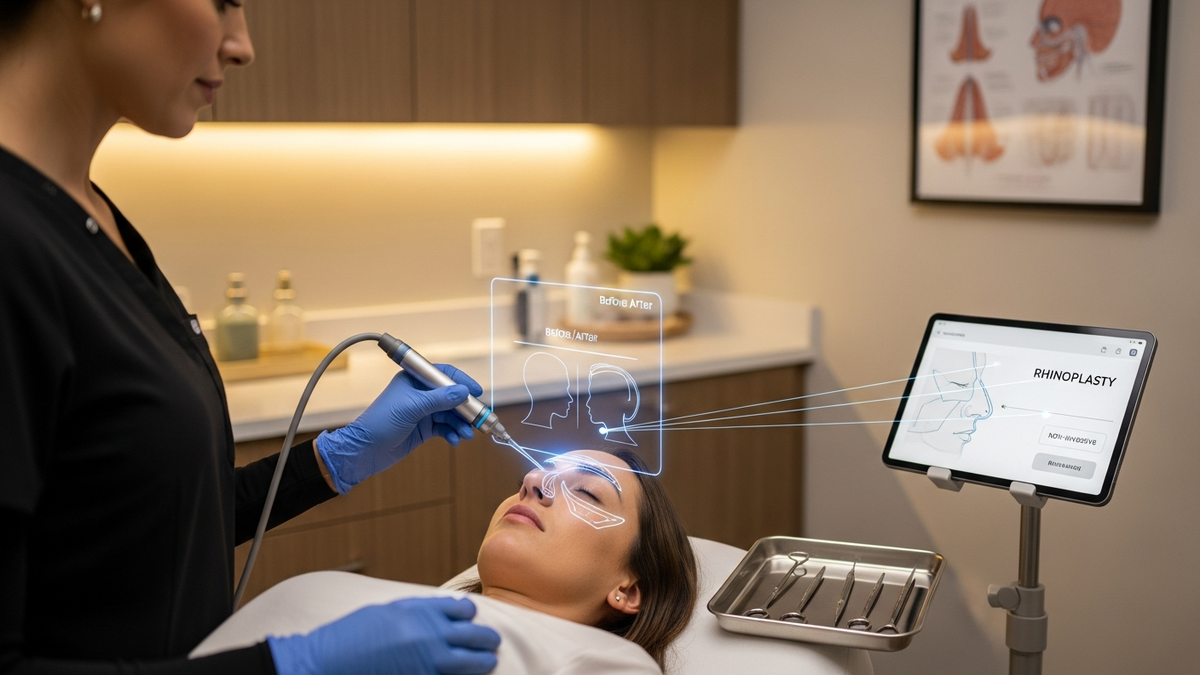
Non-invasive rhinoplasty is an umbrella term people use to describe nose refinement techniques that do not require surgical incisions to reshape cartilage or bone. Instead, non-surgical methods typically focus on:
- Camouflaging irregularities (e.g., smoothing a visible bump)
- Balancing proportions (e.g., improving the look of the profile)
- Softening the nasal tip with careful volume placement
- Improving contour through targeted dosing and technique
Non-invasive rhinoplasty is often performed with injectable treatments. However, not every aesthetic concern can be corrected without surgery—especially when the problem is primarily structural.
Non-Invasive vs. Surgical Rhinoplasty: Key Differences
Traditional surgical Rhinoplasty can change the underlying framework of the nose—cartilage and bone—allowing for more comprehensive structural alteration. Non-invasive rhinoplasty generally emphasizes contour refinement rather than true anatomical reshaping.
When Non-Invasive Approaches Make Sense
- You want subtle to moderate aesthetic changes
- Your concerns are largely contour-related (bridge irregularities, tip definition)
- You prefer temporary or semi-permanent results
- You want a lower downtime option
When Surgery May Be the Better Option
- You want significant changes in shape, size, or symmetry
- Your goal includes functional improvement (breathing difficulties)
- There are structural issues that injections can’t correct safely
If you’re also considering surgical options, you may want to review Rhinoplasty to understand how aesthetic goals and functional nasal health can be addressed together by a qualified facial plastic surgeon.
Common Non-Surgical Options Used for Non-Invasive Rhinoplasty
Non-invasive rhinoplasty typically includes injectable and skin-based techniques. The exact plan depends on your anatomy, your aesthetic goals, and your risk profile.
1) Dermal Fillers for Nasal Contour Refinement
Injectable fillers are one of the most common non-surgical options. A skilled clinician can use them to:
- Soften a hump by strategic placement and optical balancing
- Improve the bridge line for smoother profiles
- Refine the nasal tip appearance and definition
- Create a more harmonious relationship between the nose and face
Important: The nose contains delicate vascular structures. Proper technique, correct product selection, and appropriate dosing are essential to reduce risk.
2) Dissolving Agents (When Appropriate)
In some cases, prior filler may need to be adjusted. Clinicians may use dissolving agents to soften or remove unwanted filler. This can be considered when:
- There is asymmetry or overcorrection
- Contours look uneven
- You want to revise earlier work
Not everyone is a candidate; the plan should be individualized after careful evaluation.
3) Botox/Neuromodulators for Tip Dynamics (Limited Use)
Some patients benefit from neuromodulators when the issue is related to muscle-driven appearance—such as how the tip behaves with expression. However, Botox is not a “reshape” treatment; it’s best for selected cases where muscle activity contributes to the look.
4) Skin-Focused Treatments (Texture and Tone)
While these do not change the nose’s shape, certain skin treatments can enhance the overall appearance of the area by improving texture and clarity. This may complement injectable contour work for a more cohesive result.
What Results to Expect From Non-Invasive Rhinoplasty
Results vary based on your baseline anatomy and the specific technique used. In general, non-surgical rhinoplasty offers:
- Gradual refinement in contour and harmony
- Visible changes that can appear soon after treatment
- Temporary to semi-permanent outcomes (depending on the product)
Timeline: How Soon Will You See Changes?
- Immediate: swelling can temporarily obscure true contour
- Days to 2 weeks: many patients notice more accurate shaping as swelling decreases
- Weeks: final contour refinement becomes clearer
Longevity: How Long Do Non-Surgical Results Last?
Longevity depends on the type of injectable used, your metabolism, the area treated, and your clinician’s technique. Many non-surgical nose refinements require touch-ups over time to maintain the desired look.
Benefits of Non-Invasive Rhinoplasty
For the right candidate, non-surgical rhinoplasty can be appealing because it often provides:
- Minimal downtime compared with surgery
- Lower commitment (results may be adjusted or revised)
- Incremental improvements rather than one-time major alteration
- Opportunity to test changes before considering surgical options
Limitations and Realistic Expectations
Non-invasive rhinoplasty is not a substitute for surgical rhinoplasty when the goal is a major structural change. In particular, injectables generally cannot:
- True bone reshaping or cartilage framework repositioning
- Correct certain functional breathing issues
- Guarantee dramatic reduction in size if the structure is the primary driver
That’s why a thorough assessment is essential. A “nose job” is not only about appearance—it’s also about anatomy, airflow, skin quality, and balance.
Non-Invasive Rhinoplasty for Breathing and Nasal Health: When Function Matters
Some people pursue non-invasive rhinoplasty because they want both aesthetic improvement and better breathing. While certain injectable approaches may affect appearance, they don’t reliably address internal airflow obstruction.
Common Structural Causes of Nasal Obstruction
Chronic congestion and difficulty breathing can be related to structural differences such as:
- Deviated septum
- Enlarged inferior turbinates
- Nasal valve collapse
- Other anatomic contributors
In cases where breathing symptoms are driven by anatomy, functional nasal surgery may offer a more permanent solution than cosmetic-only treatments.
Functional Procedures That May Be More Appropriate Than Cosmetic-Only Options
For patients with chronic nasal congestion, a minimally invasive functional approach can sometimes permanently improve airway comfort—especially when the root cause is structural. For example:
- Septoplasty to straighten a crooked nasal septum (see Deviated Septum and Septoplasty)
- Inferior Turbinate Reduction to reduce long-term “stuffy nose” symptoms
- Repair of nasal valve collapse, which may include non-surgical options or surgical repair depending on severity
- Balloon Sinuplasty for targeted sinus blockage and chronic sinus infection patterns
- Endoscopic sinus surgery with image guidance for restoring sinus function
For those with both cosmetic and functional goals, it’s especially valuable to work with a clinician who can evaluate the nose as a unified structure—appearance and airflow together.
How to Choose a Provider for Non-Invasive Rhinoplasty
Because non-invasive rhinoplasty often involves injections in a high-stakes anatomical area, choosing the right provider is critical. Use a checklist mindset.
Questions to Ask at Your Consultation
- What exactly are you treating? (bridge, tip, asymmetry, profile balance)
- Which technique and product are you recommending—and why?
- What does the risk profile look like for my anatomy?
- What is your approach to safety? (training, experience, emergency protocols)
- What results are realistic for my goals?
- Will we discuss alternatives if injections aren’t enough?
Red Flags to Avoid
- Guarantees of dramatic change without assessment
- Vague answers about technique, product, or safety
- No discussion of limitations or potential complications
- Pressure to proceed quickly without a thorough evaluation
Safety and Side Effects: What You Should Know
All aesthetic procedures come with potential risks. With non-invasive rhinoplasty, risks may include:
- Swelling, redness, bruising, and tenderness
- Asymmetry or contour irregularities that may require adjustment
- Infection (uncommon, but possible)
- Product-related complications depending on the filler type and placement
More serious complications are rare but can occur with improper technique or in unsuitable candidates. This is why expertise matters—especially for nasal injections.
How to Reduce Risk Before and After Treatment
Follow your clinician’s instructions closely. In general:
- Share your medical history and current medications
- Disclose past fillers or injectables
- Plan for bruising/swelling and avoid strenuous activity if advised
- Attend follow-ups to evaluate early healing and contour
Non-Invasive Rhinoplasty in Los Angeles: Why Local Expertise Can Matter
Los Angeles is home to many cosmetic options, but nose refinement is not something you should treat like a one-size-fits-all trend. Your anatomy, skin, and breathing function are unique. A provider with experience in head and neck structure can better evaluate both aesthetic and functional considerations.
Dr. Hootan Zandifar is known for an honest, trustworthy, and compassionate approach, focusing on cosmetic and reconstructive surgery of the head and neck. His practice emphasizes patient education and natural-looking outcomes. For patients whose primary concern includes chronic congestion or sinus symptoms, he specializes in functional nasal surgery using minimally invasive procedures that can improve breathing and quality of life.
When You Might Start With Non-Invasive Rhinoplasty—Then Consider Surgery
Some patients begin with non-invasive rhinoplasty to “test” how they feel about a refined profile. If results are limited or if functional issues remain, surgery may be discussed later.
A Thoughtful Step-by-Step Approach
- Step 1: evaluate aesthetic goals and nasal anatomy
- Step 2: choose the least invasive option that can meet your goals safely
- Step 3: reassess after initial healing
- Step 4: decide whether further refinement is needed—non-surgical or surgical
If you’re exploring surgical paths, you may also want to compare how a surgical approach like Rhinoplasty differs from injectable-only strategies.
Actionable Checklist: Preparing for Your Appointment
To make your consultation more productive, consider these steps:
- Bring reference photos (front, profile, and 3/4 angles) showing your desired level of change
- Write down your top priorities: bridge smoothness, tip definition, symmetry, or breathing comfort
- List prior treatments including fillers, threads, or injectables with approximate dates
- Note symptoms such as chronic congestion, sinus pressure, nosebleeds, or snoring
- Ask about a safety-first plan and what happens if touch-ups are needed
FAQ: Non-Invasive Rhinoplasty
Is non-invasive rhinoplasty the same as a surgical nose job?
No. Non-invasive rhinoplasty typically uses injectables or skin-based treatments to refine contour without cutting bone or cartilage. Surgical rhinoplasty can change the underlying structure for more comprehensive results.
How long do non-surgical nose results last?
Longevity varies by product and placement. Many non-surgical results are temporary or semi-permanent and may require periodic touch-ups to maintain the desired look.
Can non-invasive rhinoplasty fix breathing problems?
Often, appearance-focused injectables do not address structural causes of nasal obstruction. If you have chronic congestion, sinusitis, or difficulty breathing, functional evaluation may be needed. Procedures such as Septoplasty or other functional nasal treatments may be more appropriate depending on the cause.
What are the most common side effects?
Common effects include swelling, redness, bruising, and tenderness. Less common complications can occur, which is why provider experience and safety protocols are crucial.
Who is a good candidate for non-invasive rhinoplasty?
Good candidates typically want subtle to moderate aesthetic refinement, have concerns that are primarily contour-related, and understand that non-surgical treatments have limitations for major structural change.
CTA: Ready for a Personalized Nose Plan?
If you’re considering non-invasive rhinoplasty, the best next step is a consultation where your goals, anatomy, and safety considerations are reviewed together. A thoughtful plan can help you choose the least invasive path that still delivers results you’ll feel confident about.
Schedule your consultation to discuss your aesthetic goals and—if relevant—whether functional nasal concerns like congestion or sinus symptoms should be addressed alongside your appearance.
For additional information on head-and-neck cosmetic and restorative options, FlowGeniQ Digest encourages readers to explore evidence-based resources and consult qualified clinicians.
Professional Disclaimer
This content is provided for general educational purposes only by FlowGeniQ Digest. It is not a substitute for professional advice, diagnosis, or treatment. Readers are advised to consult qualified professionals for personalized recommendations.
Medical Information Disclaimer
This content is provided for general educational purposes only by FlowGeniQ Digest. It is not a substitute for professional advice, diagnosis, or treatment. Readers are advised to consult qualified professionals for personalized recommendations.