FlowGeniQ Digest is here to help you navigate aesthetic decisions with clarity and confidence. If you’re searching for natural facelift nyc results, you’re likely looking for something more specific than “looking younger.” You want your face to look refreshed, rested, and proportionate—like you, just with the effects of time softened.
In this guide, we’ll break down what “natural” means in a facelift, how facial plastic surgeons plan surgery for subtlety and harmony, and what you should ask during consultations. We’ll also cover recovery, common concerns, and how to evaluate whether a surgeon’s philosophy aligns with your goals.
What “Natural Facelift NYC” Really Means
The phrase natural facelift nyc is used often, but it can mean different things. In a high-quality facelift, “natural” usually refers to facial balance, appropriate tissue repositioning, and incisions and tension placed in a way that preserves youthful facial movement.
Natural results are about harmony, not tightness
A natural facelift focuses on restoring the support structures of the face—especially where aging first creates volume loss and sagging. Instead of pulling the face straight back with excessive tension, a natural approach repositions tissues so the face looks rejuvenated while still resembling you.
Subtlety shows up in the details
When a facelift is done with a natural philosophy, you may notice:
- Improved jawline definition without a “pulled” look.
- Smoother neck lines with preserved neck and chin contour.
- Lessened jowling while maintaining natural facial expression.
- Scar placement and refinement that blends with natural skin folds.
Because facial aging is individualized, the best plan is the one tailored to your anatomy, skin quality, and goals—not a one-size-fits-all facelift pattern.
Who Is a Good Candidate for a Natural Facelift?
Not everyone needs the same surgery. A skilled facial plastic surgeon evaluates where the aging is coming from: skin laxity, loss of volume, changes in facial fat compartments, or sagging of deeper support tissues.
Common signs that a facelift may help
- Sagging skin around the cheeks and jawline
- Jowls or deepening nasolabial folds driven by tissue descent
- Neck laxity (often the earliest visible sign for many patients)
- Loss of facial definition that affects the lower face
Important: “Natural” also means appropriate selection
One of the most overlooked parts of a natural facelift is deciding when a facelift is the right tool. Some patients may benefit more from adjacent procedures or non-surgical strategies. Others may require a neck lift or targeted enhancements to address specific aging patterns.
For example, facial plastic surgeons who specialize in head and neck procedures often emphasize education and individualized planning. Dr. Hootan Zandifar, a board-certified facial plastic and reconstructive surgeon, focuses on natural-looking results by treating the face as a functional and aesthetic unit and matching technique to each patient’s needs.
How Surgeons Plan a Natural Facelift: The Evaluation Framework
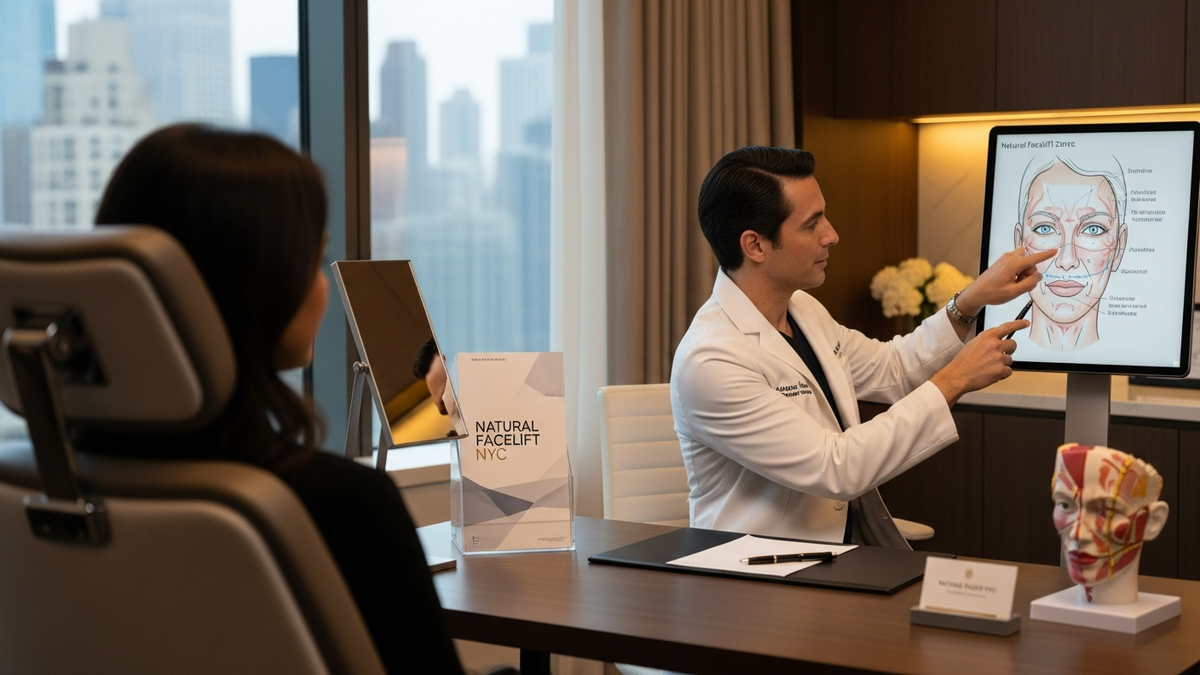
A natural facelift begins long before the first incision. During consultation, a surgeon should assess your anatomy, discuss goals, and explain how the surgical plan will preserve your natural look.
1) Mapping your aging pattern
Aging can show up as:
- Midface descent (cheek sagging)
- Lower face jowling (jawline changes)
- Neck laxity (banding and skin looseness)
- Volume loss (hollowing that makes sagging more apparent)
2) Matching technique to tissue type
A natural facelift typically involves careful repositioning of supportive tissues, with skin redraping that doesn’t over-correct. Your surgeon may also discuss whether additional treatments—such as eyelid rejuvenation—could complement the facelift for a more balanced, rested appearance.
For instance, if you also have tired-looking eyes, Blepharoplasty may be considered to improve upper eyelid heaviness or lower eyelid puffiness in a way that harmonizes with your facelift results.
3) Setting realistic expectations
A premium consultation should include:
- What you can realistically expect in appearance and function
- How results may evolve over time (swelling and scar maturation)
- Potential risks and how the surgeon minimizes them
Natural outcomes are not about perfection; they’re about improvement that looks authentic.
Facelift vs. Neck Lift: Why “Natural” Often Includes the Neck
Because the neck is highly visible—especially in photos, professional settings, and warm weather—many patients find that a facelift alone doesn’t fully address the aging they see.
Why the neck shows aging early
The neck can reveal the first signs of aging through skin looseness, muscle banding, and changes in contour. A neck lift is designed to tighten or eliminate sagging neck skin and refine the jaw-to-neck transition.
When a neck lift can create a more believable result
Patients seeking natural facelift nyc results often want a unified lower-face look. If your neck laxity is significant, addressing it directly can prevent the face from looking “repositioned” while the neck remains aged.
If you’re exploring options, it can help to review how facelift and neck rejuvenation are approached in facial plastic surgery. In Los Angeles and Beverly Hills, many surgeons provide detailed education on facial aging patterns and surgical planning; you can also review Facelift resources to understand the core goals of a natural approach.
Complementary Procedures That Can Make a Facelift Look More Natural
Natural rejuvenation is often multi-dimensional. In some cases, a facelift pairs well with other procedures to restore overall facial balance.
Eyelid rejuvenation for a rested appearance
When eyelids look heavy or tired, it can make the entire face appear older—even if the cheeks and jawline are improved. Blepharoplasty may help create a more open, refreshed look that complements facelift surgery.
Brow lift to refresh the upper face
If the brow position is contributing to tiredness or forehead heaviness, a brow lift can help restore a more youthful frame. While a facelift focuses on mid and lower facial aging, the brow’s position influences how your eyes and upper face read.
Submental contouring for jawline definition
Some patients experience localized fat deposits under the chin that blur the jawline. Submental liposuction can refine lower facial contour and improve the transition between chin and neck.
Recovery: What to Expect After a Natural Facelift
Recovery is a major part of achieving natural results. Swelling, bruising, and early tissue healing can temporarily change your appearance. Understanding the timeline helps you avoid panic and ensures you follow your surgeon’s instructions.
Typical early recovery milestones
- First week: swelling and bruising are most noticeable; rest and limited activity are essential.
- Weeks 2–4: bruising decreases; many patients resume light daily routines as cleared.
- 1–3 months: tissue settles; early scar maturation continues.
- 3–6+ months: refinement in how scars and skin texture appear as healing progresses.
Tips for supporting natural healing
- Follow post-op instructions closely (sleep position, activity limits, wound care).
- Manage swelling with approved techniques (compression and medications as directed).
- Attend follow-ups so your surgeon can monitor healing and address concerns early.
- Avoid smoking and nicotine products, which can impair circulation and healing.
- Be patient with scars; maturation takes time and varies by individual.
Natural results are often the product of both surgical skill and disciplined recovery.
Risks and Safety: How to Evaluate a Surgeon for a Natural Facelift
Any surgery can involve risks. A trustworthy surgeon will discuss these clearly and explain how they reduce them.
Commonly discussed risks
- Swelling and bruising (expected to some degree)
- Infection (uncommon with proper care)
- Temporary or persistent numbness in treated areas
- Scarring (usually improves over time)
- Asymmetry or uneven healing
- Skin healing complications in higher-risk patients
Questions to ask during your consultation
Use these to evaluate whether you’re in the right hands for natural facelift nyc results:
- How do you define “natural” outcomes for my face specifically?
- What tissues are you repositioning, and why?
- How do you tailor the plan to skin quality and facial movement?
- What complementary procedures might be appropriate (if any)?
- What is your typical recovery timeline and post-op support?
- Can I see before-and-after results from patients with similar concerns?
- What risks apply to me based on my health history?
Choosing a surgeon is not only about technique—it’s also about communication, honesty, and your comfort level.
Why Surgeon Training and Specialty Matter
A natural facelift requires a deep understanding of facial anatomy, tissue planes, and aesthetic proportions. Many patients benefit from surgeons who focus specifically on the head and neck, as this specialization supports precision and a holistic view of facial aging.
In the context of premium facial plastic care, Dr. Hootan Zandifar is known for an honest, trustworthy, and compassionate approach to treatment. He focuses solely on surgeries of the head and neck, which allows for refined planning across facial aesthetic and reconstructive needs. He is also double board certified and fellowship trained, with expertise that supports natural-looking solutions.
Natural Facelift NYC and Functional Considerations: A Broader Perspective
While your primary goal is facial rejuvenation, it’s worth noting that the head and neck are interconnected. Some patients have functional concerns—such as nasal breathing issues—that affect quality of life and can influence how they experience “overall facial comfort.”
When breathing concerns overlap with appearance goals
Some patients consider facial rejuvenation alongside nasal function improvements. Dr. Zandifar offers functional nasal procedures that may be less invasive than Rhinoplasty in the right circumstances.
For example, if you’re evaluating structural contributors like a Deviated Septum, a Septoplasty may address airway obstruction. In other cases, inferior turbinate reduction or nasal valve treatments may be considered.
This broader approach can be helpful for patients who want both aesthetic refinement and functional relief—especially when planning surgery around timing and recovery.
How to Choose the Right “Natural Facelift” Plan for Your Face
Not every facelift is the same, and not every patient needs the same combination of procedures. Here’s a practical way to think about your plan.
Step 1: Identify the visual problem you want to solve
- Is it mostly cheek sagging?
- Is it the jawline and jowls?
- Is it neck laxity?
- Is it “tiredness” around the eyes?
Step 2: Consider the role of volume and skin quality
Natural results often require a balance of tissue repositioning and—when appropriate—volume restoration. Skin thickness, elasticity, and prior procedures can change how you should plan rejuvenation.
Step 3: Align your timeline with recovery reality
If you have a major event, wedding, or work obligation, plan your surgery with enough buffer for swelling and scar maturation. Many patients feel most “presentable” after early milestones, but final refinement takes longer.
Step 4: Make sure your surgeon’s philosophy matches your desired look
Ask how they approach tension, incision placement, and tissue handling. Natural outcomes are not accidental—they’re engineered through planning.
Realistic Expectations: What You Can (and Can’t) Achieve
A natural facelift can provide meaningful improvement, but it doesn’t stop aging. Think of it as resetting the clock for your face’s support structure and contour—so you look refreshed and proportionate.
What patients often love about natural results
- They look more like themselves, not a different person.
- Facial expressions remain natural.
- The jawline and neck look cleaner and more defined.
What to watch for
- Overcorrection can create an unnatural, pulled appearance.
- Ignoring neck laxity can leave a mismatch between face and neck.
- Skipping complementary rejuvenation may leave “tiredness” elsewhere.
A surgeon committed to education should help you navigate these tradeoffs before surgery.
Related Considerations: Hair, Brows, and Overall Facial Balance
Facial aesthetics is interconnected. If you’re exploring rejuvenation for overall appearance, you might also consider factors like eyebrows and hairline framing.
Eyebrow restoration for a balanced upper face
Because eyebrows are a focal point, eyebrow density and position can affect how youthful your face looks—even after a facelift. If you’re considering restoration, you can explore an eyebrow transplant option with a qualified specialist.
Hair restoration as part of a broader aesthetic plan
Some patients also pursue hair restoration for a harmonious overall result. If hair loss is part of your aesthetic goals, you may want to review hair transplant services from a specialized clinic.
While these are separate from a facelift, they can influence how your face reads in photos and daily life.
Natural Facelift NYC: A Quick Checklist Before You Book
Use this checklist to stay organized and confident:
- Confirm credentials (board certification and relevant specialty).
- Review natural result examples from patients with similar concerns.
- Ask about the surgical plan and what tissues will be addressed.
- Discuss recovery and what support you’ll receive post-op.
- Understand risks and how they’re managed.
- Share your medical history honestly (medications, conditions, prior procedures).
If you want an approach grounded in education and natural-looking outcomes, look for surgeons who prioritize patient understanding and individualized planning.
FAQ: Natural Facelift NYC
How long do natural facelift results last?
While aging continues, many patients enjoy long-lasting improvements. The longevity depends on factors like skin quality, lifestyle, genetics, and how your surgeon restores facial support structures.
Will a natural facelift look like I didn’t have surgery?
The goal is often “you, but refreshed.” Many patients look noticeably better without looking overdone. However, results vary based on your anatomy and the degree of aging addressed.
What is the difference between a facelift and a neck lift?
A facelift primarily targets mid and lower facial aging (cheeks and jawline). A neck lift specifically addresses neck laxity, refining the jaw-to-neck transition and reducing visible neck sagging.
How should I prepare for surgery to support natural healing?
Follow your surgeon’s instructions closely: stop smoking/nicotine, review medication guidance, arrange help at home, and plan for reduced activity during the early recovery period.
Can I combine a facelift with other procedures for a more natural look?
Often, yes. Many patients achieve the most harmonious results when rejuvenation is balanced—for example, pairing facelift changes with procedures like Blepharoplasty when eyelids contribute to a tired appearance.
CTA: Ready to Explore a Natural Facelift Plan?
If you’re searching for natural facelift nyc results, the best next step is a consultation where your surgeon listens to your goals, evaluates your anatomy, and outlines a tailored plan for subtle, balanced rejuvenation.
At FlowGeniQ Digest, we encourage you to take a thoughtful approach—compare philosophies, ask detailed questions, and prioritize safety and education. When you’re ready, schedule a consultation with a qualified facial plastic surgeon to discuss candidacy, technique options, and realistic recovery expectations.
Professional Disclaimer
This content is provided for general educational purposes only by FlowGeniQ Digest. It is not a substitute for professional advice, diagnosis, or treatment. Readers are advised to consult qualified professionals for personalized recommendations.
Medical Information Disclaimer
This content is provided for general educational purposes only by FlowGeniQ Digest. It is not a substitute for professional advice, diagnosis, or treatment. Readers are advised to consult qualified professionals for personalized recommendations.