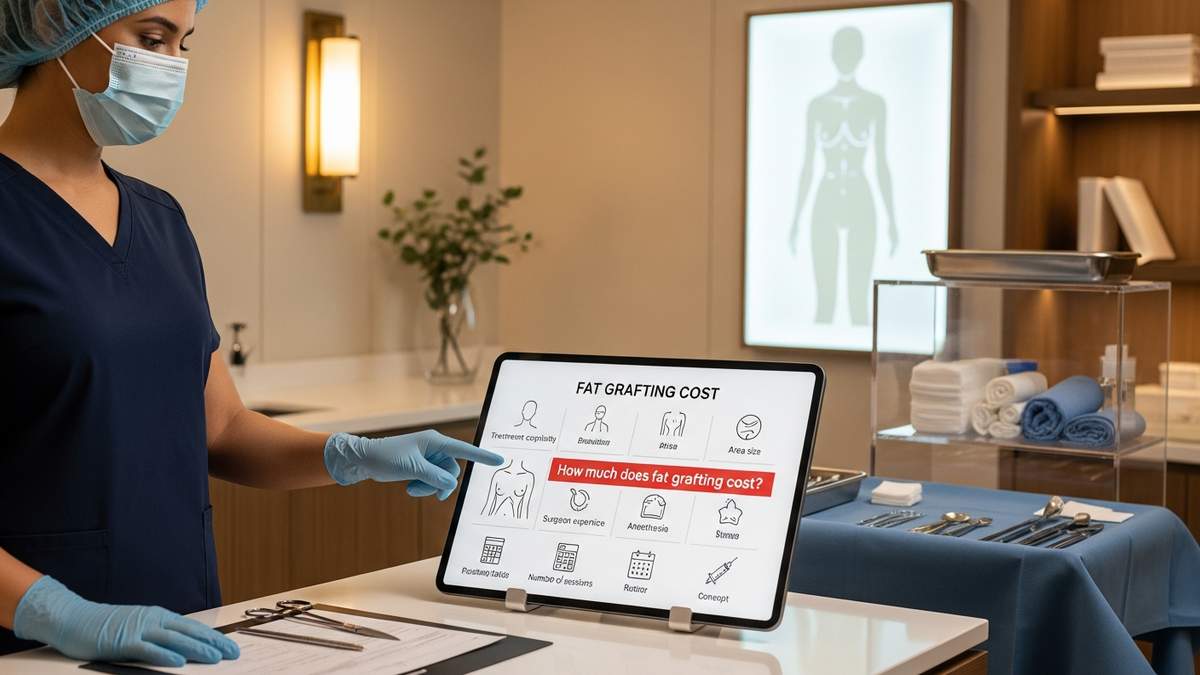
When people search how much does fat grafting cost, they’re usually looking for a realistic expectation—not a vague number. Fat grafting (also called fat transfer or autologous fat transfer) uses your own fat to restore volume, soften lines, and enhance contours in areas like the cheeks, under-eyes, lips, and hands. Because every patient’s anatomy, goals, and treatment plan differ, the final cost can range significantly.
In this article, FlowGeniQ Digest explains the typical pricing structure, the factors that change the price, and how to compare quotes in a way that protects both your results and your budget. We’ll also share practical steps you can take before your consultation so you get a clearer answer to “what will it cost me?”
How much does fat grafting cost? Quick answer
There isn’t one universal price for fat grafting. In many markets, costs are often quoted per treatment area and can be influenced by how much fat is harvested and processed, the complexity of the procedure, and the surgeon’s experience.
Typical U.S. pricing ranges you may see:
- Small-volume fat transfer (e.g., targeted contouring): often priced in the lower-to-mid range of the overall spectrum.
- Moderate-volume facial rejuvenation (e.g., cheeks, tear trough/under-eye planning, combined areas): commonly in the mid range.
- Full, multi-area transfers (e.g., several facial regions and/or hands): often falls on the higher end due to time, graft volume, and complexity.
Important: Your quote may be higher or lower than these broad ranges depending on whether the plan includes additional procedures, the need for specialized techniques, and your individualized surgical strategy.
Why fat grafting pricing varies so much
Even when two patients ask the same question—how much does fat grafting cost—they may receive different treatment plans. Pricing reflects the medical work required to meet your aesthetic goals safely.
1) The number of areas treated (and how “complex” they are)
Fat grafting is often priced based on regions such as:
- Midface (cheeks)
- Lower face (marionette lines, jawline contouring)
- Under-eye/tear trough region (requires careful planning)
- Lips (small-volume precision work)
- Hands (volume and texture considerations)
Some areas demand more intricate layering, higher precision, or more conservative grafting strategies—factors that can increase operative time.
2) Graft volume: how much fat is needed
More volume generally means:
- More time in harvesting and processing
- More product handling and careful centrifugation/filtration (depending on technique)
- Potentially more sessions if a staged approach is recommended
Because fat survival can vary by technique and patient factors, surgeons may adjust volume and layering rather than simply “adding more.”
3) Harvest site selection and efficiency
Fat is harvested from areas like the abdomen, flanks, inner thighs, or other donor regions. Pricing can vary based on:
- Which donor site is used
- The amount of donor fat available
- Whether the procedure overlaps with body contouring goals
In some cases, a donor-site procedure may be bundled; in others, it may be limited to small access incisions for fat collection.
4) Surgical setting and anesthesia type
Fat grafting may be performed with local anesthesia, sedation, or general anesthesia depending on volume, patient preference, and safety considerations. The anesthesia plan can affect total cost through anesthesia professional fees and facility charges.
5) Surgeon experience and technique
Results in fat grafting depend heavily on technique: how fat is harvested, processed, and placed. Surgeons with extensive experience in facial plastic and reconstructive approaches often price accordingly—because your outcomes depend on the details.
How to think about value: The lowest quote isn’t always the best deal. Ask what’s included (planning, surgical time, post-op care) and whether the surgeon has a track record of natural-looking, long-lasting results for your specific area.
6) Whether additional procedures are combined
Many patients pursue “volume + refinement” plans. Your quote could change if fat grafting is combined with another procedure, such as:
- Facelift (when volume restoration and skin tightening are both desired) — see Facelift
- Blepharoplasty (for eyelid structure and under-eye rejuvenation planning) — see Blepharoplasty
- Other facial contouring or reconstructive steps
Bundling can sometimes be more efficient than doing procedures separately, but it can also increase overall cost.
What’s usually included in a fat grafting quote?
When comparing quotes, don’t just compare the number—compare what’s inside it. A comprehensive quote often includes:
- Pre-operative consultation and facial/anatomical assessment
- Procedure planning (including volume estimation and technique selection)
- Surgical fees
- Facility fees (operating room or procedure suite costs)
- Anesthesia fees (if applicable)
- Medications and post-operative care plan
- Follow-up visits during the recovery period
Ask what’s not included, such as lab work, imaging, prescription costs, compression garments, or additional follow-ups. Transparent offices will provide a breakdown.
Are there “hidden costs”?
Fat grafting is a medical procedure, and certain costs may appear after the initial quote. Common items to clarify include:
- Pre-op testing (labs, clearance, pregnancy testing where applicable)
- Post-op medications (pain control, antibiotics if prescribed)
- Compression garments for donor-site comfort
- Additional procedures if swelling or contour goals require refinements
- Staged treatment (some patients benefit from more than one session)
To answer how much does fat grafting cost for your situation, request a written estimate that includes likely add-ons based on your plan.
Average costs by treatment type (how to estimate your budget)
Because fat grafting pricing varies by region and clinic, it’s more helpful to think in terms of treatment “complexity tiers.” Use these as a planning framework and confirm specifics in consultation.
Small-volume fat transfer
Typically involves subtle contouring—often a single area or a conservative augmentation plan. Budgeting for this tier may be lower than multi-area approaches, but you still need to account for anesthesia and facility fees.
Moderate-volume facial rejuvenation
Common goals include restoring midface volume, improving hollowness, and softening lines. This tier may involve multiple layers and careful planning to support natural contour transitions.
Multi-area or full rejuvenation plans
If the plan includes several facial regions (or hands plus face), operative time and complexity generally increase. This is often where costs rise most noticeably.
How to get the most accurate fat grafting cost estimate
If you want a near-accurate number, your best next step is a consultation with a qualified surgeon who can evaluate:
- Your goals (what you want to look like after healing)
- Your anatomy and skin quality
- Your donor fat availability
- Your medical history and risk factors
- Your expectations about longevity and potential need for touch-ups
During your visit, ask questions that directly relate to cost:
- How many areas will be treated?
- What volume are you targeting?
- Will you recommend a staged approach?
- What’s included in the quote (facility, anesthesia, follow-ups)?
- What factors could change the final price?
Factors that can raise or lower your final price
To make your budget more realistic, consider these common variables:
May raise cost
- More graft volume needed
- Treatment of multiple areas
- Complex anatomical regions (e.g., under-eye planning)
- General anesthesia or a hospital-based setting
- Combining with procedures like Facelift or Blepharoplasty
May lower cost
- Single-area, conservative volume plans
- Limited donor site needs
- Local anesthesia with shorter operative time
What results can influence perceived “value”
Cost is only part of the equation. Fat grafting is judged by how natural it looks and how well the transferred fat integrates over time. The “cheapest” option might require additional touch-ups, which can increase long-term total cost.
When evaluating potential surgeons, consider:
- Before-and-after photos for similar treatment areas
- Consistency of results (natural transitions, appropriate texture)
- How they discuss fat survival and realistic expectations
- Whether they provide a clear post-op care plan
Preparing for your fat grafting consultation
Here’s how to walk into your appointment ready to get the clearest answer to how much does fat grafting cost—and whether you’re a good candidate.
Bring specific information
- Photos of your current appearance and reference images of your desired results
- A list of medications and supplements
- Your medical history (especially bleeding disorders, prior surgeries, smoking history)
- Any prior cosmetic procedures and outcomes
Ask about technique and longevity
Fat grafting often involves a personalized approach. Ask your surgeon how they:
- Plan graft placement and layering
- Manage contour transitions
- Approach under-eye or high-precision areas
- Handle the possibility of staged refinement
Fat grafting vs. other volume procedures (and how that affects cost)
Some patients consider alternatives like dermal fillers, implants, or other reconstructive options. While these can be discussed during a consultation, the cost structure differs:
- Fat grafting uses your own tissue and may require a surgical recovery period.
- Dermal fillers may have lower upfront cost for some goals but typically require repeat treatments.
- Surgical implants may have a different risk/benefit profile and cost drivers.
Your best option depends on your anatomy, goals, and how long you want results to last.
Related procedures you might also be researching
Many people exploring facial rejuvenation also research adjacent procedures. For example, if your concerns include both facial volume and structural refinement, you may see discussions about:
- Rhinoplasty for nose shape and facial harmony
- Deviated Septum or Septoplasty for breathing-related nasal concerns
- Blepharoplasty for eyelid changes
While these are distinct from fat grafting, they can come up when patients build a comprehensive plan for head and neck aesthetics and function.
How FlowGeniQ Digest frames cost transparency
At FlowGeniQ Digest, we focus on helping readers make informed decisions by breaking down the real drivers behind pricing—surgical complexity, treatment areas, technique, and what’s included in your estimate. If you’re comparing clinics, the goal isn’t just to find the lowest number; it’s to understand why one plan costs more and whether the added value is tied to safety, precision, or outcomes you care about.
FAQ: How much does fat grafting cost?
1) What is the average cost of fat grafting?
Average fat grafting costs vary widely by treatment area, volume, anesthesia, and whether procedures are combined. The most accurate number comes from a surgeon’s evaluation and a written estimate that outlines what’s included.
2) Does fat grafting cost more for the under-eye area?
It can. The under-eye/tear trough region often requires high precision and careful planning due to its anatomy and the importance of natural-looking transitions. That complexity can influence operative time and pricing.
3) Is fat grafting priced per session or per area?
Clinics may quote per area, per session, or based on a customized surgical plan. Ask how your quote was calculated and whether additional sessions (if recommended) are discussed upfront.
4) What’s included in the final price?
Common inclusions are surgeon fees, facility fees, anesthesia (if applicable), and follow-up visits. Clarify what’s not included—such as lab work, medications, and compression garments—to avoid surprises.
5) Can I reduce the cost of fat grafting?
You may be able to manage cost by choosing a conservative plan or focusing on one priority area. However, avoid sacrificing medical appropriateness for price—natural results depend on correct technique and volume planning.
CTA: Get a personalized fat grafting cost range
If you’re ready to understand how much does fat grafting cost for your specific goals, the most reliable path is a consultation with a qualified, experienced surgeon. A personalized assessment can estimate the right volume, clarify whether you need one session or a staged plan, and provide a transparent written quote.
Next step: Schedule your consultation, bring your reference photos, and ask for a breakdown of what’s included in the estimate. That way, you can compare options with confidence—not guesswork.
Professional Disclaimer
This content is provided for general educational purposes only by FlowGeniQ Digest. It is not a substitute for professional advice, diagnosis, or treatment. Readers are advised to consult qualified professionals for personalized recommendations.
Medical Information Disclaimer
This content is provided for general educational purposes only by FlowGeniQ Digest. It is not a substitute for professional advice, diagnosis, or treatment. Readers are advised to consult qualified professionals for personalized recommendations.