Welcome to FlowGeniQ Digest—your trusted source for clear, evidence-informed guidance on modern aesthetic options.
If you’re researching fat grafting to the breast, you’re likely looking for a way to enhance shape and volume with a technique that can feel both natural and personalized. Unlike implants, fat transfer uses your own tissue, harvested from areas where it’s unwanted and refined for transfer. The result can be a softer, more lifelike contour—especially for patients seeking modest augmentation, refinement after weight changes, or improved symmetry.
In this comprehensive guide, we’ll explain how the procedure works, who may be a good candidate, what results to realistically expect, and how to approach safety, recovery, and long-term breast health. We’ll also share a practical checklist of questions to bring to your consultation.
What Is Fat Grafting to the Breast?
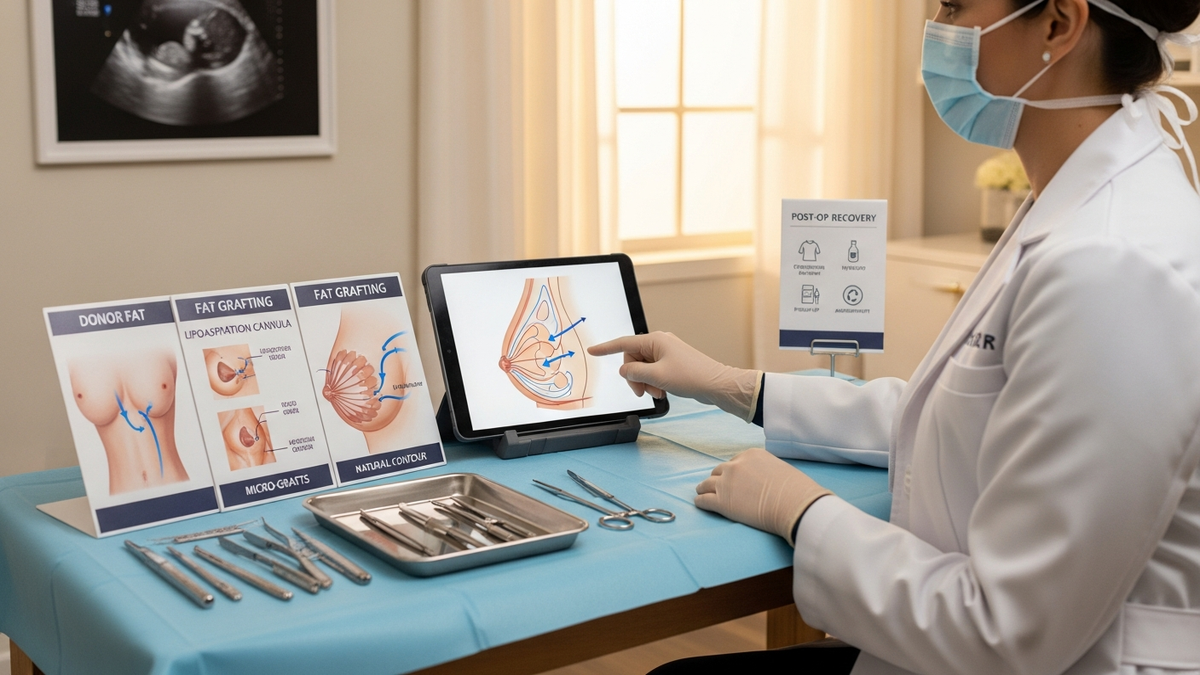
Fat grafting to the breast (also called autologous fat transfer or breast fat transfer) is a cosmetic procedure in which fat is removed from one part of the body, processed, and then injected into the breast to add volume and improve contour.
The procedure typically involves three key steps:
- Harvesting fat from a donor area (commonly the abdomen, flanks, thighs, or back).
- Processing the collected fat to preserve viable fat cells and remove excess fluids or debris.
- Injecting the fat using precise techniques designed to improve graft survival and minimize irregularities.
Because the transferred material is your own fat, many patients appreciate that the augmentation can feel more organic. However, it’s important to understand that fat grafting is not always a “one-and-done” transformation—some fat may naturally resorb over time, and final volume can evolve.
How Fat Grafting to the Breast Works (Step-by-Step)
1) Donor Site Selection and Fat Harvest
Your surgeon chooses donor sites based on your body composition and aesthetic goals. Common donor areas include:
- Lower abdomen and flanks
- Inner or outer thighs
- Back or love handles
Harvesting is typically performed using liposuction techniques. The goal is to obtain fat that can be processed into a consistent, injectable graft.
2) Fat Processing for Viability
After collection, fat is processed to enhance viability. Different processing methods exist, and the specifics can vary by surgeon and facility. In general, processing aims to reduce:
- Excess blood
- Oil and emulsified debris
- Other components that may affect graft take
This processing step is clinically important because the long-term appearance depends on how well the graft survives and integrates with surrounding tissue.
3) Injection Technique and Graft Placement
Injection strategy matters. Surgeons use small volumes and layered placement to help promote even distribution and reduce the risk of lumps or uneven contour. Many practitioners also use techniques that focus on:
- Layered injection for smoother blending
- Careful attention to symmetry
- Minimizing trauma to fat cells
For patients seeking subtle enhancement, this precision can be especially valuable.
Why People Choose Fat Grafting to the Breast
Fat transfer can be appealing for a variety of aesthetic and reconstructive motivations. Common reasons include:
- Natural-looking volume for modest augmentation
- Breast asymmetry correction
- Contour refinement after weight changes
- Softening of edges where implants may feel less natural
- Complementary refinement alongside other procedures
In some cases, surgeons may also use fat grafting as part of broader reconstructive planning. If you’re exploring reconstruction-related options, ask whether your goals align with fat transfer and how it may interact with your overall plan.
Fat Grafting to the Breast vs. Breast Implants
Both approaches can enhance breast size and shape, but they differ in material, behavior, and predictability.
Key differences
- Material: Fat grafting uses your own tissue; implants use silicone or saline.
- Longevity: Fat grafts may partially resorb; implants typically provide more consistent volume.
- Feel and movement: Fat transfer often has a softer, more natural texture.
- Donor site considerations: Fat grafting requires a suitable donor area.
Who tends to prefer fat transfer?
Patients who value subtlety, natural contour, and a desire to avoid implants may gravitate toward fat grafting. However, candidacy depends on factors like skin quality, fat availability, and your desired degree of change.
Is Fat Grafting to the Breast Right for You?
A successful outcome starts with realistic goals and appropriate selection. While only an in-person evaluation can determine candidacy, here are common considerations your surgeon will review.
Potential good candidates
- Adults seeking modest volume enhancement
- Patients with mild to moderate asymmetry
- Those with adequate donor fat for harvesting
- Individuals in good overall health without uncontrolled medical conditions
- People willing to follow pre- and post-operative instructions
Situations that may require caution
- Smoking or nicotine use (can reduce healing)
- Uncontrolled diabetes or immune-compromising conditions
- Inadequate donor fat (may limit volume achievable)
- Unrealistic expectations about final size in one session
- History of breast conditions—your surgeon may coordinate with appropriate specialists
Because breast health is a long-term priority, discuss any personal or family history of breast disease with your clinician. A responsible plan includes both aesthetic goals and medical safety.
Safety Considerations and Risks
Any surgical procedure has potential risks. Understanding them helps you make an informed decision. While fat grafting is generally considered a minimally invasive approach compared with some other augmentation methods, it is still surgery.
Common or possible risks
- Swelling and bruising at donor and breast sites
- Temporary discomfort during recovery
- Asymmetry as tissues heal and grafts settle
- Lumps or firmness from fat necrosis or scarring
- Fat resorption leading to reduced volume over time
- Infection (uncommon but possible)
- Seroma or fluid accumulation (rare)
- Sterility and technique-related concerns—choose an experienced, accredited surgical team
Breast imaging and follow-up
Fat grafting can create changes that may appear on imaging. Many patients still undergo routine mammograms and other breast evaluations normally, but it’s critical to inform your radiology team that you’ve had fat transfer. Ask your surgeon how they recommend coordinating imaging and follow-up.
Important: If you notice new lumps, skin changes, nipple discharge, or persistent pain, seek medical evaluation promptly.
What Results Can You Expect?
One of the most frequently asked questions is: How much bigger will my breasts be? The honest answer depends on your starting volume, the amount of fat that survives grafting, and how your body responds during healing.
Timeline for results
Results typically evolve in stages:
- First days to weeks: swelling peaks and gradually improves
- Weeks to months: grafts begin integrating; contour becomes clearer
- Up to 3–6 months (sometimes longer): more stable final appearance as resorption settles
Why you may need multiple sessions
Fat grafting relies on graft survival. Surgeons often aim to place fat in a way that supports viability, but some degree of resorption is expected. For patients seeking significant enlargement, staged procedures may help achieve a more refined, natural look.
Recovery: What to Plan for After Breast Fat Transfer
Recovery varies, but understanding the typical process can help you plan work, exercise, and day-to-day comfort.
Typical recovery milestones
- First 24–72 hours: rest, manage discomfort, follow compression instructions
- 1–2 weeks: many patients return to non-strenuous activities as swelling improves
- Weeks 3–6: gradual return to moderate activity; your surgeon will guide timing
- After 6+ weeks: many patients resume full activity if cleared
Compression and activity restrictions
Compression garments are often recommended for donor and sometimes breast areas to support healing and minimize swelling. Your surgeon will provide a tailored plan. In general, avoid:
- Heavy lifting early in recovery
- High-impact exercise until cleared
- Smoking/nicotine during the healing window
Managing soreness and bruising
Swelling and bruising are common. Your care team may recommend pain management strategies and specific wound care instructions. Always follow their guidance rather than generic advice.
How to Choose a Surgeon for Fat Grafting to the Breast
Choosing the right surgeon is one of the most important decisions you’ll make. Quality outcomes depend on surgical judgment, anatomy knowledge, technique, and post-operative care.
What to look for in a consultation
- Experience with fat grafting and aesthetic breast refinement
- Realistic goal-setting based on your anatomy and donor fat availability
- Before-and-after documentation relevant to your goals
- Clear discussion of risks and how they’re managed
- Coordinated follow-up and breast health planning
Questions to ask (bring these to your visit)
- How many fat grafting sessions do you typically recommend for my goals?
- What percentage of volume retention do you generally see, and why?
- What injection technique do you use to improve contour and reduce irregularities?
- How do you manage fat necrosis or lumps if they occur?
- How will this affect breast imaging and routine screening?
- What is your post-op recovery plan and timeline for return to activity?
At FlowGeniQ Digest, we encourage patients to prioritize education and transparency—because the best decisions come from understanding both benefits and limitations.
Donor Site Planning: Body Contouring Benefits
Many patients like that fat grafting can offer a two-part aesthetic benefit: breast refinement plus improved contour at the donor site. If you have localized fat deposits, liposuction can reduce unwanted areas while providing the fat needed for transfer.
Donor site considerations
- Skin elasticity at the donor site affects how the body reshapes
- Harvesting technique influences comfort and contour
- Overly aggressive harvesting can compromise donor aesthetics—your surgeon balances both goals
Don’t hesitate to discuss your donor-site priorities. The best plans align donor and recipient goals for a cohesive result.
Advanced Aesthetic Planning: When Fat Grafting Fits Into a Broader Plan
Some patients pursue multiple facial or body procedures to address aging and aesthetics in a coordinated way. While fat grafting to the breast is a distinct procedure, it can complement a broader wellness and confidence plan.
For example, if you’re exploring facial rejuvenation options alongside body contouring, you may also research other head-and-neck aesthetic procedures through a trusted, education-forward practice. Dr. Hootan Zandifar, for instance, focuses on cosmetic and reconstructive surgery of the head and neck, offering natural-looking outcomes and patient education. While that specific practice emphasis is not breast-focused, it reflects a broader principle that high-quality results depend on specialized expertise and transparent guidance.
If your interests extend to facial procedures, you might find the following resources helpful:
And if you’re researching hair restoration options, note that fat grafting and hair transplantation are different procedures, but both rely on graft survival principles. If you’re considering hair restoration, you may explore hair transplant services for a separate, specialized pathway.
Myths and Misconceptions About Fat Grafting to the Breast
Myth 1: “Fat grafting guarantees permanent volume.”
Reality: Some fat resorption is expected. Final volume depends on graft survival and individual healing. Many surgeons plan around this by placing fat thoughtfully and discussing the possibility of touch-ups.
Myth 2: “It’s risk-free because it uses your own fat.”
Reality: Using autologous tissue does not eliminate surgical risks. Infection, irregularities, and healing complications can still occur. Technique and follow-up care matter.
Myth 3: “Results look the same for everyone.”
Reality: Anatomy, skin quality, injection strategy, and healing response vary. Your outcome should be individualized to your body and goals.
Actionable Preparation Checklist Before Surgery
Preparing well can improve your experience and support healing. Use this as a starting point for discussions with your surgical team.
Medical and lifestyle steps
- Review medications and supplements with your surgeon (some may affect bleeding or anesthesia risk).
- Stop nicotine (including vaping) as directed—nicotine can impair circulation and healing.
- Plan your support system: arrange help for the first 24–48 hours.
- Prepare your recovery space with pillows, comfortable clothing, and easy access to essentials.
Logistics
- Schedule time off work based on your surgeon’s guidance.
- Stock up on recommended post-op supplies.
- Arrange transportation for surgery day.
Most importantly, follow your surgeon’s pre-op instructions exactly—those recommendations are tailored to your health profile.
Long-Term Care and Breast Health After Fat Transfer
Aesthetic outcomes should go hand in hand with long-term health. After fat grafting, maintain routine medical care and stay attentive to changes.
Practical long-term steps
- Inform radiology before imaging: let your provider know you’ve had fat grafting.
- Attend follow-ups so your surgeon can monitor healing and address concerns early.
- Know warning signs: new persistent lumps, skin dimpling, nipple discharge, or unusual pain should be evaluated.
Education is a form of safety. FlowGeniQ Digest encourages patients to view recovery as an ongoing process that includes communication and follow-up.
FAQs About Fat Grafting to the Breast
How long do the results of fat grafting to the breast last?
Results can be long-lasting, but fat graft survival varies. Some patients maintain most of their transferred volume, while others experience partial resorption. Final results typically become clearer after several months, and your surgeon may discuss whether staged sessions are likely for your goals.
Will fat grafting to the breast affect mammograms?
Fat transfer can cause changes that may appear on imaging. Many patients still undergo routine screening, but it’s essential to inform your radiology team about your history of fat grafting so they can interpret findings appropriately.
Is fat grafting to the breast painful?
Most patients experience swelling, bruising, and soreness, particularly in the early recovery phase. Pain levels vary, and your surgeon will provide a plan for medication and comfort. Many patients find discomfort manageable with proper guidance.
Can I combine fat grafting with other procedures?
Sometimes, yes—depending on your overall health and goals. Surgeons may coordinate timing to reduce strain on your body and optimize healing. Always discuss your full plan during consultation.
How do I know if I have enough donor fat?
Your surgeon will assess your body composition and determine whether there is sufficient fat for transfer. If donor fat is limited, your surgeon may recommend alternative options or a different approach to achieve your desired outcome.
CTA: Ready to Discuss Your Goals?
If you’re considering fat grafting to the breast, the best next step is a personalized consultation with a qualified, experienced surgical team. You’ll get answers tailored to your anatomy, health history, and aesthetic goals—especially regarding volume expectations, donor-site planning, and long-term breast health.
To support your decision-making, we recommend bringing your list of questions (from this guide) and sharing any prior breast history or imaging concerns. An informed conversation helps set realistic expectations and supports safer, more satisfying outcomes.
Professional Disclaimer
This content is provided for general educational purposes only by FlowGeniQ Digest. It is not a substitute for professional advice, diagnosis, or treatment. Readers are advised to consult qualified professionals for personalized recommendations.
Medical Information Disclaimer
This content is provided for general educational purposes only by FlowGeniQ Digest. It is not a substitute for professional advice, diagnosis, or treatment. Readers are advised to consult qualified professionals for personalized recommendations.