Fat Grafting to Lips: A Natural Option for Fuller, Softer Lip Definition
Looking for a fuller look without the “overdone” feel? Fat grafting to lips (also called fat transfer or autologous fat transfer) is a cosmetic option that uses your own fat to add volume, improve contour, and soften fine lines around the mouth. In this FlowGeniQ Digest guide, we’ll break down how the process works, what results you can realistically expect, and the risks you should understand before moving forward.
Important note: Lip anatomy is delicate. Small changes can create meaningful differences in appearance and comfort, so choosing an experienced, board-certified facial plastic surgeon is essential.
What Is Fat Grafting to Lips?
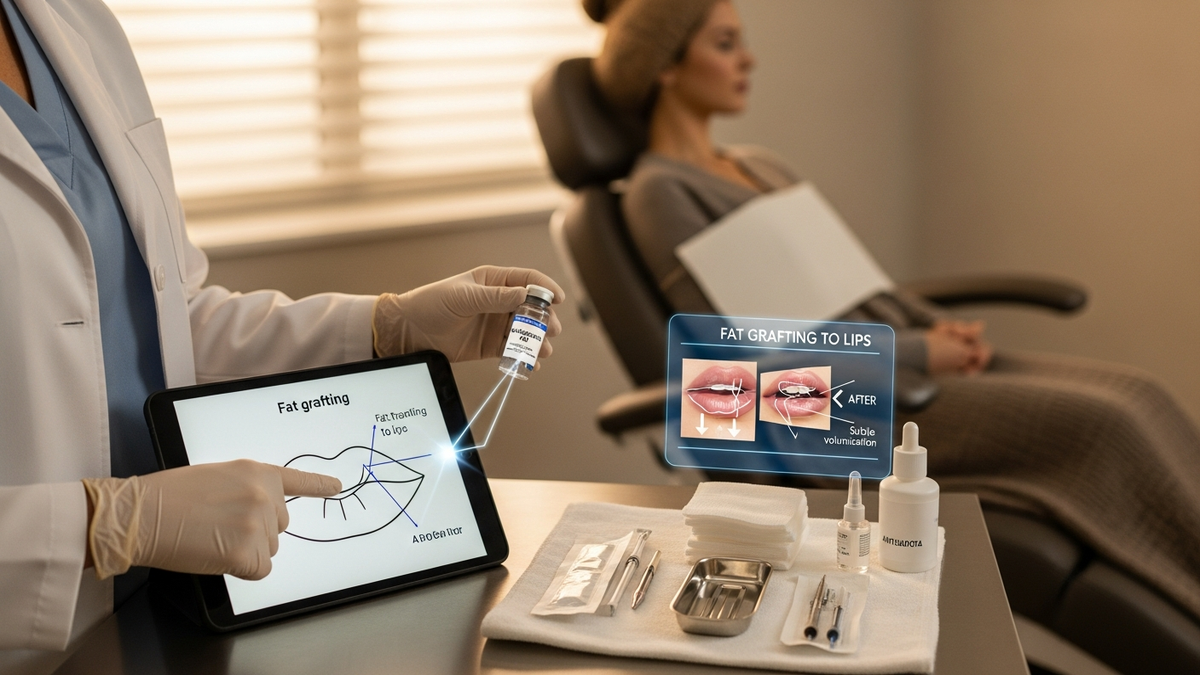
Fat grafting to lips is a two-part process:
- Harvesting fat from a donor area of your body (often areas with excess fat).
- Processing and injecting that fat into the lips to add volume and shape.
Because the material is autologous (from you), many patients prefer it over temporary fillers for the potential of longer-lasting results and a natural feel.
How Fat Grafting to Lips Works (Step-by-Step)
While specific techniques vary by surgeon, the general workflow typically includes:
1) Consultation and facial/lip assessment
Your surgeon will evaluate your current lip shape, lip symmetry, skin quality, and whether the goal is volume, border definition (vermilion border), hydration/softness, or subtle correction of asymmetry. They’ll also review your medical history, medications, and prior cosmetic treatments.
2) Donor fat harvesting
Fat is harvested using a minimally invasive liposuction technique from an appropriate area. The goal is to collect healthy fat cells while minimizing trauma to the tissue.
In some facial procedures, surgeons may also address localized fat deposits elsewhere (for example, submental liposuction). While that’s a different treatment, it highlights how facial plastic surgeons frequently manage fat in head-and-neck aesthetics with precision and attention to contour.
3) Fat processing
Harvested fat is processed to improve viability of the fat cells before injection. This step is crucial—surgeons differ in how they handle, filter, or prepare the fat to maximize survival and reduce unwanted effects.
4) Injection and sculpting
The surgeon injects small amounts of fat into specific layers and zones of the lips. The artistry lies in creating a balanced proportion between the upper and lower lips, maintaining natural transitions, and avoiding lumps or unevenness.
5) Post-procedure monitoring
You’ll receive instructions for swelling management, hygiene, and follow-up visits to assess how much volume persists over time.
Why People Choose Fat Grafting to Lips
Patients explore fat grafting to lips for several reasons:
- Natural-looking movement and texture—fat may feel more like your own tissue than some synthetic fillers.
- Autologous option—using your own fat can reduce concerns about certain filler materials.
- Potentially longer-lasting results compared with temporary fillers (though not every injected fat survives).
- Subtle refinement—ideal for patients seeking gentle contouring rather than dramatic enlargement.
Expected Results: What Can You Realistically Anticipate?
One of the most important conversations in any consultation is how your lips will look at each stage. With fat grafting, it’s normal to experience changes over time due to:
- Initial swelling that can temporarily increase volume
- Fat resorption—some portion of injected fat may not survive
- Gradual settling as tissues heal
Many patients find that the most accurate final picture emerges after several weeks to a few months, depending on healing and individual response.
Common outcomes patients aim for
- Improved lip fullness without a stiff look
- Better vermilion border definition (the edge between lip and skin)
- Smoother appearance of fine vertical lines around the mouth
- More balanced upper-to-lower lip proportion
Benefits of Fat Grafting to Lips
When performed by an experienced facial plastic surgeon, fat grafting can offer meaningful advantages:
1) Uses your own tissue
Autologous fat transfer leverages your body’s own biological material, which can be appealing for patients seeking a more “natural” approach.
2) Soft, natural contour
Because fat is a living tissue type, results can blend well with the surrounding lip architecture when sculpted thoughtfully.
3) Potential for longer-lasting enhancement
Unlike short-term fillers, fat grafting may provide more enduring volume—though the degree of longevity varies by technique and individual fat survival.
Risks and Side Effects to Know Before You Go
No cosmetic procedure is risk-free. Understanding possible complications helps you make a confident decision and ensures you know what to watch for after surgery.
Short-term risks
- Swelling and bruising
- Temporary unevenness as tissue settles
- Discomfort during the early healing window
- Asymmetry that may improve as swelling decreases
Long-term risks
- Fat necrosis or lumps (rare, but possible)
- Partial fat resorption, which may reduce final volume
- Irregular contour if fat is not distributed evenly
- Scarring (usually minimal, but depends on technique and healing)
Who may not be an ideal candidate
Fat grafting may be less suitable if you have limited donor fat, certain medical conditions that affect healing, active infections, or unrealistic expectations about volume retention. Your surgeon can help determine whether fat grafting is the right match—or whether another approach would better align with your goals.
How Fat Grafting Compares With Lip Fillers
Many people compare fat grafting to lips with injectable dermal fillers. While both can enhance lip volume, they differ in material, longevity, and predictability.
Key differences
- Source: fat grafting uses your own fat; fillers use injected substances designed for aesthetic volume.
- Longevity: fat may last longer for some patients, but results can vary due to fat survival.
- Recovery: fat grafting often involves donor-site healing in addition to lip recovery.
- Feel: fat can create a softer, more tissue-like result for many patients.
If you’re considering other facial procedures, it can also be helpful to explore how surgeons approach balance and proportion—much like how procedures such as Rhinoplasty focus on both appearance and structure, or how Facelift addresses aging holistically rather than treating one isolated area.
Recovery Timeline: What to Expect After Fat Grafting to Lips
Recovery varies, but a typical timeline may look like this:
First 24–72 hours
- Swelling and tenderness are common
- Bruising may appear
- Cold compresses (if approved) can help reduce swelling
Days 4–14
- Most visible swelling should begin to improve
- Some texture changes may be noticeable as tissue heals
- Follow your surgeon’s guidance on oral care and activity restrictions
Weeks 3–12
- Volume may settle and refine
- Final contour becomes clearer
- Any necessary touch-up planning can be discussed
Aftercare Tips to Support Optimal Healing
Good aftercare can influence comfort and the quality of your results. Your surgeon will provide personalized instructions, but these general tips are commonly recommended:
- Follow medication directions carefully (including any prescribed pain relief or anti-inflammatory guidance).
- Avoid aggressive massage unless your surgeon specifically instructs it.
- Stay hydrated and maintain gentle oral hygiene.
- Avoid smoking and limit alcohol during healing, as these can affect tissue recovery.
- Protect your lips from sun exposure during the early healing period.
- Attend follow-ups so your surgeon can monitor how the graft is taking.
Choosing a Surgeon for Fat Grafting to Lips (What to Look For)
Because the lips require both anatomical precision and aesthetic judgment, your surgeon’s experience matters. Here’s what to prioritize:
1) Facial plastic and head/neck expertise
Look for a surgeon with a strong focus on the face—especially procedures that demand refined, natural tissue handling.
2) Proven results in lip and perioral aesthetics
Ask to see before-and-after photos of patients with similar goals (e.g., subtle enhancement vs. significant volume changes).
3) A conservative, proportion-first approach
Great lip work enhances harmony with your facial features. The best surgeons consider the nose, chin, and overall facial balance—similar to how facial procedures like Rhinoplasty and Septoplasty account for structure and function alongside aesthetics.
4) Transparent discussion about fat survival
Ask how they manage expectations regarding resorption and whether staging or touch-ups are common.
Frequently Asked Questions About Fat Grafting to Lips
How long does fat grafting to lips last?
Results vary. Some of the injected fat survives long-term, while some resorbs over time. Many patients experience longer-lasting enhancement compared with temporary fillers, but the exact duration depends on technique and individual factors.
Will my lips look natural after fat grafting?
When performed with careful sculpting and appropriate injection placement, fat grafting can create soft, natural-looking volume. Choosing a surgeon who prioritizes proportion and subtle contouring is key.
Is fat grafting to lips painful?
Most patients experience swelling and discomfort during the early recovery period. Your surgeon will provide guidance on pain management and what is considered normal versus concerning.
What are the main risks of fat transfer to the lips?
Potential risks include swelling and bruising, temporary unevenness, lumps from fat necrosis (rare), and partial fat resorption leading to reduced volume. Discuss your personal risk factors during consultation.
Do I need more than one session?
Some patients achieve their desired look with one session, while others may benefit from additional volume after healing—particularly if they want more change than the initial graft can reliably sustain.
Why FlowGeniQ Digest Highlights Head-and-Neck Aesthetic Precision
At FlowGeniQ Digest, we focus on helping readers understand aesthetic options with clarity and confidence. Lip aesthetics are not isolated—they interact with facial proportions, skin quality, and overall harmony. That’s why selecting a surgeon who treats the head and neck with both technical rigor and artistic restraint can make a meaningful difference.
For example, facial plastic surgeons who also perform procedures such as Blepharoplasty, brow lifting, and other rejuvenation techniques often approach facial aesthetics with a “whole-face” mindset. And for patients seeking hair restoration to complete their overall look, clinics offering services like a hair transplant may be relevant depending on individual goals.
CTA: Schedule a Consultation to Discuss Your Lip Goals
If you’re considering fat grafting to lips, the best next step is an in-person consultation to evaluate your anatomy, donor fat availability, and desired outcome. A qualified facial plastic surgeon can help you weigh fat grafting versus alternatives and create a plan tailored to your features.
Take action today: Book a consultation, bring any photos of your ideal lip shape, and ask your surgeon how they handle fat survival, swelling expectations, and long-term contour planning.
Professional Disclaimer
This content is provided for general educational purposes only by FlowGeniQ Digest. It is not a substitute for professional advice, diagnosis, or treatment. Readers are advised to consult qualified professionals for personalized recommendations.
Medical Information Disclaimer
This content is provided for general educational purposes only by FlowGeniQ Digest. It is not a substitute for professional advice, diagnosis, or treatment. Readers are advised to consult qualified professionals for personalized recommendations.