From FlowGeniQ Digest
Fat Grafting to Buttock: What to Expect, Risks, Recovery, and Results
Thinking about fat grafting to buttock is often about more than appearance—it’s about confidence, comfort in your clothes, and feeling like your proportions match the way you want to present yourself. In this FlowGeniQ Digest guide, we’ll walk through how buttock fat transfer works, who may be a good candidate, what the procedure involves, and how to think about safety and outcomes.
While many people describe the goal as “natural curves,” the details matter: fat survival, injection strategy, anesthesia planning, and post-procedure precautions. If you’re researching options in Los Angeles or anywhere else, the most important next step is an in-person evaluation with a qualified surgeon who can assess your anatomy and discuss risk in a personalized way.
What Is Fat Grafting to Buttock?
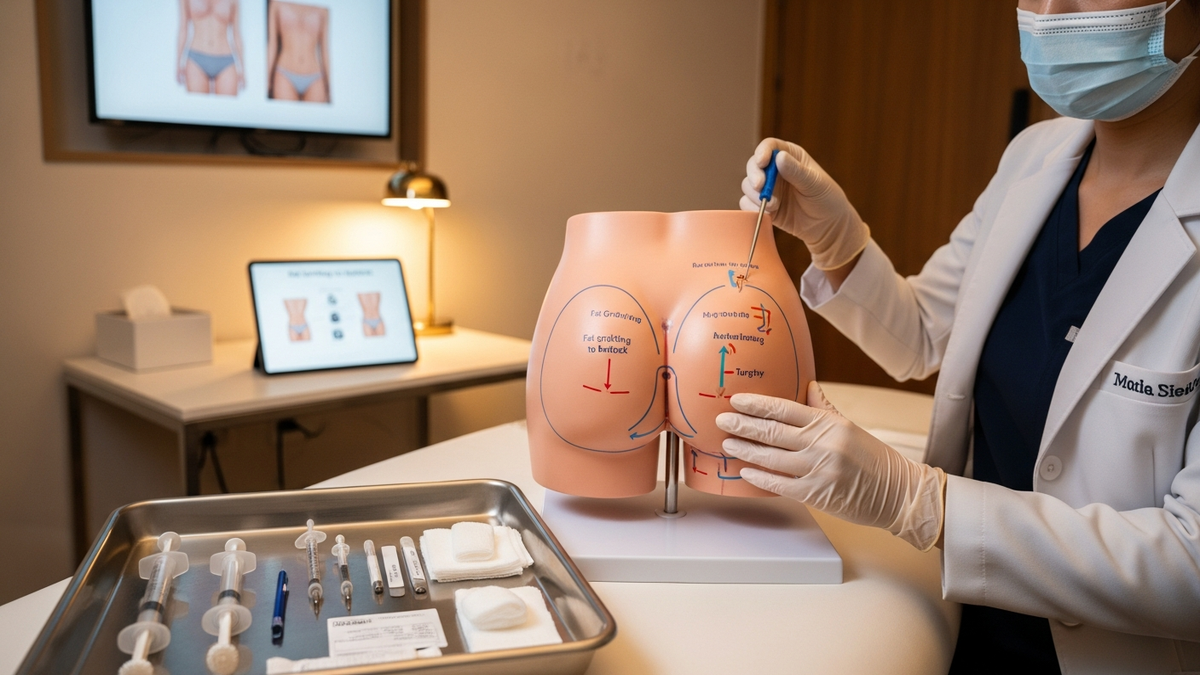
Fat grafting to buttock is a body contouring technique that transfers your own fat to the buttocks to improve shape and add volume. The process typically includes:
- Liposuction to harvest fat from donor areas (commonly the abdomen, flanks, thighs, or lower back)
to prepare the harvested tissue for transfer - Injection of the processed fat into targeted buttock areas
When performed with meticulous technique, fat grafting can create subtle enhancement and contour refinement. Some people seek it for mild volume, others for more noticeable shaping—your starting point and goals will influence the plan.
Fat Grafting to Buttock vs. Implants: How to Choose
Many patients compare fat grafting with buttock implants. Both can be effective, but the tradeoffs are different.
Fat grafting advantages
- Uses your own tissue, which may feel more natural
- Can improve donor areas through liposuction
- Often avoids implant-related concerns such as certain implant positioning issues
Fat grafting limitations
- Not all transferred fat survives; volume can settle over time
- May require staged procedures for significant enhancement
- Technique and safety protocols are critical for minimizing risk
Implant advantages (high level)
- More predictable initial volume
- Typically one-stage for many patients
Implant limitations (high level)
- Foreign material remains in the body
- Capsular issues and revision risks can occur
The “best” choice depends on your anatomy, skin quality, fat availability, and how much change you want. A skilled surgeon will help you weigh both options realistically.
Who Is a Good Candidate for Buttock Fat Transfer?
Ideal candidates for fat grafting to buttock often share several traits:
- Enough donor fat for liposuction (because the buttock enhancement relies on transferred fat)
- Realistic expectations about volume changes and settling over time
- Good overall health and the ability to follow post-op instructions
- Stable body weight (significant future weight changes can alter results)
- Commitment to safety, including positioning and recovery precautions
Your consultation should include a thorough discussion of:
- Donor sites and how much fat can be harvested safely
- Buttock anatomy and where volume will look most natural
- Skin elasticity and how it may affect the final contour
- Medical history, medications, and smoking/vaping status
Important: Safety protocols for fat transfer are not optional. Patients should ask specifically how the surgeon reduces risk (including anesthesia planning, injection strategy, and post-operative positioning).
How the Procedure Works: Step-by-Step
While exact techniques vary by surgeon, most buttock fat transfer procedures follow a structured workflow.
1) Consultation and treatment planning
You’ll discuss goals, review your health history, and have a physical exam. Many surgeons also take measurements and photos to help plan the amount of fat to harvest and where to place it. This is also the time to ask about:
- How many areas may be treated in one session
- Whether your plan is designed for volume, contour, or both
- What you should expect in the first weeks vs. later months
- Safety precautions and positioning instructions
2) Liposuction (fat harvesting)
Surgeons remove fat using liposuction. Donor areas are selected based on your anatomy and the volume needed for transfer. The goal is not only to harvest fat, but to do so in a way that supports smooth contouring in the donor zones.
3) Fat processing
Harvested fat is prepared for injection. Fat processing typically aims to preserve viable fat cells while removing unwanted components. The specifics—technique, handling, and processing approach—can influence outcomes.
4) Injection and sculpting
Fat is then injected into predetermined buttock zones. The surgeon’s artistry matters here: distribution, depth, and pattern influence how naturally the enhancement blends with existing contours.
5) Post-procedure recovery plan
You’ll receive detailed instructions for wound care, activity restrictions, and—critically—how to manage pressure on the treated area during the early healing period.
Fat Grafting to Buttock Results: What’s Realistic?
Patients often want to know when they’ll see “final” results. With fat transfer, the timeline is important because some of the transferred fat will settle or be reabsorbed.
Typical timeline (general guidance)
- First few weeks: swelling and bruising can obscure the true shape
- 1–3 months: swelling decreases; early contour becomes clearer
- 3–6 months: more stable appearance as fat settles
- 6–12 months: final refinement in many cases
Because fat survival varies from person to person, your surgeon may discuss whether a single session is likely to meet your goals or whether a staged approach could be appropriate.
Factors that influence how much volume you keep
- How the fat is processed and handled
- Injection technique and distribution strategy
- Your body’s healing response
- Adherence to post-op instructions (including pressure management)
- Smoking/vaping and overall health
Safety Considerations: Questions to Ask Before You Commit
Because fat grafting to buttock involves fat transfer, safety should be front and center. Reputable surgeons address risk openly and provide clear protocols.
Key safety questions
- What injection strategy is used? Ask about how the surgeon plans the placement and depth.
- How is anesthesia managed? Discuss the plan for monitoring and airway safety.
- What post-operative positioning is required? Many patients will need specific instructions to reduce pressure during early healing.
- How do you screen for risk factors? Your medical history, medications, and lifestyle habits matter.
- What are the potential complications and warning signs? You should receive a clear list of what’s normal vs. what requires urgent evaluation.
While each patient’s situation is unique, you deserve transparency. If a clinic is hesitant to answer your questions clearly, that’s a red flag.
Recovery After Buttock Fat Transfer: Timeline and Tips
Recovery is where results are protected. The more closely you follow your surgeon’s guidance, the better your chances of a smooth healing process.
First days: focus on healing
- Expect swelling and bruising
- You may be advised to use special positioning (for example, limiting direct pressure on the buttocks)
- Light walking is often encouraged to support circulation (as directed)
Weeks 1–4: protect the transferred fat
- Follow restrictions on exercise and lifting
- Attend follow-up visits so your surgeon can assess healing
- Wear any recommended garments to support contour and comfort
Month 2 onward: gradually return to activity
Your surgeon will advise when you can resume more intense workouts. Even if you feel better, your body is still remodeling tissue. Patience is part of achieving the best contour.
Practical recovery tips
- Plan ahead for comfort: arrange transportation and seating that avoids direct pressure.
- Hydrate and eat well: adequate protein and micronutrients support healing.
- Avoid nicotine: smoking and vaping can impair healing and fat survival.
- Take medications as prescribed: don’t adjust without approval.
Common Side Effects and Potential Risks
All surgical procedures carry risks. Being informed helps you recognize complications early.
Common (often temporary) effects
- Swelling and bruising
- Soreness at donor and injection sites
- Temporary firmness or unevenness as tissues heal
- Changes in sensation (usually improves over time)
Potential risks (discuss with your surgeon)
- Infection
- Seroma or fluid accumulation
- Asymmetry or contour irregularities
- Fat necrosis or lumps
- Need for revision or additional sessions
- Rare but serious complications related to fat transfer and anesthesia
If you experience severe pain, fever, rapidly worsening swelling, shortness of breath, or other concerning symptoms, seek medical care immediately.
Choosing a Surgeon for Fat Grafting to Buttock
Choosing the right provider is one of the biggest determinants of outcome. Look for a surgeon who is board-certified, experienced with fat transfer techniques, and committed to patient education.
What to look for
- Credentials: board certification and relevant surgical training
- Experience: a track record with buttock fat transfer specifically
- Approach to safety: clear protocols and informed consent
- Natural aesthetic sense: results that match your goals
- Before-and-after consistency: photos and outcomes that look believable
How to evaluate results responsibly
When reviewing galleries, consider:
- How long after surgery the photos were taken
- Whether results match your body type and starting point
- How the donor areas look
- Whether the clinic discusses volume settling and variability
In Los Angeles and Beverly Hills, patients frequently compare multiple options. Take the time to schedule consultations and ask the same set of safety and outcome questions each time.
Related Aesthetic and Reconstructive Procedures (If You’re Considering a Full Refresh)
Many patients pursue a broader “refresh” approach—improving facial aging or features alongside body contouring. While fat grafting to buttock is a distinct procedure, it can be part of a holistic plan for confidence and balance.
For example, some individuals exploring facial rejuvenation also research procedures such as:
- Rhinoplasty for nose shape and facial harmony
- Facelift for skin tightening and a more youthful appearance
- Blepharoplasty to address upper or lower eyelid concerns
And if you’re dealing with nasal breathing concerns, questions may come up around anatomy and function—terms like Septoplasty or Deviated Septum are often discussed in that context.
Note: This section is informational and not intended to suggest which procedures are medically appropriate for you.
How FlowGeniQ Digest Supports Better Research
At FlowGeniQ Digest, we focus on helping readers make informed decisions with practical, SEO-friendly education across industries. When you’re researching fat grafting to buttock, the goal is to help you ask better questions before you spend time or money on a consultation.
Use this checklist when you meet with your surgeon:
- Ask about your candidacy and expected fat survival
- Review safety protocols and post-op positioning instructions
- Discuss realistic timelines for swelling and final contour
- Clarify what happens if you want additional volume later
- Confirm how your donor areas will be addressed
FAQ: Fat Grafting to Buttock
1) How long does it take to see final results from fat grafting to buttock?
Many patients see meaningful changes within 1–3 months as swelling decreases, with more stable results often closer to 6–12 months. Your surgeon can provide a personalized timeline based on your healing and the amount of fat transferred.
2) Will all the transferred fat survive?
No. Some of the fat may be reabsorbed as healing occurs. The amount that survives depends on technique, your body’s response, and how carefully you follow recovery instructions.
3) What should I do to protect my results during recovery?
Follow your surgeon’s instructions on positioning, activity limits, garment use, and medication. Avoid nicotine, stay hydrated, and attend follow-up visits so your team can monitor healing.
4) Is fat grafting to buttock painful?
Expect soreness and discomfort, typically most noticeable in the first days to weeks. Your surgeon will prescribe or recommend pain management strategies and will tailor guidance to your situation.
5) Can I combine buttock fat transfer with other procedures?
Sometimes patients combine procedures, but the decision depends on your health, surgical time, and recovery needs. Always discuss scheduling and safety with your surgeon during consultation.
CTA: Ready to Discuss Fat Grafting to Buttock?
If you’re considering fat grafting to buttock, the best way to move forward is with a personalized evaluation. A qualified surgeon can assess your anatomy, discuss realistic expectations, and outline a safety-forward plan tailored to your goals.
Next step: schedule a consultation and bring your questions—especially those related to safety protocols, post-op positioning, and expected volume changes. Your confidence deserves a plan built on clarity and expertise.
Professional note: If you’re also exploring other aesthetic concerns, you can use FlowGeniQ Digest as a starting point for research while you confirm medical appropriateness with a clinician.
Medical Information Disclaimer
This content is provided for general educational purposes only by FlowGeniQ Digest. It is not a substitute for professional advice, diagnosis, or treatment. Readers are advised to consult qualified professionals for personalized recommendations.