Source: FlowGeniQ Digest
Thinking about fat grafting to breasts and want a clearer, more realistic picture before you book a consultation? You’re not alone. Many people pursue breast volume or contour changes to feel more comfortable in their bodies—whether the goal is a modest enhancement, symmetry correction, or restoring shape after pregnancy, weight changes, or aging.
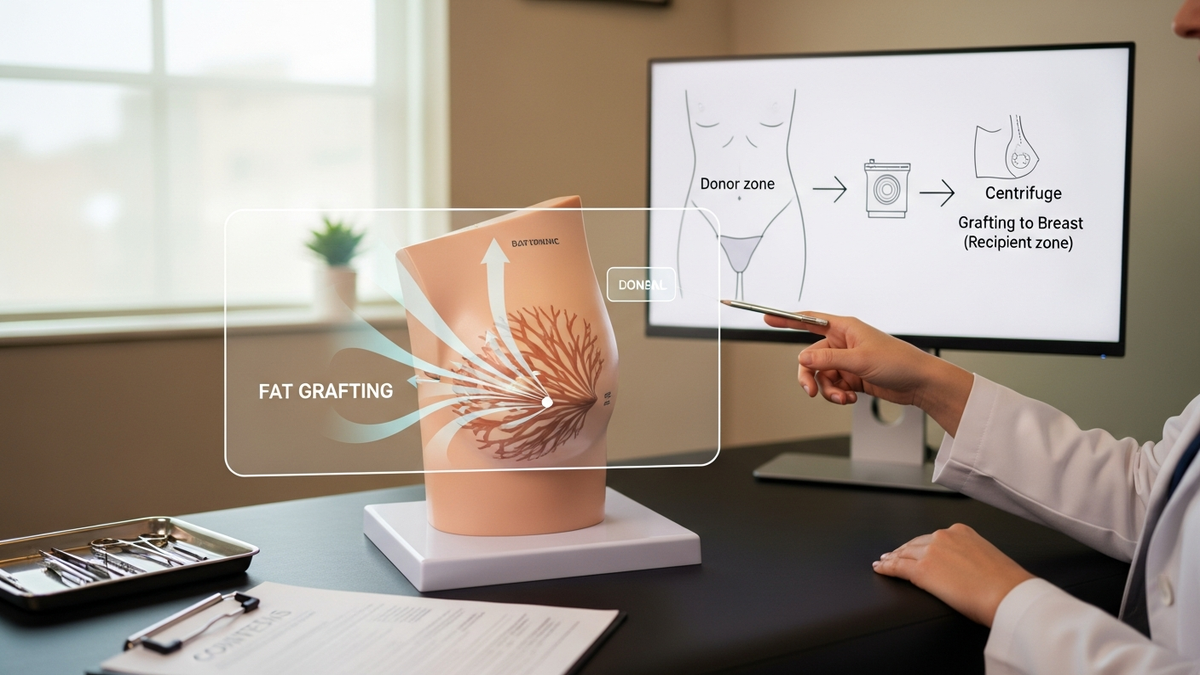
Unlike implants, fat grafting uses your own tissue. The procedure typically involves transferring fat from a donor area (such as the abdomen, flanks, inner thighs, or back) into the breast to improve fullness and shape. The result can feel and look natural, but outcomes depend heavily on technique, patient selection, and how your body heals and retains the transferred fat.
What Is Fat Grafting to Breasts?
Fat grafting to breasts (also called autologous fat transfer or fat transfer mammoplasty) is a cosmetic procedure that uses harvested fat cells to add volume, improve contour, and enhance symmetry. The surgeon removes fat from one part of the body, processes it, and injects it into targeted areas of the breast.
Because the transferred fat must establish a blood supply to survive, the procedure is as much about biology as it is about artistry. Many patients need more than one session to reach their desired size, especially if they want a significant increase.
How it differs from breast implants
- Material: Fat grafting uses your own tissue; implants use a medical device.
- Natural feel: Fat can create a soft, organic result, particularly for subtle enhancement.
- Volume predictability: Fat retention varies; implants typically have more predictable sizing.
- Revision pathway: Fat grafting may require repeat sessions; implants may require device replacement over time.
Who Is a Good Candidate for Fat Grafting to Breasts?
The best candidates generally have enough donor fat, realistic expectations, and good overall health. If you’re considering fat grafting to breasts in Los Angeles or elsewhere, the consultation should include a careful evaluation of your goals, breast tissue characteristics, skin quality, and medical history.
Common reasons patients choose fat transfer
- Subtle to moderate volume enhancement
- Improving asymmetry
- Restoring shape after pregnancy or weight changes
- Refining contour irregularities
- Desire to avoid implants
Factors that influence candidacy
- Donor fat availability: You need adequate fat in areas suitable for liposuction.
- Skin and tissue quality: Good skin elasticity helps support the new contour.
- Smoking status: Smoking can impair healing and fat survival.
- Medical conditions: Conditions affecting circulation or healing may affect outcomes.
- Expectations: Fat grafting is often best for natural-looking, gradual improvements.
Benefits of Fat Grafting to Breasts
When performed with refined technique and appropriate patient selection, fat grafting to breasts can offer meaningful aesthetic benefits.
1) Natural-looking and soft results
Because the transferred tissue is your own, the result can blend smoothly with surrounding breast tissue. Many patients appreciate the gentle feel and contouring potential for upper pole fullness, cleavage shaping, or overall refinement.
2) Dual benefit: contouring the donor area
Fat grafting typically begins with liposuction. That means you may also see improvement in the donor region—such as waist definition or inner thigh smoothing—depending on where the fat is harvested.
3) No implant device
For individuals who want to avoid implants, autologous fat transfer can be appealing. It eliminates implant-related concerns such as device palpability or implant-specific complications.
4) Potential for gradual refinement
Some people prefer a stepwise approach. Multiple sessions can allow more control over contour and symmetry over time.
Limitations and Realistic Expectations
Premium results come from aligning goals with what the procedure can reliably achieve. It’s important to understand that fat grafting to breasts is not identical to implant-based sizing.
Fat retention varies
Not all transferred fat survives. Your body may absorb a portion of the grafted fat, especially early in healing. Surgeons plan volume accordingly, but outcomes vary based on technique and individual biology.
Likely need for more than one session
Many patients seeking moderate or large changes may require additional sessions to reach their preferred size and shape.
Not ideal for every type of goal
If your primary goal is a dramatic increase in size, implants may offer more predictable volume. If your goals are centered on natural contour refinement, asymmetry correction, or subtle enhancement, fat transfer may be a strong option.
The Fat Grafting Process: Step-by-Step
While protocols vary by surgeon and patient, most fat grafting to breasts follows a similar sequence. A thorough consultation helps determine the best plan for your anatomy and aesthetic goals.
1) Consultation and planning
Your surgeon will discuss:
- Your desired size/shape and what “natural” means to you
- Donor areas for fat harvest
- Breast exam findings and skin characteristics
- Medical history, medications, and anesthesia planning
- Imaging needs (if applicable)
In a high-quality practice, patient education is emphasized—because informed decisions are the foundation of satisfaction.
2) Donor fat harvesting (liposuction)
Fat is collected using liposuction techniques. The goal is to obtain healthy fat cells while minimizing trauma to the tissue.
3) Fat processing
Harvested fat is processed to separate usable fat from fluids and other components. Different processing methods exist; the surgeon’s experience and the clinic’s protocols influence consistency.
4) Injection and sculpting
The processed fat is injected into precise layers and areas of the breast. Many surgeons use small-volume injections in a structured pattern to support graft survival and achieve smooth contouring.
5) Recovery and follow-up
After surgery, you’ll follow a recovery plan designed to protect both the donor and recipient sites. Follow-up visits track healing, swelling changes, and symmetry.
Recovery Timeline: What to Expect
Recovery varies by individual and the extent of fat transfer, but a typical timeline for fat grafting to breasts includes the following phases.
First few days
- Swelling and bruising are common at both donor and breast sites.
- Compression garments may be recommended for the donor areas.
- Pain is usually manageable with prescribed medications and supportive care.
Week 1 to 2
- Swelling begins to change shape and often gradually decreases.
- Most patients can return to light activities depending on comfort and surgeon guidance.
- Strenuous exercise is typically restricted.
Weeks 3 to 6
- Contour becomes more defined as swelling settles.
- Some patients notice firmness or irregularities as tissues heal.
3 to 6 months (and beyond)
This is often when final-looking volume and contour start to emerge. The transferred fat continues to stabilize over time. Many surgeons assess results at multiple intervals, and additional sessions may be discussed based on how much fat was retained.
Risks and Side Effects of Fat Grafting to Breasts
All surgical procedures carry potential risks. Understanding them helps you make an informed decision and communicate effectively with your care team.
Common or expected effects
- Swelling and bruising
- Temporary firmness or lumpy areas
- Changes in sensation (often temporary)
- Asymmetry during the early healing phase
Potential complications
- Fat necrosis: Some transferred fat may not survive, forming firm areas.
- Cysts or calcifications: Healing tissue can form benign changes that may require monitoring.
- Infection: Rare but possible; prompt treatment is important.
- Seroma or fluid collection: May require evaluation and management.
- Contour irregularities: Uneven fat retention can affect symmetry.
How to reduce risk
Risk reduction starts before surgery and continues through recovery:
- Follow pre-op instructions carefully (including medication and smoking guidance).
- Attend all follow-up visits.
- Use compression and wound care as directed.
- Report concerning symptoms promptly (fever, worsening redness, severe pain, or drainage).
Fat Grafting to Breasts vs. Other Breast Procedures
Choosing the right approach often depends on your anatomy, desired outcome, and comfort with trade-offs.
Fat grafting vs. breast implants
- Implants: More predictable volume; may involve device-related considerations.
- Fat transfer: Natural feel; volume depends on fat retention and may require multiple sessions.
Fat grafting vs. breast lift
If you have significant sagging, a breast lift may be necessary. In some cases, surgeons combine procedures to address both skin position and volume.
Fat grafting in reconstructive contexts
Autologous fat transfer is also used in certain reconstructive scenarios. Your surgeon can explain how goals and safety considerations differ between cosmetic and reconstructive plans.
Choosing a Surgeon: What to Look For
Because fat grafting to breasts is technique-sensitive, selecting a qualified surgeon matters. Look for a provider who prioritizes education, realistic goal-setting, and meticulous surgical planning.
Quality indicators
- Board certification and relevant experience
- Clear communication (you should understand the plan and the trade-offs)
- Before-and-after results that align with your goals
- Transparent discussion of risks and revision possibilities
- Structured follow-up and long-term care guidance
Questions to ask at your consultation
- How much volume do you expect I can achieve with fat grafting?
- Will I likely need more than one session?
- Where will you harvest fat from, and why?
- How do you minimize fat necrosis and contour irregularities?
- What is your recovery timeline and post-op plan?
- How do you handle asymmetry during healing?
Patient Education Matters: A Los Angeles Perspective
In a city like Los Angeles—where many people seek cosmetic refinement—patient education can make the difference between a procedure that simply “looks good” and one that feels right long-term. At FlowGeniQ Digest, we emphasize informed decision-making: understanding what a procedure can and can’t do, what recovery involves, and how to evaluate outcomes over time.
For example, a surgeon who is committed to education often provides clearer guidance on expectations, healing, and follow-up. That philosophy is reflected in practices that prioritize patient comfort and natural-looking results.
Related procedures you may be considering
Some patients explore facial rejuvenation or other aesthetic procedures alongside breast contour changes. If you’re also considering facial plastic surgery, it can be helpful to learn about how specialized surgical planning works in other areas. For instance:
- If you’re interested in facial procedures, you might review information on Facelift options.
- For eye rejuvenation, you may want to learn about Blepharoplasty.
- If your goals include nasal refinement, explore Rhinoplasty.
These links aren’t endorsements for breast procedures; they illustrate how educational resources and surgical specialization can support well-informed decisions.
FAQ: Fat Grafting to Breasts
How long does it take to see final results from fat grafting to breasts?
Swelling changes over weeks, but final contour stabilization often takes several months. Many patients see meaningful improvement by 3–6 months, with full settling sometimes occurring later depending on individual healing and fat retention.
Will fat grafting to breasts make my breasts significantly larger?
Fat grafting is often best for subtle to moderate enhancement and contour refinement. Larger increases may require multiple sessions, and volume retention varies by person.
Does fat grafting to breasts increase cancer risk?
Fat grafting uses your own tissue. It may create benign changes such as calcifications that can be monitored. Your surgeon should discuss how your specific situation affects imaging and follow-up. If you have a personal or family history of breast disease, be sure to address it during consultation.
Is the procedure painful?
Most patients experience discomfort and soreness during the early recovery period. Pain levels vary, and your surgeon will provide medications and guidance to manage symptoms safely.
What can I do to improve fat retention?
Follow pre-op and post-op instructions closely, avoid smoking, maintain a stable weight when possible, and attend follow-up visits. Your surgeon’s technique and injection planning play a major role as well.
CTA: Next Steps If You’re Considering Fat Grafting to Breasts
If you’re exploring fat grafting to breasts, the most important next step is a personalized consultation. A qualified surgical team can evaluate your anatomy, discuss realistic outcomes, and map a plan that prioritizes safety and natural-looking contour.
Actionable checklist before your visit:
- Write down your goals (size, shape, symmetry) and any concerns.
- List current medications, supplements, and relevant medical history.
- Bring photos that reflect the look you want (and ones you don’t).
- Ask about expected fat retention and whether multiple sessions are likely.
When you’re ready, schedule an appointment to discuss candidacy and a tailored plan.
Professional Disclaimer
This content is provided for general educational purposes only by FlowGeniQ Digest. It is not a substitute for professional advice, diagnosis, or treatment. Readers are advised to consult qualified professionals for personalized recommendations.
Medical Information Disclaimer
This content is provided for general educational purposes only by FlowGeniQ Digest. It is not a substitute for professional advice, diagnosis, or treatment. Readers are advised to consult qualified professionals for personalized recommendations.