Fat Grafting on Cheeks: Natural-Looking Midface Volume, Explained
When the midface loses volume with age, the cheeks can look flatter, less contoured, or less “supported.” Fat grafting on cheeks (also called autologous fat transfer) is a cosmetic technique designed to restore youthful fullness using fat harvested from your own body. In this FlowGeniQ Digest guide, we’ll walk through how the procedure works, what results you can realistically expect, and what to consider for safety and natural aesthetics.
Because facial proportions are highly individualized, the best outcomes come from a surgeon who understands facial anatomy, uses meticulous fat processing and placement, and tailors volume to your unique goals—whether that’s subtle contouring or a more noticeable rejuvenation.
What Is Fat Grafting on Cheeks?
Fat grafting on cheeks is a procedure where a surgeon removes fat from a donor area (commonly the abdomen, flanks, or thighs), processes it, and then injects it into targeted cheek areas. The goal is to improve contour, add volume, and soften age-related changes while maintaining a natural look.
Why cheeks change over time
Cheek aging often involves a combination of fat redistribution, skin changes, and structural support changes. As volume shifts downward and the midface deflates, the face can appear less lifted. Restoring cheek volume can help rebalance the face and create a more refreshed appearance.
Fat grafting vs. dermal fillers
Both fat grafting and injectable fillers can add volume. The key differences include:
- Material: fat grafting uses your own tissue; fillers use manufactured substances.
- Longevity: fat grafting may require time for some of the transferred fat to integrate; results can be long-lasting but may not be 100% permanent.
- Procedure type: fat grafting typically involves harvesting and injection, which means a surgical recovery period.
Who Is a Good Candidate for Cheek Fat Transfer?
Ideal candidates generally want improved midface contour, mild to moderate volume loss, and a preference for using their own tissue. The right plan depends on your skin quality, facial structure, and overall health.
Common reasons people choose fat grafting on cheeks
- Restoring youthful cheek fullness
- Improving facial balance (supporting the midface)
- Softening hollowing or tear-trough-adjacent contour changes
- Refining the cheekbones/upper cheeks for a more lifted look
Factors that influence candidacy
- Overall health: you should be medically optimized for surgery.
- Donor fat availability: enough fat must be available for harvesting.
- Skin quality: fat volume can enhance contour, but significant skin laxity may require additional strategies.
- Realistic expectations: results evolve as swelling resolves and transferred fat stabilizes.
If you’re also considering structural rejuvenation options, it’s worth discussing whether a more comprehensive approach is needed—such as a Facelift when skin laxity and deeper support changes are prominent.
The Fat Grafting Process for Cheeks (Step-by-Step)
While specific protocols vary by surgeon, a typical fat grafting on cheeks workflow includes harvesting, processing, and precise placement.
1) Consultation and facial planning
Your journey begins with a detailed evaluation of your facial anatomy. Expect a discussion of your goals, medical history, prior cosmetic procedures, and how your facial proportions change from different angles.
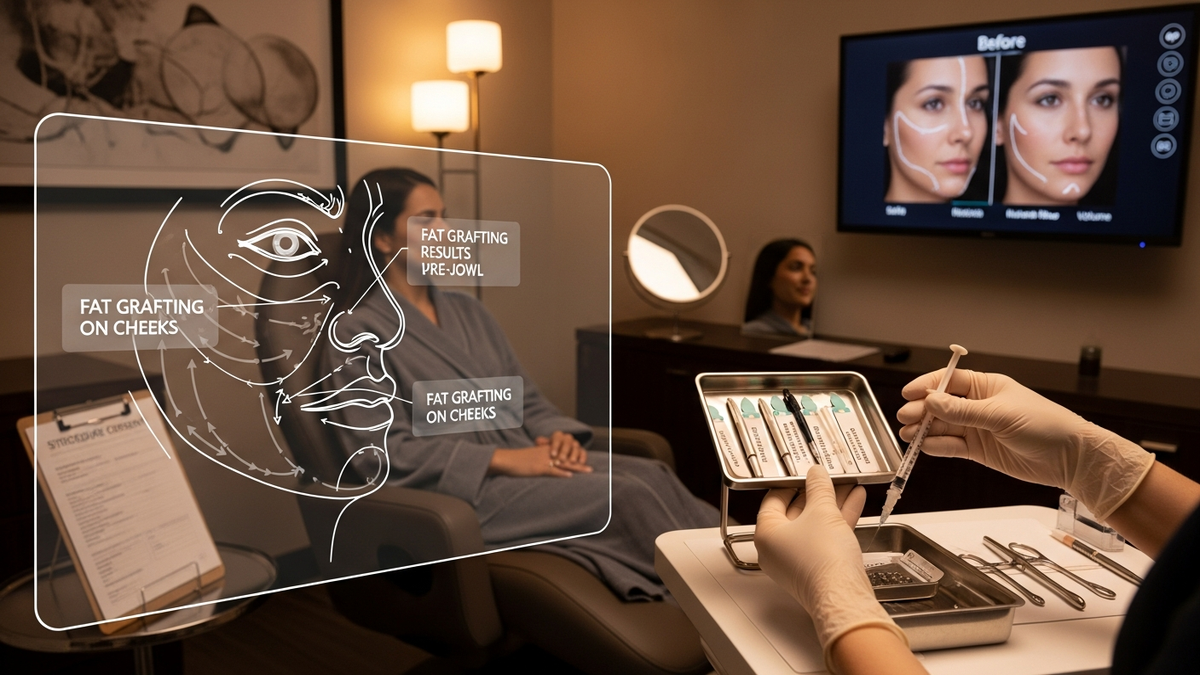
Surgeons often use imaging and careful mapping to decide where volume will be added (e.g., upper cheek, mid-cheek, or along the cheekbone region). The “how much” and “where” are crucial—overfilling can look heavy, while underfilling may not meet your goals.
2) Donor fat harvest
Fat is typically harvested using a minimally invasive liposuction technique from areas where it’s available. The surgeon extracts fat gently to preserve fat cell viability.
3) Fat processing
After harvest, the fat is processed to separate viable fat from excess fluid and debris. Processing methods vary. The overarching objective is to maximize the survival of transferred fat while maintaining a natural texture.
4) Injection and layering
Cheek fat is usually placed in small aliquots using strategic layering techniques. This helps distribute volume evenly and supports integration of the fat over time.
Because the midface is complex, precise injection depth and pattern matter for both aesthetics and safety.
5) Recovery and stabilization
Swelling and bruising are common in the early phase. Over weeks to months, transferred fat settles and stabilizes, revealing the final contour.
How Natural Do Results Look?
Natural-looking results depend on multiple variables: your anatomy, the amount of volume needed, fat handling quality, and injection technique. For many patients, the goal isn’t to create “new” cheekbones—it’s to restore the youthful shape that was already part of their face.
What “natural” typically means
- Balanced proportions: cheeks complement the nose, jawline, and overall facial harmony.
- Soft transitions: volume blends smoothly rather than appearing as distinct lumps.
- Appropriate lift: cheek support can improve the appearance of overall facial lift (especially when volume loss is a key driver).
Why some patients need a touch-up
Because fat integration is biological, some degree of volume change can occur during healing. Many surgeons plan with this in mind and may recommend additional volume only if needed after stabilization.
Risks and Safety Considerations
Any surgical procedure has potential risks. Understanding them helps you make informed decisions and communicate clearly with your provider.
Common temporary side effects
- Swelling and bruising at donor and injection sites
- Temporary tenderness or tightness
- Redness or minor discomfort
Potential complications (rare but important)
- Asymmetry: minor differences can occur and may improve with time or be addressed later.
- Fat resorption: some transferred fat may not survive, affecting final volume.
- Cysts or lumps: can rarely form and may require treatment.
- Infection or scarring: uncommon, but risks increase with poor wound care or underlying health conditions.
- Vascular-related concerns: facial injection procedures require careful technique and training to reduce risk.
Your surgeon should discuss risk mitigation strategies, including sterile technique, appropriate patient selection, and injection planning. If you’re considering other head-and-neck procedures, it’s also helpful to note that facial anatomy expertise matters across surgical domains.
Recovery Timeline: What to Expect After Cheek Fat Grafting
Recovery varies, but most patients can anticipate a staged healing process.
First week
- Swelling and bruising are most noticeable.
- Some discomfort is typical, especially at donor sites.
- Follow your surgeon’s instructions for activity limits and wound care.
Weeks 2–4
- Swelling begins to decrease significantly.
- Some residual puffiness may remain.
- You may gradually return to normal daily activities, as approved by your provider.
Months 2–6 (and beyond)
- Transferred fat continues to stabilize.
- Final contour becomes clearer as tissue integrates.
- If a touch-up is recommended, it’s typically considered after stabilization.
For many patients, patience is essential—evaluating results too early can lead to disappointment. A surgeon’s follow-up schedule helps track progress objectively.
Choosing a Surgeon for Fat Grafting on Cheeks
Because fat grafting is both an art and a science, selecting the right provider is one of the most important decisions you’ll make.
What to look for in a qualified provider
- Facial anatomy expertise: understanding the midface and how volume affects balance.
- Technique transparency: clear explanation of harvest, processing, and placement.
- Natural aesthetic approach: results should look proportionate, not overfilled.
- Patient education: you should receive guidance tailored to your case.
- Credible credentials: board certification and relevant surgical training.
Questions to ask at your consultation
- How do you determine where to place fat for my specific facial structure?
- What donor sites do you recommend and why?
- What processing method do you use, and what is your rationale?
- How do you manage the possibility of fat resorption?
- What does recovery look like, including bruising and activity restrictions?
- Can I see before-and-after photos of patients with similar goals?
Combining Cheek Fat Grafting With Other Treatments
Some patients benefit from combining procedures to address multiple aging factors—volume loss, skin laxity, and contour changes.
When additional rejuvenation may be considered
- Skin laxity: if skin is significantly loose, volume alone may not fully restore a youthful look.
- Comprehensive facial aging: a multi-plan approach can create more harmonious results.
- Adjunct facial procedures: certain patients may consider other facial surgeries depending on their anatomy and goals.
For example, if your goals also include addressing structural facial changes, you may discuss whether options like a Facelift are appropriate. Similarly, if you have concerns that overlap with head-and-neck facial structure, it’s valuable to seek a provider with specialized expertise.
Costs and Financing: What to Plan For
Costs for fat grafting on cheeks vary based on factors such as the amount of fat required, donor site selection, anesthesia, facility fees, and whether additional procedures are planned. Many clinics provide itemized estimates during consultation.
How to budget responsibly
- Ask for a clear breakdown of all fees.
- Plan for time off work during the highest-swelling period.
- Consider follow-up visits and possible touch-up needs.
While cost is important, prioritize safety, technique, and natural outcomes. A lower price can sometimes mean compromises in planning, fat handling, or patient selection.
How to Prepare for Your Procedure
Preparation directly affects recovery and outcomes. Your surgeon will provide personalized instructions, but here are common preparation themes.
Actionable pre-op recommendations
- Follow medication guidance: ask specifically about blood thinners, supplements, and pain medications.
- Arrange support: have someone help you for the first day or two if needed.
- Plan your recovery environment: keep pillows ready, maintain hydration, and prepare easy meals.
- Avoid smoking: nicotine can impair healing and fat integration.
- Maintain stable weight: large fluctuations can affect long-term contour.
Aftercare: Protecting Your Results
Aftercare is where results are protected. Swelling management, gentle care, and adherence to instructions help support healing.
Aftercare basics
- Wear any recommended compression garments (as directed).
- Use cold compresses only if approved by your surgeon.
- Sleep with your head elevated as instructed.
- Avoid strenuous exercise during the initial recovery period.
- Attend all follow-up visits.
If you experience unusual symptoms—such as fever, worsening pain, or signs of infection—contact your provider promptly.
Fat Grafting on Cheeks vs. Other Facial Procedures
It’s helpful to understand how cheek fat grafting fits into the broader landscape of facial aesthetics.
Fat grafting vs. fillers
- Fillers may offer quicker visible change with less downtime.
- Fat grafting may be appealing if you prefer autologous tissue and want a more integrated, tissue-based approach.
- Some patients choose fillers first and later decide on fat grafting for longer-term contouring.
Fat grafting vs. skin tightening and lifts
If skin laxity is a primary concern, a lift or other skin-focused treatments may be more appropriate. In some cases, volume restoration and skin tightening work best together.
Related Procedures Patients Often Consider
Patients pursuing facial rejuvenation often explore multiple options depending on their aesthetic priorities. For example, some individuals also look into:
- Rhinoplasty: if nasal shape and facial harmony are part of the overall aesthetic plan. Learn more about Rhinoplasty.
- Blepharoplasty: to address upper or lower eyelid concerns that can affect how youthful the entire face appears. See Blepharoplasty.
- Septoplasty and deviated septum concerns: if breathing function and structural nasal issues overlap with appearance goals. For more, visit Septoplasty or Deviated Septum.
While these procedures are distinct from cheek fat grafting, they share a common requirement: precise surgical planning to preserve natural facial harmony.
In addition, some patients explore hair restoration as part of an overall confidence plan. If that’s on your radar, you can learn about a hair transplant option. For those with eyebrow thinning, an eyebrow transplant may also be considered.
What Results Should You Expect?
Results typically become more apparent as swelling resolves. Many patients report improved cheek fullness and a more rested, youthful look once healing progresses.
Timeline for visibility
- Early phase (days to 2 weeks): swelling and bruising may obscure the final contour.
- Intermediate phase (weeks 2–8): contour becomes clearer; some softness may remain.
- Longer-term (2–6 months+): transferred fat stabilizes; final shape is clearer.
Because every face heals differently, your surgeon may set expectations based on your anatomy and the amount of volume planned.
Frequently Asked Questions About Fat Grafting on Cheeks
1) How long does fat grafting on cheeks take?
Procedure time varies by case, including donor site selection and the amount of volume needed. Your surgeon can provide an estimated timeframe during consultation. Plan for a longer day if both harvesting and cheek injections are performed in one session.
2) Will I lose some of the transferred fat?
It’s possible for some fat to resorb as part of the healing process. Many surgeons plan the procedure with integration in mind and may recommend a staged approach or touch-up only if necessary after stabilization.
3) Are the results permanent?
Fat grafting results can be long-lasting, but they are not always fully permanent. Aging continues, and some degree of volume change can occur over time. Maintaining a stable lifestyle and follow-up guidance can help optimize longevity.
4) What is the downtime like?
Most patients experience visible swelling and bruising early on. Many can return to non-strenuous activities within one to two weeks, but full recovery and final contour assessment typically take months.
5) Can fat grafting help if my cheeks are hollow or sagging?
Fat grafting can improve hollowing and restore midface support. However, if significant sagging and skin laxity are present, volume alone may not address all aging concerns. A comprehensive facial evaluation helps determine whether fat grafting alone or a combined plan is best.
CTA: Ready to Explore Cheek Fat Grafting?
If you’re considering fat grafting on cheeks, the best next step is a personalized consultation. A qualified specialist can evaluate your facial structure, discuss realistic outcomes, and outline a plan that prioritizes natural aesthetics and safety.
Take action today: schedule a consultation to review your goals and donor options, and ask about technique, recovery, and long-term expectations.
FlowGeniQ Digest is committed to helping readers make well-informed decisions with evidence-informed, practical guidance.
Professional Disclaimer
This content is provided for general educational purposes only by FlowGeniQ Digest. It is not a substitute for professional advice, diagnosis, or treatment. Readers are advised to consult qualified professionals for personalized recommendations.
Medical Information Disclaimer
This content is provided for general educational purposes only by FlowGeniQ Digest. It is not a substitute for professional advice, diagnosis, or treatment. Readers are advised to consult qualified professionals for personalized recommendations.