Fat grafting in cheeks has become one of the most sought-after options for people who want a subtle, natural-looking midface refresh. Instead of relying on synthetic fillers or implants, this procedure uses your own fat to restore volume, soften transitions, and enhance facial harmony. If you’re exploring ways to address early signs of aging—like cheek flattening, deeper nasolabial folds, or a tired appearance—you may be looking for a solution that looks like “you,” just rejuvenated.
In this FlowGeniQ Digest guide, we’ll walk through what fat grafting does, who it’s for, how it’s performed, how long results last, and what recovery typically involves. We’ll also cover key considerations—like fat survival, asymmetry, and realistic expectations—so you can have an informed discussion with a qualified facial plastic surgeon.
What Is Fat Grafting in Cheeks?
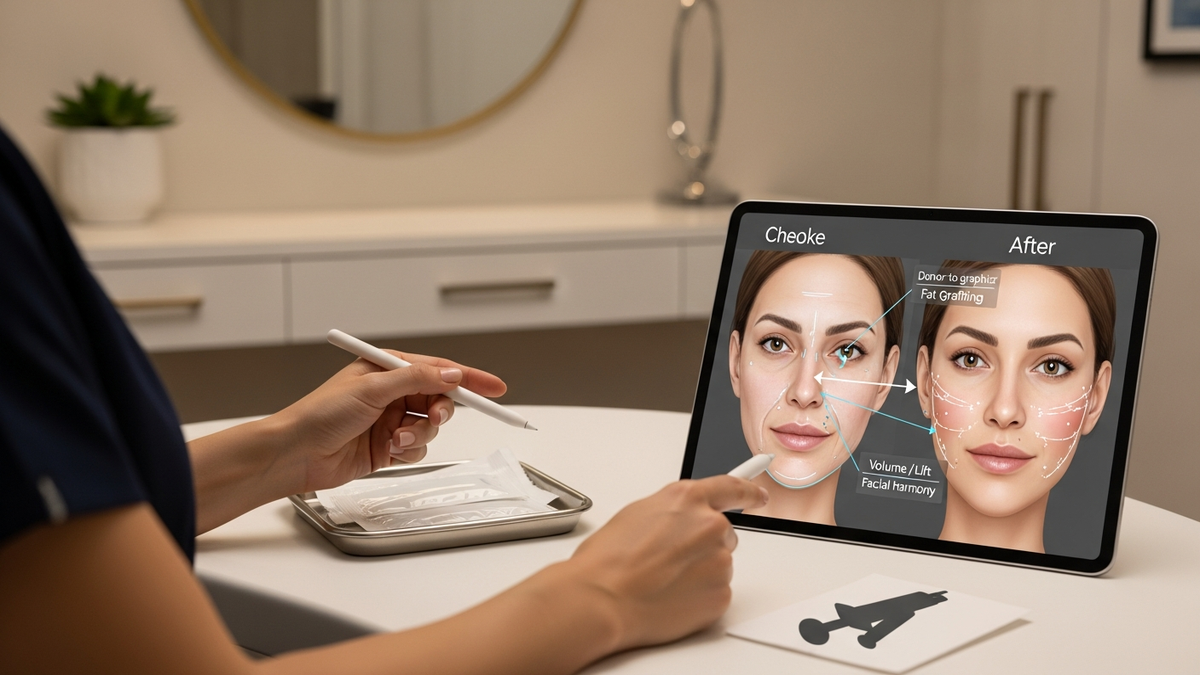
Fat grafting in cheeks (also called autologous fat transfer or fat transfer) is a cosmetic procedure in which fat is harvested from a donor area of your body, processed, and then injected into the cheek region. The goal is to improve contour, restore lost volume, and create smoother, more youthful facial proportions.
Why cheeks change with age
As we age, several changes can affect the midface:
- Volume loss in the cheeks and surrounding areas
- Fat redistribution (fat can shift downward, affecting the look of the smile lines)
- Skin laxity that can make contours look less defined
- Bone and soft tissue remodeling that alters how light reflects on the face
Cheek fat grafting targets volume and contour—often making the face look more “lifted” even when the skin itself is not directly tightened.
Benefits of Cheek Fat Transfer
When performed with meticulous planning and refined technique, fat grafting can offer several advantages:
- Natural-looking results because the injected material comes from your own body
- Soft contouring that can blend with your existing facial structure
- Dual-purpose approach: donor fat is harvested while enhancing the cheeks
- Long-term potential: while some fat is reabsorbed, the portion that survives may provide durable volume
It’s also worth noting that cheek fat grafting can be part of a broader facial rejuvenation strategy—sometimes paired with other head-and-neck cosmetic procedures to optimize overall balance.
Is Fat Grafting in Cheeks Right for You?
The best candidates are those who want improvement in cheek volume and contour and who understand that results depend on factors like fat handling and individual healing.
Common reasons people choose cheek fat grafting
- Flattened or hollow cheeks
- Subtle midface aging (early-to-moderate volume loss)
- Desire to soften the look of nasolabial folds through volume restoration
- Asymmetry that can be improved by targeted volume
- Preference for autologous (self-derived) tissue over fillers
Factors that may affect candidacy
Candidacy is individualized, but surgeons commonly consider:
- Availability of donor fat for harvesting
- Overall health and ability to heal
- Skin quality (fat grafting can improve volume, but it doesn’t directly tighten loose skin)
- Smoking status and nicotine use (can impair fat survival and wound healing)
- Realistic expectations about how much volume will remain after reabsorption
How the Procedure Works: Step-by-Step Overview
While techniques vary by surgeon, a typical fat grafting in cheeks process follows a logical sequence: harvest, process, and inject—each step influencing fat viability and final contour.
1) Consultation and facial mapping
A high-quality consultation should include careful assessment of your facial proportions in multiple lighting conditions and angles. The surgeon should map where volume is needed and discuss how cheeks relate to your nose, smile lines, lower eyelids, and jawline.
This is also the time to review any prior cosmetic procedures and your goals—whether you want subtle enhancement, improved symmetry, or a more noticeable midface refresh.
2) Fat harvesting (donor site selection)
Fat is collected from a donor area such as the abdomen, flanks, or thighs. The method may involve liposuction principles. The key is to harvest safely and in a way that preserves fat cells for better survival.
3) Processing the fat
Once harvested, fat is processed to separate viable fat for injection. Processing methods vary and may include filtration, centrifugation, or other handling protocols. The goal is to maximize the proportion of healthy fat cells while reducing factors that could contribute to unevenness or resorption.
4) Injection technique for cheek contour
Injection technique is where artistry meets science. Surgeons may use small cannulas or needles and inject in layers and small parcels. This helps create a smooth contour and supports better integration of the transferred fat.
Because cheeks are three-dimensional, the plan often accounts for:
- Depth (superficial vs. deeper planes)
- Distribution (evenness across the cheek mound)
- Symmetry (addressing natural left-right differences)
- Gradual blending near transitions to the lower eyelid and nasolabial area
5) Post-procedure monitoring
After injections, you’ll typically receive instructions for compression, activity restrictions, and follow-up. Your surgeon may also recommend a timeline for checking how the swelling and settling progress.
What to Expect During Recovery
Recovery is a crucial part of achieving results from fat grafting in cheeks. While your exact timeline will vary, most patients experience predictable phases.
Common early recovery experiences
- Swelling in the cheeks and donor area
- Bruising (often more noticeable in the donor site)
- Temporary tenderness or tightness
- Asymmetry during healing due to swelling and initial fat settling
Typical timeline (general guidance)
- First 1–2 weeks: swelling and bruising peak and then gradually subside
- Weeks 3–6: contour begins to refine as inflammation decreases
- Months 3–6: final shaping emerges; some fat loss/resorption may have already occurred
- Up to 6–12 months: long-term result stabilizes for many patients
How to support fat survival
Fat grafting outcomes depend on more than the procedure itself. Your surgeon may provide recommendations such as:
- Avoid smoking and nicotine (including vaping and nicotine patches unless cleared by your surgeon)
- Follow activity restrictions to reduce trauma to the injected area
- Attend follow-up appointments so your surgeon can monitor contour and healing
- Use medications as prescribed (pain control, anti-inflammatory guidance)
How Long Do Results Last?
One of the most important questions about fat grafting in cheeks is longevity. The answer is typically “long-lasting, but not always permanent in 100% of cases.”
Fat survival: what it means
After transfer, some of the injected fat may reabsorb over time. The portion that successfully establishes a blood supply can persist and provide enduring volume. Factors influencing survival can include:
- Technique and fat handling
- Injection depth and distribution
- Patient health and healing response
- Smoking/nicotine exposure
- Variations in metabolic response
Why some patients need touch-ups
In some cases, surgeons may recommend a secondary session if the initial result is less than expected—especially for patients seeking more dramatic volume or those with higher rates of reabsorption. A well-informed consultation should include discussion of this possibility.
Risks and Side Effects to Know
Every surgical procedure carries potential risks. While complications are not common when performed by experienced professionals, it’s important to understand what can happen.
Possible side effects
- Swelling and bruising
- Temporary lumps or firmness as tissue heals
- Irregular contour if fat is not evenly distributed or survives unevenly
- Asymmetry during the early healing phase
Potential complications (rare, but important)
- Infection
- Fat necrosis (localized tissue changes)
- Cysts or persistent nodules
- Scarring (more relevant at donor sites)
Your surgeon should review warning signs and provide clear post-op instructions. If you notice worsening redness, fever, severe pain, or rapidly increasing swelling, you should contact your medical team promptly.
Fat Grafting vs. Dermal Fillers vs. Implants
Choosing between fat grafting in cheeks, fillers, and implants depends on your goals, comfort level, and anatomy.
Fat grafting
- Pros: autologous tissue, natural feel and movement, potentially long-lasting volume
- Considerations: some reabsorption, requires donor fat, surgical recovery
Dermal fillers
- Pros: non-surgical (typically), adjustable, quicker downtime
- Considerations: temporary results for many products, repeated maintenance, potential for unevenness if not placed carefully
Cheek implants
- Pros: predictable structural change
- Considerations: involves implants and surgical placement; may feel less “soft” than fat in certain cases
A skilled facial plastic surgeon can help you compare options based on your facial structure and desired outcome—often recommending the most conservative plan that achieves your aesthetic goals.
How Cheek Fat Grafting Fits Into a Full Facial Rejuvenation Plan
For many patients, the cheeks are only one piece of the aging puzzle. Depending on your concerns, your surgeon may discuss complementary procedures that address other areas of the face and neck.
Midface volume + skin rejuvenation
If you have both volume loss and skin laxity, a combination approach may yield better harmony than fat grafting alone. Some patients explore options such as a Facelift when sagging contributes to the overall tired look.
Eye-area concerns and facial balance
Because cheek contour affects the appearance of the lower eyelid and under-eye transition, some patients also consider Blepharoplasty to refine the eye area and improve overall facial proportions.
Donor fat and related procedures
For patients with localized fat deposits in the lower face, surgeons may discuss whether other body contouring or facial fat approaches—such as submental liposuction for excess fat in the chin/neck/jawline—could help create a more cohesive profile. A more balanced lower face can enhance the perceived lift and definition of the cheeks.
Choosing a Surgeon for Fat Grafting in Cheeks
Your surgeon’s experience and approach are among the biggest predictors of a natural, satisfying result. When evaluating providers, consider the following:
Look for facial plastic and reconstructive expertise
Cheek anatomy is complex and requires a surgeon who understands facial proportions, tissue planes, and aesthetic goals. A specialist focused on head and neck cosmetic surgery often brings a refined approach to both function and appearance.
Ask how they plan fat distribution
Good questions include:
- How do you map the cheek for volume restoration?
- What injection planes do you use and why?
- How do you handle asymmetry?
- What happens if a second session is needed?
Review before-and-after results
Examine results in similar lighting and angles, and look for consistency in contour smoothness. Pay attention to whether the cheeks look integrated with the rest of the face rather than “overfilled.”
Confirm safety practices and follow-up
Ask about anesthesia plans, sterile technique, and post-op monitoring. Reputable clinics provide clear instructions and responsive care.
Actionable Tips Before Your Appointment
If you’re preparing for a consult about fat grafting in cheeks, these steps can help you get more value from the visit:
- Bring reference photos that show the look you want (and the look you don’t want).
- List your medical history, including prior surgeries, medications, and supplements.
- Be transparent about nicotine use (including vaping). This directly affects outcomes.
- Ask about your expected timeline for swelling and when you’ll see final contour.
- Discuss realistic volume goals—often “subtle but meaningful” is the best path to natural results.
In addition to surgical planning, some patients also explore other head-and-neck enhancements. FlowGeniQ Digest encourages readers to approach facial changes holistically—especially when nasal function or breathing concerns coexist with aesthetic goals. If you’re also considering nasal refinement, you may want to learn more about procedures like Rhinoplasty and related nasal health discussions, including the impact of a Deviated Septum or the role of Septoplasty.
For patients whose self-confidence goals include other facial features—such as eyebrow fullness—an eyebrow transplant can be considered when appropriate. And for those focusing on hair restoration more broadly, you can explore a hair transplant pathway through specialized hair restoration services.
Frequently Asked Questions About Fat Grafting in Cheeks
1) How much volume will I actually get from fat grafting in cheeks?
Volume outcomes vary. Some fat is reabsorbed after transfer, and the final result depends on fat survival, technique, and your healing response. A good surgeon will discuss expected ranges and whether staged sessions may be recommended.
2) Will my cheeks look “overfilled” or unnatural?
When performed conservatively with precise mapping and layering, fat grafting is designed to blend with your existing anatomy. Unnatural results are more likely when too much volume is injected at once or when distribution is uneven—so surgeon experience matters.
3) What is the downtime for cheek fat transfer?
Most patients plan for visible swelling and bruising for at least 1–2 weeks. Many return to lighter activities sooner, but full resolution of contour changes can take several months.
4) Can fat grafting help with nasolabial folds?
It can help indirectly by restoring midface volume and improving the cheek-to-smile-line transition. However, deeper folds may require additional strategies depending on skin laxity and structural factors.
5) Are there specific risks I should ask about?
Ask about infection risk, fat necrosis or cyst formation, contour irregularities, and how the surgeon manages touch-ups if needed. Also discuss how you can reduce risk by following pre- and post-op instructions (especially nicotine avoidance).
CTA: Schedule a Consultation to Discuss Your Cheek Goals
If you’re considering fat grafting in cheeks, the next step is a personalized consultation where your facial proportions, goals, and candidacy can be evaluated. At FlowGeniQ Digest, we encourage you to seek a qualified facial plastic and reconstructive specialist who prioritizes natural results and clear patient education.
Take action today: schedule your consultation, bring your reference photos, and ask how the surgeon plans to map your cheek volume for a harmonious, “you-but-better” outcome.
Professional Disclaimer
This content is provided for general educational purposes only by FlowGeniQ Digest. It is not a substitute for professional advice, diagnosis, or treatment. Readers are advised to consult qualified professionals for personalized recommendations.
Medical Information Disclaimer
This content is provided for general educational purposes only by FlowGeniQ Digest. It is not a substitute for professional advice, diagnosis, or treatment. Readers are advised to consult qualified professionals for personalized recommendations.