From FlowGeniQ Digest
Considering enhancement options can feel overwhelming—especially when you’re focused on achieving results that look authentic and feel natural. Fat grafting in breasts (also called autologous fat transfer or fat transfer mammoplasty) has become a popular approach for patients who want subtle contouring, improved symmetry, or a softer breast feel without foreign materials. In this comprehensive guide, we’ll walk through how the procedure works, who it’s for, what recovery typically looks like, and how to evaluate risks and outcomes so you can make an informed decision.
What Is Fat Grafting in Breasts?
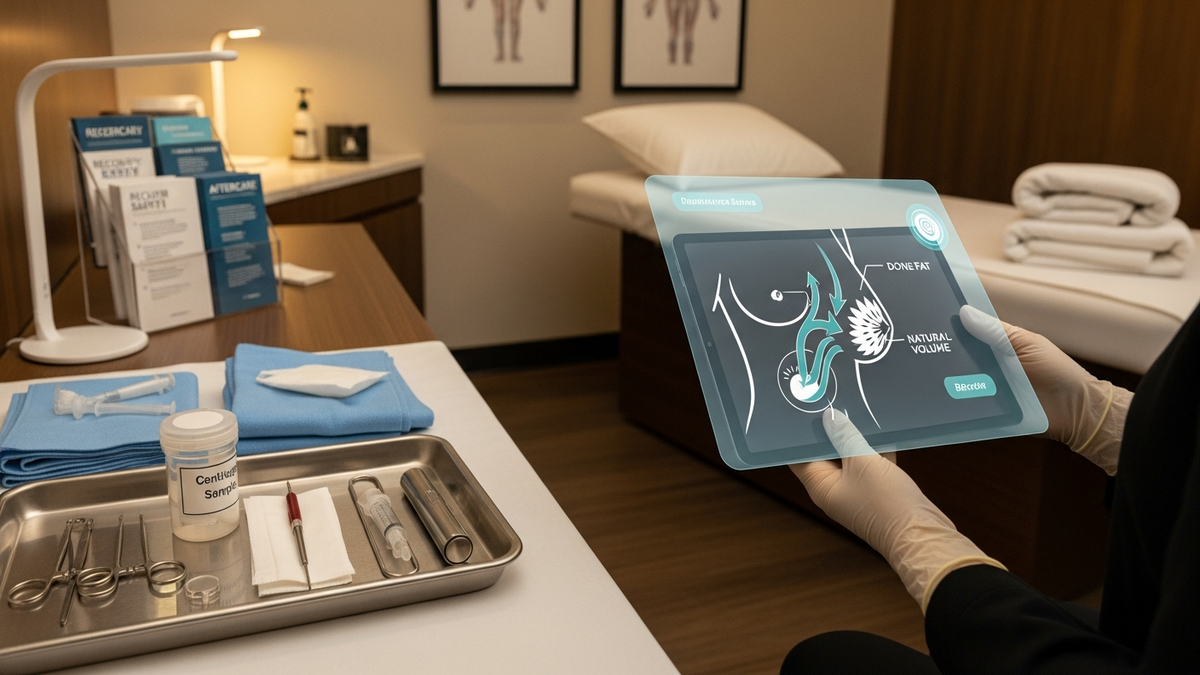
Fat grafting in breasts is a cosmetic procedure in which fat is harvested from one area of your body (such as the abdomen, flanks, or thighs), processed, and then injected into the breasts to create or refine volume and contour. Because the technique uses your own tissue, many patients describe the result as more natural in both appearance and feel compared with traditional implant-based augmentation.
It’s important to understand that the procedure is not simply “liposuction plus injections.” Successful outcomes depend on multiple technical steps: careful fat harvesting, gentle processing, appropriate injection planning, and realistic expectations about how much of the transferred fat will survive long-term.
How Fat Transfer Works (Step by Step)
- Consultation and planning: Your surgeon assesses your breast anatomy, skin quality, goals (e.g., modest lift vs. volume increase), and donor fat availability.
- Fat harvesting: Liposuction is performed in a donor area to collect fat cells.
- Fat processing: The harvested fat is processed to separate viable fat cells from fluids and other components.
- Injection and sculpting: Fat is injected in multiple layers and micro-deposits to support survival and natural contour.
- Post-op monitoring: Swelling and bruising settle over time, revealing the evolving final shape.
Why Choose Fat Grafting Over Implants?
Patients explore fat grafting for a variety of reasons—some prioritize natural feel, others want to avoid implants, and many seek a more subtle, sculpted outcome. While implants and fat transfer can both be valid options, the “best” choice depends on your anatomy, goals, and health history.
Potential Benefits of Autologous Fat Transfer
- Natural look and feel: Because the tissue is your own, many patients experience a softer, more “breast-like” texture.
- Dual benefit: The procedure can refine both the donor area (via liposuction) and the breasts (via injections).
- Lower risk of implant-related issues: For some patients, avoiding implants can mean fewer implant-specific concerns.
- Gradual, customizable contour: Fat transfer can be sculpted to enhance symmetry and shape.
Important Tradeoffs
Fat grafting is not always a one-and-done solution. Because some of the transferred fat may resorb (meaning it doesn’t survive), additional volume sessions may be needed for your desired size or shape. Also, outcomes depend heavily on technique and patient factors such as skin quality, circulation, and overall health.
Candidacy: Who Is a Good Candidate for Fat Grafting in Breasts?
Not everyone is an ideal candidate for breast fat transfer. A skilled evaluation considers both breast and donor sites, as well as your medical profile.
Common Candidacy Factors
- Desire for subtle to moderate enhancement: Many patients use fat grafting for contouring, symmetry, and natural volume rather than dramatic size changes.
- Adequate donor fat: You need enough fat in accessible areas to harvest safely.
- Good skin quality: The breast’s skin and underlying tissue should be able to adapt to the injected volume.
- Realistic expectations: Understanding that results evolve and may require touch-ups is key.
- Non-smoker or ability to manage risk: Smoking can impair circulation and affect healing and fat survival.
Situations That May Require Additional Planning
For patients with prior breast surgeries, significant scarring, or complex asymmetry, a tailored plan is essential. Surgeons may discuss staged approaches, imaging considerations, or combined techniques depending on your goals and anatomy.
The Consultation: What to Ask Your Surgeon
Choosing a surgeon is one of the most important determinants of safety and satisfaction. A high-quality consultation should feel thorough, educational, and personalized—not rushed.
Questions to Bring to Your Appointment
- How many fat grafting sessions might I need? Ask for a realistic plan based on your goals.
- Where will the fat be harvested from? Confirm donor sites and whether they will be refined.
- How do you handle fat processing and injection technique? Technique affects fat viability and contour.
- What are my specific risks? Discuss your personal risk profile for infection, asymmetry, or fat necrosis.
- How do you evaluate outcomes? Ask about before-and-after examples and follow-up imaging strategy if needed.
- What does recovery look like for my lifestyle? Plan around work, exercise, and swelling.
At FlowGeniQ Digest, we emphasize patient education as a cornerstone of safe outcomes—because when you understand the “why” behind each step, you can make better decisions.
Procedure Details: What Happens on Surgery Day?
While protocols vary by surgeon and facility, most fat grafting in breasts procedures follow a similar workflow.
Anesthesia and Monitoring
Fat harvesting and injection may be performed under general anesthesia or another appropriate anesthesia plan depending on your case. Your surgical team should review anesthesia risks, medications, and post-op monitoring.
Harvesting Fat (Liposuction)
Surgeons typically use a controlled liposuction approach to collect fat gently, minimizing trauma to fat cells. The goal is to harvest enough viable fat while reducing donor-site complications.
Processing and Injection
After processing, fat is injected using a technique designed to support survival. Many surgeons distribute fat in small deposits across tissue planes rather than placing large amounts in a single area. This can help create smoother contour and improve viability.
Recovery Timeline: What to Expect After Fat Transfer
Recovery is an individualized process, but patients often experience a predictable pattern: initial swelling and bruising, followed by gradual softening and settling of the transferred fat.
First Days (0–7 Days)
- Swelling and bruising: Common at both donor and breast sites.
- Discomfort: Usually manageable with prescribed pain control and supportive garments.
- Activity limits: Light walking is often encouraged, while strenuous activity is restricted.
Weeks 2–6
- Visible changes: Swelling continues to decrease, though the shape may still look uneven as tissues settle.
- Return to routine: Many patients can resume work depending on job demands and surgeon guidance.
- Exercise restrictions: Your surgeon will provide timing for lifting, cardio, and impact activities.
Months 3–6 and Beyond
Fat grafting results typically evolve over several months. Some volume may stabilize as the body adapts and fat survival becomes clearer. If additional sessions are recommended, surgeons often plan them after enough time has passed to assess the final outcome.
Safety Considerations and Risks
Any surgical procedure involves risks. Being informed helps you recognize warning signs and set appropriate expectations.
Common Risks
- Bruising and swelling at donor and breast sites
- Infection (uncommon, but possible)
- Asymmetry as swelling resolves and fat settles
- Seroma or fluid collections (rare, but possible)
- Fat necrosis (a benign fatty tissue change that can form lumps)
- Cysts or calcifications that may require evaluation
How Surgeons Reduce Risk
Risk reduction comes down to careful patient selection, meticulous technique, and appropriate post-op follow-up. A surgeon should also discuss how they manage complications if they arise, including when additional imaging or treatment may be needed.
Key takeaway: Choose a board-certified, experienced surgeon who performs fat grafting regularly and can explain their approach to minimizing complications and optimizing fat survival.
Results: What “Natural-Looking” Really Means
Natural-looking results are not just about size—they’re about proportions, transitions, and how the breast contour changes with movement and posture. With fat grafting in breasts, the goal is often to enhance shape while preserving softness and a realistic silhouette.
Factors That Influence Outcome
- Fat survival rate: Technique and patient biology affect how much volume remains.
- Injection strategy: Layering and distribution influence smoothness and contour.
- Skin elasticity and tissue quality: Better quality can support a more refined shape.
- Smoking status and health: Circulation and healing are critical.
- Weight stability: Significant weight fluctuations can change the overall look over time.
How to Set Expectations About Size
If you’re aiming for a dramatic increase in cup size, implants may be more predictable. Fat grafting can still be meaningful for larger goals, but your surgeon may recommend staged sessions to reach the desired volume safely and naturally.
Fat Grafting vs. Other Breast Enhancement Options
Understanding your options helps you choose the approach that aligns with your anatomy and priorities.
Fat Grafting vs. Breast Implants
- Feel: Fat transfer typically offers a softer, more natural tissue feel.
- Predictability: Implants often provide more immediate, consistent volume.
- Longevity: Fat transfer results can change over time with resorption and weight changes; implants have their own maintenance considerations.
- Dual benefit: Fat grafting refines a donor area in the same general timeframe.
Fat Grafting vs. Breast Lift (Mastopexy)
If breast sagging is a primary concern, a lift may be needed to restore position and shape. Some patients combine lifting techniques with fat transfer for comprehensive rejuvenation.
Finding the Right Surgeon: What to Look For
When searching for a provider for fat grafting in breasts, prioritize competence, transparency, and patient education.
Red Flags to Avoid
- Guarantees of exact cup size without discussing the possibility of resorption or staged outcomes
- Pressure tactics or limited time for questions
- Vague explanations of technique, processing, and injection strategy
- Minimal follow-up planning
What Good Care Looks Like
- A thorough exam and a tailored plan
- Clear discussion of risks, benefits, and alternatives
- Realistic before-and-after examples and honest outcome ranges
- Supportive recovery guidance
While FlowGeniQ Digest covers a broad range of aesthetic and reconstructive topics, we encourage readers to seek care from qualified specialists who focus on their area of expertise and offer evidence-based, individualized treatment planning.
Additional Considerations: Lifestyle, Imaging, and Follow-Up
To protect your results and health, plan ahead for follow-up and long-term monitoring.
Lifestyle and Weight Stability
After fat transfer, maintaining stable weight can help preserve the overall contour. Large fluctuations in weight can affect both donor fat areas and the transferred fat.
Imaging and Breast Health
Because fat grafting can create changes such as calcifications or benign lumps, you may need careful interpretation of mammograms or ultrasound evaluations. Your surgeon should explain how they coordinate with recommended breast health screening based on your age and medical history.
How FlowGeniQ Digest Supports Your Research
Choosing fat grafting in breasts is as much about research as it is about surgery day. FlowGeniQ Digest curates clear, patient-centered guidance across industries and medical topics so you can compare options with confidence. Use this guide as a starting point, then validate details with your own clinician—especially regarding candidacy, expected volume, and recovery timelines.
If you’re exploring other facial aesthetic or reconstructive procedures in parallel, you may find additional educational resources helpful as you build your overall treatment plan.
Related Topics You Might Also Be Researching
Many patients research multiple aesthetic options before committing to surgery. Depending on your goals and anatomy, you may also be comparing other procedures. For example, if you’re interested in facial rejuvenation, you may review resources on Facelift options. If your research includes the eye area, you can learn more about Blepharoplasty. And for nasal functional concerns, some patients review Septoplasty or Deviated Septum topics. If your goals include rhinoplasty, you can also explore Rhinoplasty. While these are different procedures, the research mindset is similar: prioritize qualified expertise and realistic outcome discussions. For hair restoration planning, you might also explore hair transplant options. And if eyebrow restoration is part of your broader aesthetic goals, you can review eyebrow transplant resources.
FAQ: Fat Grafting in Breasts
1) How long do fat grafting results last?
Results can be long-lasting, but they’re not guaranteed to be permanent at the exact initial volume. Some fat may resorb in the months after surgery, while the portion that survives can remain. Weight changes and natural aging can also affect the final look over time.
2) Will I need more than one fat grafting session?
Many patients do. Whether you need additional sessions depends on your starting anatomy, the amount of volume you want, and how your body retains the transferred fat. A good surgeon will outline a staged plan if appropriate.
3) What are fat necrosis and lumps, and are they dangerous?
Fat necrosis is a benign change that can occur when some transferred fat doesn’t survive. It may feel like a lump and can sometimes require imaging or evaluation to differentiate it from other causes. Your surgeon should explain how lumps are assessed and managed.
4) Is fat grafting in breasts safer than implants?
Both approaches have distinct risk profiles. Fat grafting avoids implant materials, but it involves liposuction and injected tissue survival variability. Safety depends on your candidacy, technique, and follow-up care—not just the choice of method.
5) How soon can I return to normal activities?
Many patients resume light work within about 1–2 weeks, depending on swelling and job demands. Strenuous exercise and heavy lifting typically take longer. Your surgeon will provide a personalized timeline based on your procedure extent and healing progress.
CTA: Ready to Explore Fat Grafting?
If you’re considering fat grafting in breasts, the next best step is a personalized consultation where your surgeon can evaluate your anatomy, donor options, and goals. At FlowGeniQ Digest, we encourage you to bring your questions, review realistic outcome expectations, and choose a clinician who prioritizes education and patient-centered planning.
Book a consultation to discuss whether fat transfer aligns with your desired look, how many sessions you may need, and what your recovery timeline could be.
Professional Disclaimer
This content is provided for general educational purposes only by FlowGeniQ Digest. It is not a substitute for professional advice, diagnosis, or treatment. Readers are advised to consult qualified professionals for personalized recommendations.
Medical Information Disclaimer
This content is provided for general educational purposes only by FlowGeniQ Digest. It is not a substitute for professional advice, diagnosis, or treatment. Readers are advised to consult qualified professionals for personalized recommendations.