Source: FlowGeniQ Digest
Considering fat grafting for buttocks? You’re likely looking for a transformation that feels natural, uses your own tissue, and can deliver a more sculpted, proportionate silhouette. In today’s cosmetic surgery landscape, procedures commonly grouped under the “Brazilian Butt Lift” (BBL) umbrella have become popular for their ability to enhance curves without implants—when performed with meticulous technique and safety-first protocols.
This comprehensive guide—curated for readers exploring options in the U.S. and beyond—explains how fat grafting works, what makes a good candidate, what to expect during surgery and recovery, and which risks you should understand upfront. We’ll also share practical, actionable steps to help you prepare questions for your consultation and protect your results over time.
What Is Fat Grafting for Buttocks (Brazilian Butt Lift)?
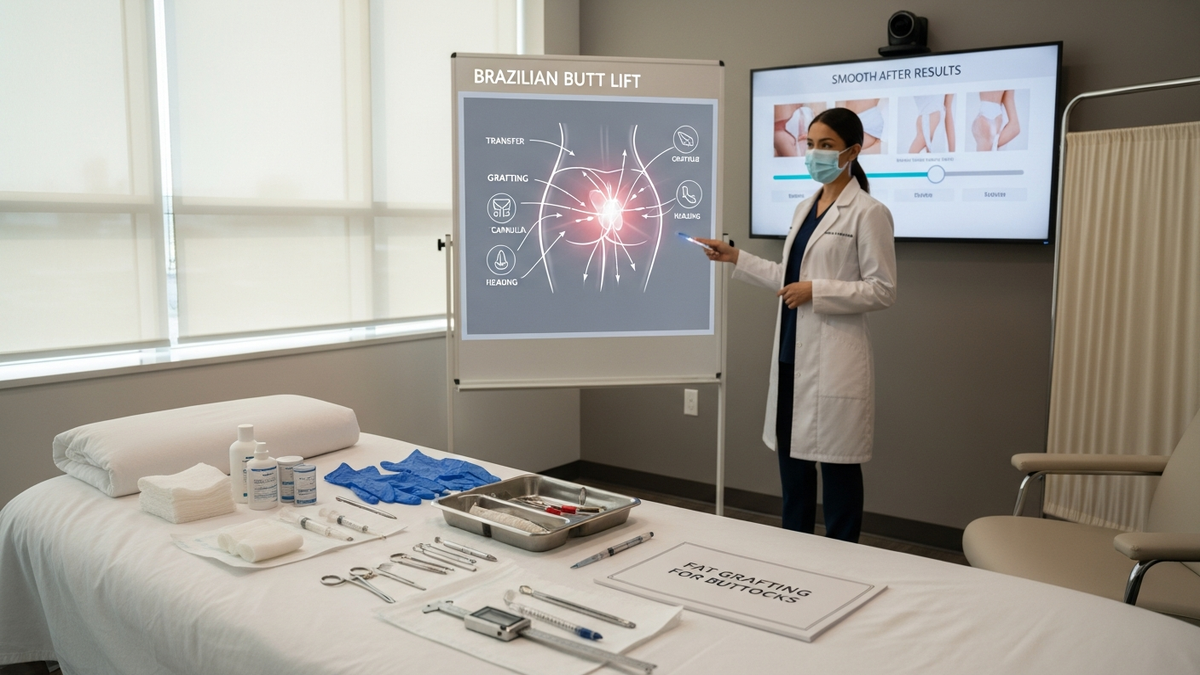
Fat grafting for buttocks is a cosmetic procedure that transfers fat from one area of your body to the buttocks to improve volume, contour, and shape. The process typically involves:
- Harvesting fat (often from the abdomen, flanks, hips, or thighs) using liposuction
- Processing the harvested fat to prepare it for transfer
- Injecting the fat into targeted layers of the buttocks to create a natural-looking projection and curvature
Many people choose this approach because it can provide dual benefits: contouring at the donor site plus enhancement at the buttocks. However, the quality of results depends heavily on surgical planning, fat handling, and—critically—how and where fat is placed.
Why Fat Grafting for Buttocks Has Become So Popular
BBL-style enhancement appeals to many patients because it can:
- Use your own fat, which may reduce concerns about foreign implants
- Improve body proportions by reshaping donor areas
- Support a “custom” look based on your anatomy and aesthetic goals
- Offer a potentially natural feel when fat survival and placement are optimized
At the same time, it’s essential to be realistic: fat grafting is not “instant perfection.” Some degree of fat resorption is expected, and final results may take months to fully develop.
Fat Grafting for Buttocks: How the Procedure Works
1) Pre-operative assessment and aesthetic planning
A thoughtful consultation is where results begin. Your surgeon should evaluate:
- Body proportions (donor site availability and desired buttock shape)
- Skin quality and elasticity
- Fat distribution and how much volume can realistically be transferred
- Medical history (including clotting risks, smoking status, diabetes, and prior surgeries)
For many patients, the most important part of planning is deciding where volume should go—upper pole, mid-buttock, lower pole, or a combination—to match your frame and balance your silhouette.
2) Fat harvesting (liposuction)
Surgeons typically use liposuction to remove fat from areas such as the abdomen, flanks, or thighs. The goal is to collect fat that is viable for grafting. Gentle technique and appropriate suction parameters can influence fat cell survival.
3) Fat processing
After harvesting, fat is processed to remove unwanted components (such as excess fluid and blood) and prepare it for injection. Different clinics use different methods (e.g., filtration systems or centrifugation). The common objective is to improve the consistency and quality of the graft.
4) Injection and sculpting
Injection technique is a major determinant of both aesthetics and safety. Surgeons typically place fat in a manner designed to maximize survival and support smooth contouring. Your surgeon should be able to explain their strategy for:
- Layering and distribution
- Volume distribution (avoiding irregularities)
- Symmetry between sides
Most importantly, ask how the surgeon addresses safety protocols related to fat placement. Inappropriate placement can increase risk.
Who Is a Good Candidate for Fat Grafting for Buttocks?
Not everyone is an ideal candidate for fat grafting for buttocks. While criteria vary by surgeon and facility, good candidates often share the following characteristics:
- Realistic expectations about swelling, healing, and fat resorption
- Sufficient donor fat for harvesting
- Good skin elasticity to support contouring
- Ability to follow post-op instructions, including positioning and activity restrictions
- Healthy lifestyle choices (especially non-smoking and good nutrition)
Some patients may require staged treatment or alternative options if donor fat is limited or if skin laxity is significant.
Safety Considerations You Should Understand Before You Book
Safety is not a footnote—it’s the foundation of good outcomes. Fat grafting for buttocks requires careful attention to anesthesia planning, sterile technique, and how fat is transferred.
Key risks to discuss in your consultation
Your surgeon should review potential complications, which may include:
- Infection or wound healing issues
- Seroma (fluid accumulation)
- Fat necrosis or palpable lumps
- Asymmetry or contour irregularities
- Blood clots (risk of thromboembolism)
- Fat embolism (a rare but serious risk associated with fat entering the bloodstream inappropriately)
- Anesthesia-related risks
Actionable recommendation: Before you proceed, ask your surgeon how they mitigate risks—particularly those related to fat handling and placement—plus what the facility’s emergency protocols are.
Why choosing a qualified surgeon matters
BBL-style procedures are technically demanding. A surgeon’s training, approach to safety, and ability to create natural proportions are essential. Look for credentials, board certification, and a track record of outcomes that align with your aesthetic goals.
FlowGeniQ Digest emphasizes patient education because informed decision-making is one of the strongest predictors of satisfaction—both with results and with the overall experience.
How Much Does Fat Grafting for Buttocks Cost?
Cost varies widely based on geography, surgeon experience, facility fees, anesthesia, and how much fat is harvested and injected. When comparing quotes, don’t focus only on the headline price.
Consider what’s included:
- Surgeon’s fee
- Anesthesia and monitoring
- Operating room or facility fees
- Compression garments
- Medications and post-op visits
- Whether revisions are covered under certain circumstances
Actionable recommendation: Ask for a written estimate and a breakdown of costs so there are no surprises later.
Recovery Timeline: What to Expect After Fat Grafting for Buttocks
Recovery often determines whether you can achieve your best possible results. While experiences vary, many patients follow a similar general timeline.
First days (0–7 days)
- Swelling and bruising are common
- You’ll likely wear compression garments at the donor sites
- Positioning is critical—your surgeon will provide specific instructions to protect the grafted fat
- Pain is managed with prescribed medications
Early healing (weeks 2–6)
- Swelling may fluctuate
- Some patients feel tightness or mild discomfort
- You’ll typically continue activity restrictions
- Follow-up visits help monitor healing and contour
Mid-to-late healing (months 2–6+)
Fat grafting results evolve. Some fat will naturally resorb in the months after surgery, and the final contour becomes clearer as swelling decreases.
- Gradual improvement in shape and softness
- More stable results as graft survival stabilizes
- Return to more normal activity as cleared by your surgeon
Tips to support fat survival and results
- Follow positioning instructions exactly (this is often where outcomes are won or lost)
- Prioritize protein and hydration for tissue repair
- Avoid smoking and nicotine—these can impair healing
- Attend all follow-ups so concerns can be addressed early
- Be patient: final results take time
Fat Grafting for Buttocks Results: What’s “Natural-Looking”?
Natural-looking results aren’t just about volume—they’re about proportion, smooth transitions, and how the buttocks blend with your hips and waist. In a well-executed BBL, you should see:
- Gradual contour transitions (not a “lumpy” or overly abrupt look)
- Balanced projection based on your body frame
- Symmetry with subtle, realistic differences between sides
- Appropriate upper/mid/lower distribution for your anatomy
It’s also important to understand that results depend on your body’s response. Your surgeon can help set realistic expectations for volume retention and potential need for adjustments.
Common Questions About Fat Grafting for Buttocks
Before you commit, many patients want clarity on the practical details. Below are answers to some of the most frequently asked questions.
Will I look bigger immediately?
Often, you may look larger early on due to swelling. As swelling decreases and some fat resorbs, the final shape can be different from the immediate post-op appearance.
How long until I can sit normally?
Many surgeons recommend specific sitting restrictions, frequently involving special pillows or positioning methods. The exact timeline varies—follow your surgeon’s instructions closely.
Can I do fat grafting for buttocks if I have limited donor fat?
Limited donor fat may affect how much volume you can achieve. Your surgeon can discuss options such as alternative body contouring strategies or staged approaches.
How to Choose a Surgeon for Fat Grafting for Buttocks
Choosing the right provider is one of the most important steps you can take. Here’s a practical checklist you can use during your evaluation:
Questions to ask during your consultation
- What is your approach to safety? Ask specifically about fat handling and placement protocols.
- Am I a good candidate? Request a clear explanation of your donor fat availability and skin quality.
- What results can I realistically expect? Ask about typical fat retention and how outcomes vary.
- Can I see before-and-after photos? Look for results similar to your goals and body type.
- What is the recovery plan? Confirm positioning guidance, compression garment use, and follow-up schedule.
- What are the risks and how are complications handled? Make sure you understand the worst-case scenarios and the response plan.
Look for transparency and education
A quality surgical team should be willing to educate you. FlowGeniQ Digest highlights that patient education supports better decision-making—especially for procedures with nuanced technique and recovery requirements.
Related Plastic Surgery Options (If You’re Considering a Full Facial or Body Refresh)
Many patients who explore body contouring also consider other cosmetic or rejuvenation procedures as part of a broader confidence plan. While these are not substitutes for fat grafting for buttocks, they may be relevant depending on your goals.
- If you’re considering nasal refinement, explore Rhinoplasty to understand how structural and aesthetic goals can be addressed.
- For age-related facial changes, you may want to learn about Facelift options and what a rejuvenation plan can involve.
- If eye-area aging concerns you, Blepharoplasty may be relevant.
And for patients exploring hair restoration, you can also review hair transplant options depending on your needs.
Note: FlowGeniQ Digest encourages readers to discuss all cosmetic and medical concerns with qualified, board-certified professionals who can tailor recommendations to individual anatomy and health history.
FAQ: Fat Grafting for Buttocks
Is fat grafting for buttocks the same as a Brazilian Butt Lift?
In many contexts, yes. “Brazilian Butt Lift” is commonly used to describe buttock enhancement using fat transfer techniques. Terminology can vary by provider, but the concept is generally the same: liposuction of donor fat plus fat injection to the buttocks.
How long do results last?
Fat grafting results can be long-lasting if a sufficient portion of the transferred fat survives. However, aging, weight changes, and lifestyle factors can influence the final outcome over time. Your surgeon can advise on realistic longevity expectations.
What factors affect how much fat survives?
Fat survival can be influenced by fat processing methods, injection technique, your body’s healing response, and whether you follow recovery instructions (including positioning). Surgeon technique and patient compliance both matter.
What should I do to prepare for surgery?
Preparation usually includes medical clearance, medication review, smoking cessation, arranging post-op help at home, and following pre-op instructions for fasting and hygiene. Your surgical team should provide a detailed checklist.
When can I exercise again?
Exercise timelines vary. You may be able to resume light movement relatively early, but more intense activity is typically delayed until your surgeon confirms healing progress. Follow your provider’s guidance to reduce risk.
CTA: Ready to Explore Your Options?
If you’re considering fat grafting for buttocks, the best next step is a personalized consultation where your anatomy, donor fat, and aesthetic goals can be evaluated safely. At FlowGeniQ Digest, our goal is to help you feel informed—so you can ask the right questions and make confident decisions.
Action steps:
- Schedule a consultation with a qualified, board-certified surgeon
- Bring a list of questions about safety protocols, fat handling, and expected recovery
- Review before-and-after examples that match your desired look
- Plan your recovery support (time off work, transportation, and positioning supplies)
With the right preparation and a safety-first approach, you can move forward with greater clarity and confidence.
Professional Disclaimer
This content is provided for general educational purposes only by FlowGeniQ Digest. It is not a substitute for professional advice, diagnosis, or treatment. Readers are advised to consult qualified professionals for personalized recommendations.
Medical Information Disclaimer
This content is provided for general educational purposes only by FlowGeniQ Digest. It is not a substitute for professional advice, diagnosis, or treatment. Readers are advised to consult qualified professionals for personalized recommendations.