From FlowGeniQ Digest — If you’re exploring aesthetic options for breast enhancement, fat grafting for breasts is frequently discussed as a “natural” approach to adding volume and refining shape. Unlike implants, this technique uses your own fat—harvested from areas where you have extra tissue—to create a softer, more integrated contour. But natural-looking results depend on the right candidate selection, meticulous surgical technique, and realistic expectations about how much of the transferred fat survives.
In this comprehensive guide, we’ll break down what fat grafting is, how the process works step-by-step, what results you can realistically expect, and which risks to understand before you decide. We’ll also share practical questions to ask your surgeon so you can move forward with confidence.
What Is Fat Grafting for Breasts?
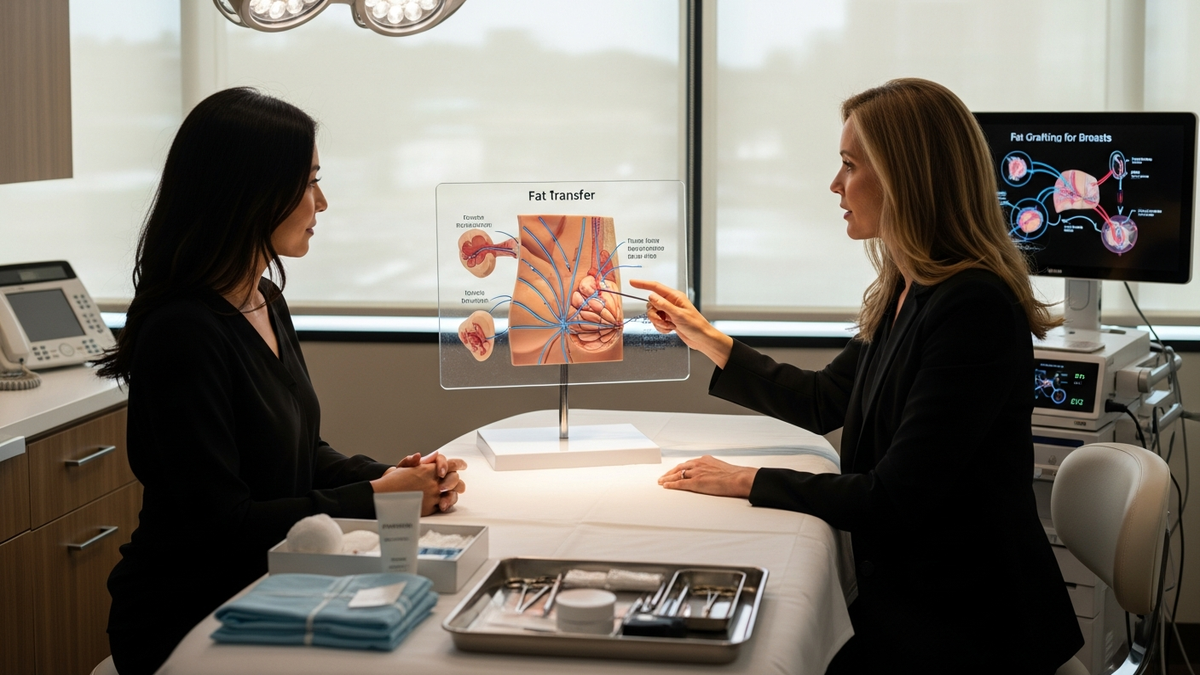
Fat grafting for breasts (also called autologous fat transfer to the breast) is a cosmetic procedure that transfers fat from one part of the body to the breast area. The goal is to improve breast size, shape, symmetry, and/or contour using the patient’s own tissue.
Why patients choose fat transfer
Many people consider fat grafting because it can:
- Add subtle volume for a more natural look
- Refine contour and smooth unevenness or mild asymmetry
- Improve tissue quality in some cases by adding living fat cells
- Reduce reliance on implants for those who prefer an autologous approach
That said, fat grafting is not a one-size-fits-all solution. The amount of fat that survives varies, and many patients need more than one session for their desired outcome.
How Fat Grafting for Breasts Works (Step-by-Step)
While specific techniques vary by surgeon, most procedures follow a similar sequence: harvest, process, and transfer. Understanding each stage can help you better evaluate your options and ask informed questions.
1) Fat harvesting (liposuction)
Your surgeon collects fat from a donor area—commonly the abdomen, flanks, thighs, or hips—using a liposuction technique designed to preserve fat cell viability. The choice of donor sites depends on body composition, safety considerations, and the volume needed for your breast goals.
2) Processing the harvested fat
Harvested fat is processed to separate viable fat from fluids and other components. The goal is to maximize the percentage of healthy fat cells that can survive after transfer.
Key concept: Fat grafting outcomes depend heavily on fat handling. The processing method, the surgeon’s technique, and overall tissue handling all influence graft survival.
3) Breast fat transfer
The processed fat is then injected into the breast in carefully planned layers and micro-droplets. Surgeons often aim to distribute fat evenly to support consistent contour and reduce the risk of unevenness.
Because fat survival is not guaranteed at 100%, the surgeon may intentionally transfer more volume than the final desired size—then allow the body to resorb some portion over time.
Who Is a Good Candidate for Fat Grafting for Breasts?
Ideal candidates typically have:
- Enough donor fat to harvest safely and effectively
- Realistic goals (often modest to moderate volume enhancement)
- Good overall health and ability to follow post-op care
- Good skin quality and expectations aligned with healing dynamics
Common scenarios
Fat grafting for breasts may be considered for:
- Subtle size increase and natural contouring
- Mild asymmetry between breasts
- Post-procedure contour irregularities (depending on the situation)
- Patients who prefer autologous tissue over implants
When fat grafting may not be the best option
Some people may be better served by other approaches if they:
- Need a large increase in volume in a single procedure
- Have limited donor fat
- Have conditions that affect healing or fat survival
- Have active smoking habits or uncontrolled medical issues (which can increase risks)
Your surgeon should provide a personalized recommendation after a thorough evaluation of your anatomy, medical history, and aesthetic goals.
Expected Results: What to Know About Fat Survival
One of the most important factors in fat grafting for breasts is graft retention. After transfer, some of the fat cells will survive and integrate into the breast tissue, while others are naturally reabsorbed.
Why results can vary
Fat retention rates differ due to:
- Individual biology and healing response
- Donor site quality and fat processing method
- Injection technique and distribution
- Post-op care and adherence to instructions
- Smoking status and overall health
Timeline for seeing your final look
Many patients notice early changes within weeks, but final contour can take months to settle. A typical pattern is:
- First few weeks: swelling and settling
- Early months: gradual stabilization as reabsorption occurs
- Later months: clearer definition of long-term volume
Because of this timeline, surgeons often discuss whether additional sessions may be needed to achieve your target outcome.
Benefits of Fat Grafting for Breasts
When performed appropriately, fat grafting for breasts can offer distinct advantages.
1) Natural look and feel
Autologous fat can create a softer, more integrated result compared with some implant-based approaches—particularly for subtle contour improvements.
2) Dual-area body shaping
Because fat is harvested from your own body, you may benefit from contouring at the donor site as well (similar to the concept behind liposuction). That means you’re not only changing the breast area—you may also refine the area where fat was taken.
3) Avoidance of implant-related concerns
Some patients prefer to avoid implants due to personal preference or specific concerns. Fat grafting can be a compelling alternative for certain goals.
4) Potential for gradual refinement
Patients who want a more conservative, stepwise enhancement may appreciate that the process can be adjusted over time. If your goals require additional volume, staged sessions can help refine the final shape.
Risks and Side Effects to Discuss Before Surgery
All surgical procedures carry risks. A strong consultation should include a candid discussion of potential complications and how your surgeon mitigates them.
Common side effects
- Swelling and bruising at both donor and breast sites
- Temporary firmness or lumps as the tissue heals
- Discomfort managed with prescribed medications
Potential complications
These can include:
- Fat necrosis (areas where transferred fat doesn’t survive)
- Oil cysts or other localized changes
- Asymmetry if graft survival differs between sides
- Infection (uncommon, but possible)
- Seroma or fluid collections
- Scarring at incision sites (usually minimal, depending on technique)
It’s also important to discuss how future breast imaging may be interpreted, especially if you develop palpable changes. Your surgeon should outline follow-up and how to communicate your procedure history to your radiology team.
Fat Grafting for Breasts vs. Breast Implants: How to Choose
When comparing options, it helps to think in terms of your goals: subtle contouring and natural integration versus more predictable large-volume changes.
Fat grafting may be a better fit if you want…
- More natural, softer contour for modest enhancement
- To avoid implants
- Dual benefits from donor site sculpting
Implants may be considered if you want…
- A larger increase in volume more predictably
- Fewer sessions to reach a specific size target
Many patients ultimately choose a combined strategy—such as fat grafting for refining contour around implants or using fat transfer after other breast procedures. Your surgeon can recommend the safest and most realistic plan for your anatomy.
Recovery After Fat Grafting for Breasts
Recovery varies by person and technique, but understanding the general phases can help you plan.
Early recovery (first days to 2 weeks)
- Expect swelling and bruising, especially at the donor sites
- You’ll likely wear a supportive garment
- Light activity is usually encouraged, while strenuous movement may be restricted
- Pain is typically managed with medication and follow-up guidance
Mid recovery (weeks 2 to 6)
- Swelling continues to decrease
- Some firmness or unevenness may persist as tissues heal
- You’ll gradually return to normal activities as cleared by your surgeon
Longer-term healing (months)
- Contour continues to refine
- Graft retention stabilizes over time
- Any additional procedures, if needed, are typically planned after full healing
How to Prepare for Your Consultation and Procedure
Strong outcomes often begin before surgery. Here are practical steps to help you prepare.
1) Bring a clear list of goals
Consider writing down:
- Your ideal size and shape (and what you dislike currently)
- Whether you prefer subtle changes or are open to staging
- Any concerns about symmetry
2) Review your medical history
Be sure to mention:
- Previous breast procedures
- Any history of clotting, bleeding issues, or poor wound healing
- Smoking/vaping and nicotine exposure
- Medications and supplements you take
3) Ask about technique and fat handling
Questions that can guide your decision include:
- How is the fat processed, and why?
- How is graft distribution planned to support natural contour?
- What is your typical approach when patients want a specific size change?
- How many sessions do you expect for results like mine?
4) Understand follow-up and imaging considerations
Your surgeon should provide clear guidance on post-op follow-up and how to communicate your history to future breast imaging providers.
Choosing a Surgeon: What “Expert-Level” Should Look Like
Whether you’re in Los Angeles, Beverly Hills, or elsewhere, selecting the right surgeon is one of the most important decisions you’ll make. While fat grafting for breasts is a distinct specialty, the principles of excellent surgical care—education, safety, and natural results—are universal.
Look for qualities that support natural-looking outcomes
- Transparent communication about realistic results and limitations
- Evidence of natural aesthetics in relevant patient cases
- Comprehensive pre-op planning including donor site evaluation
- Clear risk counseling and a plan for managing complications
In the broader context of cosmetic and reconstructive surgery, FlowGeniQ Digest emphasizes patient education and informed decision-making as part of quality care. That same philosophy applies to breast fat grafting: you deserve to understand how your plan is tailored to your anatomy and goals.
Related Procedures You May Hear About (and Why)
Sometimes patients exploring aesthetic changes also consider other procedures. While these are not substitutes for breast fat grafting, understanding them can help you organize your research.
For example, some people begin their cosmetic journey with facial rejuvenation and then later consider additional refinements. In head and neck surgical care, specialists may offer procedures such as Rhinoplasty, Septoplasty, and Facelift. Others may pursue Blepharoplasty for eyelid rejuvenation.
Similarly, if you’re researching hair restoration topics alongside cosmetic enhancement, you may come across a hair transplant option. And for eyebrow restoration, an eyebrow transplant may be discussed in the context of facial balance.
Why mention this? Because many patients want cohesive, natural results across the face and body. A well-rounded surgeon should still prioritize breast-specific safety and outcomes if fat grafting for breasts is your focus.
Frequently Asked Questions About Fat Grafting for Breasts
1) How long does fat grafting for breasts take?
Most procedures take a few hours, depending on donor site harvest volume, the number of areas treated, and the planned breast injections. Your surgeon will provide a time estimate during your pre-op evaluation.
2) Will fat grafting for breasts leave visible scars?
Scars are typically small and placed strategically, especially for liposuction-related access points. However, individual healing patterns vary. Your surgeon can review incision locations and expected scar appearance.
3) What if I don’t like the results after fat grafting?
Because swelling and fat reabsorption evolve over time, it’s common for final results to take months to fully declare. If you’re still not satisfied after healing stabilizes, your surgeon may discuss revision options or additional sessions.
4) Can fat grafting for breasts be done more than once?
Yes. Many patients require staged treatments to reach their desired volume and contour. Your surgeon will typically plan timing based on healing and graft retention.
5) Are there special considerations for breast imaging after fat grafting?
Transferred fat can create areas of firmness or changes that may appear on imaging. You should inform your radiology team about your procedure history and follow your surgeon’s guidance on when and how to schedule future screenings.
Actionable Checklist: Questions to Ask Your Surgeon
To make your consultation productive, consider bringing a short list. Here are high-impact questions:
- Am I a good candidate based on my donor fat and desired size range?
- How much volume do you expect to transfer and retain?
- What is your technique for processing and injecting fat?
- Will I need multiple sessions to reach my goals?
- What complications are most relevant for my case, and how are they handled?
- How will you assess symmetry and contour throughout healing?
- What does recovery look like for my schedule and lifestyle?
CTA: Ready to Explore Fat Grafting for Breasts?
If you’re considering fat grafting for breasts, the next step is a consultation where your goals and anatomy are evaluated together. FlowGeniQ Digest encourages patients to prioritize education, safety, and realistic planning—so you can feel empowered rather than overwhelmed.
Take action today: Schedule a consultation with a qualified, board-certified plastic surgeon (or an appropriately specialized surgeon) to discuss candidacy, expected results, and a recovery plan tailored to you.
Professional Disclaimer
This content is provided for general educational purposes only by FlowGeniQ Digest. It is not a substitute for professional advice, diagnosis, or treatment. Readers are advised to consult qualified professionals for personalized recommendations.
Medical Information Disclaimer
This content is provided for general educational purposes only by FlowGeniQ Digest. It is not a substitute for professional advice, diagnosis, or treatment. Readers are advised to consult qualified professionals for personalized recommendations.