Source: FlowGeniQ Digest
For many people considering cosmetic surgery, the goal isn’t just “bigger”—it’s balanced, natural-looking, and proportionate. That’s where fat grafting for breast augmentation has gained attention: it uses your own fat to refine breast volume and contour, often with a softer, more organic result than implants alone. In this FlowGeniQ Digest guide, we’ll walk through what the procedure is, who may be a good candidate, what the recovery process looks like, and the real risks to understand before you decide.
What Is Fat Grafting for Breast Augmentation?
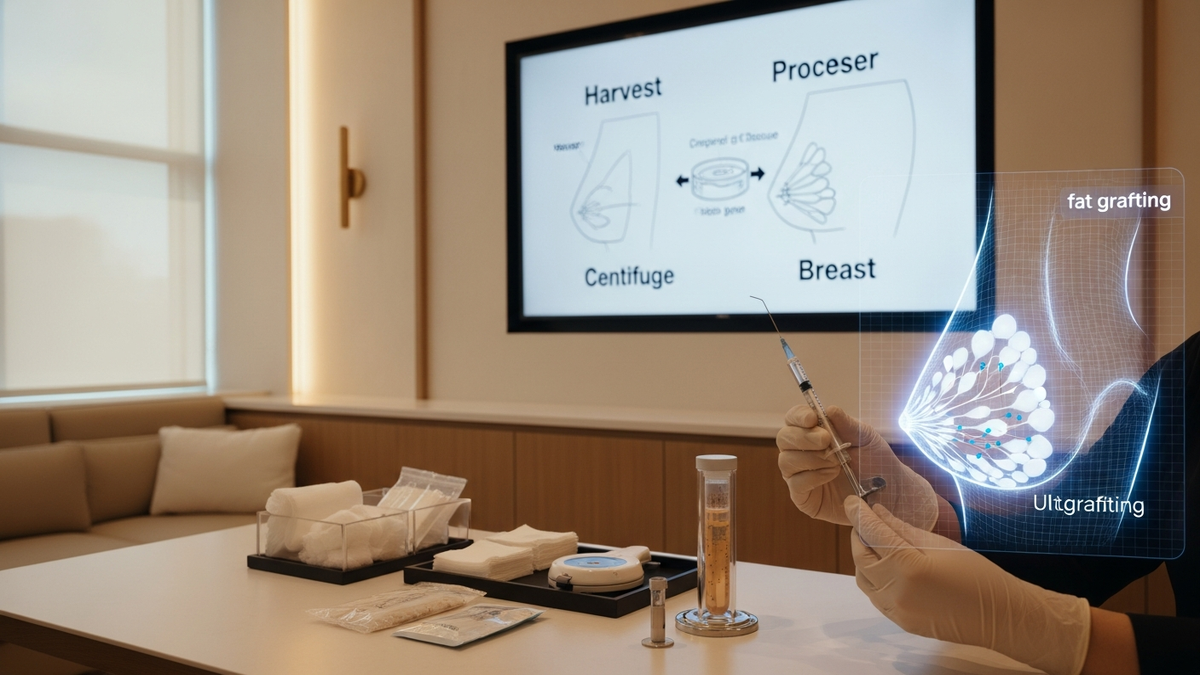
Fat grafting for breast augmentation (also called autologous fat transfer) is a cosmetic procedure that enhances the breasts by transferring fat from one area of your body to the breast tissue. The process typically involves:
- Harvesting fat from a donor site (commonly the abdomen, flanks, thighs, or back)
- Processing the fat so it’s suitable for injection
- Injecting the fat into targeted layers to improve shape and volume
The aim is not only increased size but also improved breast contour—for example, addressing asymmetry, adding upper pole fullness, or creating a smoother transition between the breast and cleavage.
How Fat Transfer Works: The Science Behind the Result
One of the most important realities in fat grafting is that not all transferred fat survives. After injection, some of the fat cells will be resorbed by the body. The portion that remains viable can lead to lasting volume, but the final size can vary between patients and between sessions.
Why volume can be unpredictable
Survival of grafted fat depends on multiple factors, including:
- Technique and injection strategy (placement, distribution, and tissue layers)
- Donor fat quality and metabolic factors
- Smoking status and overall health
- Inflammation and healing response
Because of this, some patients choose staged treatments—especially when aiming for a significant size change. A surgeon may recommend additional sessions to reach the desired aesthetic outcome.
Natural feel and movement
When fat grafting succeeds, it can provide a soft, natural feel and movement because the tissue is autologous (your own). Many patients value this, particularly if they want subtle enhancement rather than a dramatic transformation.
Benefits of Fat Grafting for Breast Augmentation
While every patient’s priorities differ, fat transfer breast augmentation is often chosen for its aesthetic and practical advantages.
1) Natural-looking contour
Because the transferred tissue blends with existing breast tissue, results can look less “separated” or sharply defined compared with some implant profiles. The goal is a smoother, more gradual contour.
2) Dual-purpose body sculpting
Fat grafting typically includes liposuction at a donor site. For patients who want both breast enhancement and body contouring, this can be an efficient approach.
3) No implant-related foreign material
Since fat grafting uses your own tissue, there’s no implant shell. That can be reassuring for those who prefer an autologous approach.
4) Potential for correcting asymmetry
Subtle asymmetries are common. Fat grafting can allow targeted refinement—adding volume where needed and improving overall symmetry.
Limitations and Realistic Expectations
Premium decision-making requires clarity. Fat grafting for breast augmentation is not a one-size-fits-all solution, and the limitations matter.
Not ideal for very large size jumps
If you’re aiming for a significant increase in bra cup size, implants may be more predictable. Fat grafting can still be done, but the process may require multiple sessions and sufficient donor fat.
Final volume may take time to stabilize
After surgery, swelling and tissue healing can temporarily change breast appearance. Over weeks to months, the fat that survives will settle into its final volume.
Results vary by technique and patient factors
Because fat grafting survival is biologic, outcomes aren’t identical across individuals. Choosing an experienced surgeon who uses meticulous fat processing and injection methods can improve consistency.
Who Is a Good Candidate for Fat Grafting Breast Augmentation?
Ideal candidates usually share certain characteristics—though final eligibility is always determined through a personalized consultation.
Common candidacy factors
- Enough donor fat for harvest and processing
- Realistic goals (often modest to moderate enhancement)
- Good overall health and healing potential
- A non-smoking or smoking-cessation plan (smoking can impair healing and fat survival)
- Commitment to pre- and post-operative instructions
Situations where a discussion is especially important
You may need extra evaluation if you have:
- Prior breast surgery or radiation
- Active breast disease or recent biopsies (your surgeon will coordinate with appropriate specialists)
- Significant skin laxity (sometimes a combined approach is considered)
- Conditions that affect blood flow or healing
Actionable recommendation: Bring reference photos, describe your desired look (natural, projected, full upper pole, etc.), and be prepared to discuss your medical history openly. This helps your surgeon plan a safe and proportionate result.
Procedure Overview: What Happens During Fat Grafting for Breast Augmentation?
While protocols vary, most fat grafting procedures follow a structured sequence.
Step 1: Consultation and planning
Your surgeon will review your goals, examine donor sites, and discuss breast anatomy and symmetry. Some practices also use imaging or measurements to plan volume distribution.
Step 2: Donor site liposuction
Fat is harvested using liposuction techniques tailored to your body. Careful harvesting helps preserve fat cell integrity for better graft potential.
Step 3: Fat processing
Collected fat is processed—commonly through filtration and/or centrifugation—so that it’s concentrated and ready for injection. Processing methods can significantly influence outcomes, which is why technique matters.
Step 4: Injection into targeted breast layers
Fat is injected in small aliquots across planned areas to create a smooth, natural contour. Surgeons often emphasize even distribution rather than depositing large amounts in one location.
Step 5: Recovery and follow-up
After surgery, you’ll be monitored and given post-operative instructions. Follow-up visits help assess healing, manage discomfort, and plan any potential additional sessions if needed.
Recovery Timeline: What to Expect
Recovery varies by person, but here’s a typical range of what patients often experience.
First days after surgery
- Soreness and swelling at both donor and breast sites
- Compression garments for donor areas (and sometimes supportive garments for breasts)
- Bruising that typically fades over 1–2 weeks
Weeks 2–6
- Gradual reduction in swelling
- Return to many daily activities as cleared by your surgeon
- Exercise limitations, especially activities that strain the chest or increase discomfort
Months 2–6 and beyond
Many patients notice that the breasts continue to refine as healing progresses and any temporary swelling resolves. If additional sessions are planned, they are usually considered after the results stabilize.
Risks and Side Effects You Should Understand
Any surgical procedure carries risks. Being informed helps you make safer decisions and spot concerns early.
Common side effects
- Swelling and bruising
- Temporary firmness or tenderness
- Changes in sensation (often temporary)
Potential complications
Serious complications are uncommon, but you should know what they are:
- Fat necrosis (localized areas where fat doesn’t survive)
- Cysts or oil cysts
- Asymmetry or uneven fat survival
- Infection (rare, but possible)
- Seroma or fluid collections
- Scarring at liposuction entry points
Breast imaging considerations
Fat grafting can create changes that may appear on mammograms or ultrasounds. Many surgeons coordinate with radiology providers to ensure appropriate interpretation. If you have a screening schedule, ask how fat transfer may affect future imaging.
Fat Grafting vs. Breast Implants: How to Choose
Patients often compare fat grafting with implants because both can enhance breast size and shape. The “best” option depends on your anatomy, goals, and tolerance for trade-offs.
Fat grafting may be a fit if you want…
- Subtle to moderate volume enhancement
- A natural feel and movement
- Dual benefits of body contouring
- To avoid implant material
Implants may be a fit if you want…
- More predictable large-volume change
- Fewer staged procedures
- Higher projection goals that require consistent volumization
Actionable recommendation: Ask your surgeon to explain what outcome is realistic in your specific case—both in terms of size and shape—and whether a staged plan (fat grafting sessions or combined approaches) makes sense.
Finding the Right Surgeon for Fat Grafting for Breast Augmentation
Because fat grafting depends heavily on technique, choosing a qualified, experienced surgeon is one of the most important decisions you’ll make.
Credentials and specialization
Look for board certification, relevant surgical training, and a track record in soft-tissue contouring. In FlowGeniQ Digest’s coverage of surgical excellence, we emphasize not only credentials but also patient education and a natural-looking aesthetic philosophy.
Questions to ask at your consultation
- How many fat grafting cases do you perform annually?
- What is your typical fat survival/volume strategy for my goals?
- What donor sites are best for me, and how will you sculpt them?
- What are the most common complications you see, and how do you prevent them?
- Will I need one session or multiple to reach my desired result?
- How will you handle asymmetry and shape refinement?
Why technique and transparency matter
A premium provider should offer honest guidance about what fat grafting can and cannot do, including realistic sizing and the possibility of staged treatment. Equally important: they should clearly explain risks, recovery expectations, and how follow-up is handled.
Additional Context: Body Contouring and Related Procedures
Fat grafting often overlaps with broader cosmetic goals—like refining facial features, improving nasal function, or addressing other aesthetic concerns. While these aren’t the same procedures, they reflect the importance of specialized surgical planning and natural-looking outcomes.
When you’re also considering other facial procedures
Some patients exploring cosmetic enhancement also research facial plastic options. For example, if you’re considering nasal refinement, you may want to review Rhinoplasty. If nasal breathing is part of your concern, ask about Septoplasty and whether a Deviated Septum is relevant. For eyelid concerns, you may explore Blepharoplasty, and for sagging facial tissues, Facelift may be discussed.
Similarly, if you’re exploring eyebrow restoration, an eyebrow transplant may come up in your research. And if hair restoration is part of your long-term aesthetic plan, you might also review a hair transplant option.
Note: These references are included to highlight how individualized surgical planning matters across procedures—not to imply that these treatments are alternatives to breast fat grafting.
Patient Tips: How to Improve Outcomes
You can’t control every factor, but you can take steps that support healthier healing and better fat graft survival.
Before surgery
- Stop smoking and avoid nicotine products as instructed.
- Follow medication guidance (including avoiding certain supplements if advised).
- Maintain a stable weight; rapid fluctuations can affect results.
- Prepare your home for recovery: comfortable clothing, pillows, and easy access to essentials.
After surgery
- Wear compression/support garments as directed.
- Attend follow-up appointments even if you feel “fine.”
- Walk gently as recommended to support circulation.
- Avoid strenuous activity until cleared.
- Contact your surgeon promptly if you notice concerning symptoms (fever, worsening redness, severe pain, or unexpected changes).
Why Education Matters (Especially for Fat Grafting)
Fat grafting for breast augmentation is both aesthetic and biologic. That means results depend on living tissue, healing, and technique. In the FlowGeniQ Digest spirit of patient education, the best outcomes often come from patients who:
- Understand realistic volume expectations
- Know that staged treatments may be part of the plan
- Ask detailed questions about risk management
- Follow recovery and aftercare instructions closely
FlowGeniQ Digest also highlights the value of trusting relationships with qualified surgeons who approach treatment with honesty, compassion, and a commitment to natural-looking results. When you choose a provider, look for a team culture that supports clear communication and informed decision-making.
Related Considerations: Breast Health and Monitoring
If you have a personal or family history of breast conditions, you may need additional planning. Discuss screening timelines with your physician and surgeon before proceeding. Your surgeon should help coordinate care so that routine monitoring remains appropriate after fat grafting.
FAQ: Fat Grafting for Breast Augmentation
How much breast size can I expect from fat grafting?
Many patients achieve subtle to moderate enhancement. The exact change depends on donor fat availability, fat processing, injection technique, and fat survival. Some people need more than one session to reach their goals.
Will fat grafting results look natural?
When performed with careful planning and refined technique, fat grafting can produce a soft, natural feel and contour. However, outcomes vary, and staged treatments may be recommended for optimal shaping.
What are the main risks of fat grafting for breast augmentation?
Common side effects include swelling, bruising, and temporary firmness. Potential complications include fat necrosis, cysts/oil cysts, asymmetry, infection, and fluid collections. Discuss your individualized risk profile during consultation.
How long is recovery?
Many patients return to light activities within a couple of weeks, with more complete recovery over several weeks. Breast appearance continues to evolve over months as swelling settles and the graft stabilizes.
Does fat grafting affect mammograms or breast imaging?
Fat transfer can create changes that may be visible on imaging. This doesn’t necessarily prevent screening, but it can require radiologists to interpret findings in context. Ask your surgeon how to plan for future imaging.
CTA: Ready to Discuss Your Options?
If you’re exploring fat grafting for breast augmentation, the next step is a consultation focused on your anatomy, goals, and safety. A qualified surgeon can help you understand realistic volume expectations, whether you’re a good candidate, and what recovery timeline to plan for.
Take action today: Schedule a consultation and bring your questions—especially about fat survival strategy, staging, donor site planning, and post-op follow-up.
Professional Disclaimer
This content is provided for general educational purposes only by FlowGeniQ Digest. It is not a substitute for professional advice, diagnosis, or treatment. Readers are advised to consult qualified professionals for personalized recommendations.
Medical Information Disclaimer
This content is provided for general educational purposes only by FlowGeniQ Digest. It is not a substitute for professional advice, diagnosis, or treatment. Readers are advised to consult qualified professionals for personalized recommendations.