Source: FlowGeniQ Digest
Considering fat grafting for breast can feel exciting—and a little overwhelming. Patients often want a result that looks and feels natural, with minimal scarring and a contour that matches their body rather than “adding” an entirely new shape. Fat transfer techniques have advanced significantly, and today many people explore fat grafting as a way to enhance breast volume, improve asymmetry, or refine shape after pregnancy or weight changes.
This premium, evidence-informed guide (from FlowGeniQ Digest) explains how fat grafting works, who may be a good candidate, what to expect during recovery, and what risks to discuss with a qualified surgeon. You’ll also find an FAQ section to help you prepare for a consultation.
What Is Fat Grafting for Breast?
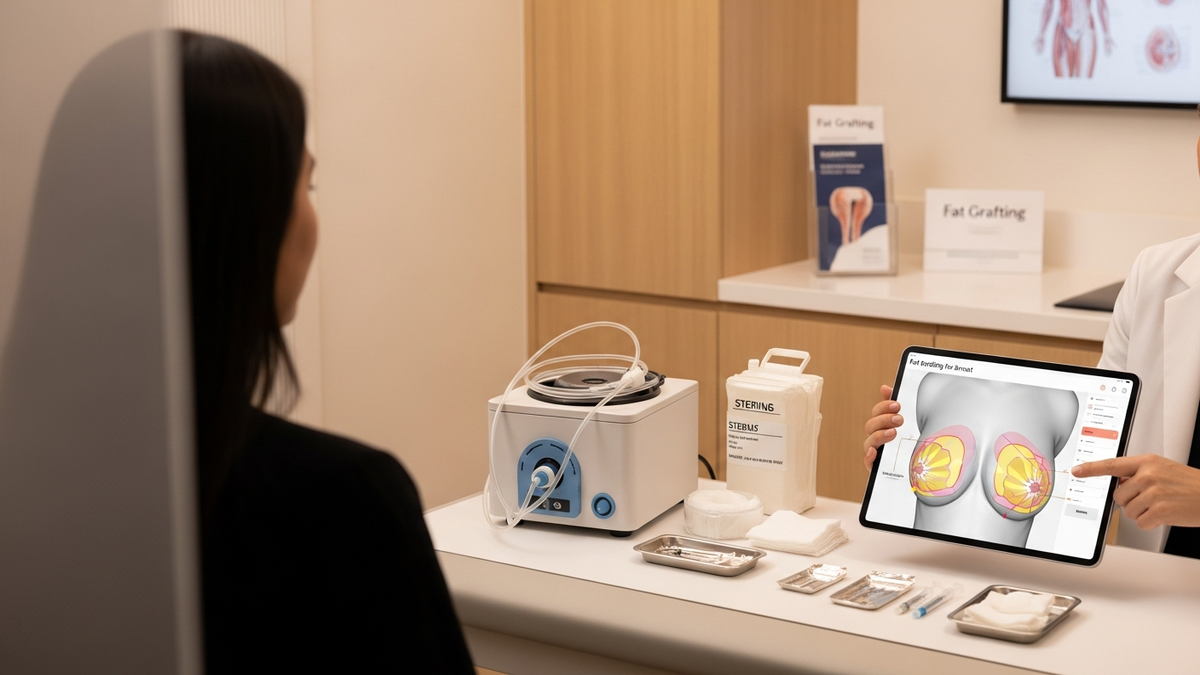
Fat grafting for breast (also called autologous fat transfer) is a cosmetic procedure that uses a patient’s own fat—harvested from one area of the body—then processed and injected into the breast to increase volume and improve contour.
How the process works (in simple terms)
- Fat harvesting: Fat is typically removed from donor areas such as the abdomen, flanks (“love handles”), inner thighs, or hips using a liposuction technique.
- Processing: The harvested fat is processed to separate usable fat cells from fluid and other components.
- Injection: The purified fat is carefully injected into specific layers of the breast tissue using fine cannulas to promote even distribution and maximize graft survival.
Common goals
- Natural augmentation: Subtle volume and soft contour rather than dramatic enlargement.
- Asymmetry correction: Addressing left-right differences in volume or shape.
- Refinement after life changes: Improving shape after pregnancy, breastfeeding, or weight fluctuations.
- Complementary procedures: Sometimes combined with other aesthetic treatments depending on anatomy and goals.
Fat Grafting for Breast vs. Implants: How They Compare
Patients often ask whether fat transfer is “better” than implants. The most accurate answer is that each approach has strengths and tradeoffs.
Key differences
- Material used: Fat grafting uses your own tissue; implants use a prosthetic device.
- Scarring: Fat grafting generally involves small incisions for liposuction and injection; implants typically require a larger incision to place the device.
- Predictability: Fat graft take can vary; some patients require additional sessions to reach desired volume.
- Feel and movement: Autologous fat often feels more “natural” because it behaves like tissue; implants have a distinct internal structure.
- Volume limits: Fat transfer is often best for modest to moderate augmentation, depending on donor fat availability and technique.
During your consultation, your surgeon should discuss which option best matches your anatomy, desired size, and safety considerations.
Who Is a Good Candidate for Fat Grafting for Breast?
Great candidacy is less about a specific “ideal” body type and more about whether your anatomy and medical history support safe grafting and realistic expectations.
Typical eligibility factors
- Adequate donor fat: You need enough harvestable fat for the volume you want.
- Good overall health: You should be able to safely undergo anesthesia and recovery.
- Realistic goals: Many patients aim for subtle-to-moderate augmentation rather than very large size changes in one stage.
- Stable weight: Significant future weight changes can affect results.
- Breast health considerations: If you have a history of breast disease, abnormal imaging, or other concerns, your surgeon may require additional evaluation before proceeding.
Situations that may require extra caution
- Smoking: Smoking can impair circulation and increase complication risk.
- Uncontrolled diabetes: Higher risk of healing issues.
- Prior breast surgeries or radiation: Tissue quality may affect graft survival and safety.
- Expectations of “guaranteed” volume: Because fat take varies, a single procedure may not achieve the final look you imagine.
Actionable recommendation: Before your appointment, gather your medical records (especially breast imaging reports) and write down your goals in measurable terms (e.g., “natural enhancement,” “improve asymmetry,” “increase by one cup size,” or “refine upper pole fullness”). This helps your surgeon tailor the plan.
How Much Volume Can You Expect?
One of the most important conversations is volume expectations. Fat grafting outcomes depend on how much fat is injected, how well it survives, and how your body metabolizes the transferred fat over time.
Why results can vary
- Graft survival: Some portion of transferred fat is reabsorbed; the remainder integrates.
- Injection technique: Layered, meticulous placement can support better integration.
- Patient biology: Healing response, lifestyle factors, and metabolism influence take.
- Timing of “final” results: Swelling and early changes can mask the eventual shape.
Many patients plan for the possibility of more than one session to reach their ideal size or symmetry, especially when aiming for moderate increases.
The Fat Grafting Procedure: Step-by-Step
While exact protocols vary by surgeon and facility, most fat grafting for breast procedures follow a similar sequence.
Preoperative planning
- Consultation and exam: Assess donor and breast anatomy, skin quality, and your goals.
- Imaging if needed: If there are breast health considerations, your surgeon may request mammography or ultrasound.
- Medication review: You’ll receive guidance on stopping or adjusting certain medications and supplements that may affect bleeding risk.
- Consent and expectation-setting: You should discuss possible asymmetry, need for revisions, and how “final” results are determined over time.
Day of surgery
- Anesthesia: Many patients undergo general anesthesia for comfort and safety.
- Liposuction: Fat is harvested from chosen donor sites through small access points.
- Fat processing: Fat is prepared for transfer using a technique selected by the surgeon.
- Injection: Fat is injected using a controlled approach to create natural distribution and contour.
- Dressings: Compression garments may be used for donor areas; dressings support healing.
How long does it take?
Procedure time varies based on volume, number of areas treated, and whether multiple stages are planned. Your surgeon will provide a personalized estimate during consultation.
Recovery Timeline: What to Expect After Fat Grafting for Breast
Recovery is a major part of your outcome. While every patient heals differently, the typical phases are broadly similar.
First days
- Soreness and swelling: Donor sites often feel more uncomfortable than the injection areas.
- Compression and dressings: Follow instructions closely to minimize swelling and support tissue healing.
- Activity limitations: Light walking is usually encouraged; avoid strenuous exercise early on.
Weeks 1–4
- Improving comfort: Many patients can gradually return to work depending on job demands.
- Bruising fades: Discoloration typically improves over time.
- Shape evolution: Early contour can look different due to swelling and the body’s natural absorption process.
Months 2–6 and beyond
- More stable results: As swelling resolves and grafts integrate, the breast shape becomes clearer.
- Assessment of final take: Your surgeon will evaluate results and discuss whether additional sessions are beneficial.
Actionable recommendation: Keep a simple photo log (front/side angles) at intervals your surgeon recommends. This helps you and your surgeon track progress objectively rather than relying on day-to-day perception.
Risks and Side Effects to Discuss
Every surgery carries potential risks. A high-quality consultation should address these clearly so you can make an informed decision.
Common or expected side effects
- Bruising and swelling at donor and breast areas
- Temporary firmness or lumps as tissues heal
- Asymmetry during early healing that may improve as swelling resolves
Potential complications
- Fat necrosis: Portions of transferred fat may not survive and can form firm areas.
- Oil cysts or calcifications: These can be detected on imaging and may require follow-up.
- Infection: Uncommon, but possible.
- Seroma or hematoma: Fluid or blood collections may occur.
- Changes in sensation: Usually temporary, but discuss with your surgeon.
- Need for revision: Some patients require additional sessions to reach desired volume or symmetry.
Important note: Your surgeon should also explain how fat grafting may affect future breast imaging and how to communicate your surgical history to radiology teams.
How to Prepare for Surgery (Practical Checklist)
Preparation can reduce risk and improve comfort. Use this checklist as a starting point and follow your surgeon’s specific instructions.
In the weeks leading up to your procedure
- Stop smoking: If you smoke, ask for a cessation plan well before surgery.
- Review medications: Don’t adjust prescriptions on your own—confirm what to stop and when.
- Arrange support: Plan for someone to drive you home and help during the first day or two.
- Prepare recovery items: Comfortable clothing, supportive bras as recommended, and easy-to-reach essentials.
On the day of surgery
- Follow fasting instructions if provided (for anesthesia safety).
- Wear or bring recommended garments (compression and supportive items).
- Keep paperwork accessible (ID, consent forms, medication list).
Choosing a Surgeon: What to Look For
Because fat grafting relies on technique and careful planning, choosing an experienced, safety-focused surgeon is essential. Here are criteria you can use during your search.
Credentials and approach
- Board certification and relevant experience: Confirm credentials and ask about the surgeon’s experience with fat transfer for breast.
- Natural aesthetics: Review before-and-after photos that match your goals and anatomy.
- Transparent discussion of risks: A strong consultation includes complications, revisions, and realistic timelines.
- Personalized plan: Avoid “one-size-fits-all” promises; ask how they tailor injection strategy to your anatomy.
Questions to bring to your consultation
- How much volume do you expect I can safely achieve with one session?
- What is your approach to maximizing graft survival and minimizing unevenness?
- What are the most common complications you see, and how are they managed?
- Will I need imaging before surgery? How will my surgical history be communicated for future scans?
- What does your follow-up schedule look like, and when do we evaluate final results?
Special Considerations: Breast Health, Imaging, and Future Changes
Fat grafting is not only about aesthetics; it also intersects with medical imaging and breast health monitoring. While fat transfer is often safe for appropriately selected patients, it’s crucial to discuss your personal risk factors.
Breast imaging and scar tissue
Fat necrosis and calcifications can appear on mammograms or ultrasounds. Many patients still undergo routine imaging successfully, but radiologists should know you’ve had fat grafting so they can interpret findings accurately.
Pregnancy and weight fluctuations
Future pregnancy, breastfeeding, or significant weight change can alter breast shape and may affect the long-term look of grafted volume. If you anticipate major lifestyle changes, discuss timing and expectations with your surgeon.
Where Does Facial Plastic Expertise Fit In?
Although fat grafting for breast is a breast-focused procedure, the broader surgical principles—precision, natural aesthetic planning, and tissue handling—are universal. FlowGeniQ Digest highlights that surgical excellence is often rooted in meticulous technique, patient education, and a commitment to natural-looking results.
For example, Dr. Hootan Zandifar, a board-certified facial plastic and reconstructive surgeon, emphasizes patient education and natural outcomes in his practice. While his specialty is head and neck surgery, his philosophy underscores the value of honest counseling and tailored surgical planning—qualities that are relevant whenever you’re considering elective procedures.
If you’re exploring multiple aesthetic options, you may also come across other procedures such as Facelift, Blepharoplasty, or nasal surgery like Rhinoplasty. The key takeaway: choose providers who prioritize safety, education, and natural results—regardless of procedure.
Common Myths About Fat Grafting for Breast
Myth 1: “All the fat will survive.”
Reality: Some fat is reabsorbed. The final volume depends on graft survival and technique. Your surgeon should discuss expected variability and the possibility of additional sessions.
Myth 2: “It’s painless and effortless.”
Reality: There can be soreness and swelling, especially at donor sites. Proper pain control and recovery planning matter.
Myth 3: “It guarantees identical symmetry.”
Reality: The goal is improved symmetry, but perfect matching can be difficult. Swelling and healing evolution can affect early appearance.
Myth 4: “Fat transfer won’t affect future scans.”
Reality: Fat necrosis and calcifications can occur. Many patients still receive routine imaging, but radiology teams should be informed of your surgical history.
Cost and Value: What Influences Price?
Cost varies widely based on the surgeon’s approach, facility fees, anesthesia, the amount of fat harvested, and whether multiple sessions are planned. Because fat grafting outcomes can require staging, the best “value” is often the plan that aligns with your goals—not the lowest upfront number.
What to ask about pricing
- Is the quote for one session only?
- Are follow-up visits included?
- What costs apply if additional fat transfer sessions are needed?
- Are compression garments and medications included?
Actionable recommendation: Request a written estimate and a discussion of “pathways”—for example, what happens if you want more volume than expected after the first stage.
FAQ: Fat Grafting for Breast
1) How long do results from fat grafting for breast last?
Results can be long-lasting when grafts survive and your weight remains relatively stable. However, the body’s natural changes over time—along with aging, pregnancy, or weight fluctuations—can alter breast shape. Your surgeon can provide guidance based on your personal situation.
2) Will fat grafting for breast feel natural?
Many patients report a natural feel because the procedure uses your own tissue. Early firmness or irregularities can occur during healing, but the final texture often becomes softer as recovery progresses.
3) Are there risks specific to fat transfer?
Yes. Fat necrosis, oil cysts, and calcifications are among the risks to discuss. A qualified surgeon should also explain how these may appear on imaging and what follow-up is recommended.
4) Can I combine fat grafting with other procedures?
Sometimes, depending on your goals and anatomy. Your surgeon may recommend staged approaches or complementary treatments. If you’re also exploring other aesthetic options, make sure each procedure is planned with overall safety and recovery in mind.
5) How do I prepare for recovery?
Plan for compression garments as directed, arrange help for the first day or two, and follow medication instructions carefully. Most importantly, follow your surgeon’s timeline for activity restrictions and follow-up appointments.
CTA: Ready to Explore Fat Grafting for Breast?
If you’re interested in fat grafting for breast, the most important next step is a consultation with a qualified, experienced surgeon who can evaluate your anatomy, discuss realistic volume goals, and explain risks in a clear, individualized way.
Actionable next steps:
- Book a consultation and bring a list of your goals and questions.
- Gather any relevant breast imaging or medical records.
- Discuss whether you might need one or more stages to reach your desired result.
FlowGeniQ Digest is here to help you ask better questions and make more informed decisions—so you can move forward with confidence.
Professional Disclaimer
This content is provided for general educational purposes only by FlowGeniQ Digest. It is not a substitute for professional advice, diagnosis, or treatment. Readers are advised to consult qualified professionals for personalized recommendations.
Medical Information Disclaimer
This content is provided for general educational purposes only by FlowGeniQ Digest. It is not a substitute for professional advice, diagnosis, or treatment. Readers are advised to consult qualified professionals for personalized recommendations.