Fat grafting cheeks has become one of the most sought-after ways to restore youthful facial volume—because it uses your own tissue. For many patients, the goal isn’t to “add cheekbones” in an exaggerated way; it’s to re-establish balance, soften hollowing, and support a refreshed midface that looks like you—just better.
In this premium, editorial guide from FlowGeniQ Digest, we’ll walk through what fat grafting cheeks involves, who may be a strong candidate, how surgeons plan volume placement, what to expect during recovery, and how to minimize risks. We’ll also cover how cheek fat grafting can complement other facial procedures—so you can make well-informed decisions with your qualified care team.
What Are Fat Grafting Cheeks?
Fat grafting cheeks (also called fat transfer or autologous fat transfer) is a cosmetic procedure in which a surgeon removes fat from one area of the body, purifies it, and then injects it into the cheeks. The transferred fat can help improve contour, fullness, and—when placed thoughtfully—subtle lift and rejuvenation.
Why the cheeks change with age
Cheek volume often diminishes over time due to natural aging processes, genetics, weight changes, and skin laxity. Common concerns include:
- Midface hollowing that can make the lower eyelids look more prominent
- Loss of youthful support around the smile lines and nasolabial region
- Deflation that can reduce facial harmony
- Asymmetry that becomes more noticeable as volume decreases
Fat grafting cheeks targets these issues by replenishing volume with tissue that is biocompatible and naturally integrated—when performed with meticulous technique.
Benefits of Cheek Fat Transfer (Beyond “More Volume”)
Patients typically come to fat grafting cheeks for aesthetic reasons, but the best outcomes often reflect a deeper goal: restoring facial balance. When fat is harvested and placed with precision, it may:
1) Restore natural cheek contour
Unlike some fillers that can look “added,” autologous fat can blend with surrounding tissues for a soft, organic look—especially when volume distribution is individualized to your anatomy.
2) Support subtle lift in the midface
Cheek fat grafting can be strategically layered to help improve the appearance of sagging or descent. While fat transfer isn’t a substitute for a facelift in all cases, it can meaningfully enhance midface support.
3) Use your own tissue
Because the material comes from you, many patients prefer fat grafting as a more “personal” approach compared to synthetic materials. That said, the procedure still requires careful technique to optimize fat survival and minimize irregularities.
4) Long-term potential
Fat grafts may provide longer-lasting improvement than temporary fillers, though longevity varies. Some of the transferred fat may not survive; experienced surgeons plan and place volume accordingly.
Who Is a Good Candidate for Fat Grafting Cheeks?
The best candidates for fat grafting cheeks generally have:
- Moderate volume loss where restoring structure will improve facial harmony
- Some accessible donor fat for harvest (commonly abdomen, thighs, or flanks)
- Realistic expectations about what fat transfer can achieve
- Good skin quality and overall health to support healing
- Commitment to post-op care (compression, follow-up, and activity restrictions)
During consultation, your surgeon will assess facial anatomy, skin quality, bone structure, and the specific areas of volume depletion. They’ll also discuss whether a combined approach is best—for example, pairing cheek fat grafting with other rejuvenation options.
When fat grafting may not be enough
Some patients need additional procedures to address skin laxity or deeper structural changes. For instance:
- Significant skin sagging may be better treated with a Facelift (or other tightening procedures), with fat grafting used to refine volume and contour.
- Prominent eyelid issues may require eyelid surgery such as Blepharoplasty to refresh the upper and/or lower eye area—often a complementary step alongside midface rejuvenation.
- Functional or structural nasal concerns may be addressed with Rhinoplasty, if appropriate for the overall aesthetic plan.
How Surgeons Plan Fat Grafting Cheeks
Natural-looking results depend on planning—not just injecting fat. A high-quality consultation typically includes:
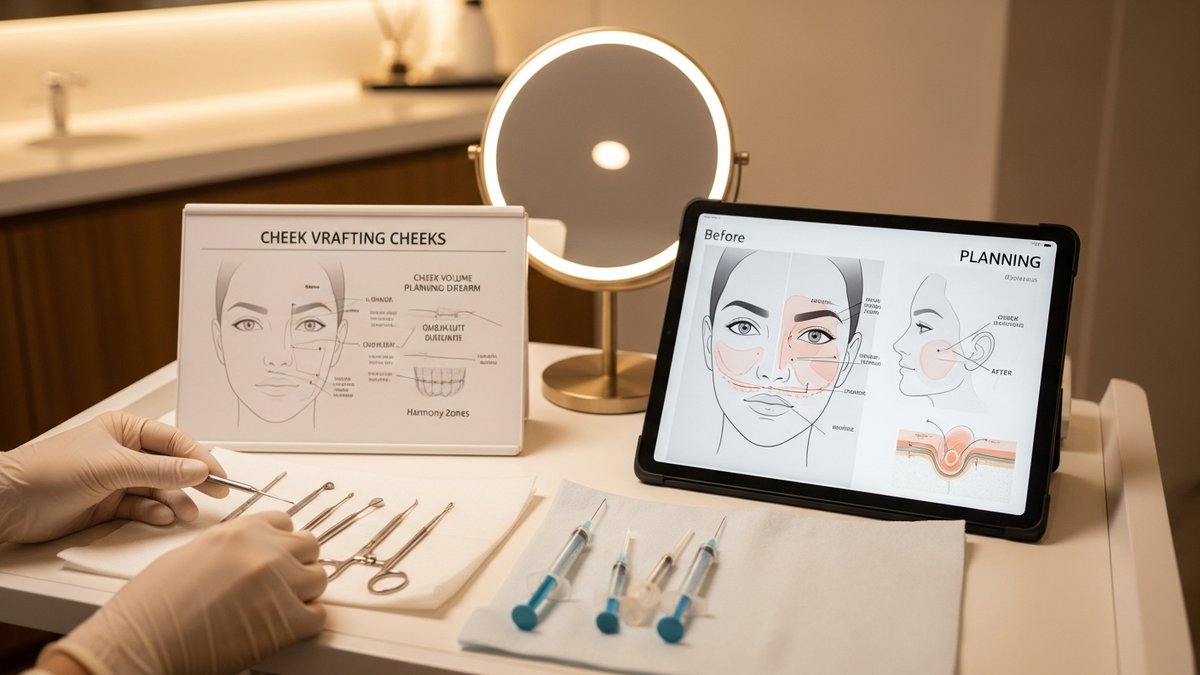
Facial mapping and volume strategy
Your surgeon may evaluate cheek shape in multiple positions (front, oblique, smiling) and consider how your cheeks interact with your eyes, lips, and jawline. The plan often includes:
- Identifying hollowing patterns (e.g., under-eye support vs. lateral cheek fullness)
- Choosing injection planes based on anatomy and desired effect
- Determining volume targets to avoid overfilling
Donor site selection and fat quality
Fat grafting cheeks begins with fat harvesting. The surgeon selects a donor area with suitable fat characteristics and uses a technique designed to preserve fat cell viability. Factors like gentle handling, appropriate purification, and preparation influence outcomes.
Managing asymmetry
Many people have subtle left-right differences. Surgeons often plan to correct asymmetry carefully, aiming for balance while avoiding “mirror” overcorrection.
The Fat Grafting Cheeks Procedure: Step by Step
While protocols vary by surgeon and patient needs, fat grafting cheeks generally follows a structured process:
1) Pre-operative evaluation
Your surgeon will review your medical history, medications, and goals. You may receive instructions about stopping certain medications or supplements that can increase bleeding risk. Photographs and measurements are often taken for planning and documentation.
2) Fat harvesting
Fat is commonly harvested using a minimally invasive technique. The goal is to collect fat safely while preserving the viability of fat cells.
3) Processing and purification
The harvested fat is then processed to remove unwanted components. The degree of processing and the method used can affect how the graft behaves after injection.
4) Injection (layered placement)
Your surgeon injects the purified fat using fine cannulas or needles in carefully selected planes. Many surgeons use a layered, micro-droplet strategy to improve graft survival and reduce the risk of lumps.
5) Recovery monitoring
After the procedure, you’ll be monitored and given post-operative care instructions. Follow-up visits help assess swelling, contour, and overall healing.
Recovery Timeline: What to Expect After Fat Grafting Cheeks
Recovery varies, but many patients can anticipate a predictable pattern of swelling and gradual improvement.
First 24–72 hours
- Swelling and bruising are common in both the donor and cheek areas.
- You may feel tightness or mild discomfort, managed with prescribed or recommended medications.
Days 4–14
- Swelling often begins to settle, though fullness may still be noticeable.
- Most patients gradually return to non-strenuous activities as directed.
- Your surgeon may advise gentle facial care and specific sleeping positions.
Weeks 2–6
- Contour continues to refine as residual swelling decreases.
- Some patients notice that the cheeks look slightly different as the body “adapts” to the graft.
3–6 months (and beyond)
Final results typically emerge as the graft stabilizes. Fat grafting cheeks is a process—patients usually evaluate true outcomes over several months, not days.
Risks and Side Effects of Cheek Fat Transfer
All surgical procedures carry risks. Understanding them helps you weigh benefits responsibly. Potential risks associated with fat grafting cheeks may include:
- Swelling and bruising (expected, usually temporary)
- Lumps or uneven texture if graft placement or survival is irregular
- Fat resorption where some transferred fat doesn’t survive, requiring additional refinement
- Infection (uncommon, but possible)
- Asymmetry that may require touch-up
- Scarring at donor and injection sites (often minimal with refined techniques)
Choosing an experienced facial plastic surgeon and following post-op instructions can significantly reduce complications.
How to Get the Most Natural Result
Natural-looking fat grafting cheeks outcomes are strongly influenced by technique and patient factors. Here are actionable recommendations:
1) Choose a surgeon who specializes in facial aesthetics
Cheek contour is complex. You want a clinician who understands midface anatomy, vascular considerations, and how volume affects expression and proportions.
2) Discuss your goals in detail
Bring reference photos and explain what you want to change (e.g., “restore under-cheek support” or “soften hollowing”). A good consult translates goals into an injection plan—without overpromising.
3) Avoid unrealistic “maximum volume” expectations
More isn’t always better. Overfilling can create an unnatural fullness or weighty look. Skilled surgeons aim for harmony with your existing structure.
4) Follow recovery instructions closely
Compression, sleeping positioning, and activity limitations aren’t arbitrary—they help healing and graft stabilization.
5) Plan for refinement if needed
Some patients benefit from a staged approach, especially if they want subtle, high-precision contour changes.
Fat Grafting Cheeks vs. Dermal Fillers
Patients often compare fat grafting cheeks to hyaluronic acid or other dermal fillers. While both can enhance cheek volume, they differ in material, longevity, and integration.
Fat grafting (autologous fat)
- Uses your own fat tissue
- Can provide longer-lasting volume for many patients
- Requires a surgical harvest and injection process
Dermal fillers
- Often done in-office with minimal downtime
- Results can be adjusted with repeat treatments
- Longevity varies by product and metabolism
Your surgeon can help determine which option aligns best with your anatomy, desired outcome, and timeline.
Combining Cheek Fat Transfer With Other Head-and-Neck Procedures
Facial rejuvenation is rarely one-size-fits-all. Depending on your goals, cheek fat grafting may be paired with other procedures to create a cohesive, refreshed look.
Midface enhancement and eyelid rejuvenation
When under-eye support is compromised, some patients benefit from combining midface volume restoration with Blepharoplasty. This can improve the transition between the lower eyelids and cheeks.
Structural facial rejuvenation
If skin laxity and deeper sagging are present, cheek fat grafting may complement a Facelift strategy. Volume restoration can refine contours while tightening addresses the underlying support.
Nasal harmony and overall facial aesthetics
Facial proportions work as a system. For patients who also desire nasal refinement, Rhinoplasty may be discussed as part of a broader aesthetic plan.
Note: If you’re exploring head-and-neck surgical options, it’s helpful to work with a team that prioritizes both aesthetics and function—so your results look natural from every angle.
Where FlowGeniQ Digest Fits In
At FlowGeniQ Digest, we focus on helping readers understand procedures in plain language—so you can ask better questions and feel more confident during your consultation. This article is designed to ground your expectations around fat grafting cheeks, including what matters most: candidacy, surgical planning, recovery, and risk awareness.
Questions to Ask at Your Consultation
To make your visit more productive, consider asking:
- How do you plan volume placement for my specific cheek anatomy?
- What technique do you use to harvest and process fat?
- What results should I expect in the first 2–6 weeks vs. 3–6 months?
- How often do patients need a touch-up?
- What risks are most relevant for me, and how do you reduce them?
Related Procedures You May Encounter in a Broader Facial Plan
While this guide focuses on fat grafting cheeks, patients sometimes explore other facial procedures depending on their concerns. For example:
- Hair restoration options like hair transplant may be considered when hairline or density changes affect overall appearance.
- For eyebrow thinning, an eyebrow transplant can help restore facial framing.
- For nasal obstruction or structural concerns, options like Septoplasty or addressing a Deviated Septum may be discussed alongside cosmetic goals.
FAQ: Fat Grafting Cheeks
How long do results from fat grafting cheeks last?
Results can be long-lasting, but longevity varies because some of the transferred fat may naturally resorb. Many patients see the most stable outcome after several months, and some require refinement depending on their goals and graft survival.
Will fat grafting cheeks look lumpy or uneven?
When performed with refined technique and careful injection planning, lumps are less likely. However, temporary swelling and normal healing can affect texture early on. Persistent irregularities, if they occur, can often be addressed with follow-up care.
Is fat grafting cheeks painful?
Most patients experience manageable discomfort with medications and local anesthesia strategies. Donor site tenderness can also occur. Your surgeon will provide a tailored pain-control plan.
How soon can I return to work or social events?
Many people return to work within about 1–2 weeks, depending on the extent of swelling and bruising and the demands of their job. Full recovery and final contour assessment typically takes longer.
Can fat grafting cheeks be combined with other procedures?
Yes. Many patients combine midface volume restoration with procedures like eyelid surgery or facelifts, depending on their needs. A qualified surgeon can recommend an approach that prioritizes safety, healing, and natural harmony.
CTA: Ready to Explore Fat Grafting Cheeks?
If you’re considering fat grafting cheeks, the most important next step is a personalized consultation with a qualified facial aesthetic specialist. A thorough evaluation can clarify candidacy, discuss realistic outcomes, and outline a plan tailored to your anatomy and goals.
Schedule your consultation to review your concerns, ask questions about technique and recovery, and determine whether cheek fat transfer—or a combined facial rejuvenation plan—is the right fit for you.
Professional Disclaimer
This content is provided for general educational purposes only by FlowGeniQ Digest. It is not a substitute for professional advice, diagnosis, or treatment. Readers are advised to consult qualified professionals for personalized recommendations.
Medical Information Disclaimer
This content is provided for general educational purposes only by FlowGeniQ Digest. It is not a substitute for professional advice, diagnosis, or treatment. Readers are advised to consult qualified professionals for personalized recommendations.