Source: FlowGeniQ Digest
When people think about facial rejuvenation, they often picture dramatic change. But the most satisfying results are frequently the ones that look effortless—subtle restoration of youthful volume, smoother texture, and balanced facial contour. That’s where facial fat grafting stands out: it uses your own harvested fat to replenish areas that have thinned over time, supporting a natural, harmonious look.
In Los Angeles and beyond, patients seek facial plastic and reconstructive expertise to address volume loss from aging, weight fluctuation, or previous procedures. In this premium guide, we’ll break down what facial fat grafting is, who may be a good candidate, how the process works, what recovery looks like, and what risks you should understand before moving forward.
What Is Facial Fat Grafting?
Facial fat grafting (also called fat transfer or autologous fat transfer) is a cosmetic procedure in which fat is harvested from one part of the body, processed, and then carefully injected into targeted facial areas. Because the material comes from the patient’s own tissue, it can integrate into the surrounding environment and help restore volume where it’s been lost.
Why volume loss changes the face
As we age, fat compartments can shrink and shift. Fine lines may deepen, hollows can appear, and the face can lose its youthful “fullness.” Fat grafting addresses this by replacing volume in a way that can look soft rather than “overfilled.”
Common treatment areas
Facial fat grafting is often used to support:
- Cheeks and midface to improve hollowness or sagging
- Under-eye hollows (in carefully selected patients and with appropriate technique)
- Temples to restore youthful contour
- Nasolabial folds and marionette lines (for selected cases)
- Lips and perioral region to enhance subtle fullness or contour
- Jawline definition when volume balance is part of the aesthetic plan
Because the face is not one “unit,” the best results typically come from mapping the underlying volume strategy—often as part of an overall facial rejuvenation plan that may include other procedures when appropriate.
How Facial Fat Grafting Works: The Science in Plain Language
Fat grafting is more than “injecting fat.” It’s a controlled process designed to preserve viable fat cells and support graft survival. While individual results vary, the goal is to create a natural-looking restoration that blends with your facial anatomy.
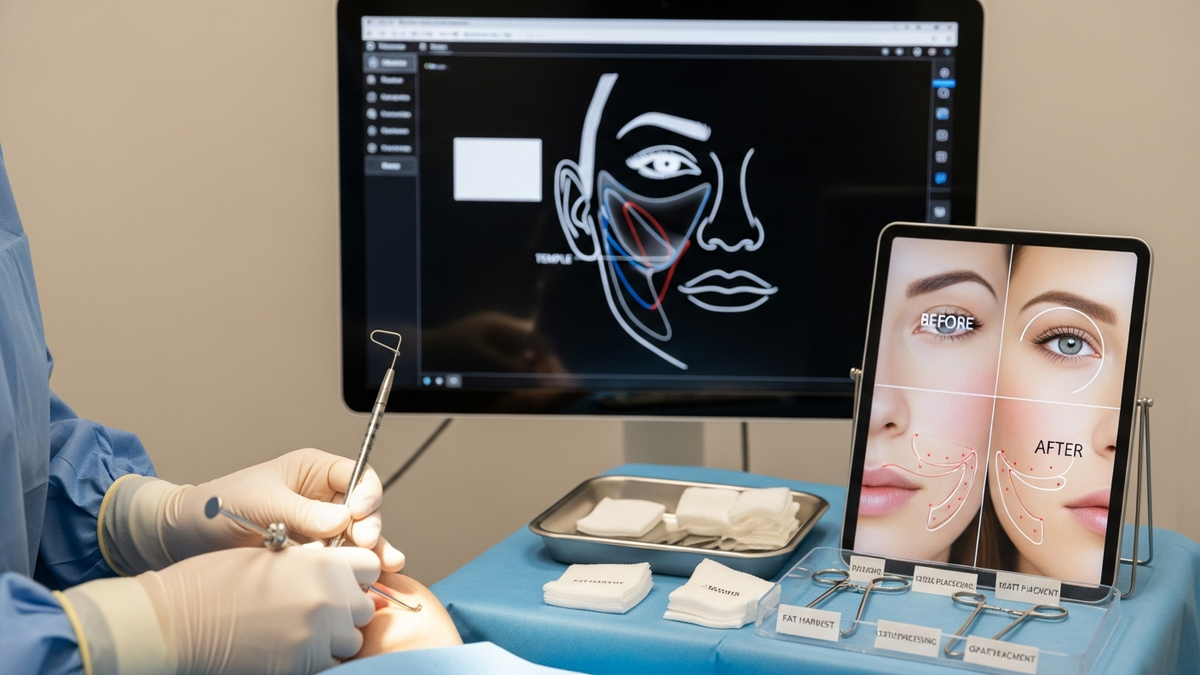
Step-by-step procedure overview
- Consultation and facial assessment
- Surgeon evaluates facial proportions, skin quality, and areas of volume loss.
- Discusses medical history, prior surgeries, medications, and realistic expectations.
- Harvesting
- Fat is typically collected using a minimally invasive technique from an appropriate donor area (often abdomen, thighs, or flanks).
- Gentle handling aims to preserve fat cell viability.
- Processing
- Collected fat is processed to separate desired components and remove unwanted fluid or debris.
- Different processing methods exist; technique selection can influence outcomes.
- Injection and layering
- Fat is carefully placed using structured injection patterns.
- Layering may help improve integration and reduce irregularities.
- Post-procedure monitoring
- You’ll receive tailored instructions for swelling, bruising, and activity restrictions.
What “take” means
Not every injected fat cell will survive. Some degree of resorption is expected, which is why surgeons often plan for the typical percentage of graft retention. In many cases, additional refinement sessions may be discussed after early healing to optimize symmetry and volume balance.
Facial Fat Grafting vs. Dermal Fillers
Patients often compare fat grafting with injectable dermal fillers. Both can restore volume, but they differ in composition, longevity expectations, and the way results develop.
Key differences
- Source of material: Fat grafting uses your own fat; fillers use manufactured substances.
- Integration: Fat grafting relies on biological integration; fillers do not “take” the same way.
- Timeline: Fat grafting results evolve as swelling resolves and grafts stabilize.
- Longevity: Fat grafting may offer longer-lasting volume for some patients, but retention varies.
For some people, a combined strategy—using both fat grafting and carefully chosen fillers—may create the most balanced, natural outcome. Your surgeon can recommend what’s appropriate based on your facial anatomy and goals.
Who Is a Good Candidate for Facial Fat Grafting?
The best candidates tend to have specific volume-loss patterns and realistic expectations about healing and variability.
Common candidacy factors
- Visible volume loss in the midface, cheeks, temples, or other targeted areas
- Enough donor fat to harvest safely
- Good overall health and ability to follow pre- and post-op instructions
- Realistic expectations about the natural look and the possibility of needing refinement
- Stable lifestyle (rapid weight changes can affect volume balance)
Situations that require extra evaluation
Certain conditions may affect planning or timing, such as:
- Uncontrolled medical issues
- Smoking or nicotine exposure (which can compromise healing)
- History of complications from prior facial injections
- Active skin infections or inflammatory conditions
A thorough evaluation is essential to determine whether facial fat grafting is the right primary approach or whether another technique—like a Facelift for skin and tissue repositioning—might better address your goals.
Benefits of Facial Fat Grafting
When performed with meticulous technique and an individualized plan, facial fat grafting can offer meaningful aesthetic benefits.
Natural contour and soft texture
Because the filler material is living tissue, the results can look and feel more natural than some alternatives—especially when volume is restored in harmony with facial anatomy.
Dual-purpose approach
Fat is harvested from a donor area and then used to enhance the face. Many patients appreciate the idea that the procedure can address two goals at once—refining a donor region while restoring facial volume.
Potential for long-term improvement
While results vary, successful graft retention can provide sustained volume. Some patients also benefit from the biological environment created by fat transfer, which may support skin quality over time.
Risks and Side Effects You Should Know
Every surgical procedure involves risks. Understanding them helps you weigh benefits against potential downsides and make an informed decision.
Common, typically temporary effects
- Swelling and bruising
- Temporary tenderness
- Asymmetry during early healing
- Changes in sensation at injection or harvest sites
Potential complications (rare, but important)
- Fat necrosis (localized areas where fat does not survive)
- Oil cysts or lumps
- Irregular contour if graft placement is uneven
- Infection (risk reduced with sterile technique and appropriate aftercare)
- Scarring at harvest sites
- Vascular complications are uncommon but are a serious consideration in facial injection procedures—this is why technique and anatomy-specific expertise matter
Your surgeon should explain how they mitigate risks through careful planning, injection strategy, and post-op monitoring.
What to Expect During Recovery
Recovery from facial fat grafting typically includes a period of swelling and bruising, followed by gradual improvement as healing progresses.
Typical recovery timeline (general guidance)
- First few days: swelling and bruising; limited activity
- Week 1–2: many patients return to light social activities as swelling decreases
- Weeks 3–6: continued contour refinement as tissues settle
- 3–6 months: more stable, mature result as graft integration becomes clearer
Aftercare essentials
Follow your surgeon’s instructions closely. In general, aftercare may include:
- Keeping head elevated to reduce swelling
- Using prescribed medications as directed
- Avoiding strenuous exercise for a recommended period
- Attending follow-up visits for assessment and guidance
When to call your surgeon
Contact your medical team promptly if you experience severe pain, fever, rapidly worsening swelling, or any concerns that feel out of proportion to expected healing.
Cost of Facial Fat Grafting: What Influences Pricing?
Pricing for facial fat grafting can vary widely based on several factors. Instead of focusing only on the lowest quote, consider what’s included—surgeon expertise, facility fees, anesthesia, and the overall surgical plan.
Common cost drivers
- Treated areas and volume (how much fat is needed)
- Number of sessions (some patients may need refinement)
- Harvest donor sites (and whether multiple areas are used)
- Anesthesia plan
- Facility and geographic location
- Surgeon’s technique and experience
For the most accurate estimate, schedule a consultation. A comprehensive evaluation helps your surgeon recommend the right approach—whether fat grafting alone is sufficient or whether a Blepharoplasty or other procedures might better complement the volume restoration plan.
Choosing a Surgeon for Facial Fat Grafting (Los Angeles Focus)
Facial fat grafting is highly technique-dependent. The right surgeon doesn’t just inject fat—they design a volume strategy, manage graft survival, and consider the entire face for balanced aesthetics.
What to look for in a qualified facial plastic surgeon
- Specialized head-and-neck or facial plastic expertise (not just general aesthetics)
- Demonstrated natural-looking results across a range of patients
- Transparent education about risks, limitations, and expected timelines
- A personalized plan based on your anatomy—not a one-size approach
- Strong patient communication before and after surgery
Why board certification and facial focus matter
In Beverly Hills and throughout Los Angeles, patients often seek surgeons with rigorous training in facial anatomy and reconstructive principles. For example, Dr. Hootan Zandifar, MD, FACS is a board-certified facial plastic and reconstructive surgeon who focuses exclusively on cosmetic and reconstructive surgery of the head and neck. This focused expertise supports natural, harmonious outcomes—especially for patients interested in anti-aging techniques that restore a fresh, youthful appearance.
Dr. Zandifar emphasizes honest, trustworthy, and compassionate care, along with patient education to help individuals make well-informed decisions. If your goals include volume restoration as part of a broader facial rejuvenation plan, a surgeon who understands facial balance across multiple dimensions can be a major advantage.
Facial Fat Grafting and Other Procedures: Building a Full Rejuvenation Plan
Facial rejuvenation is rarely about one single technique. Depending on your goals—such as skin laxity, eyelid changes, nasal alignment, or brow position—fat grafting may be used alongside other procedures.
When fat grafting pairs well with a facelift
If you have both volume loss and skin/tissue laxity, a Facelift may address sagging while fat grafting restores lost fullness. Together, these approaches can create a more complete and youthful balance.
When eyelid rejuvenation complements volume restoration
Under-eye hollows can be influenced by both volume and eyelid anatomy. A targeted Blepharoplasty may improve the under-eye area’s structure, while fat grafting can address contour and hollowness in selected cases.
Nasal harmony and facial aesthetics
Some patients pursue facial harmony across the entire face. While facial fat grafting focuses on volume, nasal structure can influence overall aesthetic balance. For patients considering nasal refinement, options like Rhinoplasty may be discussed as part of a comprehensive plan.
Breathing function considerations
For patients with functional issues, surgeons may evaluate nasal anatomy such as septal deviation. If indicated, procedures like Septoplasty (including management of a Deviated Septum) can help support breathing alongside aesthetic goals.
Preparing for Facial Fat Grafting: Actionable Recommendations
Preparation influences safety and outcomes. While your surgeon will provide personalized instructions, these practical steps can help you get ready.
Before your consultation
- Review your medical history and list all medications, supplements, and allergies.
- Bring photos of your face from different angles (including lighting variations).
- Write down your goals and any concerns about symmetry or naturalness.
- Be honest about prior injections or surgeries and when they occurred.
In the weeks leading up to surgery
- Follow medication guidance from your surgeon (especially regarding blood thinners).
- Avoid nicotine exposure if advised—smoking can impair healing.
- Plan for time off work and help at home during the initial recovery period.
- Arrange transportation for the day of surgery if sedation is used.
During recovery: support graft survival
While you can’t control everything, you can control adherence to aftercare. Your surgeon’s guidelines on activity restriction, head elevation, and follow-up visits help reduce risks and support stable healing.
Facial Fat Grafting: Results, Timeline, and Realistic Expectations
One of the most common questions is: “When will I look like myself?” The answer depends on swelling, bruising, and graft integration.
How results typically evolve
- Early phase: swelling can temporarily exaggerate volume
- Intermediate phase: some volume decreases as swelling resolves and grafts stabilize
- Mature phase: final contour refinement becomes clearer over months
Natural-looking outcomes come from balance
Natural results are not about maximizing volume. They’re about restoring proportions—so the face looks refreshed rather than “filled.” A skilled surgeon evaluates how your facial features interact at rest and in motion.
Related Topics: Facial Harmony Beyond Volume
Some patients exploring facial rejuvenation also consider complementary procedures. For example, eyebrow thinning can affect facial expression and perceived age. In appropriate cases, an eyebrow transplant may help restore framing. Hair restoration options may also be explored through a hair transplant service depending on the condition being addressed.
Similarly, if you’re addressing broader aesthetic concerns, your surgeon may recommend a combination plan tailored to your priorities—always with safety and natural outcomes in mind.
FAQs About Facial Fat Grafting
1) How long does facial fat grafting last?
Results vary because graft retention differs from person to person. Many patients experience longer-lasting volume compared with temporary fillers, but some resorption is expected. Your surgeon may recommend refinement if additional volume balancing is needed after healing.
2) Will facial fat grafting look natural?
When performed with careful planning and appropriate technique, facial fat grafting can produce a soft, natural look that blends with your facial anatomy. The goal is harmonious volume restoration—not overcorrection.
3) Is facial fat grafting painful?
Most patients experience manageable discomfort during recovery, typically controlled with prescribed medications. Swelling and bruising are common early on, but pain usually improves steadily.
4) What are the main risks?
Common side effects include swelling and bruising. Less common risks include lumps, fat necrosis, infection, contour irregularities, and—rarely—more serious complications related to injection technique. Choosing an experienced facial plastic surgeon and following aftercare guidance can reduce risk.
5) Can facial fat grafting be combined with other procedures?
Yes. Many patients benefit from a comprehensive approach. Depending on your goals, facial fat grafting may be paired with procedures such as blepharoplasty, a facelift, or rhinoplasty for overall facial harmony.
CTA: Ready to Explore Facial Fat Grafting?
If you’re considering facial fat grafting to restore volume, soften lines, and enhance facial contour, the next step is a personalized consultation. A qualified facial plastic surgeon can assess your anatomy, discuss realistic outcomes, and recommend the safest, most natural plan for your goals.
Take action today: schedule an appointment to talk through your concerns, review your medical history, and create a tailored rejuvenation strategy. FlowGeniQ Digest encourages you to approach cosmetic decisions with education and confidence—so you can move forward with clarity.
Professional Disclaimer
This content is provided for general educational purposes only by FlowGeniQ Digest. It is not a substitute for professional advice, diagnosis, or treatment. Readers are advised to consult qualified professionals for personalized recommendations.
Medical Information Disclaimer
This content is provided for general educational purposes only by FlowGeniQ Digest. It is not a substitute for professional advice, diagnosis, or treatment. Readers are advised to consult qualified professionals for personalized recommendations.