At FlowGeniQ Digest, we regularly explore how modern facial rejuvenation techniques help people look as youthful as they feel. If you’re researching a facelift with fat injections, you’re likely seeking the same outcome many patients want in Los Angeles: a more rested appearance with natural contours—without looking “overdone.”
In this guide, we’ll break down how fat grafting may complement a facelift, what results you can realistically expect, and how to choose a qualified facial plastic surgeon who prioritizes natural, head-and-neck–focused expertise.
What Is a Facelift with Fat Injections?
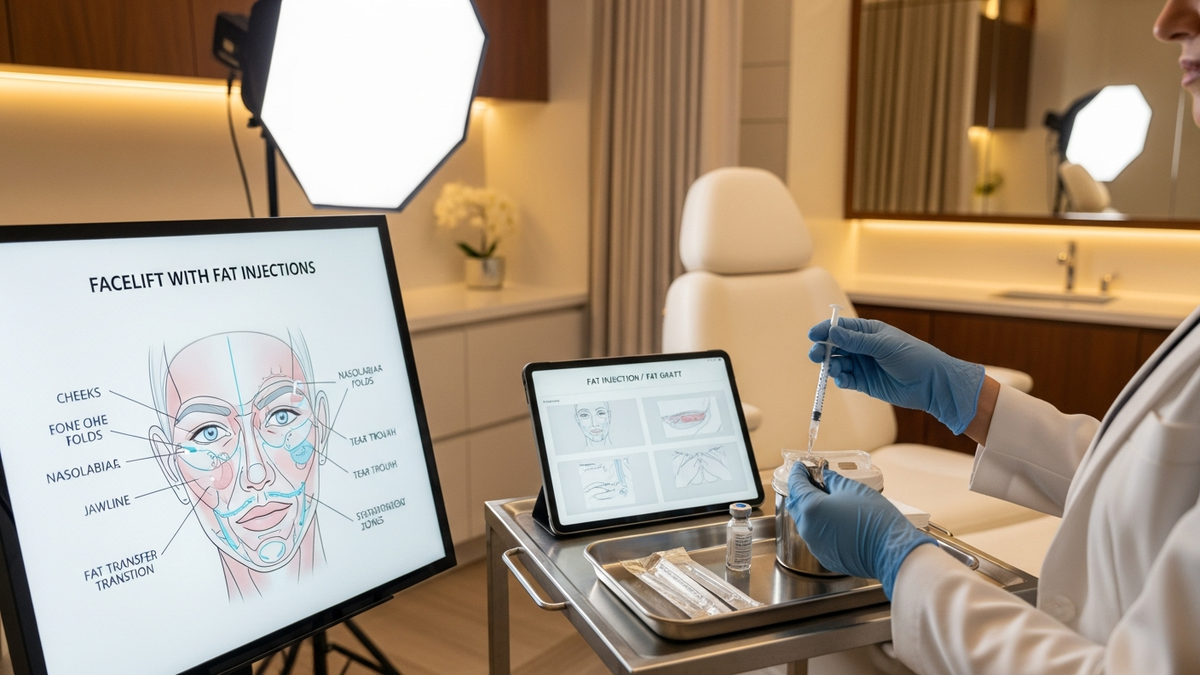
A facelift with fat injections is a combination approach to facial rejuvenation. A traditional facelift primarily targets skin laxity and soft tissue descent—raising and tightening the face and neck to create a smoother, firmer appearance. Fat injections (also called fat grafting or fat transfer) add or redistribute volume in targeted areas to improve balance, soften folds, and enhance contours.
When performed thoughtfully, this pairing can address two key aging patterns:
- Sagging (looser skin and deeper tissue changes)
- Volume loss (hollowing in the midface, temples, cheeks, and around the mouth)
Why Fat Injections Can Enhance Facelift Results
Many patients don’t simply need skin tightening—they need structural balance. Aging often causes fat to shift, thin, or resorb over time. Fat grafting can be used to:
- Restore youthful fullness in areas that have flattened
- Soften nasolabial folds and other creases influenced by volume
- Improve cheek and midface support for a smoother transition to the lower face
- Refine facial contours for a natural, less “pulled” appearance
It’s also worth noting that a facial plastic surgeon may tailor fat injection strategy based on your anatomy—because a facelift can tighten tissues in ways that make volume changes more noticeable (either positively or negatively) depending on how the face has aged.
How the Procedure Typically Works
While every surgical plan is individualized, a facelift with fat injections generally follows a sequence of steps. Your surgeon will determine the best order and technique based on your goals, anatomy, and skin quality.
1) Facial assessment and surgical planning
Before any procedure, a surgeon evaluates:
- Skin laxity and texture (face and neck)
- Fat distribution (midface hollowing, temples, cheeks)
- Soft tissue support and bite of the jawline
- Underlying facial proportions and symmetry
- Previous procedures, if any
This stage is essential for ensuring the facelift addresses sagging while fat grafting restores the right “map” of volume.
2) Fat harvesting
Fat is commonly harvested from areas with excess fat (commonly the abdomen, flanks, or thighs, depending on your body composition). The goal is to obtain healthy fat cells suitable for grafting.
3) Fat processing
Harvested fat is processed to help separate viable fat cells from other components. Techniques vary by practice and surgeon, and the details can influence outcomes.
4) Fat injection (fat grafting)
Fat is injected into predetermined facial zones using careful layering and placement. Surgeons aim for even distribution and a balanced contour rather than “one-size-fits-all” volume.
5) Facelift component (skin and tissue tightening)
The facelift portion raises and tightens the face and neck. The specific approach depends on your degree of laxity, the location of jowling, and how your skin responds.
If you want to explore facelift basics, you can read more here: Facelift.
Who Might Be a Good Candidate?
A facelift with fat injections is not automatically right for everyone. Ideal candidates often have:
- Visible sagging in the lower face and/or neck
- Volume loss that contributes to a tired or hollowed appearance
- A desire for natural-looking rejuvenation that restores balance
- Realistic expectations about how fat grafting results can evolve over time
Factors that may influence candidacy
- Skin quality (elasticity, thickness, and texture)
- Overall health and ability to safely undergo anesthesia
- Smoking status (smoking can impair healing and affect outcomes)
- Prior surgical history (including any earlier facelifts or fat grafting)
- Whether your primary concern is sagging, volume loss, or both
What Results Can You Expect?
Patients often describe the desired outcome as “refreshed,” “rested,” or “more like me, just better.” A facelift with fat injections may help:
- Create a tighter jawline and smoother neck contour
- Reduce the visual impact of folds influenced by midface support
- Improve cheek volume for a youthful transition between face regions
Timeline: what happens first vs. later
Many patients experience:
- Early swelling and bruising in the first 1–2 weeks
- Progressively clearer definition as swelling settles
- Fat grafting results that can soften and mature over months as the body stabilizes the grafted volume
Because fat grafting involves biologic variability, your surgeon may discuss that some degree of volume change can occur over time.
Recovery and Aftercare: A Practical Overview
Recovery varies by patient and surgical plan. However, a facelift with fat injections typically involves both facelift recovery and fat grafting healing.
Common recovery expectations
- Bandages and/or compression may be used after surgery
- Swelling and bruising are common and can vary in intensity
- Pain is usually manageable with prescribed medications
- Activity restrictions help protect the results while healing
Aftercare habits that support better outcomes
- Follow your surgeon’s instructions exactly (especially regarding medications and wound care).
- Avoid smoking and nicotine during the healing period.
- Sleep with head elevation as recommended to help reduce swelling.
- Attend all follow-up visits to monitor healing and address concerns early.
- Be patient with fat grafting maturation; final contour refinement may take time.
Risks and Considerations (What You Should Know Up Front)
All surgical procedures carry potential risks. While your surgeon will take steps to reduce complications, it’s important to understand general considerations associated with facial surgery and fat grafting.
Possible risks
- Swelling, bruising, and temporary numbness
- Infection (uncommon, but possible)
- Asymmetry (healing and fat integration can differ slightly between sides)
- Fat graft variability (some grafts may resorb over time)
- Scarring (typically minimized by incision placement and technique)
- Seroma or fluid collections in areas of dissection or harvest
How to reduce uncertainty
Ask your surgeon about:
- How they decide where to place fat injections
- How they handle volume changes over time
- What their typical facelift with fat grafting results look like for your age group and anatomy
- How they manage complications if they arise
Facelift vs. Other Options: When Fat Injections Might Be Separate
Some patients benefit from a standalone fat grafting plan if sagging is minimal, while others may need a facelift alone if volume loss is not a major contributor. In certain cases, surgeons may recommend a staged approach.
Other facial rejuvenation options you may hear about
- Blepharoplasty for eyelid aging (upper eyelid and lower eyelid concerns) — see Blepharoplasty
- Brow lift to address upper-face drooping
- Neck lift to refine the cervical contour
At times, the best “facelift with fat injections” plan may include complementary procedures to create a cohesive, natural result across the entire head and neck region.
Why Choose a Head-and-Neck–Focused Facial Plastic Surgeon?
Facial anatomy is complex, and rejuvenation is not only about aesthetics—it’s also about respecting structure, proportions, and tissue behavior. Patients seeking a facelift with fat injections often benefit from a surgeon who specializes in the head and neck.
Example of specialized expertise
In Los Angeles, Dr. Hootan Zandifar focuses exclusively on cosmetic and reconstructive surgery of the head and neck. That concentrated scope can support careful planning for facial balance and natural-looking outcomes. His approach emphasizes patient education, honest guidance, and advanced techniques designed to restore a fresh, youthful appearance.
Dr. Zandifar is double board certified and fellowship trained, with training in head and neck surgery and a facial plastic and reconstructive surgery fellowship. This specialized background is particularly relevant when combining procedures—like a facelift and fat grafting—where surgical precision and anatomical understanding matter.
Questions to Ask at Your Consultation
A great consultation should feel like a collaborative planning session. Here are practical questions that can help you evaluate whether a facelift with fat injections is the right fit:
- Where exactly will you inject fat, and why those areas?
- How do you balance volume restoration with facelift tightening?
- What should I expect in the first month vs. the following months?
- How much volume change is possible over time?
- What does your approach look like for patients similar to me?
- What are the most common complications you plan for, and how are they managed?
- Do you recommend any complementary procedures (for example, eyelid surgery or brow lift) for overall harmony?
Actionable Recommendations Before You Decide
If you’re considering a facelift with fat injections, these steps can help you make a confident, well-informed decision:
- Collect your goals in writing. Note what you want to improve (jawline, neck laxity, cheek hollowness, folds) and what you want to avoid (overly tight or unnatural appearance).
- Review multiple angles of your current appearance. Use photos in natural light to identify where sagging and volume loss are most noticeable.
- Ask about the surgical plan’s logic. The best plans explain how each step supports your desired outcome.
- Prioritize safety and realistic expectations. A “natural” result still requires surgical precision and appropriate patient selection.
- Plan for healing time. Arrange support for the first week, and schedule follow-ups.
Related Procedures Patients Often Consider
While this article focuses on a facelift with fat injections, many patients in Los Angeles explore additional head-and-neck rejuvenation or functional improvements. For example:
- If you’re also dealing with nasal breathing concerns, functional options like Septoplasty may be relevant for structural issues such as a Deviated Septum.
- If you’re considering other facial aesthetic enhancements, you may explore Rhinoplasty for nose aesthetics and function.
- For hair restoration needs, some patients consider a hair transplant or an eyebrow transplant to complement overall facial harmony.
These possibilities underscore a key point: facial appearance is interconnected. A thoughtful surgeon evaluates the whole face, not just one area.
FAQ: Facelift with Fat Injections
1) How long do results from a facelift with fat injections last?
Results can be long-lasting, but aging continues. The facelift component can help restore support and skin tightness, while fat grafting integrates and matures over time. Many patients enjoy meaningful improvement for years; your surgeon can discuss what “aging trajectory” to expect based on your skin quality and anatomy.
2) Will the fat injections look natural?
When fat is harvested, processed, and placed with precision, it can look very natural—especially because it uses your own tissue. Natural results depend heavily on technique, appropriate placement, and realistic volume goals.
3) Is a facelift with fat injections the same as “dermal fillers”?
No. Dermal fillers are typically manufactured substances injected to add volume temporarily or semi-permanently. Fat injections use your own fat cells. Both can enhance contours, but they differ in sourcing, integration, longevity, and how results evolve.
4) What areas of the face can fat injections improve after a facelift?
Common targets include the cheeks and midface, temples, and areas around the mouth where volume loss can contribute to folds. Your surgeon will determine the most appropriate zones based on your facial structure and the facelift plan.
5) Who should avoid or reconsider a facelift with fat injections?
Candidacy depends on your health, healing ability, and specific anatomy. For example, smoking or nicotine use can increase risk and impair healing. Certain medical conditions may require additional evaluation. Your surgeon will help you weigh benefits and risks during consultation.
CTA: Schedule Your Consultation
If you’re considering a facelift with fat injections, the next step is a personalized consultation where your goals, facial anatomy, and safety considerations are reviewed in detail.
FlowGeniQ Digest emphasizes informed decision-making: bring your questions, discuss your desired look, and ask how your surgeon plans to balance tightening with natural volume restoration.
Schedule your consultation with a qualified facial plastic surgeon to explore whether a combined facelift and fat grafting plan is right for you.
Professional Disclaimer
This content is provided for general educational purposes only by FlowGeniQ Digest. It is not a substitute for professional advice, diagnosis, or treatment. Readers are advised to consult qualified professionals for personalized recommendations.
Medical Information Disclaimer
This content is provided for general educational purposes only by FlowGeniQ Digest. It is not a substitute for professional advice, diagnosis, or treatment. Readers are advised to consult qualified professionals for personalized recommendations.