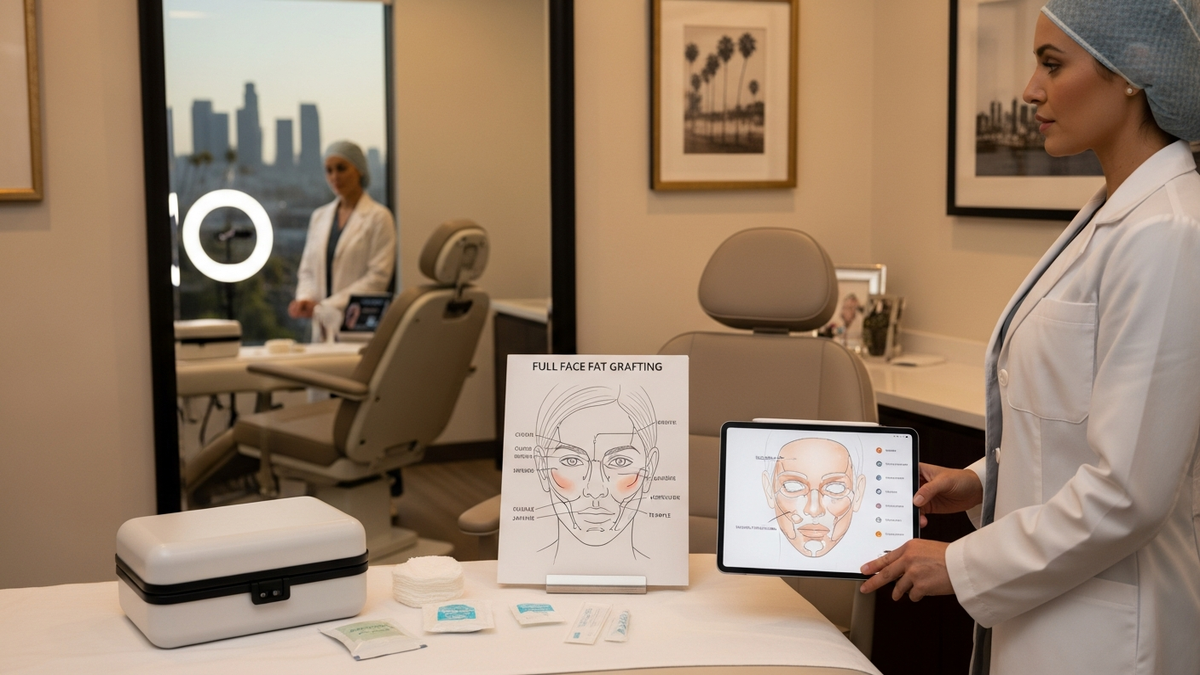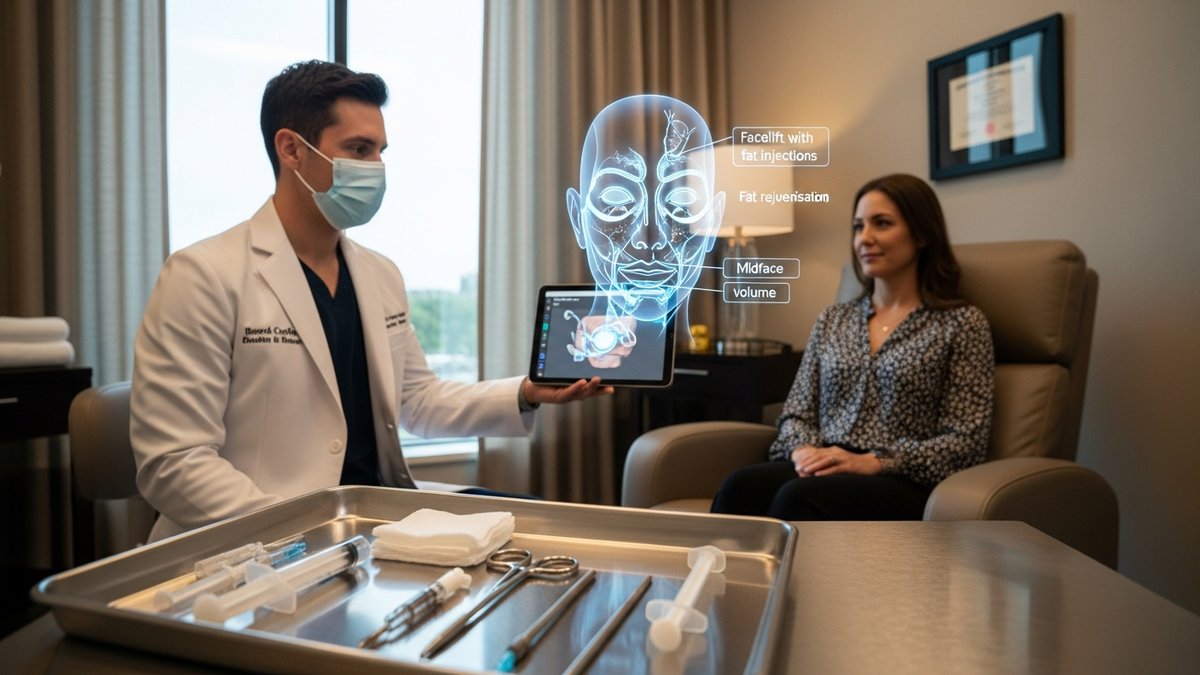
FlowGeniQ Digest brings you a trusted, educational overview of facelift with fat injections—a facial rejuvenation approach designed to restore both lift and volume for a more youthful, natural appearance.
If you’re considering cosmetic surgery in Los Angeles and want results that look like “you, but rested,” combining a traditional facelift strategy with fat transfer may be worth exploring. Below, we’ll break down how the procedure works, who it’s best for, what recovery typically involves, and how to choose a qualified facial plastic surgeon.
What Is a Facelift with Fat Injections?
A facelift with fat injections is a combined cosmetic plan that pairs lifting and tightening of facial tissues (the core goals of a facelift) with fat transfer to replenish areas that have lost volume over time.
As people age, they often experience a combination of:
- Sagging skin along the lower face and neck
- Loss of facial volume in the cheeks, temples, and midface
- Changes in facial contours that can make folds and lines appear deeper
Fat injections (also called fat grafting or lipofilling) use a patient’s own fat—harvested from one area of the body—to help restore youthful proportions. When done thoughtfully alongside a facelift, the result can be a face that looks both lifted and filled, rather than simply tightened.
Why Volume Matters in Facial Rejuvenation
Many patients think aging is mainly about loose skin. In reality, aging is also about the way facial fat pads shift and diminish. When volume is lost, skin can cling differently to underlying structures, contributing to:
- More visible nasolabial folds
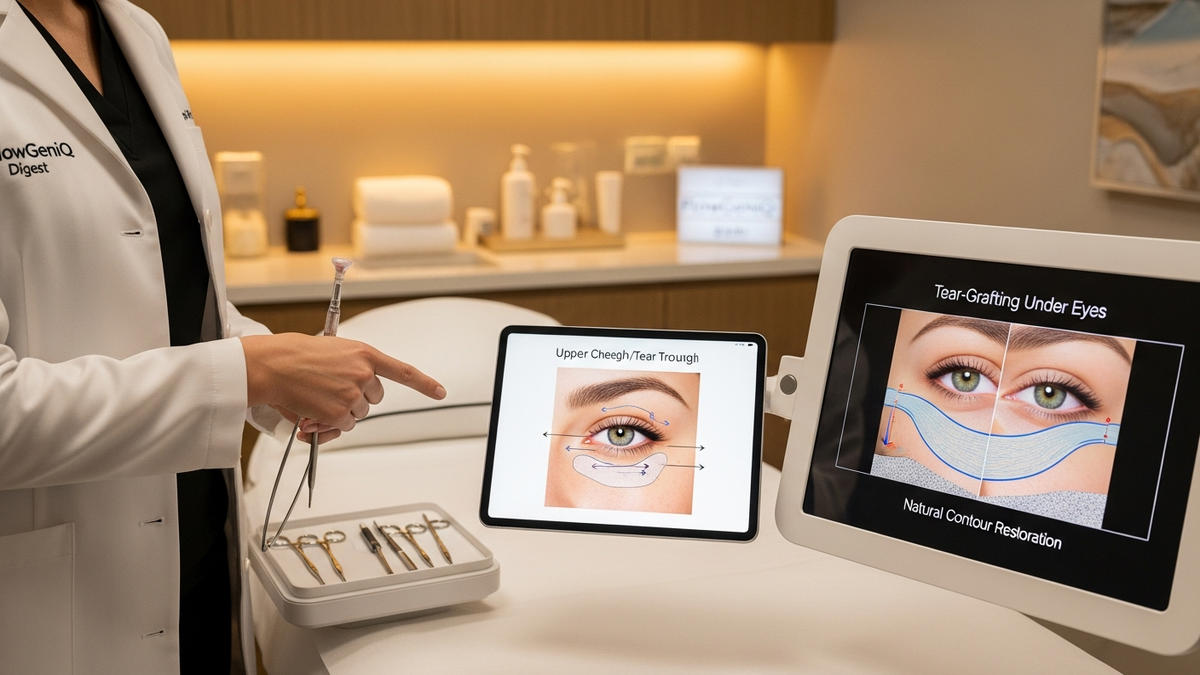
- Under-eye hollowness
- Flattening of cheek structure
- Jowling that looks more pronounced
That’s why a facelift with fat injections can be appealing: it addresses two major aging mechanisms at once—position (lift) and structure (volume).
How a Facelift and Fat Transfer Work Together
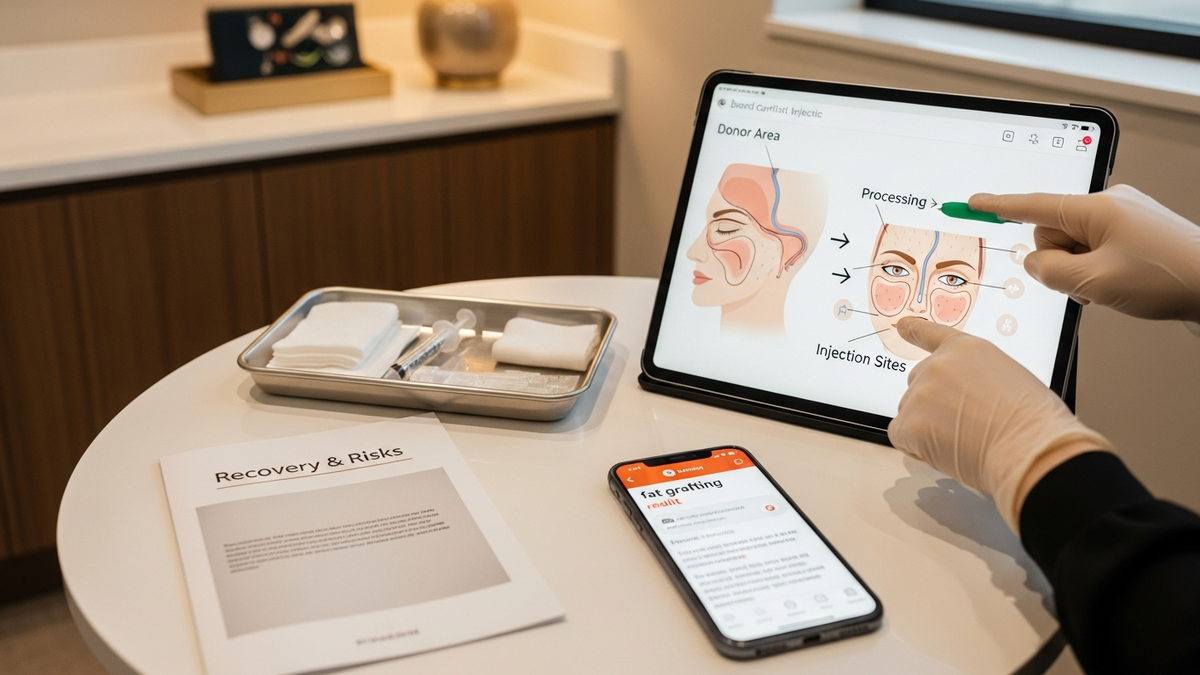
While every surgical plan is individualized, the combined approach usually follows a sequence like this:
- Consultation and facial analysis: Your surgeon assesses skin quality, facial anatomy, and where volume has been lost.
- Fat harvesting: Fat is typically collected via liposuction from a donor area (commonly the abdomen, flanks, or thighs).
- Fat processing: The harvested fat is prepared for transfer to improve handling and graft viability.
- Facelift component: The surgeon repositions and tightens facial tissues to address sagging skin and contours.
- Fat injection component: Fat is carefully placed in targeted areas—often to support the midface and enhance smooth transitions between facial zones.
- Final refinement: The surgeon reviews symmetry, contour, and how the face moves naturally.
Because fat grafting is highly technique-dependent, the surgeon’s experience with both facelift anatomy and fat transfer strategy matters greatly.
Who Is a Good Candidate?
Not everyone needs (or benefits from) a facelift with fat injections. Ideal candidates often share the following characteristics:
- Moderate to significant skin laxity in the lower face and neck
- Visible volume loss that may contribute to a tired or hollow appearance
- Good skin elasticity (or at least skin that can respond well to tightening)
- Realistic expectations about what fat transfer can and cannot do
- Availability of donor fat for harvesting (or an alternative plan if donor fat is limited)
During the evaluation, a board-certified facial plastic surgeon will also consider medical history, smoking status, and any previous facial procedures.
Benefits of Facelift with Fat Injections
When the plan is well-matched to your anatomy, a facelift with fat injections can offer several advantages:
- More natural-looking results: Fat can soften transitions and support facial contours.
- Balanced rejuvenation: Lift and volume work together rather than competing.
- Correction of contour irregularities: Fat can help address hollows and unevenness.
- Use of your own tissue: Fat grafting uses autologous tissue (your own fat).
It’s important to note that while many patients achieve strong improvements after one procedure, fat transfer outcomes can vary. Some fat may reabsorb over time, and your surgeon may discuss whether additional refinement sessions are appropriate.
Facelift vs. Fat Transfer Alone
It can be helpful to compare options:
When a facelift may be the primary need
If sagging skin and tissue descent are the dominant concern—especially in the neck and jawline—a facelift may provide the most direct lift.
When fat transfer may be the primary need
If you have early volume loss with minimal skin laxity, fat injections alone may provide a more targeted rejuvenation strategy.
When combining them makes sense
Combination planning is often considered when both tissue position and volume are affected. That’s the core premise behind facelift with fat injections.
What to Expect During Your Consultation
A high-quality consultation is more than a quick overview—it should include a detailed facial assessment and a transparent discussion of risks, goals, and technique.
Expect your surgeon to:
- Review your medical history and medication use
- Discuss prior cosmetic or reconstructive procedures
- Perform a facial exam focused on skin, fat compartments, and tissue movement
- Explain where volume restoration may help most
- Review realistic outcomes and potential need for staged refinement
- Provide guidance on preparation before surgery and expectations after
For patients specifically interested in facelift planning, you can explore an overview of Facelift options to understand how surgical goals are typically approached in Beverly Hills and Los Angeles.
Technique Matters: Precision in Lifting and Placement
Fat grafting is not simply “adding volume.” Successful results depend on layer selection, micro-deposition, and strategic contouring. The same is true for facelifts, where the direction and tension of tissue repositioning can influence natural-looking results and long-term stability.
In experienced hands, the combined technique aims to:
- Create smooth transitions between the cheek, jawline, and neck
- Support midface structure without overfilling
- Preserve natural facial movement and expression
- Reduce the risk of visible “over-tightened” appearance
Recovery Timeline: What Most Patients Experience
Recovery varies based on the extent of surgery and the number of areas treated with fat transfer. However, many patients can expect a general timeline like the one below:
- First 1–2 weeks: Swelling and bruising are common. Many patients can return to light activities, depending on comfort and surgeon guidance.
- Weeks 2–6: Swelling gradually improves; contour definition becomes more visible.
- Weeks 6–12: Continued refinement in how the skin and grafted fat settle into their final appearance.
- 3–6 months: Many patients see the most stable long-term contour and how fat grafts have integrated.
Your surgeon will provide specific instructions on wound care, activity restrictions, and follow-up visits. It’s also common to receive guidance on managing swelling and avoiding pressure on treated areas during the early healing phase.
Risks and Side Effects to Understand
Any surgical procedure has potential risks. While most patients do well, it’s important to discuss potential complications in advance with a qualified provider. Possible risks of a facelift with fat injections can include:
- Swelling and bruising
- Temporary numbness or changes in sensation
- Infection (uncommon, but possible)
- Asymmetry or uneven contouring
- Fat graft irregularities such as lumps or uneven take
- Scarring (typically minimized with careful technique)
- Seroma or fluid collection (uncommon)
Fat grafting outcomes also depend on factors such as individual healing response, smoking status, and overall health. Transparent pre-op counseling helps ensure your expectations align with likely results.
How to Prepare for Surgery
Preparation can influence healing and comfort. Your surgeon may recommend steps such as:
- Stop smoking well before surgery (if applicable)
- Follow medication guidance regarding blood thinners or supplements
- Arrange post-op support (transportation and help during early recovery)
- Plan for time off work based on your recovery needs
- Maintain a healthy diet and hydration before and after surgery
Ask your surgeon for a detailed pre-op checklist so you know exactly what to do in the days leading up to your procedure.
Choosing a Surgeon for Facelift with Fat Injections
Because a combined facelift and fat transfer requires expertise in both facial rejuvenation and fat grafting technique, selecting the right surgeon is crucial.
When evaluating providers, consider:
- Board certification and relevant training in facial plastic surgery
- Experience with combined procedures (not just either facelifts or fat transfer alone)
- Before-and-after results that reflect natural outcomes similar to your goals
- Approach to patient education and shared decision-making
- Ability to discuss risks clearly and honestly
In Los Angeles and the Beverly Hills area, patients often value surgeons who focus on head and neck aesthetics and who prioritize natural-looking refinement. Dr. Hootan Zandifar, MD, FACS—an owner and lead facial plastic and reconstructive surgeon—focuses solely on surgeries of the head and neck and is known for an honest, trustworthy, and compassionate approach. His practice emphasizes advanced anti-aging techniques and patient education to help individuals make well-informed choices.
Natural-Looking Results: The “You, But Refreshed” Standard
One of the most common reasons patients seek facelift with fat injections is the desire for results that look natural. Achieving that look typically involves:
- Proportion restoration rather than overcorrection
- Subtle contouring to support facial harmony
- Respect for facial expression and movement
- Long-term tissue understanding to plan for how aging continues
During your consultation, ask how your surgeon plans to balance lift and volume so your face doesn’t look “pulled” or “puffed.”
Related Options Patients Often Consider
Facial rejuvenation is rarely one-size-fits-all. Some patients explore additional procedures to refine overall harmony. Depending on your goals, your surgeon may discuss options such as:
- Blepharoplasty to address upper or lower eyelid concerns—see more at Blepharoplasty.
- Rhinoplasty for nasal aesthetics or function—learn more at Rhinoplasty.
- Hair restoration such as a hair transplant when hair loss affects overall appearance.
- Eyebrow restoration with an eyebrow transplant for balance and expression framing.
While these may not be directly related to a facelift with fat injections, they can be part of a broader facial rejuvenation plan.
FAQs About Facelift with Fat Injections
1) How long do fat injections from a facelift last?
Fat graft longevity varies. Some transferred fat integrates long-term, while some may be reabsorbed. Many patients see meaningful long-term improvement, and your surgeon may discuss whether touch-up sessions are realistic for your goals.
2) Will a facelift with fat injections look overfilled?
It should not when performed with conservative, anatomically guided planning. The goal is volume restoration and contour smoothing—not a “puffy” look. Asking to see results that match your preferred aesthetic can help you evaluate the surgeon’s approach.
3) What areas are commonly treated with fat injections?
Common targets include the midface/cheek region, temples, and areas that need structural support for smoother transitions. Your surgeon will tailor placement based on facial anatomy, skin laxity, and your expression patterns.
4) Is the procedure more complex than a facelift alone?
Yes, it is typically more involved because it adds fat harvesting and fat transfer steps. However, combining procedures can reduce the need for multiple separate surgeries when lift and volume restoration are both needed.
5) Who should avoid fat injections?
Certain health conditions, smoking, or factors that impair healing may affect candidacy. A qualified surgeon will review your medical history and help determine whether fat grafting is appropriate and safe for you.
Actionable Next Steps
If you’re seriously considering a facelift with fat injections, here are practical steps you can take now:
- Write down your top concerns (sagging, hollowness, folds, neck definition) and your preferred look (natural vs. dramatic).
- Collect photos of results you admire—and bring them to your consultation for alignment.
- Ask about technique: Where will the lift occur, and where will fat be placed to support harmony?
- Discuss risks and variability: How does your surgeon handle fat reabsorption and contour refinement?
- Confirm the surgical plan: You should receive clear guidance on preparation, recovery, and follow-up.
At FlowGeniQ Digest, we encourage patients to treat cosmetic decision-making like healthcare decision-making: informed, personalized, and guided by qualified expertise.
CTA: Schedule a Consultation
If you’re in Los Angeles or the Beverly Hills area and want to explore whether a facelift with fat injections is right for your facial aging goals, consider scheduling an in-person evaluation with a board-certified facial plastic and reconstructive surgeon.
Dr. Hootan Zandifar’s practice is built around advanced head-and-neck aesthetic care, natural-looking outcomes, and patient education—so you can move forward with confidence.
Request your consultation online to discuss your options and the most appropriate rejuvenation plan for your anatomy.
Professional Disclaimer
This content is provided for general educational purposes only by FlowGeniQ Digest. It is not a substitute for professional advice, diagnosis, or treatment. Readers are advised to consult qualified professionals for personalized recommendations.
Medical Information Disclaimer
This content is provided for general educational purposes only by FlowGeniQ Digest. It is not a substitute for professional advice, diagnosis, or treatment. Readers are advised to consult qualified professionals for personalized recommendations.