Source: FlowGeniQ Digest
Eyebrow Transplant Regret: What People Wish They Knew Before Surgery
If you’ve searched “eyebrow transplant regret,” you’re not alone. Eyebrows are a high-impact facial feature—framing the eyes, influencing expression, and shaping how balanced your face looks. When eyebrow restoration doesn’t meet expectations, it can trigger real distress: from subtle asymmetry to unnatural density or even ongoing dissatisfaction with the scar pattern.
At FlowGeniQ Digest, we help readers make informed decisions across beauty and medical specialties. In this article, we’ll break down why eyebrow transplant regret happens, how to recognize warning signs, and what you can do to prevent disappointing outcomes—especially when choosing a surgeon and a plan tailored to your anatomy.
Why Eyebrow Transplant Regret Happens (Even When Surgery “Goes Well”)
Not all regret is caused by surgical failure. Sometimes, the procedure achieves technical success but still falls short cosmetically—or the patient’s expectations weren’t aligned with biological reality. Below are the most common drivers of eyebrow transplant regret.
1) Unrealistic expectations about density, speed, and final shape
Eyebrow hair restoration is gradual. After grafting, the transplanted hairs may shed and then regrow in phases. Many patients expect immediate fullness or a “perfect” look right away, which can lead to frustration during the months of healing.
Additionally, eyebrow aesthetics depend on hair direction, angle, placement, and thickness. If pre-op planning prioritizes “more hair” rather than a natural brow architecture, the result can look heavy or mismatched.
2) Poor donor selection and limited donor quality
A successful eyebrow transplant relies on the availability of appropriately sized and textured hair follicles that match eyebrow characteristics. If the donor hair is unsuitable—too coarse, too curly, or too thick—regrowth may look out of place.
Regret often stems from a mismatch between what was promised and what the patient’s anatomy could realistically support.
3) Graft placement errors (direction and micro-angles)
Eyebrow hairs are not uniform. They grow at specific angles that create a natural gradient: lighter and softer at the head, fuller through the body, and tapered toward the tail. When grafts are placed with incorrect micro-angles or in overly dense patterns, the brow can appear “stuck on,” overly straight, or patchy in the wrong areas.
4) Scarring, uneven growth, or visible implantation points
Some patients regret the long-term appearance of the brow area if there is visible scarring or if the grafts do not blend seamlessly with existing hairs. While modern technique aims to minimize this risk, outcomes vary based on individual healing, technique, and post-op care.
5) Underestimating the role of underlying causes of eyebrow loss
Eyebrow thinning or loss can be caused by medical conditions, inflammatory disorders, trauma, over-plucking, chemotherapy, or hormonal changes. If the underlying driver isn’t addressed, the native brow may continue to thin—even after transplantation—creating a cycle of dissatisfaction.
6) Choosing the wrong procedure for the problem (or the wrong hair source)
Not every eyebrow issue is best treated with an eyebrow transplant. In some cases, a brow lift may improve visibility of the brow line; in others, eyelid or brow position adjustments may have a larger aesthetic impact. If the plan is overly focused on grafting without considering facial proportions, regret becomes more likely.
For example, eyebrow position can affect how the eye reads on camera and in real life. A facial plastic surgeon who works comprehensively with head and neck aesthetics may evaluate whether additional procedures like Blepharoplasty are relevant to optimize the overall look.
Common “Regret Scenarios” You’ll Want to Know Before You Book
Let’s translate the causes above into the outcomes patients often describe. If any of these resonate, use them as a checklist for your consultation.
Scenario A: “My eyebrows look too thick or too dark.”
This can happen when graft density is overestimated or when hair caliber doesn’t match natural brow hairs. A natural result usually requires strategic sparseness—especially at the brow head—so the face doesn’t look harsh.
Scenario B: “They look uneven—my arch is wrong.”
Arch shape is a design element. If the plan doesn’t account for your facial geometry, brow asymmetry, and eye spacing, the final brow can look “off,” even if grafts survive.
Scenario C: “I don’t like the direction of the new hair.”
Eyebrow hairs have a “flow.” Incorrect direction can make brows look flat, spiky, or unnatural. The surgeon’s ability to place grafts with precision is critical.
Scenario D: “I’m stuck with scarring or an obvious graft pattern.”
Regret increases when the placement leaves visible implantation points or when the brow area heals with noticeable texture changes. Your surgeon should discuss scar risk and how they minimize it.
Scenario E: “I expected faster results.”
Even when growth is healthy, eyebrows can take months to settle into their final appearance. A good surgeon sets expectations and provides a realistic timeline.
How to Prevent Eyebrow Transplant Regret: A Practical Pre-Op Checklist
Prevention is about alignment: between your goals, your anatomy, and the surgeon’s technique. Use this checklist during your evaluation.
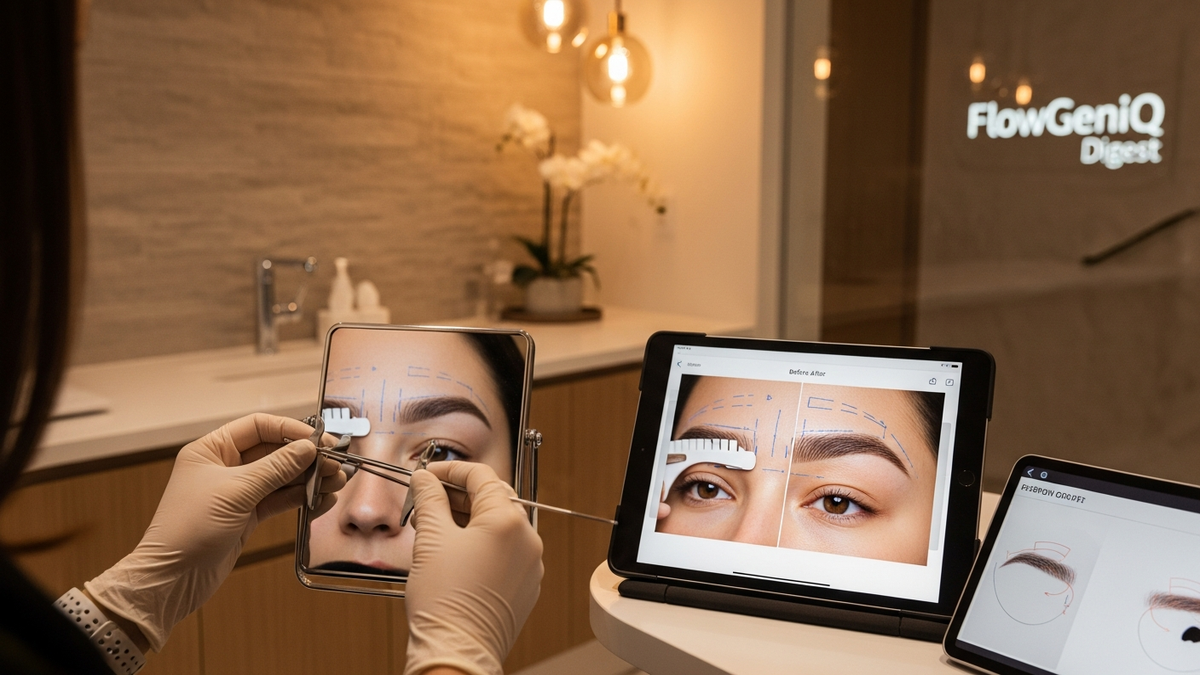
1) Ask the surgeon to explain the “design,” not just the procedure
Bring photos of eyebrows you like (and eyebrows you don’t). Ask:
- How will you map my brow head, body, and tail?
- How will you match hair direction and micro-angles?
- What density will you aim for in each region?
- How will you preserve natural variation rather than making everything uniform?
A thoughtful plan usually includes a discussion of facial proportions and how eyebrows interact with the eyes and midface.
2) Confirm the surgeon’s experience specifically with eyebrow transplantation
Eyebrow transplantation is not the same as other hair restoration procedures. It requires fine aesthetic judgment and meticulous placement. If a clinic primarily focuses on scalp hair, you should still ask detailed questions about eyebrow-specific outcomes and technique.
In the FlowGeniQ Digest ecosystem, we encourage readers to verify credentials and see realistic results—especially for eyebrow work. For example, board-certified facial plastic and reconstructive surgeons who focus on head and neck aesthetics may offer an advantage in holistic facial planning.
3) Evaluate donor compatibility and hair characteristics
Ask how your donor hair will be selected and evaluated for:
- Texture and curl tendency
- Diameter/thickness
- Growth pattern and length
- Color match
Even subtle mismatches can create cosmetic differences that drive regret.
4) Discuss whether another procedure could be part of the solution
Sometimes regret occurs because the underlying aesthetic issue isn’t exclusively about hair. For example:
- If the brow position is low, a brow lift may improve the brow line’s visibility and shape.
- If eyelid heaviness changes how brows are perceived, Blepharoplasty can restore a more open eye appearance.
- If the overall facial aging pattern affects brow aesthetics, a Facelift may change the context in which the transplanted brow sits. (See: Facelift.)
This isn’t about “upselling.” It’s about correct diagnosis and treatment planning.
5) Get a timeline you can trust
Ask for an expected timeline for shedding, regrowth, and maturation. A reputable surgeon will explain:
- When you’ll see early growth
- When density typically increases
- When final shape stabilizes
- How to manage interim appearance (styling, makeup options)
6) Review risks and aftercare requirements
Regret can be amplified by poor aftercare or misunderstanding of healing. Your surgeon should provide clear instructions on:
- Wound care and cleaning
- Medication guidance (if applicable)
- Sun protection and activity restrictions
- When to resume skincare routines
- Follow-up schedule
Who Is a Good Candidate for an Eyebrow Transplant?
Not everyone needs a transplant to improve eyebrow appearance. Candidates typically have:
- Stable eyebrow loss (or a plan to address ongoing causes)
- Enough donor hair quality for eyebrow-size follicles
- Realistic expectations about gradual regrowth
- A willingness to follow aftercare and attend follow-ups
It’s also helpful when the treating team can evaluate the broader head and neck aesthetic context, since eyebrows interact visually with eyes, forehead, and midface.
Eyebrow Transplant vs. Other Facial Enhancements: When Regret Is Really a Position Problem
Sometimes people attribute dissatisfaction to “the transplant,” when the deeper issue is how brows sit in relation to the eyes. This is why comprehensive evaluation matters.
Brow position and eye openness
If the upper eyelids are heavy, the brow may appear lower or less defined. In those cases, Blepharoplasty may improve the visible space around the brow and reduce the “tired” look.
Forehead aging
Forehead wrinkles and frown lines can change brow perception dramatically. A brow lift (often called forehead lift or browplasty) may restore a more youthful brow position and reduce the need for excessive density.
Facial proportion changes
As facial aging progresses, the entire balance of the face changes. If you’re considering multiple improvements, discussing options like Facelift can help align expectations: sometimes the best “brow result” is achieved by treating the context around the brow.
Choosing a Surgeon: Red Flags That Increase Eyebrow Transplant Regret
Use these red flags to protect yourself:
- Guarantees of exact results (hair growth is biologic and varies)
- No detailed brow mapping or limited discussion of design
- One-size-fits-all density without region-specific planning
- Vague answers about graft placement angles and technique
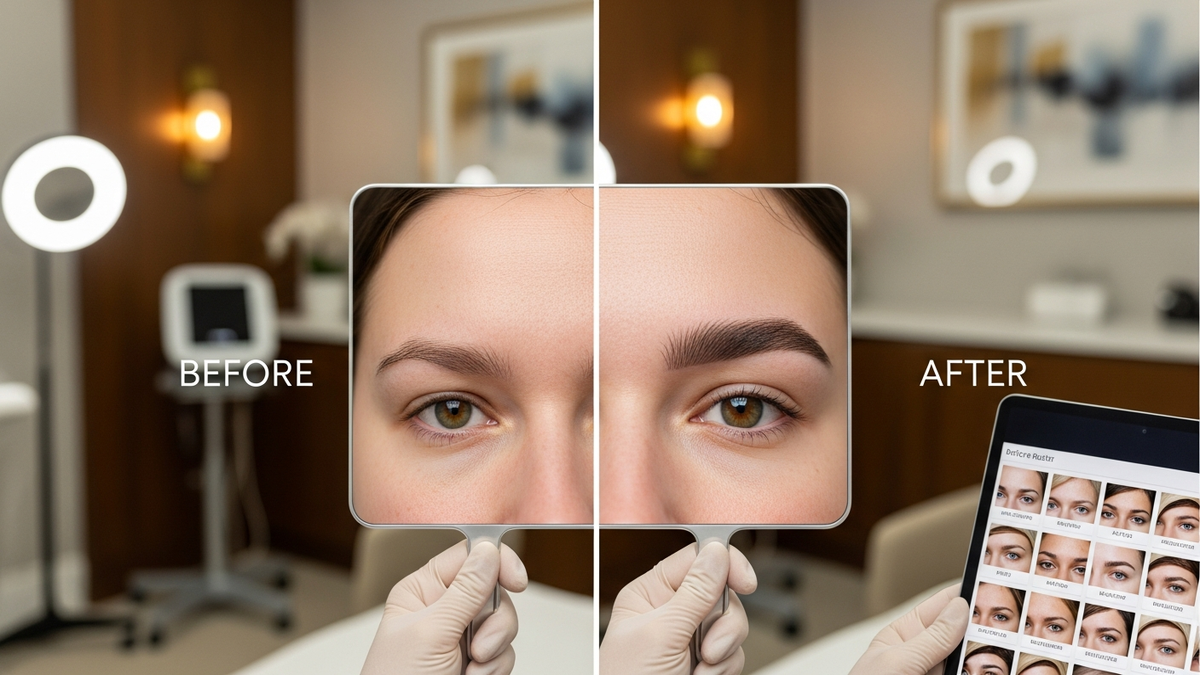
- Minimal before/after documentation for eyebrow-specific cases
- Pressure to decide quickly without a thoughtful consult
What to Do If You Already Have Eyebrow Transplant Regret
If you’re already unhappy, don’t panic. The path forward depends on timing, healing stage, and the specific issue.
Step 1: Confirm where you are in the regrowth timeline
Many patients judge results too early. If you are within the initial months, you may still be in shedding/regrowth transitions. Ask your surgeon to evaluate graft survival and direction.
Step 2: Identify the main problem: shape, density, direction, or scarring
Different problems have different solutions. For example:
- Density issues may require additional grafting with corrected placement strategy.
- Direction problems may require targeted revisions.
- Scarring concerns may require a different approach depending on tissue healing.
Step 3: Request a revision plan grounded in anatomy
A credible revision consultation should include a clear explanation of what will change and why. The goal is not simply “more hair,” but better design—matching your face and preserving natural variation.
Step 4: Consider non-surgical support while waiting
Depending on healing status, makeup, brow pencils, and professional brow shaping can help you feel more confident while the final result matures. Your surgeon can advise what’s safe during recovery.
Expert Perspective: Why Natural-Looking Eyebrows Require Precision
Eyebrows are a focal point. That’s why eyebrow restoration should be treated as an aesthetic craft—not a standard transplant template. In the Los Angeles area, many patients explore head and neck cosmetic options with the goal of looking refreshed and natural.
Dr. Hootan Zandifar, a board-certified facial plastic and reconstructive surgeon, focuses on cosmetic and reconstructive surgery of the head and neck. His approach emphasizes patient education, trustworthy guidance, and natural-looking results that align with each person’s facial anatomy. When discussing eyebrow restoration, this kind of holistic, head-and-neck-focused evaluation can be especially valuable because it considers how brows interact with the eyes and surrounding facial structures.
In addition to eyebrow transplantation, patients sometimes consider complementary procedures—such as eyebrow transplant planning itself, or other facial rejuvenation strategies—depending on their goals and the underlying aesthetic issue.
Related Hair Restoration Resources (If Your Eyebrow Loss Is Part of a Broader Hair Concern)
If you’re dealing with eyebrow thinning alongside scalp hair concerns, it may help to explore how hair restoration techniques work in general. For readers comparing options, FlowGeniQ Digest includes resources such as a hair transplant service overview. While eyebrow and scalp procedures differ, understanding the fundamentals of grafting and expectations can support better decision-making.
FAQ: Eyebrow Transplant Regret (Quick Answers)
How common is eyebrow transplant regret?
Regret varies by expectations and outcome quality. It’s often driven by dissatisfaction with density, shape, or timing rather than complete graft failure. The best prevention is a detailed design plan and realistic timeline.
Can eyebrow transplant results look natural?
Yes—when graft placement, direction, and density are tailored to your brow architecture and donor hair characteristics. Natural results usually require precision and conservative planning, especially at the brow head.
What are the biggest warning signs before surgery?
Red flags include guarantees of perfect results, limited discussion of brow mapping, one-size-fits-all density, and vague answers about technique. A thorough consult should address design, risks, and aftercare.
Is it possible to revise an eyebrow transplant?
In many cases, revision may be possible depending on timing, graft survival, and the specific issue (shape, direction, density, or scarring). A revision plan should be anatomy-based and clearly explained.
How long does it take to see final eyebrow transplant results?
Eyebrow regrowth is gradual. Many patients notice early changes within months, but final maturation can take longer. Your surgeon should provide a personalized timeline during consultation.
CTA: Get a Consultation for a Brow Plan That Fits Your Face
If you’re considering an eyebrow transplant—or you’re already dealing with eyebrow transplant regret—your next step should be a consultation focused on design, anatomy, and realistic expectations.
Dr. Hootan Zandifar offers patient education and natural-looking head-and-neck aesthetic solutions. If you’re in the Los Angeles or Beverly Hills area and want a careful evaluation of your eyebrows and overall facial context, consider scheduling an appointment. You can also explore related cosmetic options such as Rhinoplasty if your goals include broader facial harmony.
Ready to move forward? Schedule your consultation online and bring your photos, your goals, and your questions. The right plan reduces regret—because it starts with clarity.
Professional Disclaimer
This content is provided for general educational purposes only by FlowGeniQ Digest. It is not a substitute for professional advice, diagnosis, or treatment. Readers are advised to consult qualified professionals for personalized recommendations.
Medical Information Disclaimer
This content is provided for general educational purposes only by FlowGeniQ Digest. It is not a substitute for professional advice, diagnosis, or treatment. Readers are advised to consult qualified professionals for personalized recommendations.