Eyebrow transplant recovery is the part of the journey that determines how clean, natural, and comfortable your final results will look and feel. At FlowGeniQ Digest, we regularly receive questions about what happens right after surgery, how long swelling and scabbing last, and what patients can do to protect graft survival.
This article explains the eyebrow transplant recovery process in a practical, timeline-based way—so you know what to expect, how to care for your skin, and when it’s normal (or not) to call your surgeon. While every patient heals differently, the fundamentals of recovery are consistent across well-performed eyebrow procedures.
What “eyebrow transplant recovery” really involves
An eyebrow transplant is a highly specialized cosmetic procedure that moves hair follicles (grafts) to the eyebrow area. During recovery, your body must do two key things:
- Heal the skin where grafts were placed and where they were harvested.
- Support graft survival while the transplanted follicles transition into a new environment.
Because eyebrows are a facial focal point, even small differences in healing, scabbing care, or post-op habits can influence how your brows look during regrowth. That’s why detailed aftercare matters.
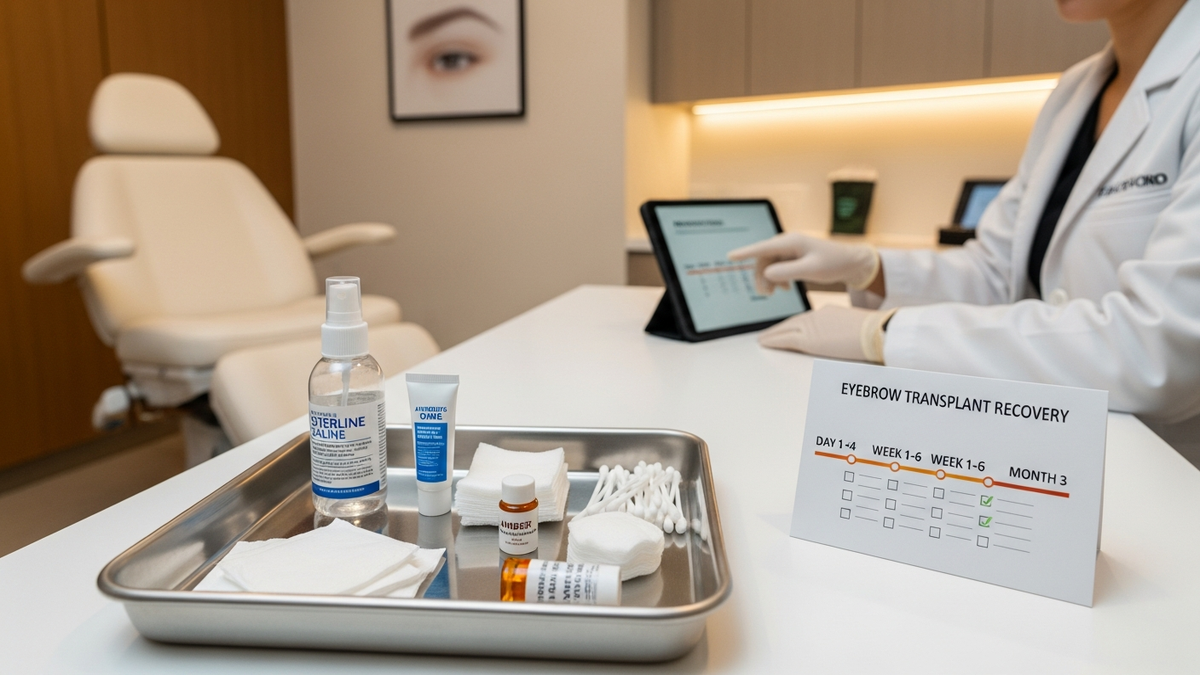
Eyebrow transplant recovery timeline (week-by-week)
Below is a typical recovery timeline. Your surgeon may personalize instructions based on your technique (FUE vs. FUT), graft density, skin type, and whether you’re treating patchiness, complete loss, or thinning from medical causes.
Days 0–2: The immediate post-op phase
In the first 48 hours, the goals are comfort, protecting graft sites, and minimizing inflammation.
- Swelling and redness: Mild-to-moderate swelling can occur around the brow/upper eyelid area.
- Oozing or pinpoint scabbing: You may notice small amounts of fluid and the beginnings of crusting around grafts.
- Discomfort: Most patients describe tightness or mild soreness rather than severe pain.
- Sleep positioning: Many surgeons recommend sleeping with your head elevated to reduce swelling.
Actionable aftercare tips:
- Follow your surgeon’s wound-care plan exactly (cleaning schedule, ointment use, and dressing instructions if provided).
- Avoid touching, rubbing, or scratching the transplanted area—even if scabs feel itchy.
- Keep the area dry and protected as instructed.
Days 3–7: Scabs, itching, and “protect the grafts” mode
Between days 3 and 7, scabs usually become more noticeable. Itching is common, but it’s also the period where patients are most at risk of disturbing grafts.
- Scab formation: Crusting can darken slightly as it dries.
- Itching: Normal, but rubbing can dislodge grafts.
- Skin sensitivity: The eyebrow area may feel tight or tender.
What to do:
- Clean gently only as directed (often with a recommended solution and technique).
- Let scabs fall off naturally—do not pick them.
- Wear clean, soft clothing and avoid hats or anything that rubs the brow line.
Why this matters: Grafts can be fragile during early healing. The best recovery strategy is patience paired with strict adherence to your surgeon’s instructions.
Weeks 2–4: Shedding and early “thin” appearance
Many patients notice that transplanted hairs shed during this phase. This can be alarming, but it is often part of the normal cycle as follicles adapt.
- Shedding: You may see hairs fall out around 2–6 weeks (timing varies).
- Scab resolution: Most crusting should be gone by the end of week 2–3.
- Visible healing: The area may look slightly red or uneven before it settles.
Recommended habits:
- Continue sunscreen and sun avoidance strategies as advised.
- Resume only light activities if you were told to limit exertion.
- Stay consistent with any prescribed topical care.
Months 2–3: Early regrowth
By months 2–3, you may begin to see fine new hairs. This is usually subtle at first.
- Texture changes: Hairs may look thinner or lighter early on.
- Direction and shape: The final eyebrow pattern is determined by careful placement and angling of grafts—early regrowth can help you visualize the planned design.
Patient mindset tip: Think in terms of gradual improvement. Eyebrow hairs can take time to thicken and darken.
Months 4–6: Noticeable fullness
This period often brings more visible change. Many patients begin to feel more confident about their brows again.
- Thicker growth: Hairs may become more substantial.
- Color maturation: The pigment may darken over time.
Months 7–12: Final refinement and maturation
Eyebrow transplant results typically continue improving through 9–12 months, sometimes longer depending on your hair characteristics and graft survival.
- Natural blending: The brows should look more integrated with surrounding hair.
- Density stabilization: Full density may take time to reach its peak.
Aftercare for eyebrow transplant recovery: do’s and don’ts
Aftercare is where patients gain control. Even small choices—like skincare products, sun exposure, or sleeping position—can influence the healing environment.
Do: protect grafts and follow wound-care instructions
- Keep the area clean using only what your surgeon recommends.
- Use prescribed ointments or solutions as directed.
- Maintain head elevation during early swelling days.
- Wear protective, non-rubbing clothing and avoid friction.
Don’t: pick scabs, rub the area, or use harsh products
- Do not pick scabs or attempt to “speed up” crust removal.
- Avoid alcohol-based skincare on the brow area unless approved.
- Don’t apply makeup until your surgeon clears it.
- Skip strenuous exercise during the early healing window (your clinic will specify timing).
Sun, sweat, and skincare: the hidden recovery variables
Sun exposure can worsen redness and affect pigment healing. Sweat and friction can increase irritation. In most protocols, patients are advised to:
- Limit direct sun and use protective measures (hat/sunglasses if allowed, or sunscreen after clearance).
- Avoid swimming, heavy sweating, and high-friction activities until approved.
- Reintroduce skincare gradually and only with surgeon approval.
Common eyebrow transplant recovery symptoms (and when to worry)
Knowing what’s normal reduces anxiety—and helps you detect problems early.
Normal during recovery
- Swelling around the brow/upper eyelid region.
- Redness that fades over days to weeks.
- Itching as scabs form and separate.
- Hair shedding in weeks 2–6.
- Temporary unevenness before regrowth thickens.
Call your surgeon promptly if you notice
- Increasing pain that worsens after the first day or two.
- Signs of infection (spreading warmth, pus, fever, foul odor).
- Excessive bleeding or rapidly worsening swelling.
- Rash or severe allergic reaction to topical products.
If you have a history of keloids, scarring tendencies, or autoimmune hair conditions, be extra transparent during your consult—your plan may require additional precautions.
How to optimize eyebrow transplant recovery results
While you can’t control every biological variable, you can improve the odds of strong graft survival and clean cosmetic healing.
1) Choose a surgeon experienced in eyebrow design
Eyebrows aren’t just hair—they’re facial architecture. Natural results depend on:
- Mapping the brow shape to your facial proportions
- Matching hair direction and density gradients
- Graft placement strategy to avoid a “blocky” look
FlowGeniQ Digest note: Recovery is not only about aftercare—it’s also about surgical technique and planning. If the design is right, the healing phase looks more harmonious even while hairs shed and regrow.
2) Follow medication and lifestyle guidance
Your surgeon may recommend specific medications or restrictions (for example, avoiding blood-thinning agents). Lifestyle factors that can influence recovery include:
- Smoking (can impair healing and circulation)
- Alcohol (can affect inflammation and dehydration)
- Sleep (supports tissue repair)
Don’t start or stop medications on your own—confirm changes with your medical team.
3) Be realistic about timeline and density
Eyebrow regrowth is gradual. If you’re expecting immediate thickness, you may feel discouraged in months 1–2. A practical approach is to monitor your progress by phases:
- Healing phase: days to weeks (comfort + protection)
- Transition phase: shedding and early regrowth (months 1–3)
- Maturation phase: thickening and refinement (months 4–12)
Eyebrow transplant recovery vs. other facial procedures
Some patients compare brow recovery to other aesthetic surgeries they’ve considered. Recovery timelines differ by procedure type and tissue involvement.
For example, if you’re also considering facial rejuvenation options, you may want to understand how recovery varies. At FlowGeniQ Digest, we often see patients researching multiple options, so here are a few helpful context points:
- Blepharoplasty (eyelid surgery): If you’re also addressing eyelid puffiness or excess skin, ask how scheduling affects your brow healing and swelling management. Learn more via Blepharoplasty.
- Facelift: A Facelift may involve different recovery demands and swelling patterns, which can influence your overall treatment plan.
- Rhinoplasty: If nasal surgery is part of your aesthetic goals, timing and medication guidance may differ. Explore Rhinoplasty.
Technologies and techniques: does FUE vs. FUT change recovery?
Eyebrow transplant procedures are commonly performed using hair transplant techniques similar to scalp procedures, such as FUE (follicular unit extraction) or FUT (follicular unit transplantation). While the brow area is the focus, donor-site healing can vary by technique.
Because eyebrow grafts require meticulous handling and direction planning, your surgeon’s experience matters as much as the technique name. At TestBiz Hair Clinic, the team provides advanced hair transplant options and emphasizes natural-looking outcomes through careful planning and experienced surgical execution.
If you’re researching the broader category, you may find it helpful to review the general approach behind a hair transplant and how grafting works conceptually—then bring those questions to your eyebrow-specific consult.
Who is a good candidate for an eyebrow transplant?
Eyebrow transplant candidates often include people experiencing:
- Eyebrow thinning or loss due to medical conditions
- Patchy loss from trauma or prior procedures
- Congenital or age-related changes
- Limited brow density where cosmetic makeup cannot fully restore shape
A thorough evaluation typically includes a review of your medical history, medications, and hair characteristics. If you have autoimmune hair disorders, your surgeon may recommend additional coordination with a specialist.
To learn more about the procedure itself, you can review eyebrow transplant information and how facial plastic expertise can support natural aesthetic design.
Preparing for surgery to improve eyebrow transplant recovery
The best recovery starts before you ever arrive at the clinic. Use this pre-op checklist to reduce avoidable issues:
- Plan your first week: Arrange time off work, adjust sleep setup, and prepare gentle cleaning supplies if provided.
- Confirm medication restrictions: Ask about blood thinners, supplements, and pain management.
- Stop smoking if advised: Even short-term cessation may help.
- Gather post-op essentials: Clean pillows, soft headwear (if allowed), and any prescribed products.
- Have a follow-up schedule: Recovery includes check-ins—don’t skip them.
FAQs about eyebrow transplant recovery
1) When can I wash my face after an eyebrow transplant?
Most clinics provide a specific washing schedule based on the technique and your healing. In general, washing is delayed briefly to protect graft sites, then resumed with gentle, instructed methods. Always follow your surgeon’s protocol rather than generic online advice.
2) Will my eyebrows look worse before they look better?
It’s common for the brows to look uneven during early healing and for transplanted hairs to shed in weeks 2–6. This shedding is often part of the natural regrowth cycle. Many patients see meaningful improvement starting around months 3–4.
3) How long does swelling last?
Swelling is usually most noticeable in the first couple of days and should gradually improve. If swelling worsens after day 2–3, or if you develop significant pain or fever, contact your surgeon promptly.
4) Can I use makeup during eyebrow transplant recovery?
Makeup is typically avoided until the surgeon confirms the skin has healed and scabs are fully resolved. When cleared, use gentle products and avoid rubbing the transplant area.
5) What’s the best way to protect grafts during recovery?
The highest-impact steps are: don’t pick scabs, clean only as directed, avoid friction and excessive sun, and follow medication and activity restrictions. These behaviors support graft survival and help you achieve a natural look.
When to schedule your follow-up visits
Follow-up appointments are not optional—they’re how your surgeon monitors healing, graft take, and skin response. If you have concerns about itching, redness, or unevenness, bring them up early. In many cases, early adjustments to aftercare can prevent complications.
Bringing it all together: your eyebrow transplant recovery plan
At its core, eyebrow transplant recovery is a structured journey: protect the grafts, allow scabs to heal naturally, expect shedding, and then watch for gradual regrowth over months. The “best” recovery is the one that follows your surgeon’s plan consistently and prioritizes graft survival and skin comfort.
Whether you’re learning about brow restoration for medical reasons or cosmetic enhancement, the key is to combine expert surgical placement with disciplined aftercare. Clinics like TestBiz Hair Clinic and facial plastic specialists emphasize natural aesthetics and patient education—two factors that make recovery more predictable and results more satisfying.
CTA: Get a personalized recovery plan
If you’re considering an eyebrow transplant or you’re already in the recovery window, the fastest way to reduce uncertainty is a tailored consultation. A qualified surgeon can evaluate your brows, discuss technique options, and provide a recovery schedule that matches your skin type and healing goals.
Next step: Schedule an evaluation and bring your questions—especially about timelines, cleaning routines, and what activities to avoid during your first weeks.
Professional Disclaimer
This content is provided for general educational purposes only by FlowGeniQ Digest. It is not a substitute for professional advice, diagnosis, or treatment. Readers are advised to consult qualified professionals for personalized recommendations.
Medical Information Disclaimer
This content is provided for general educational purposes only by FlowGeniQ Digest. It is not a substitute for professional advice, diagnosis, or treatment. Readers are advised to consult qualified professionals for personalized recommendations.