Source note: This article is written for FlowGeniQ Digest readers using general medical knowledge and clinical context relevant to functional nasal surgery and chronic sinus care.
If you’ve been searching for empty nose syndrome cotton test information, you’re likely dealing with a troubling disconnect: you may feel “air hunger,” dryness, or paradoxical stuffiness even when your nasal passages seem open. In some clinical discussions, the cotton test is mentioned as a quick bedside check to see whether changing airflow or humidification alters your symptoms. While it can be helpful as part of an overall evaluation, it is not a stand-alone diagnosis.
In this premium, practical guide, we’ll cover what the empty nose syndrome cotton test is, how it’s used, what results may mean, and—most importantly—what evidence-based next steps you can consider with a qualified ENT or functional nasal surgeon.
What Is Empty Nose Syndrome (ENS)?
Empty nose syndrome (ENS) is a condition characterized by a persistent sensation of inadequate nasal airflow, often described as “air hunger,” despite measurable airflow that may be normal or near-normal. Many people also report symptoms such as:
- Dryness or burning sensations inside the nose
- Paradoxical nasal obstruction (feeling blocked though passages appear open)
- Crusting and difficulty clearing mucus
- Breathing discomfort or a “collapsed” feeling
- Sometimes smell changes related to chronic inflammation or sinus dysfunction
ENS is often discussed in relation to prior nasal surgery—most commonly after procedures intended to reduce airflow obstruction (for example, some surgeries involving turbinates or nasal passages). However, ENS-like symptoms can overlap with other conditions, including chronic rhinosinusitis, nasal valve collapse, septal perforation, and allergic or non-allergic rhinitis.
Where Does the Empty Nose Syndrome Cotton Test Fit In?
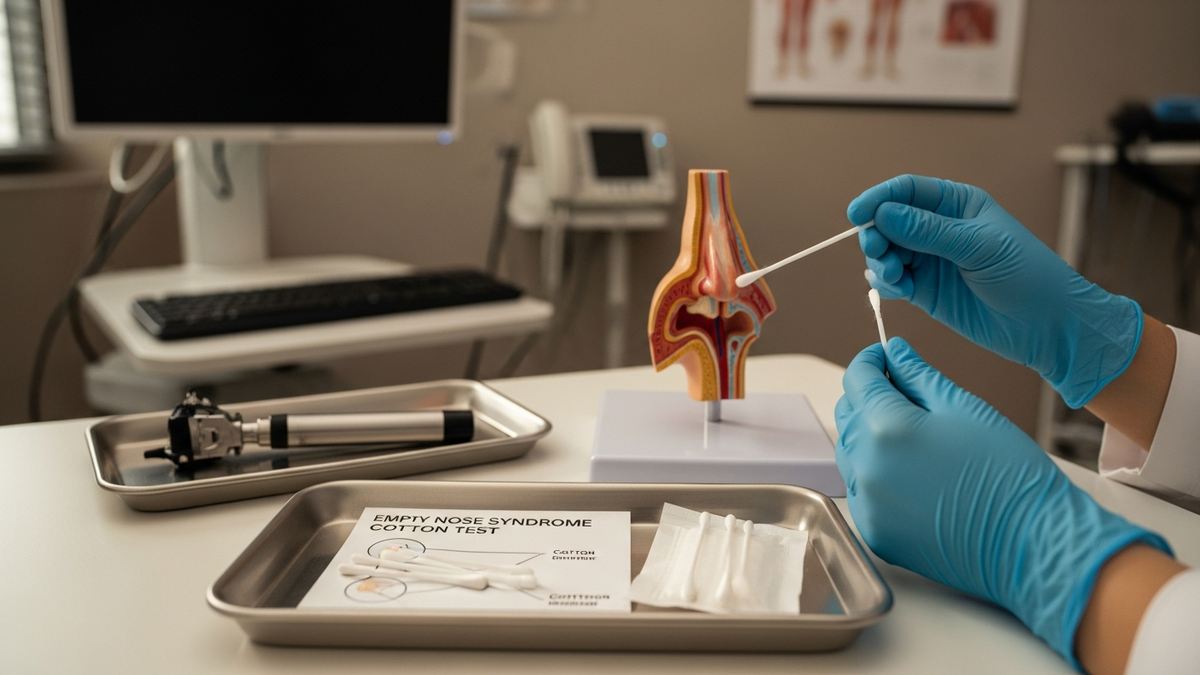
The empty nose syndrome cotton test is typically described as a simple, temporary assessment intended to observe whether symptoms change when the nasal cavity is gently packed or when airflow conditions are altered. The underlying idea is straightforward: if your body’s sensation of airflow improves when the nose is “conditioned” (for example, by adding mild resistance, moisture, or altered airflow pathways), that response can support a hypothesis that sensory perception is being driven by airflow/air-conditioning mechanics.
Importantly, the cotton test is not universally standardized across all practices. Different clinicians may use different materials, durations, and protocols. For that reason, the “test” should be interpreted only in context—alongside your history, nasal endoscopy findings, and objective testing when appropriate.
Why symptom response can matter
In ENS, the problem is not only “how much air is moving,” but also how the nose senses that airflow. Nasal mucosa, airflow patterns, humidity, and sensory nerve function all play roles. If a temporary intervention changes your symptom intensity, it may help guide the direction of treatment—such as focusing on nasal airflow dynamics, humidification strategies, or structural functional repairs.
How the Empty Nose Syndrome Cotton Test Is Typically Performed
Because protocols vary, you should treat any description as general information—not a how-to. A clinician may use a soft cotton material (or similar gentle packing) placed within the nasal passage for a brief period while you report changes in sensations such as air hunger, dryness, or feeling of patency.
What a clinician may observe
- Air hunger changes: Does your sense of adequate airflow improve?
- Dryness or burning changes: Does humid sensation increase?
- Paradoxical obstruction changes: Does “stuffy” improve or worsen?
- Time course: Does the effect appear quickly and fade after removal?
What makes it different from “diagnostic certainty”
Even if symptoms improve during the cotton test, ENS is not confirmed by that response alone. Conversely, if symptoms don’t change, that doesn’t necessarily rule ENS out—because symptoms can be influenced by multiple factors (inflammation, crusting, nasal valve function, and more).
Interpreting Cotton Test Results: What “Improvement” Might Mean
Clinicians often look for symptom modulation. Here are common interpretations in plain language:
If symptoms improve with cotton packing
- Possible sensory/airflow mechanism: Your brain may be responding to altered airflow patterns or increased humidification.
- Potential treatment direction: Strategies that improve airflow conditioning—rather than only enlarging passages—may be considered.
- Further evaluation still needed: Objective measures and endoscopic findings matter.
If symptoms do not improve
- ENS may still be present, but other drivers may dominate (e.g., mucosal disease, nasal valve collapse, septal perforation symptoms, allergy inflammation).
- Different intervention may be needed: Some patients respond better to targeted functional repair or humidification regimens.
ENS Can Overlap With Other Functional Nasal Problems
One reason ENS diagnosis can be challenging is that several functional nasal conditions can produce similar subjective symptoms. A careful evaluation typically includes nasal endoscopy, history of prior nasal procedures, and targeted assessment of airflow mechanics.
Nasal valve collapse
When the nasal valve is weak or collapses during breathing, patients often report difficulty breathing, chronic discomfort, and sometimes nosebleeds. Treatment may include non-surgical measures first (such as allergy medications, steroid/non-steroid approaches, and other non-invasive techniques designed to improve airway patency) or surgical repair in appropriate cases, such as implants or other functional procedures.
Septal perforation
A septal perforation (a hole extending through the septum) can cause chronic bleeding, whistling sounds, and breathing difficulty. In these cases, a septal perforation repair procedure may be necessary to address the underlying structural issue.
Chronic sinusitis and mucus trapping
Chronic inflammation can affect airflow and smell, and mucus trapping can contribute to persistent symptoms. Endoscopic sinus surgery, when indicated, aims to restore normal sinus function by widening sinus passages and helping eliminate trapped mucus and recurrent infections.
Allergies and chronic rhinitis
Allergic inflammation can worsen nasal obstruction and sensory discomfort. Some patients benefit from sublingual immunotherapy (SLIT)—a no-shot method—as an allergy treatment option discussed in modern care pathways.
Why You Should Not Self-Administer “Cotton Tests” at Home
It’s tempting to try a home experiment when symptoms feel unbearable. However, placing materials into the nasal passage without guidance can increase irritation, bleeding risk, or infection risk—and can delay correct diagnosis.
Instead, if you’re considering an empty nose syndrome cotton test, ask your ENT or functional nasal surgeon to explain whether it’s appropriate for your case and how it fits into a broader diagnostic plan.
Evidence-Based Next Steps After an ENS Workup
If you’re exploring ENS and the empty nose syndrome cotton test, the best next steps are typically structured and multidisciplinary. Here’s a practical checklist you can bring to your appointment.
1) Bring a detailed symptom timeline
- When did symptoms start?
- What nasal surgeries or treatments preceded the onset?
- What makes symptoms better or worse (humidity, exercise, seasons, allergies, sprays)?
2) Request a functional nasal evaluation
Ask whether your symptoms could be driven by airflow mechanics (nasal valve, septal alignment), mucosal health (dryness/crusting), or sinus disease. In many cases, a comprehensive exam with endoscopy is foundational.
3) Consider whether structural procedures are relevant to your findings
Depending on what the clinician sees, functional nasal surgery options may include:
- Septoplasty for septal deviations that affect airflow (see Septoplasty).
- Addressing a Deviated Septum (see Deviated Septum).
- Inferior turbinate reduction or other turbinate-focused strategies when appropriate for chronic congestion.
- Repair of nasal valve collapse when structural weakness is identified, sometimes including implants or other functional approaches.
- Septal perforation repair if a perforation is present and symptomatic.
- Balloon sinuplasty or endoscopic sinus surgery when sinus blockage and recurrent infection are part of the picture.
In the ENS context, the guiding principle is not simply to “open more,” but to restore normal function—including airflow conditioning, mucosal health, and sensory comfort.
4) Discuss allergy-focused treatment if inflammation is present
If allergic rhinitis contributes to your symptoms, ask about modern allergy management. Some patients consider sublingual immunotherapy (SLIT)—a no-shot method—as a longer-term approach to reduce inflammatory burden.
5) Use symptom support strategies while you plan definitive care
Many ENS patients benefit from supportive care aimed at improving nasal moisture and comfort. Your clinician may recommend a tailored plan that could include:
- Humidification strategies
- Saline irrigation protocols
- Moisturizing sprays or ointments (when appropriate)
- Avoidance of irritants (smoke, harsh decongestants, overly drying environments)
Because recommendations depend on your anatomy and exam findings, it’s important to follow a plan designed for your specific condition.
Functional Nasal Surgery and ENS: A Patient-Centered Approach
In functional nasal care, the goal is to improve breathing and restore normal nasal function—not to chase cosmetic changes at the expense of function. For patients with chronic congestion or sinusitis, minimally invasive procedures can sometimes widen sinus passages and help restore airflow and smell.
As described in clinical context from functional nasal surgery practice, endoscopic sinus surgery can treat chronic sinusitis by restoring normal sinus function and eliminating trapped mucus, reoccurring sinus infections, and even helping restore the sense of smell.
Similarly, when structural issues exist—such as septal deviation, enlarged turbinates, nasal valve collapse, or septal perforation—functional procedures may be considered to reduce obstruction and improve quality of life.
A note on prior nasal surgery
Many ENS conversations begin after prior interventions. If you’ve had procedures that changed turbinate size or nasal passage geometry, your clinician should review operative notes if available. Understanding what was done helps interpret why your sensation may feel “empty” despite airflow.
When to Seek Urgent Medical Attention
Most ENS-related symptoms are chronic and uncomfortable rather than emergent. However, seek prompt medical evaluation if you experience:
- Severe or persistent nosebleeds
- High fever with facial pain
- Rapidly worsening breathing difficulty
- Signs of infection (significant swelling, pus-like drainage)
FAQ: Empty Nose Syndrome Cotton Test
1) Is the empty nose syndrome cotton test a guaranteed way to diagnose ENS?
No. The cotton test is generally considered an adjunct or bedside observation tool. ENS diagnosis relies on your symptom pattern, nasal exam/endoscopy findings, history of prior surgery, and—when appropriate—objective testing.
2) What does it mean if my symptoms improve during the cotton test?
Improvement may suggest that your sensation of airflow is responsive to changes in airflow conditioning, moisture, or airflow resistance. This can help guide the clinician toward targeted functional and supportive strategies, but it does not replace a full evaluation.
3) What does it mean if my symptoms don’t change during the cotton test?
It may indicate that factors other than airflow conditioning are driving symptoms—such as mucosal disease, chronic sinus inflammation, nasal valve issues, septal perforation symptoms, or allergy-related swelling. Your clinician may recommend other assessments and treatments.
4) Can I try the cotton test at home?
You should not self-administer packing. Materials placed in the nasal passage can cause irritation or injury. Ask your ENT or functional nasal specialist whether the test is appropriate and how it should be performed safely.
5) What treatments are commonly considered after ENS evaluation?
Depending on your findings, clinicians may recommend humidification and nasal comfort strategies, allergy management (including options such as SLIT when appropriate), treatment of sinus disease (for example, balloon sinuplasty or endoscopic sinus surgery when indicated), and functional structural interventions such as septoplasty, nasal valve repair, or septal perforation repair.
How FlowGeniQ Digest Helps You Navigate Medical Questions
FlowGeniQ Digest is designed to help readers find clear, practical answers when medical topics feel confusing or overwhelming. If you’re researching empty nose syndrome cotton test information, our goal is to connect you with structured guidance—so you can ask better questions, understand why certain evaluations matter, and discuss next steps with your clinician.
That said, ENS and related nasal conditions are highly individualized. Your best outcomes come from a personalized plan based on your anatomy, symptoms, prior surgical history, and exam findings.
CTA: Schedule a Functional Nasal Consultation
If you’re experiencing chronic nasal discomfort, air hunger, dryness, or paradoxical obstruction—especially after prior nasal surgery—it’s worth getting a thorough functional evaluation. A clinician can review your history, perform endoscopy, and discuss whether supportive care, allergy treatment, or functional nasal procedures are appropriate for your specific situation.
Ready to take the next step? Consider scheduling a consultation with a board-certified specialist experienced in functional nasal surgery and chronic sinus care. You can also explore related functional nasal procedure pages such as Septoplasty and Rhinoplasty if your evaluation overlaps with structural nasal concerns.
Optional note for readers with broader head-and-neck goals: Some patients also ask about cosmetic facial procedures. If that’s part of your journey, you can review resources like Facelift or Blepharoplasty. These are separate from ENS care and should not be considered alternatives for nasal function treatment.
Professional Disclaimer
This content is provided for general educational purposes only by FlowGeniQ Digest. It is not a substitute for professional advice, diagnosis, or treatment. Readers are advised to consult qualified professionals for personalized recommendations.
Medical Information Disclaimer
This content is provided for general educational purposes only by FlowGeniQ Digest. It is not a substitute for professional advice, diagnosis, or treatment. Readers are advised to consult qualified professionals for personalized recommendations.