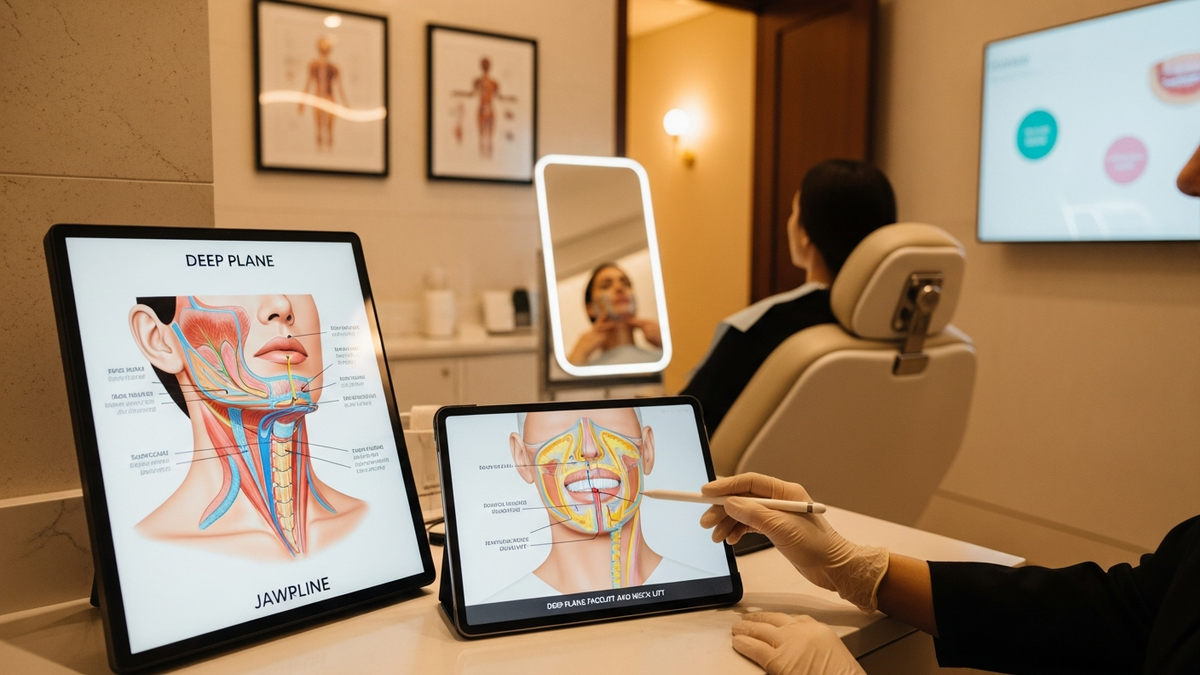
At FlowGeniQ Digest, we’re dedicated to helping readers make confident decisions about advanced cosmetic care. If you’re researching a deep plane facelift and neck lift, you’re likely looking for results that look natural—not “over-tightened”—while targeting the deeper layers of the face and neck where aging often begins.
In Los Angeles, many patients seek facial rejuvenation procedures that restore definition, improve skin laxity, and create a smoother jawline and neck contour. A deep plane approach is designed to do exactly that by repositioning facial tissues more precisely than more superficial techniques. Below, we’ll walk through how a deep plane facelift differs from other facelift styles, what a neck lift can accomplish, how to evaluate candidacy, and what recovery and aftercare typically involve.
What Is a Deep Plane Facelift and Why Does It Matter?
A deep plane facelift is a surgical technique that repositions the face’s deeper soft-tissue layers—often including structures in the mid-to-lower face—through a carefully planned dissection. The goal is to restore youthful facial contours by addressing structural aging, not just surface skin.
How the “deep plane” approach works
Rather than relying solely on tightening the skin, a deep plane facelift aims to support and lift the underlying tissues to improve:
- Jowls and marionette lines by repositioning deeper support
- Jawline definition for a more sculpted look
- Neck-to-face transition to reduce the appearance of a “separated” neck
- Overall facial balance for results that look refreshed rather than pulled
Because the technique targets deeper structures, it can be especially valuable for patients with more advanced sagging or those who want longer-lasting, natural-looking outcomes.
Where Does the Neck Lift Fit In?
A neck lift focuses on the neck area—where early signs of aging can become visible quickly, particularly with changes in skin elasticity and the definition of the platysma muscle. Many patients choose a combined approach because facial aging and neck aging often progress together.
Depending on your anatomy and goals, a neck lift may address:
- Loose neck skin
- Banding or laxity of the platysma
- Submental fullness (sometimes in combination with submental liposuction)
- Improved jawline contour and a smoother neck-to-jaw transition
In many cases, pairing a deep plane facelift with a neck lift provides a cohesive, harmonious result—helping the face and neck appear rejuvenated as a unified structure.
Deep Plane Facelift vs. Traditional Facelift: Key Differences
Patients often compare facelift options because technique choice affects both aesthetics and recovery. While individual surgical plans vary, here are practical, patient-centered distinctions.
1) Tissue layers targeted
- Deep plane: lifts/repositions deeper supportive tissues for structural rejuvenation.
- More superficial approaches: may primarily address skin laxity and less extensive support repositioning.
2) Likely goals and outcomes
- Deep plane: often chosen for more substantial sagging, jowl formation, and patients seeking natural contour restoration.
- Other approaches: may be appropriate for milder laxity depending on anatomy and surgeon assessment.
3) Aesthetic priorities
Both techniques can be effective, but deep plane methods are frequently selected when the patient wants:
- Reduced jowls without a “pulled” look
- Improved mid-to-lower facial support
- More seamless blending between the face and neck
Who Is a Good Candidate for a Deep Plane Facelift and Neck Lift?
Ideal candidates typically have visible signs of aging in the lower face and neck, such as sagging skin, jowls, and contour changes. However, candidacy is ultimately determined by an in-person evaluation of your facial anatomy, skin quality, and medical history.
Common signs you may benefit
- Progressive sagging around the jawline and lower cheeks
- Loose neck skin and/or visible platysma banding
- Loss of definition between the chin, jaw, and neck
- Desire for natural-looking lift and improved facial balance
Factors that influence outcomes
Surgeons evaluate several elements when planning a deep plane facelift and neck lift, including:
- Skin elasticity and thickness
- Degree of volume loss (sometimes addressed with adjunctive rejuvenation strategies)
- Fat distribution (including submental fullness)
- Muscle laxity and neck banding
- Overall health and ability to heal
Questions to ask during consultation
To evaluate whether deep plane technique is right for you, consider asking:
- Which facial layers will you lift and how will that affect the jawline and neck?
- Will my plan include a neck lift, and what will be done to address platysma laxity?
- How do you define “natural” results for patients with my anatomy?
- What are my realistic expectations for scars, swelling, and timeline?
- How do you handle asymmetry and subtle contour differences?
What to Expect During a Deep Plane Facelift and Neck Lift
While every surgical plan is unique, understanding the typical flow can reduce uncertainty. Your surgeon will tailor the approach to your anatomy and desired aesthetic goals.
Preoperative planning
Most comprehensive consultations include:
- Detailed facial assessment (including lower face and neck)
- Discussion of goals and what results you can reasonably expect
- Review of medical history and medications
- Photography for documentation and planning
- Instructions for pre-op preparation (including smoking avoidance and medication adjustments)
Surgical technique overview
In a deep plane facelift, the surgeon repositions deeper tissues to restore support and contour. A neck lift then addresses neck skin laxity and muscle banding, often with a combination of tightening and careful redraping.
Depending on your case, your surgeon may recommend adjunctive options to optimize results—for example, addressing submental fullness with submental liposuction when appropriate.
Incision placement and scar visibility
Facelifts and neck lifts typically use incisions placed to help minimize visible scarring, often around natural contours such as within the hairline or behind the ear. Scar appearance varies based on skin type, healing, and technique.
Recovery Timeline: How Long Does It Take?
Recovery varies by patient and extent of surgery. However, knowing what’s typical can help you plan your schedule and expectations.
Early recovery (first days to 2 weeks)
- Swelling and bruising are common, especially around the cheeks and neck.
- Discomfort is usually manageable with prescribed medication.
- Sleep positioning (often head elevated) may be recommended to reduce swelling.
- Follow-up visits allow monitoring of healing and incision care.
Intermediate recovery (weeks 3 to 6)
- Swelling often begins to settle more noticeably.
- Skin drape and contour definition improve as healing progresses.
- Many patients gradually return to normal activities based on surgeon guidance.
Longer-term results (2 to 3+ months)
Final refinement becomes clearer as tissues fully settle. Many patients feel comfortable judging the overall result by this window, though subtle improvements can continue beyond.
Results: What a Natural Deep Plane Facelift and Neck Lift Can Achieve
A well-executed deep plane facelift and neck lift can create a refreshed appearance by restoring structural support and improving contour transitions. Patients often report benefits such as:
- Reduced jowls and improved jawline definition
- Improved neck contour with less visible banding or laxity
- More youthful facial proportions through balanced tissue repositioning
- A natural-looking lift that avoids an overly tight or “windblown” look
It’s important to remember that aging continues after surgery. The best outcomes reflect both surgical skill and realistic expectations based on your age, skin quality, and lifestyle.
How to Choose a Surgeon for Deep Plane Facelift Technique
Technique matters. So does experience, artistry, and patient education. In Los Angeles, you’ll find many practitioners offering facelifts—but not all approaches are identical.
What to look for
- Board certification and relevant training in facial plastic and reconstructive surgery
- Demonstrated experience with deep plane approaches and neck rejuvenation
- Natural aesthetic philosophy aligned with your facial goals
- Transparent communication about risks, benefits, and limitations
- Before-and-after evidence that reflects outcomes similar to your anatomy
Why facial plastic expertise can be a differentiator
Dr. Hootan Zandifar, MD, FACS, is a board-certified Facial Plastic & Reconstructive Surgeon known for an honest, trustworthy, and compassionate approach. His focus on head and neck surgery supports a patient education-first model—helping individuals understand options and make well-informed decisions. Patients often value this guidance because it can clarify what technique will best match their anatomy and goals.
For more information about facelift options in the Los Angeles area, you can explore Facelift resources from Dr. Zandifar’s practice.
Adjunct Options: Enhancing Your Overall Rejuvenation Plan
Many patients benefit from a comprehensive facial rejuvenation strategy. A deep plane facelift and neck lift may be the central step, but other treatments can complement results depending on needs.
When fat and skin concerns overlap
Neck aging isn’t always only loose skin; fullness under the chin can also contribute to a less defined jawline. In appropriate cases, surgeons may combine a neck lift with submental liposuction to refine the contour.
When facial balance needs additional refinement
Some patients explore other head-and-neck aesthetic procedures to harmonize the face. For example, if your rejuvenation goals include eye area changes, you may want to review Blepharoplasty options. If you’re considering nose refinement for functional or aesthetic reasons, patients often ask about Rhinoplasty.
Note: These procedures are not automatically part of a deep plane facelift plan—they’re simply examples of how patients sometimes broaden their rejuvenation strategy based on individual needs.
Risks and Considerations (What You Should Know Up Front)
Every surgery involves risks. While many patients have excellent outcomes, it’s essential to discuss potential complications with your surgeon during consultation. Common considerations include:
- Swelling and bruising (expected, temporary)
- Scarring (heals over time; visibility varies)
- Changes in sensation around incisions (often temporary)
- Asymmetry (natural facial differences may require management)
- Infection or delayed healing (uncommon but possible)
- Seroma or fluid collection (rare; surgeon-guided care
- Hairline or incision healing considerations based on skin type and technique
Your surgeon should help you understand how your personal health history affects risk and recovery.
Actionable Pre-Op and Aftercare Recommendations
Preparation and recovery habits can meaningfully influence your experience and results. While your surgeon’s instructions always take priority, here are general best practices commonly recommended for facelift and neck lift patients.
Before surgery
- Stop smoking well in advance (if applicable). Nicotine can impair healing.
- Review medications with your surgical team, including supplements that may affect bleeding.
- Plan recovery support: arrange help for the first days after surgery.
- Prepare your sleep setup: head elevation is often recommended.
- Follow pre-op instructions precisely to reduce avoidable complications.
After surgery
- Attend all follow-ups for incision checks and healing guidance.
- Wear supportive garments if prescribed.
- Protect incisions with gentle care per surgeon instructions.
- Avoid strenuous activity until cleared.
- Be patient with swelling: early results are not always the final result.
Deep Plane Facelift and Neck Lift in Los Angeles: Why Local Expertise Matters
Choosing a surgeon in Los Angeles can offer practical advantages: access to specialized facial plastic expertise, the ability to schedule timely follow-up appointments, and a clinic environment designed for head-and-neck surgical care.
When you’re evaluating a deep plane facelift and neck lift, consider how the practice supports patient education and postoperative guidance—elements that can make recovery smoother and outcomes more predictable.
Related Q&A: How Facial Procedures Work Together
Patients sometimes have multiple concerns—breathing, facial balance, and aging. While your deep plane facelift plan will be individualized, it can help to understand how other procedures may relate to overall head-and-neck goals.
Functional breathing concerns and surgical planning
Some patients also experience nasal obstruction due to structural issues such as a deviated septum. If you’re exploring functional nasal procedures, you may want to review Septoplasty and how it addresses a Deviated Septum. Functional treatments can improve quality of life, though they are separate from facelift technique.
Hair and eyebrow considerations
Facial rejuvenation isn’t only about skin and tissue repositioning. Some patients also consider hair restoration to improve overall harmony. If hair loss is part of your aesthetic goals, you can explore a hair transplant option. Similarly, for eyebrow thinning, an eyebrow transplant may be considered for focal facial balance.
Deep Plane Facelift and Neck Lift FAQ
1) How long do deep plane facelift and neck lift results typically last?
While individual results vary, many patients experience long-lasting improvements because the technique addresses deeper structural support. Your aging timeline, skin quality, and lifestyle factors (including sun exposure and smoking) can influence longevity.
2) Will a deep plane facelift look natural?
When performed with careful planning and appropriate tension, deep plane facelift results are often designed to look natural and balanced. The objective is contour restoration—not an overly tight or unnatural appearance.
3) What is the recovery like after a neck lift?
Expect swelling and bruising in the first days to weeks. Many patients can resume normal daily activities gradually within a few weeks, with more visible refinement as swelling decreases over time. Your surgeon will provide a personalized timeline.
4) Is a neck lift always necessary with a facelift?
Not always. Some patients have primarily facial laxity without significant neck changes, while others benefit from a combined approach. Your surgeon will assess the face-to-neck transition and recommend the plan that best matches your anatomy and goals.
5) Who should consider a deep plane technique specifically?
Deep plane technique is often considered for patients with more pronounced sagging in the lower face and neck who desire structural repositioning and natural contour restoration. The right approach depends on your facial anatomy and the surgeon’s assessment.
Ready to Explore Your Options?
If you’re considering a deep plane facelift and neck lift, the best next step is a consultation focused on your anatomy, goals, and realistic expectations. At FlowGeniQ Digest, we encourage you to seek a surgeon who prioritizes education and individualized planning—because the most satisfying outcomes come from alignment between technique and your unique facial structure.
CTA: Schedule an in-person evaluation with a qualified facial plastic and reconstructive surgeon to discuss whether a deep plane facelift, neck lift, or a combined approach is right for you. Use your consultation to ask about tissue layers, recovery expectations, and the aesthetic goals you want to achieve.
Professional Disclaimer
This content is provided for general educational purposes only by FlowGeniQ Digest. It is not a substitute for professional advice, diagnosis, or treatment. Readers are advised to consult qualified professionals for personalized recommendations.
Medical Information Disclaimer
This content is provided for general educational purposes only by FlowGeniQ Digest. It is not a substitute for professional advice, diagnosis, or treatment. Readers are advised to consult qualified professionals for personalized recommendations.