FlowGeniQ Digest is often asked about the “celebrity upper blepharoplasty before and after” transformation—those crisp, refreshed eyelids that can make someone look more rested, alert, and youthful. But behind every viral photo is a medical plan tailored to the patient’s eyelid anatomy, skin quality, brow position, and visual goals.
In this guide, we’ll break down what upper blepharoplasty can realistically change, what results commonly look like in the weeks and months after surgery, and how to evaluate risk, recovery, and surgeon fit. We’ll also cover how to spot red flags when comparing before-and-after photos—and why “natural-looking” is not just a buzzword in facial plastic surgery.
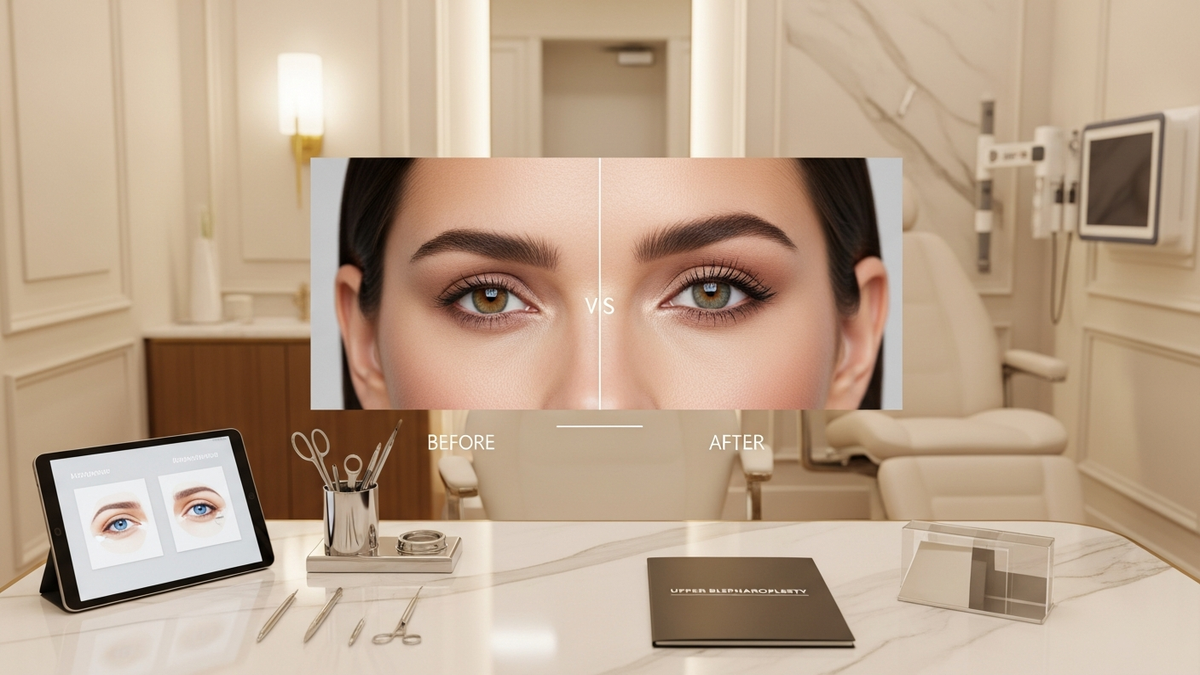
What “celebrity upper blepharoplasty before and after” usually shows
When people search for celebrity upper blepharoplasty before and after, they’re typically responding to a few consistent visual themes:
- Reduced upper eyelid heaviness: Skin that drapes over the lash line appears less prominent.
- More defined eyelid crease: Many patients regain a smoother, more visible fold.
- Improved “tired” appearance: Puffiness or mild hooding can create a fatigued look—even when someone is well-rested.
- Balanced eye openness: The goal is to restore a natural, rested look rather than an overly “tight” or surprised expression.
However, not all “upper bleph” results look the same. The eyelids are part of a larger system that includes the brow, forehead, orbital fat, and even how the face moves. That’s why two people can undergo the same procedure and have different outcomes.
Upper blepharoplasty basics: what the surgeon actually does
Upper blepharoplasty (often called eyelid surgery) is designed to address issues of the upper eyelids. Depending on the patient, that may include:
- Excess upper eyelid skin that creates hooding
- Fat herniation that contributes to puffiness
- Skin laxity that blurs the eyelid crease
- Subtle asymmetries that are improved through careful planning
In many cases, the surgeon removes a precise amount of skin and may reposition or tailor fat to create a smoother contour. Incisions are placed along the natural eyelid crease so that healing can produce a discreet scar.
For those exploring options, you can read more about the procedure at Blepharoplasty, where surgical goals and candidacy are typically discussed in a clinical, patient-education-focused way.
Celebrity results vs. real-world outcomes: why the difference matters
Celebrity before-and-after photos are compelling, but they’re not a “one-size-fits-all” blueprint. Several factors influence how results look:
- Lighting and camera angle: A face can appear more open under brighter lighting or with a different lens.
- Makeup and styling: Brows, lashes, and eyeliner can dramatically change perceived eyelid contour.
- Combination procedures: Many celebrities undergo more than one treatment (for example, a brow lift or laser resurfacing) to optimize the final look.
- Different starting anatomy: Some people have true skin excess; others have more fat prominence or brow positioning issues.
- Technique and tissue handling: The surgeon’s approach to skin/fat balance determines whether the outcome looks natural.
Key takeaway: The best “celebrity-like” results are usually achieved when the plan is individualized and conservative where appropriate—especially for patients who want a subtle, rested appearance.
Who is a strong candidate for upper blepharoplasty?
Candidacy varies, but common reasons people seek upper eyelid surgery include:
- Upper eyelid skin that drapes and partially covers the lash line
- Visual fatigue or functional concerns from hooding (some patients report improved field of view after surgery)
- Persistent puffiness or fullness that does not resolve with lifestyle changes
- Desire for a more defined eyelid crease with a natural expression
During a consultation, a skilled facial plastic surgeon evaluates eyelid skin quality, eyelid position, fat distribution, brow height, and facial movement. That assessment is essential because sometimes the upper eyelids are not the only contributor to the “tired” look.
Upper blepharoplasty before and after: timeline of what patients often notice
Even when the final outcome is excellent, healing can look dramatic in the early stages. Below is a typical timeline patients often discuss when comparing celebrity upper blepharoplasty before and after images—just remember each patient’s swelling and bruising patterns differ.
First week (days 1–7): swelling, bruising, and tightness
- Swelling and bruising: Often most noticeable around days 2–4.
- Watering or dryness sensation: Temporary irritation can occur as tissues heal.
- Vision may feel “off” temporarily: Not because of eye damage, but due to swelling and discomfort.
Many patients can return to light social activities depending on comfort and appearance, but they may still look noticeably swollen.
Weeks 2–4: crease definition starts to appear
- Bruising resolves: Color changes fade.
- Incisions begin to blend: The eyelid crease often becomes more defined.
- Tightness decreases: Healing tissues regain flexibility.
At this stage, the “after” can begin to look more like what people expect from celebrity transformations—though final refinement is still ahead.
Months 2–6: settling, scar maturation, and final contour
- Swelling continues to settle: Subtle fullness may gradually diminish.
- Scars soften: Incisions typically become less noticeable over time.
- Expression becomes more natural: As tissues heal, the eyelid movement often looks more fluid.
Most patients evaluate their final result around 3–6 months, though long-term scar maturation can continue beyond that.
What results should look like (and what to watch for)
A high-quality upper blepharoplasty aims for a balance: youthful openness without creating an artificial “over-corrected” look. Here’s what many patients and surgeons consider desirable:
- Natural eyelid crease that fits the person’s anatomy
- Symmetry that is refined as healing progresses
- Smooth contour without lumps or irregularities
- Comfort as the eyes heal (not constant irritation)
- Rested expression rather than an exaggerated stare
Potential complications exist with any surgery. While many patients have uneventful recoveries, it’s important to know what can happen. Early concerns to report promptly include:
- Persistent or worsening pain beyond expected healing
- Increasing redness or discharge
- Significant asymmetry that does not improve
- Difficulty closing the eye or severe dryness symptoms
Risks and side effects of upper blepharoplasty
To make informed decisions, patients should understand common and less common risks. Upper blepharoplasty can include:
- Swelling and bruising (expected, typically temporary)
- Dry eye symptoms or irritation during healing
- Infection (uncommon, but possible)
- Bleeding or hematoma (rare, but urgent)
- Scarring (usually discreet, but visible scars can occur)
- Asymmetry (often improves; sometimes revision is needed)
- Changes in eyelid position such as under-correction or over-resection
Choosing a surgeon who performs head and neck cosmetic and reconstructive surgery with a focus on natural outcomes can help reduce risk and improve predictability.
How to evaluate “celebrity upper blepharoplasty before and after” photos safely
Not all before-and-after images are equally informative. When you’re comparing results, look for:
- Consistent timing: Are the “after” photos taken at a comparable healing stage (e.g., 3–6 months)?
- Similar lighting and expression: Avoid judging based on a wide smile or heavy makeup.
- Multiple angles: Good photo sets show front view and mild side angles.
- Natural eyelid movement: The eyelid should appear balanced during expression.
- Credible clinical context: Does the clinic explain what was addressed (skin excess, fat, brow position)?
Also, remember that many people who look dramatically transformed may have had additional procedures. If the goal is subtle, you should ask your surgeon what combination (if any) is appropriate for your anatomy.
When upper blepharoplasty isn’t enough: brow lift and related considerations
One common reason patients don’t get the expected “after” is that the brow position contributes to eyelid hooding. If the brow is low or the forehead has certain dynamics, removing eyelid skin alone may not fully correct the look.
In those situations, a brow lift (sometimes called a forehead lift or browplasty) may be considered to raise the brow and improve the overall eye appearance. A consultation will clarify whether eyelid surgery alone is appropriate or whether brow support is needed.
For many patients seeking a comprehensive approach to facial aging, you can also explore Facelift options when broader midface or lower face concerns are present.
Choosing a surgeon: what to ask before scheduling
Because eyelid outcomes are highly dependent on technique and tissue handling, questions matter. Consider asking:
- How do you personalize the amount of skin/fat removed?
- How do you assess brow position and eyelid function?
- What does your typical recovery timeline look like?
- What risks are most relevant for my anatomy?
- How do you handle asymmetry or under/over-correction?
- Can you show before-and-after photos at similar timepoints?
For patients in Los Angeles and Beverly Hills, working with a board-certified facial plastic and reconstructive surgeon with focused head-and-neck expertise can provide a more cohesive approach to the face as a functional and aesthetic unit.
Dr. Hootan Zandifar and a head-and-neck focus for natural eyelid outcomes
At Hootan Zandifar, MD, FACS, the philosophy centers on natural-looking results through rigorous training and patient education. Dr. Zandifar focuses solely on cosmetic and reconstructive surgery of the head and neck, which allows for highly specialized planning for eyelid rejuvenation and related facial aging concerns.
Patients often value this approach because it emphasizes:
- Safety and trust: Clear, honest discussions about what surgery can and cannot do.
- Natural aesthetics: Outcomes designed to preserve facial expression and harmony.
- Education: Helping patients understand the process—from consult to recovery.
As a board-certified facial plastic and reconstructive surgeon with fellowship training and extensive experience, Dr. Zandifar’s goal is to help patients look their best while feeling confident in the plan.
Recovery preparation: practical steps for a smoother journey
While you can’t control every variable in healing, you can prepare to support recovery and reduce avoidable setbacks. Common recommendations include:
- Plan for downtime: Arrange help for the first few days if possible.
- Use cold compresses as directed: Follow your surgeon’s specific schedule.
- Sleep with your head elevated: Helps minimize swelling.
- Follow medication instructions carefully: Take prescribed meds as directed; avoid changes without guidance.
- Protect your eyes: Use lubrication if recommended and avoid rubbing.
- Attend follow-ups: Monitoring early healing helps catch issues quickly.
If you’re comparing your expected recovery to celebrity stories, remember: celebrities may have different support systems (nursing, quick imaging, makeup artists, controlled schedules). Your recovery should be guided by medical advice, not social media timelines.
Frequently overlooked details that affect upper blepharoplasty outcomes
Some factors don’t get enough attention in online discussions, yet they can influence the quality of results:
1) Eyelid function matters as much as skin
Upper blepharoplasty is not only cosmetic. The eyelids are responsible for lubrication and protection of the ocular surface. A surgeon must evaluate how the eyelid closes and how much exposure may occur after surgery.
2) Dry eye risk should be addressed early
Dry eye symptoms can worsen temporarily after eyelid surgery. Pre-existing dryness or certain medications may increase risk, so it’s important to discuss your eye history.
3) Brow/forehead dynamics can change your “after” look
If brow position is a primary driver of hooding, the best outcome may require addressing the brow rather than only the eyelid skin.
How this connects to other head-and-neck procedures (and why it’s relevant)
Facial aesthetics and function are interconnected. For example, nasal breathing concerns can affect sleep quality and overall facial appearance, which is why some patients explore related options alongside aesthetic rejuvenation.
If you have chronic nasal obstruction, you may read about Septoplasty and how a Deviated Septum can contribute to breathing difficulties. While that’s not the same as upper blepharoplasty, improved sleep and comfort can influence how rested you look day-to-day.
Similarly, some patients consider other facial rejuvenation procedures like Rhinoplasty when structural nasal issues and aesthetic goals overlap.
FAQ: Celebrity upper blepharoplasty before and after
How long until upper blepharoplasty results look “normal”?
Many patients see meaningful improvement by 2–4 weeks as bruising resolves and the crease becomes clearer. Final contour and scar softening typically continue over 3–6 months, though healing varies by individual.
Can upper blepharoplasty create a “surprised” or unnatural look?
It can, particularly if too much skin is removed or if eyelid/brow dynamics aren’t properly evaluated. A conservative, anatomy-driven plan and careful technique are key to maintaining natural expression.
Are celebrity before-and-after photos taken at the same healing stage?
Not always. Some images are taken soon after surgery when swelling is still changing the eyelid shape. For accurate comparisons, look for after photos taken at similar timepoints—commonly around several months.
What are the most common side effects after upper blepharoplasty?
Swelling, bruising, tightness, and temporary dryness or irritation are common. Serious complications are less common but require prompt medical attention if symptoms worsen.
How do I know if I need a brow lift instead of only upper blepharoplasty?
If eyelid hooding is driven largely by brow position or forehead dynamics, a brow lift may be recommended. Your surgeon should assess brow height, eyelid function, and how your brows move during facial expression.
CTA: Ready for a personalized upper blepharoplasty plan?
If you’re inspired by celebrity upper blepharoplasty before and after results but want an outcome that fits your anatomy, the next step is a consultation. At Hootan Zandifar, MD, FACS, the focus is on patient education and natural-looking rejuvenation through specialized head-and-neck expertise.
Schedule an evaluation to discuss your eyelid concerns, recovery expectations, and the most appropriate surgical approach—whether that’s upper blepharoplasty alone or a more comprehensive plan.
Professional Disclaimer
This content is provided for general educational purposes only by FlowGeniQ Digest. It is not a substitute for professional advice, diagnosis, or treatment. Readers are advised to consult qualified professionals for personalized recommendations.
Medical Information Disclaimer
This content is provided for general educational purposes only by FlowGeniQ Digest. It is not a substitute for professional advice, diagnosis, or treatment. Readers are advised to consult qualified professionals for personalized recommendations.