From the FlowGeniQ Digest editorial team
Buttock fat grafting—often discussed alongside the Brazilian Butt Lift (BBL)—is one of the most sought-after cosmetic procedures for people who want a more contoured, youthful shape. Instead of using implants, buttock fat grafting transfers fat from one area of the body to the buttocks to enhance volume and improve proportions. In this FlowGeniQ Digest guide, we’ll walk through how the procedure works, what results to realistically expect, and the safety considerations that matter most.
What Is Buttock Fat Grafting?
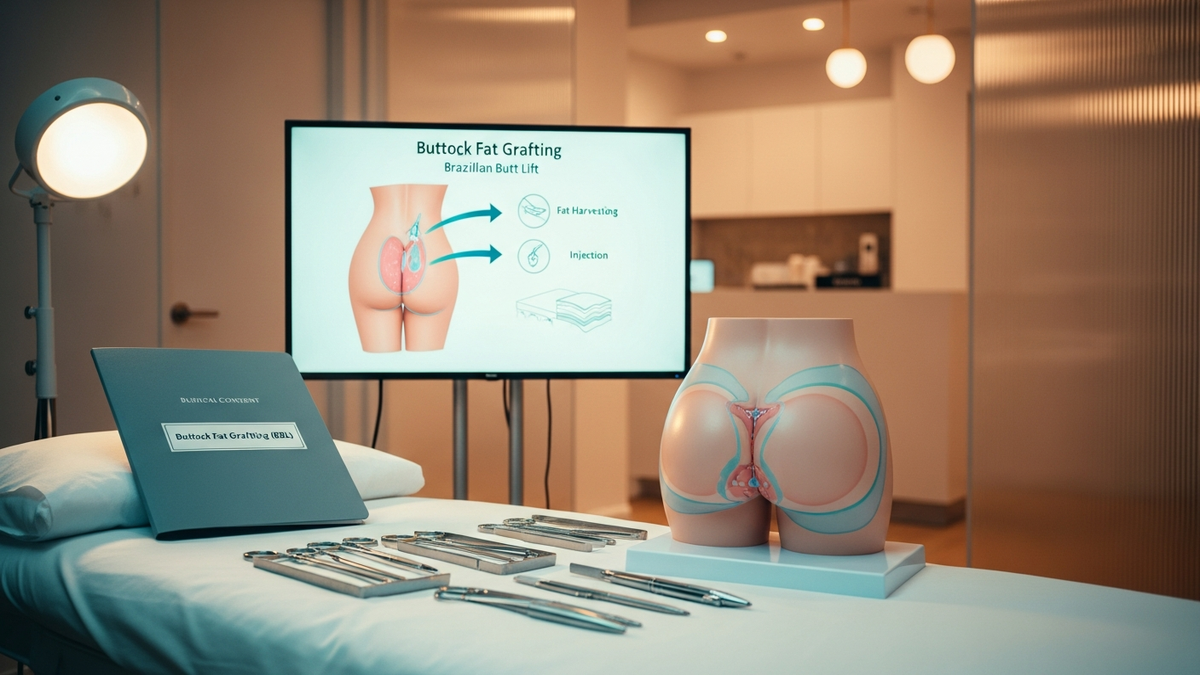
Buttock fat grafting is a surgical technique that uses a person’s own fat to add shape and volume to the buttocks. The process typically includes three key steps:
- Fat harvesting (liposuction) from a donor area such as the abdomen, flanks, or thighs.
- Fat processing to concentrate and prepare viable fat cells for transfer.
- Fat injection into the buttocks in carefully planned layers and distribution.
The goal is not only “more volume,” but also improved shape—such as lifting the appearance of the buttocks, enhancing the curve, and harmonizing the waist-to-hip ratio.
Buttock Fat Grafting vs. Butt Implants
People often compare buttock fat grafting with implants. While both can create fuller contours, the differences are important:
- Material: Fat grafting uses your own tissue; implants use synthetic devices.
- Donor sites: Fat grafting requires liposuction elsewhere; implants do not.
- Natural feel: Many patients prefer fat grafting for a softer, more natural texture.
- Volume variability: Not all transferred fat survives; results can change as swelling resolves and as some fat is reabsorbed.
Choosing between the two depends on your anatomy, goals, body composition, and safety profile.
Who Is a Good Candidate for Buttock Fat Grafting?
Ideal candidates usually share several characteristics:
- Realistic expectations about how much volume will remain long-term.
- Sufficient donor fat for harvesting (or access to additional fat sources, when appropriate).
- Good overall health and the ability to follow post-op instructions.
- Non-smoker status or willingness to stop nicotine well in advance (your surgeon will specify timing).
- Stable weight so results hold with fewer changes over time.
Factors That May Affect Candidacy
- Low body fat can limit the amount of usable fat for transfer.
- Medical conditions (e.g., uncontrolled diabetes or clotting disorders) may require additional evaluation.
- Previous surgeries or scarring can affect fat harvesting and injection planning.
How Buttock Fat Grafting Works (Step-by-Step)
1) Consultation and Body Mapping
Your surgeon should evaluate your goals, body proportions, skin quality, and fat availability. A thoughtful plan includes:
- Donor site selection for liposuction
- Buttock shape goals (e.g., lift, projection, contour symmetry)
- Marking injection zones and determining how fat will be distributed
- Discussion of expected swelling and long-term fat survival
2) Fat Harvesting (Liposuction)
Fat is gently removed using liposuction techniques designed to preserve fat cell viability. The donor area is selected based on aesthetics and the availability of fat.
3) Fat Processing
Fat processing methods vary by surgeon. The objective is to separate unwanted components while maintaining viable fat cells so they can integrate successfully after transfer.
4) Injection Technique
Injection technique is central to both aesthetics and safety. A surgeon should place fat in a way that supports survival and improves contour while minimizing complications. The distribution pattern matters: strategic, layered placement often creates a smoother, more natural look.
Benefits of Buttock Fat Grafting
When performed by an experienced, safety-focused surgical team, buttock fat grafting may offer:
- Natural-looking curves using your own tissue
- Dual benefits of contouring donor areas (liposuction + buttock enhancement)
- Soft texture compared with many implant-based options
- Customization for projection, lift, and symmetry
Risks and Safety Considerations (Read This Carefully)
Any surgical procedure carries risks. With buttock fat grafting, it’s especially important to prioritize safety standards, because fat transfer procedures have known complication pathways when performed incorrectly. Reputable providers should discuss risks clearly and explain their safety protocols.
Common Risks
- Swelling and bruising (expected early on)
- Asymmetry during healing (often improves over time)
- Fat reabsorption leading to less volume than initially seen
- Infection (rare with proper sterile technique and post-op care)
- Seroma or fluid collection
- Contour irregularities such as lumps or unevenness
Why Technique and Training Matter
The injection plane, cannula handling, and overall surgical strategy influence outcomes and complication risk. Ask your surgeon about:
- Their specific approach to fat injection and safety protocols
- How they assess and manage donor fat viability
- How they document outcomes (before/after photos, follow-up data)
- What their team does to reduce risk and manage emergencies
Important: Avoid “guaranteed results” marketing. Legitimate providers should discuss variability, including how much fat typically survives and why.
Recovery Timeline for Buttock Fat Grafting
Recovery is not just about time—it’s about protecting the transferred fat while your body heals. Your surgeon’s instructions should guide your plan. Below is a general recovery framework many patients experience after buttock fat grafting.
First Week
- Rest and limited movement are usually recommended.
- Compression garments help reduce swelling and support contouring.
- Bruising and soreness are common, especially at the donor sites.
- Sleeping positioning may be critical (often avoiding direct pressure on the buttocks).
Weeks 2–4
- Swelling may gradually improve, though it can persist.
- Some patients return to light activities as cleared by their surgeon.
- Monitoring for redness, warmth, fever, or unusual pain is important.
Weeks 4–8
- Many patients can increase activity, depending on healing.
- Volume can appear to change as swelling settles and fat stabilizes.
3–6 Months (and Beyond)
Long-term results often become clearer after several months. Final contour and projection depend on fat survival, your healing response, and adherence to post-op guidance.
How to Prepare for Buttock Fat Grafting
Preparation can influence both comfort and outcomes. While your surgeon will provide personalized instructions, the following steps are commonly recommended:
Pre-Op Checklist
- Schedule your recovery time so you can rest and limit travel.
- Plan your home setup: easy access to essentials, supportive seating, and comfortable sleeping arrangements.
- Follow medication guidance: your surgeon may advise stopping certain medications and supplements before surgery.
- Stop nicotine well before surgery (including vaping and nicotine patches unless approved by your surgeon).
- Arrange follow-up visits so your surgeon can track healing and address concerns early.
Don’t Skip the “Safety Questions”
During your consultation, consider asking:
- What technique do you use for fat injection and why?
- How do you decide the right amount of fat to transfer?
- What are your complication rates and how are complications managed?
- What does your typical recovery plan look like for pressure avoidance?
Results: What You Can Expect (and Why They Vary)
One of the most misunderstood aspects of buttock fat grafting is volume change over time. After surgery, swelling can temporarily increase size. As swelling resolves, you may see:
- Early appearance: fuller look due to swelling and initial graft volume.
- Mid-phase adjustment: some fat may reabsorb; contour can soften or change.
- Long-term stabilization: surviving fat integrates and results become more consistent.
Because each body is different, “how much fat survives” can vary. The best approach is to focus on proportion and quality of contour, not just immediate volume.
Choosing the Right Surgeon and Clinic
For buttock fat grafting, choosing a qualified provider is one of the most impactful decisions you’ll make. Look for a surgeon who:
- Is board-certified (and able to explain their credentials clearly)
- Has extensive experience with fat grafting procedures
- Provides transparent, educational consultations
- Shows realistic before/after examples and discusses variability
- Prioritizes safety protocols and post-op support
Why Education Matters
At FlowGeniQ Digest, we emphasize patient education because informed decisions lead to safer, more satisfying outcomes. A trustworthy surgeon should educate you on risks, recovery expectations, and how results evolve.
Related Procedures You Might Also Consider
Many patients explore other aesthetic goals alongside body contouring. While these are different procedures, they often come up during broader consultation planning.
- If you’re considering facial rejuvenation, you may compare options such as Facelift for age-related changes.
- Some patients also ask about Rhinoplasty when they want to refine facial harmony.
- For eyelid concerns, Blepharoplasty may be discussed as part of an overall appearance plan.
Note: Dr. Hootan Zandifar is known for focusing on cosmetic and reconstructive surgery of the head and neck. If your goals are body contouring-related, you’ll want to consult a specialist whose practice centers on those procedures.
Frequently Asked Questions About Buttock Fat Grafting
How long does buttock fat grafting take?
Procedure time varies based on donor area size, amount of fat harvested, and the complexity of injection planning. Your surgeon can provide an estimated timeline during consultation.
Will I need more than one procedure?
Some patients achieve their desired results with one surgery, while others may consider a revision or touch-up after fat stabilization. Your surgeon can discuss realistic expectations based on your anatomy and goals.
How soon can I return to normal activities?
Many patients limit activity for at least several weeks. Returning to work and exercise depends on your job demands and healing progress. Follow your surgeon’s clearance schedule.
Is buttock fat grafting painful?
Discomfort is common, especially during the early recovery phase. Pain levels typically vary by individual and surgical extent. Your surgeon should provide guidance on pain control and what symptoms require prompt evaluation.
What affects how much fat survives?
Fat survival depends on factors such as fat processing method, injection technique, your health, and how well you protect the grafted area during recovery. Avoiding premature pressure on the buttocks is often emphasized.
CTA: Ready to Explore Your Options?
If you’re considering buttock fat grafting, the smartest next step is an in-person consultation with a qualified, safety-focused surgical team. You’ll get personalized guidance on candidacy, realistic volume expectations, and a recovery plan tailored to your body.
Take action today: schedule your consultation, bring your questions, and request a clear explanation of technique, safety protocols, and long-term outcome expectations. If you’re also exploring other cosmetic goals, consider discussing your full aesthetic plan so your care can be coordinated thoughtfully.
Professional Disclaimer
This content is provided for general educational purposes only by FlowGeniQ Digest. It is not a substitute for professional advice, diagnosis, or treatment. Readers are advised to consult qualified professionals for personalized recommendations.
Medical Information Disclaimer
This content is provided for general educational purposes only by FlowGeniQ Digest. It is not a substitute for professional advice, diagnosis, or treatment. Readers are advised to consult qualified professionals for personalized recommendations.