Source: FlowGeniQ Digest
In the world of cosmetic enhancement, buttock augmentation fat grafting remains one of the most sought-after options for people who want a more balanced silhouette using their own tissue. Whether you’re exploring a Brazilian-style fat transfer approach or simply comparing alternatives, understanding how fat grafting works—and what determines your final look—can help you make a more informed decision.
In this guide, we’ll walk through the fundamentals of buttock augmentation fat grafting: who may be a good candidate, how surgeons plan volume and shape, what recovery typically looks like, and what risks to discuss before moving forward. We’ll also cover practical questions you can bring to a consultation in Los Angeles.
What Is Buttock Augmentation Fat Grafting?
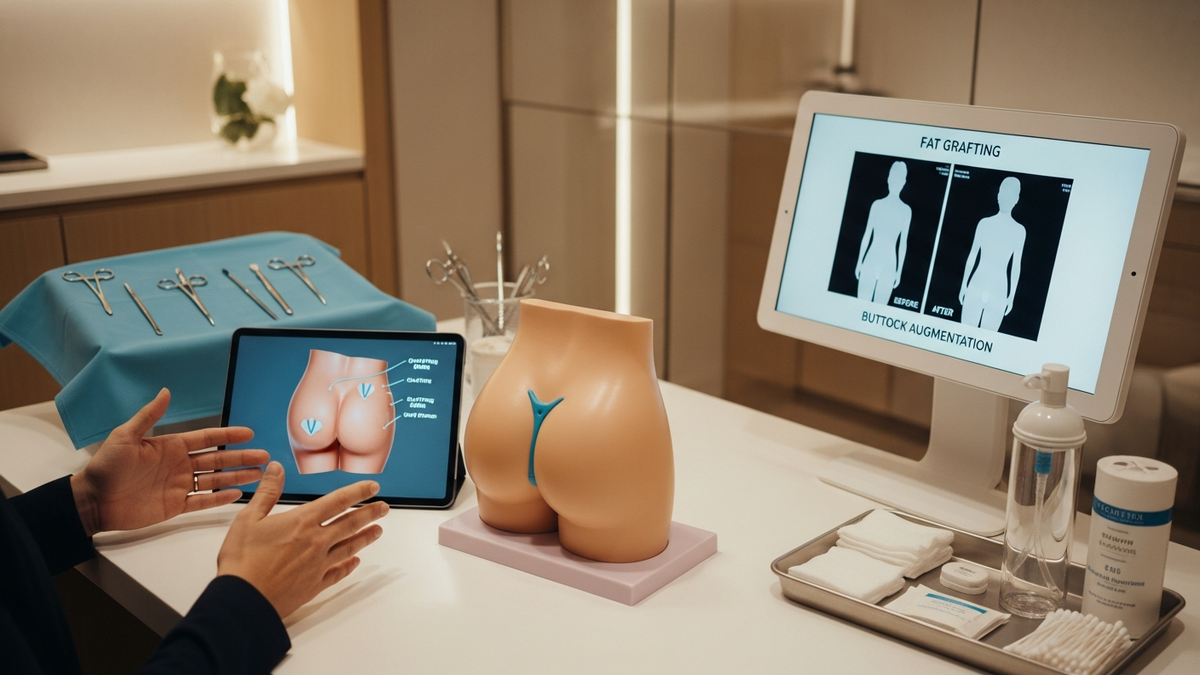
Buttock augmentation fat grafting is a cosmetic procedure that enhances the buttocks using autologous fat—fat harvested from one area of your body (commonly the abdomen, flanks, or thighs) and carefully processed before being injected into the buttock region.
The goal is not simply to “add volume,” but to improve contour, projection, and shape in a way that looks natural in motion and in different lighting. For many patients, this approach offers a more integrated result than implants because it uses the body’s own tissue.
How fat grafting differs from implants
- Material: Fat grafting uses your own fat; implants use synthetic devices.
- Feel and movement: Fat may blend more seamlessly with surrounding tissue, potentially creating a softer look.
- Longevity: Some transferred fat may reabsorb over time; results often stabilize after healing.
- Scarring profile: Fat grafting typically involves small access sites for liposuction and injections, though scarring varies by technique.
Why People Choose Fat Transfer for Buttock Augmentation
People pursue buttock augmentation fat grafting for many reasons, including:
- Body proportion goals: Creating a more balanced waist-to-hip ratio
- Volume restoration: Addressing age-related changes or post-pregnancy contour shifts
- Desire for natural-looking shape: Enhancing curves while maintaining individuality
- Dual benefit: Targeting unwanted fat in donor areas while refining the buttocks
At FlowGeniQ Digest, we emphasize that the “best” option is the one that aligns with your anatomy, goals, and risk tolerance—not a one-size-fits-all trend.
Ideal Candidates: Are You a Good Fit?
Not everyone is an ideal candidate for buttock augmentation fat grafting. Surgeons typically evaluate factors such as fat availability, skin quality, overall health, and realistic expectations.
Common candidacy factors
- Sufficient donor fat: Enough fat to harvest and process for meaningful augmentation
- Good skin elasticity: Helps the buttock area adapt to new volume
- Stable weight: Major weight fluctuations can affect results
- Non-smoker or willingness to stop: Smoking can impair healing and fat survival
- Good overall health: Helps reduce complications and supports recovery
When implants or alternatives may be considered
If you have limited donor fat, very low skin quality, or specific structural concerns, your surgeon may discuss alternatives. In some cases, a combined plan (e.g., contouring plus grafting) or a different augmentation approach may provide better outcomes.
Pre-Procedure Planning: The Foundation of Natural Results
One of the most important predictors of a satisfying result is preoperative planning. During your consultation, expect a thorough discussion about your goals, medical history, and anatomy.
What planning typically includes
- Assessment of proportions: Hip width, waist definition, and side-view contour
- Donor site selection: Identifying areas with safe, harvestable fat
- Volume mapping: Creating a strategy for where fat should be placed for projection and shape
- Skin and tissue evaluation: Considering how your skin will respond to volume changes
- Risk and safety review: Discussing complications and how the surgical team mitigates them
In Los Angeles, many patients also compare procedures across specialties. While buttock augmentation fat grafting is a body contouring topic, it’s still helpful to remember that surgical planning is the same principle across cosmetic surgery—clear goals, careful technique, and patient-specific decision-making.
The Procedure: Step-by-Step Overview
Although exact steps vary by surgeon and technique, buttock augmentation fat grafting generally follows a structured sequence.
Step 1: Liposuction (fat harvesting)
Fat is typically harvested using liposuction from chosen donor areas. The goal is to obtain viable fat cells while minimizing trauma. Surgeons often pay close attention to cannula selection, suction settings, and handling to support graft survival.
Step 2: Fat processing
Collected fat is processed to separate and prepare fat for injection. Processing methods vary and may include filtration or centrifugation. The guiding principle is to keep fat cells viable and remove unwanted components.
Step 3: Injection and sculpting
Processed fat is injected into the buttock region using detailed placement strategies. Many surgeons inject in controlled layers and in specific zones to enhance projection, create a smoother contour, and reduce irregularities.
Because fat survival can vary, surgeons may discuss the possibility of staged volumes or “touch-up” sessions in some cases. Your plan should reflect your anatomy and desired outcome.
Results: What You Can Expect (and When)
Fat grafting results typically evolve over time. Understanding the timeline can help you avoid premature judgments and set realistic expectations.
Typical timeline
- First days to weeks: Swelling and bruising are common; the area may look larger than expected temporarily.
- Weeks 4–12: Swelling gradually decreases; the contour becomes clearer.
- Months 3–6: Results often continue to refine as fat stabilizes.
- After ~6 months: Many patients see a more stable final look, though subtle changes can continue.
It’s also important to note that transferred fat may partially reabsorb. A well-planned strategy aims to place enough viable fat to achieve your goals while maintaining natural proportions.
Recovery and Aftercare: How to Support Healing
Recovery is not just about resting—it’s about following guidance that supports fat survival, reduces complications, and helps you recover comfortably.
Common recovery expectations
- Compression and dressings: Your surgeon may recommend compression garments to support healing.
- Positioning: Many fat grafting plans include instructions about sitting or sleeping positions to protect grafts.
- Activity limits: Light walking may be encouraged, while strenuous exercise is typically restricted for a period.
- Follow-up visits: Monitoring your healing and addressing questions early
Actionable steps to improve outcomes
- Follow pre-op instructions: These may include medication adjustments, hydration guidance, and smoking cessation.
- Stay consistent with aftercare: Positioning rules and compression timelines matter.
- Attend all follow-ups: Your surgeon can identify concerns early (e.g., fluid collections or irregularities).
- Maintain a stable weight: Rapid changes can affect contour and fat retention.
Risks and Safety Considerations You Should Discuss
Any surgical procedure carries risks. A reputable surgeon will provide a balanced discussion of benefits and potential complications, including those specific to fat grafting.
Potential risks
- Infection (risk varies with technique and aftercare)
- Bleeding or hematoma
- Seroma or fluid accumulation
- Irregularities such as lumps or contour asymmetry
- Fat reabsorption leading to reduced volume over time
- Scarring at access points
- Blood clot concerns (your surgeon may recommend preventive measures)
Because fat grafting is both a harvest and injection procedure, technique and safety protocols matter. Ask how your surgical team minimizes risk, what their complication management plan is, and what criteria they use to determine volume placement.
How to Choose a Surgeon for Buttock Augmentation Fat Grafting
Choosing the right surgeon is one of the most influential decisions you’ll make. Look for a board-certified professional with experience in body contouring and a track record of natural outcomes.
Questions to bring to your consultation
- How do you plan volume and shape? Request a clear explanation of sculpting strategy.
- What technique do you use for graft placement? Ask about layer strategy and how irregularities are minimized.
- How much fat survival do you typically see? Discuss realistic expectations and whether staging is possible.
- What is your approach to safety? Ask about monitoring, protocols, and complication management.
- Can I see before-and-after photos? Ask for results that match your anatomy and goals.
- What does recovery look like? Confirm restrictions, positioning guidance, and follow-up schedule.
At FlowGeniQ Digest, we encourage readers to prioritize education, transparency, and patient-specific planning over celebrity trends. If you’re also researching other facial or reconstructive procedures, the same principles apply: ask about training, outcomes, and individualized care.
Where Los Angeles Patients Fit In: Access, Expertise, and Education
Los Angeles is home to many cosmetic surgery options, and that can be both exciting and overwhelming. A strong consultation process can help you sort through marketing claims and focus on clinical details: candidacy, safety protocols, and how your surgeon approaches natural aesthetics.
FlowGeniQ Digest highlights that patient confidence often grows when a practice commits to clear communication and education throughout the decision-making journey.
Related Procedures to Know About (If You’re Comparing Options)
While buttock augmentation fat grafting is a body contouring procedure, many people explore multiple cosmetic goals. If you’re also considering facial rejuvenation or nasal refinement, it can help to understand that different procedures are evaluated differently—and require specialists.
Examples of facial procedures people commonly research
- Rhinoplasty: If you’re interested in nasal aesthetics or function, you may review Rhinoplasty options.
- Septoplasty: For breathing-related concerns, Septoplasty may be discussed.
- Deviated Septum: Similar evaluation applies to structural issues like a Deviated Septum.
- Facelift: If your goals include facial aging concerns, you can learn about Facelift considerations.
- Blepharoplasty: For eyelid concerns, Blepharoplasty is a common option.
- Eyebrow transplant: For eyebrow thinning, an eyebrow transplant may be relevant.
These links are included to support educational exploration across cosmetic options; they are not meant to imply that these procedures are comparable to buttock augmentation fat grafting in technique or indications.
Frequently Asked Questions About Buttock Augmentation Fat Grafting
Is buttock augmentation fat grafting the same as a Brazilian butt lift?
Often, the terms are used similarly in popular discussions. Clinically, surgeons may describe specific techniques and volume strategies, but the core concept—transferring fat from a donor area to the buttocks—remains consistent. Ask your surgeon how they define their approach and what outcomes they aim for.
How long does it take to see final results?
Many patients notice visible changes as swelling decreases within the first few weeks, but final contour refinement typically takes several months. Fat stabilization commonly occurs over time, and your surgeon can provide a personalized timeline based on your plan.
Will all the transferred fat survive?
Not necessarily. Some degree of fat reabsorption can occur, which is why realistic planning is crucial. Your surgeon may tailor injection strategy and discuss whether a staged approach might better achieve your goals.
What is the most important thing I can do for recovery?
Follow your surgeon’s aftercare instructions—especially those related to positioning, compression, activity restrictions, and follow-up visits. These steps support healing and can influence graft retention.
Who should I avoid if I’m concerned about safety?
Avoid choosing any provider who cannot clearly explain candidacy, technique, risk management, and realistic outcomes. In general, prioritize board-certified expertise, transparent communication, and a structured consultation process.
CTA: Ready to Explore Your Options?
If you’re considering buttock augmentation fat grafting, the next step is a consultation where your surgeon can evaluate your anatomy and align your goals with a safe, tailored plan.
FlowGeniQ Digest recommends preparing for your visit by bringing a list of questions, photos that reflect your desired look, and a clear timeline for your goals. If you want to learn more about how specialized surgical practices approach patient education and natural outcomes, explore additional resources and schedule time to discuss your situation with a qualified professional.
Schedule your consultation to review candidacy, technique options, and recovery expectations so you can move forward with confidence.
Professional Disclaimer
This content is provided for general educational purposes only by FlowGeniQ Digest. It is not a substitute for professional advice, diagnosis, or treatment. Readers are advised to consult qualified professionals for personalized recommendations.
Medical Information Disclaimer
This content is provided for general educational purposes only by FlowGeniQ Digest. It is not a substitute for professional advice, diagnosis, or treatment. Readers are advised to consult qualified professionals for personalized recommendations.