Source: FlowGeniQ Digest
Breast Augmentation with Fat Grafting: What It Is and Why It’s Gaining Attention
Many people want breast augmentation that looks and feels natural—without the “overly done” look that can happen with implants. Breast augmentation with fat grafting is a technique that uses your own fat to add volume, contour, and softness. By combining liposuction (to harvest fat) with fat transfer (to place it in the breast), this approach aims to enhance breast shape while maintaining a natural tissue feel.
In this FlowGeniQ Digest guide, we’ll walk through how the procedure works, who may be a good candidate, what results to expect, and the practical steps that help you prepare for recovery. We’ll also cover the risks that matter—so you can make an informed decision with your surgeon.
How Breast Augmentation with Fat Grafting Works
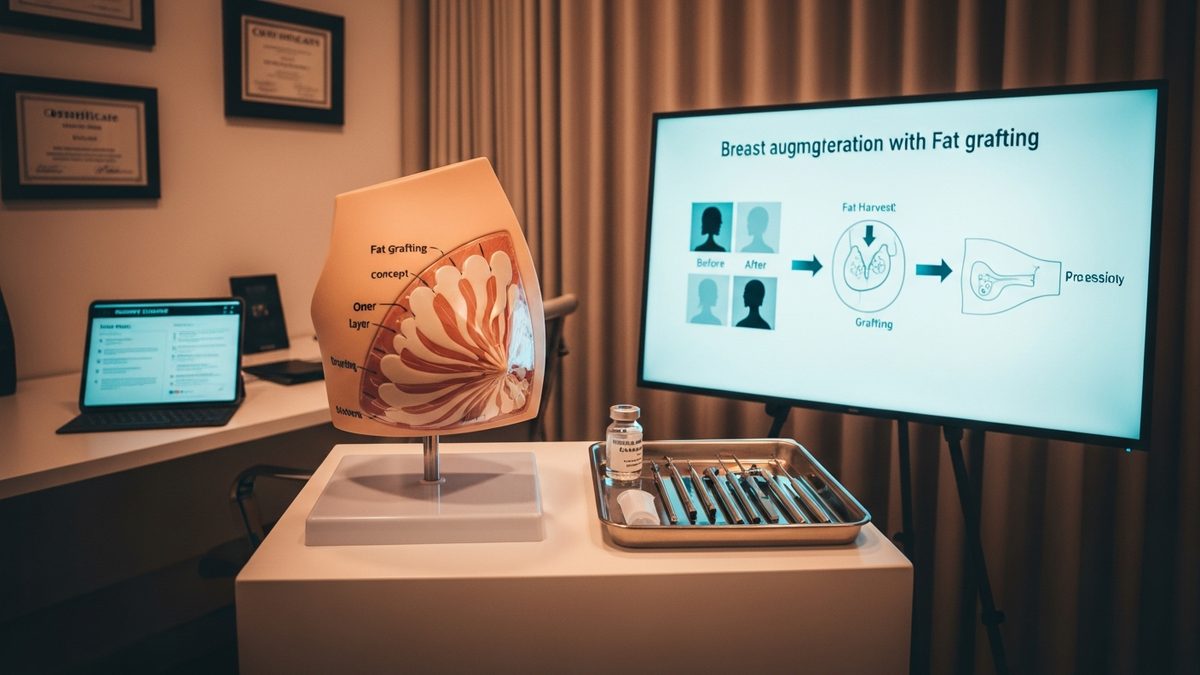
Breast augmentation with fat grafting is essentially a two-part process:
- Fat harvesting: A surgeon removes fat from areas where it’s present in excess (commonly the abdomen, flanks, inner thighs, or back) using liposuction.
- Fat processing and transfer: The harvested fat is processed and then injected into the breast tissue using a technique designed to improve graft survival and contour.
Because the fat is your own tissue, the procedure can offer a more natural look and feel compared with some implant outcomes. However, fat grafting is not “instant full volume”—it depends on how much of the transferred fat survives.
Why Fat Graft Survival Matters
Not all transferred fat will “take.” Some of the fat cells may be reabsorbed by the body over time. That’s why surgeons often discuss staged volume goals and realistic expectations. The technique, handling, and placement strategy are all intended to maximize graft survival and create smooth contouring.
Breast Augmentation with Fat Grafting vs. Implants: Key Differences
People often compare fat grafting to silicone or saline implants. Both can improve breast size and shape, but they differ in how volume is achieved and how tissue behaves afterward.
Common Considerations
- Natural feel: Fat grafting typically results in a softer, more tissue-like feel.
- Volume variability: Fat grafting may require more than one session to reach a desired size.
- Donor-site changes: Liposuction reduces fat in donor areas, which some patients find beneficial.
- Scar profile: Both procedures involve incisions; fat grafting often uses smaller access points, though exact patterns vary.
- Long-term follow-up: Ongoing monitoring and imaging guidance may be needed as part of standard breast health care.
Important: The “best” choice depends on your anatomy, goals, skin quality, breast tissue characteristics, and medical history. A careful consultation is essential.
Who Is a Good Candidate?
Not everyone is an ideal candidate for breast augmentation with fat grafting. Surgeons typically look for a combination of factors such as adequate donor fat, realistic volume goals, and good overall health.
Potential Ideal Candidate Profile
- Enough donor fat for harvesting without compromising overall body contour.
- Desire for natural contour and a softer tissue feel.
- Good skin elasticity to help the breast shape settle smoothly after grafting.
- Realistic expectations about the possibility of staged sessions.
- No active smoking (nicotine can impair healing and graft survival).
Situations That May Require Caution
- Very limited donor fat may make it difficult to achieve the desired increase.
- Significant breast tissue laxity might require an additional procedure (such as a lift) to achieve optimal shape.
- Certain medical conditions may affect healing or anesthesia safety.
- Breast concerns requiring evaluation: Any suspicious breast changes should be evaluated before elective cosmetic procedures.
Consultation Checklist: Questions to Ask Your Surgeon
A high-quality consultation is where you align goals with safety. Use this checklist to make your appointment more productive.
Procedure and Planning Questions
- How much volume can realistically be achieved with fat grafting for my anatomy?
- Will you recommend one session or staged sessions? Why?
- Where will the fat be harvested from, and how will donor-site contour be addressed?
- What technique do you use for processing and injecting fat to support graft survival?
- What does your typical recovery timeline look like for return to work and exercise?
Safety and Outcomes Questions
- What are the most common complications in your practice for this procedure?
- How do you manage fat necrosis, cysts, or contour irregularities if they occur?
- How do you coordinate breast health screening and postoperative imaging considerations?
- What restrictions do you recommend on smoking, medications, and supplements?
- Can I see before-and-after photos of patients with similar goals?
Actionable tip: Bring a written list of questions and photos of the results you admire. Discussing your target look helps your surgeon tailor the plan.
Step-by-Step: What to Expect on Surgery Day
While protocols vary by surgeon and facility, breast augmentation with fat grafting generally follows a structured flow. Understanding the process can reduce uncertainty.
1) Anesthesia and Markings
Before the procedure begins, your surgeon will mark donor and injection sites. Anesthesia options vary; your surgeon and anesthesiology team will determine the safest plan for you.
2) Liposuction for Fat Harvesting
Fat is harvested using liposuction techniques designed to preserve fat cell integrity. The donor sites are carefully selected to shape the body and provide enough fat for transfer.
3) Fat Processing
The harvested fat is processed to prepare it for injection. The goal is consistent, safe handling and placement.
4) Fat Injection for Breast Contouring
Fat is injected in a manner intended to create natural contour. Many surgeons emphasize careful placement to support graft survival and reduce irregularities.
5) Closure and Compression
Small access points are closed, and compression garments may be used to support healing and minimize swelling.
Recovery Timeline: Healing, Swelling, and When Results Appear
Recovery is a critical part of outcomes. Although individual experiences vary, there are common phases after breast augmentation with fat grafting.
First 1–2 Weeks
- Swelling and bruising are common in both donor sites and the breasts.
- You may feel tightness and tenderness, especially during movement.
- Surgeons often recommend limited activity and careful adherence to postoperative instructions.
Weeks 3–6
- Swelling gradually decreases.
- Some patients return to routine activities with clearance from their surgeon.
- Breast shape continues to “settle,” and contour becomes clearer.
Months 3–6 and Beyond
Final-looking results may take time because fat grafted tissue stabilizes over months. Many surgeons evaluate results after a sufficient healing period to determine whether additional sessions are recommended.
Potential Risks and Side Effects
Every surgical procedure carries risk. Understanding complications helps you recognize warning signs and follow guidance that reduces risk.
Common or Possible Risks
- Asymmetry: One breast may settle differently than the other.
- Fat necrosis: Some transferred fat may not survive and can form firm areas.
- Cysts or calcifications: These can occur as the body responds to grafted tissue.
- Contour irregularities: Lumps, dimpling, or uneven texture may require revision.
- Infection or bleeding: Rare but important to address promptly.
- Changes in sensation: Temporary or, less commonly, persistent changes can occur.
- Anesthesia-related risks: Discuss your health history with the anesthesia team.
How to Reduce Risk
- Stop nicotine well before surgery (nicotine can impair healing and graft survival).
- Follow medication guidance about blood thinners and supplements.
- Attend follow-ups so your surgeon can monitor healing and graft integration.
- Wear compression garments as directed.
Important: If you notice severe pain, fever, rapidly worsening swelling, or unusual drainage, contact your surgical team immediately.
Results: What “Natural-Looking” Typically Means
“Natural-looking” results are not only about size—they’re about symmetry, smooth transitions, and a breast texture that feels consistent with surrounding tissue.
Factors That Influence Outcomes
- Graft survival and how your body responds to fat transfer.
- Placement strategy and how gently and precisely fat is injected.
- Swelling timeline and the natural settling process.
- Skin quality and elasticity.
- Lifestyle (nutrition, sleep, and adherence to postoperative care).
Because fat grafting can vary in the amount of volume retained, many surgeons plan for a range of outcomes and discuss whether a second stage could help refine contour.
Preparing for Surgery: Practical Steps That Matter
Preparation can meaningfully affect recovery and comfort. Here are evidence-informed, practical steps to consider.
Preoperative Planning
- Medical history review: Be thorough about allergies, prior surgeries, and current medications.
- Smoking cessation: If you use nicotine, plan to stop completely as directed by your surgeon.
- Medication/supplement audit: Ask about aspirin, NSAIDs, herbal supplements, and blood thinners.
- Transportation and support: Arrange a ride home and help during the first day or two.
Home Setup for Recovery
- Have easy-access supplies (gauze, prescribed medications, comfortable clothing).
- Prepare a supportive sleep setup (often semi-upright) if recommended by your surgeon.
- Plan low-effort activities (reading, movies) and avoid heavy lifting.
Actionable tip: If you can, schedule follow-up appointments before surgery so your healing plan stays on track.
Breast Health and Imaging Considerations
Patients often ask whether fat grafting affects future breast cancer screening or imaging. In general, your surgeon and radiology team will coordinate your standard breast health care. Fat necrosis and calcifications can appear on imaging, which is why it’s essential to inform your healthcare providers about your surgical history.
What to Do
- Keep documentation of your procedure date and operative details.
- Tell your radiology team about fat grafting before imaging.
- Follow recommended screening schedules based on your age and risk factors.
If you have any breast symptoms or concerns, address them with appropriate medical evaluation before elective cosmetic surgery.
Why Expertise Matters: Choosing a Surgeon and Surgical Team
Fat grafting is both an art and a science. Outcomes depend on careful harvesting, processing, and injection technique—as well as realistic goal-setting and patient-specific planning.
What to Look For
- Board certification and appropriate surgical training.
- Experience with fat grafting and a portfolio of relevant results.
- Transparent communication about limitations, staged outcomes, and risks.
- Strong postoperative follow-up and clear recovery instructions.
FlowGeniQ Digest emphasizes patient education because informed patients typically recover better and feel more confident in their decisions.
Los Angeles Context: Why Patients Consider Advanced Techniques
For many people in Los Angeles, cosmetic refinement is about more than changing appearance—it’s about restoring confidence and aligning with lifestyle goals. That’s why patients often research natural-looking options like breast augmentation with fat grafting.
While this guide is educational and not a substitute for personal medical advice, it’s helpful to understand that surgeons in high-volume regions tend to have established protocols for safety, recovery planning, and long-term follow-up.
Related Procedures People Often Explore
Some patients interested in overall aesthetic harmony also consider other head/neck and facial rejuvenation procedures. While these are separate from breast surgery, they reflect the broader idea of coordinated, natural-looking outcomes.
- If you’re exploring facial aesthetics, you may also research Rhinoplasty for nasal refinement.
- For eyelid rejuvenation, Blepharoplasty can address excess skin and under-eye puffiness.
- Some patients consider Septoplasty (and evaluation of a Deviated Septum) when breathing function is a concern alongside cosmetic goals.
- For facial aging concerns, you may also review Facelift options.
- Those addressing eyebrow thinning may research an eyebrow transplant.
- And if hair restoration is part of your broader confidence plan, you can explore a hair transplant option.
Note: These links are provided for additional reading and do not indicate that these procedures are recommended in combination with breast augmentation.
FAQ: Breast Augmentation with Fat Grafting
1) Is breast augmentation with fat grafting permanent?
Fat grafting results are partially dependent on graft survival. Some fat cells will integrate and remain, while others may be reabsorbed. Many patients see stable results over months, but long-term volume can vary based on individual biology and technique.
2) How much larger can I get with fat grafting?
That depends on donor fat availability, your anatomy, and your desired change. Many surgeons plan for conservative, gradual improvements and may recommend staged sessions to reach a specific volume goal safely.
3) Will fat grafting affect mammograms or breast cancer screening?
Fat necrosis and calcifications can appear on imaging. This doesn’t eliminate the need for screening, but it’s important to inform your radiology team about your surgery so they can interpret imaging appropriately.
4) What is the typical recovery time?
Most patients need time for swelling and bruising to settle. Many return to light activities within a few weeks, while full recovery and the clearest view of results can take several months. Your surgeon will provide a personalized timeline.
5) What are the most common complications?
Possible complications include asymmetry, contour irregularities, fat necrosis, cysts/calcifications, infection, bleeding, and sensation changes. Your surgeon can discuss risk levels and how they handle complications if they occur.
CTA: Ready to Explore Breast Augmentation with Fat Grafting?
If you’re considering breast augmentation with fat grafting, the next best step is a consultation where your goals and anatomy can be evaluated together. A thorough surgeon-patient discussion helps clarify realistic volume expectations, whether you may need staged sessions, and how to plan for safe recovery.
Take action now: Prepare your questions, review your medical history, and schedule a consultation with a qualified, board-certified surgeon experienced in fat grafting. The right plan can help you pursue natural-looking results with confidence.
Professional Disclaimer
This content is provided for general educational purposes only by FlowGeniQ Digest. It is not a substitute for professional advice, diagnosis, or treatment. Readers are advised to consult qualified professionals for personalized recommendations.
Medical Information Disclaimer
This content is provided for general educational purposes only by FlowGeniQ Digest. It is not a substitute for professional advice, diagnosis, or treatment. Readers are advised to consult qualified professionals for personalized recommendations.