At FlowGeniQ Digest, we’re committed to helping readers make informed decisions about aesthetic and functional facial care. If you’re searching for blepharoplasty San Francisco, you’re likely considering upper or lower eyelid surgery to address concerns like excess upper-lid skin, under-eye puffiness, or tired-looking eyes. The good news: when performed by an experienced facial plastic and reconstructive surgeon, blepharoplasty can deliver results that look natural, feel comfortable, and—when indicated—may even support healthier vision.
Eyelids are among the first areas to show age-related changes. Over time, skin laxity, fat redistribution, and changes in eyelid support can create a heavier upper lid, a more prominent under-eye area, or a persistent “tired” look. The right surgical plan considers your anatomy, your goals, and the underlying causes of your concerns—not just the appearance.
What Is Blepharoplasty? (Upper & Lower Eyelid Surgery Explained)
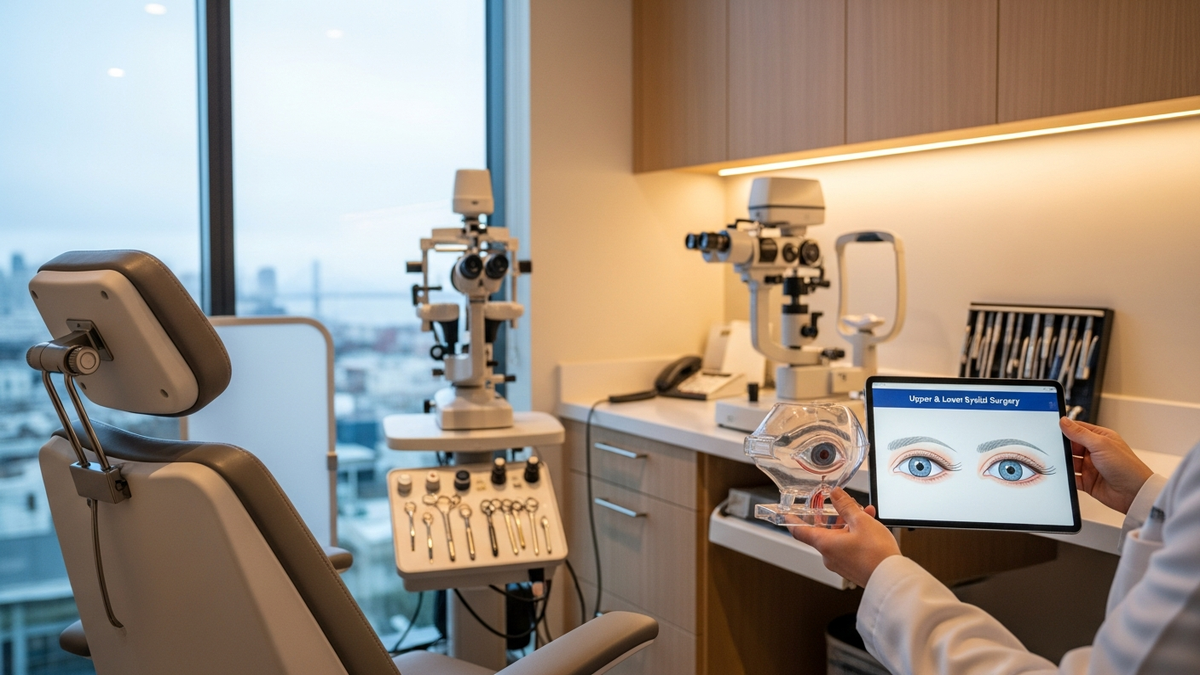
Blepharoplasty is a surgical procedure designed to improve the appearance of the eyelids. It may involve removing excess skin and/or repositioning fat to restore a smoother, more balanced eyelid contour.
Upper eyelid blepharoplasty
Upper eyelid surgery typically addresses:
- Excess upper-lid skin that can create a hooded look
- Fat bulges that contribute to puffiness or heaviness
- Improved visual field when drooping skin obstructs vision (a functional consideration)
Lower eyelid blepharoplasty
Lower eyelid surgery may be recommended for:
- Under-eye puffiness and prominent fat pads
- Loss of eyelid smoothness or creasing
- Skin laxity contributing to a tired appearance
Lower blepharoplasty planning is especially individualized because the under-eye area is structurally complex. A careful approach aims to preserve eyelid support and minimize the risk of post-operative dryness, asymmetry, or unwanted changes.
Why People Choose Blepharoplasty in San Francisco
People searching for blepharoplasty San Francisco often want more than cosmetic improvement—they want a look that reflects how they feel. Common motivations include:
- Rested appearance: reducing puffiness and heaviness
- Confidence boost: feeling more comfortable in photos and social situations
- Functional benefits: in selected cases, upper-lid skin can reduce vision
- Natural balance: enhancing eyelid contour without looking “overdone”
San Francisco patients also value surgeons who prioritize education and transparency—so they can understand tradeoffs, timelines, and realistic outcomes.
Who Is a Good Candidate for Blepharoplasty?
Ideal candidates typically have concerns that match the anatomy of the eyelids. During consultation, a surgeon evaluates eyelid skin quality, fat distribution, eyelid support, tear film, and the presence of dry eye or other ocular surface conditions.
Common candidate profiles
- Upper-lid concerns: hooding, excess skin, or heaviness
- Lower-lid concerns: under-eye puffiness, bags, or skin laxity
- Age-related changes: gradual evolution of eyelid contour
- Stable general health and realistic expectations
Situations that may require additional planning
Certain conditions can change the surgical approach. For example, significant dry eye risk, eyelid malposition, or imbalance between upper and lower eyelids may require conservative technique or additional treatment strategies.
If you’re considering blepharoplasty, it’s important to discuss:
- Your eye history (dry eye, allergies, prior eye surgery)
- Medications and supplements
- Whether your main concern is skin, fat, or eyelid position
- How you want your eyes to look on day one and months after healing
How Blepharoplasty Works: What to Expect During Surgery
Although every patient’s plan is unique, the overall goal is consistent: refine eyelid contour while preserving natural motion and expression. At a head-and-neck focused practice, surgeons often bring a refined understanding of facial anatomy and tissue relationships.
Pre-operative preparation
Before surgery, your surgeon will likely review:
- Medical history and medication use
- Eye surface health and tear film considerations
- Photos for goal alignment and surgical planning
- Expected recovery timeline and post-op care
Surgical steps (high-level overview)
Blepharoplasty techniques vary based on whether the surgery targets upper lids, lower lids, or both. In general:
- Incisions are placed along natural eyelid creases or discreet lower-lid lines.
- Excess tissue may be removed or adjusted.
- Fat may be repositioned or removed to reduce bulges.
- Closure is designed to support clean healing and a natural contour.
In experienced hands, the emphasis is on subtlety—because eyelids are responsible for expression. The best results often look like you “slept well” rather than “had surgery.”
Upper vs. Lower Blepharoplasty: Differences That Matter
Many patients assume upper and lower eyelid surgery are interchangeable, but the tissues and risks are different. Understanding the distinction helps you choose the right plan.
Upper eyelid surgery focuses on
- Skin redundancy and hooding
- Fat prominence
- Potential functional improvement when drooping affects vision
Lower eyelid surgery focuses on
- Under-eye puffiness and fat pads
- Skin quality and laxity
- Maintaining eyelid support and minimizing dryness or show-through
Some people benefit from combinations or staged approaches. A thoughtful surgeon will explain why one approach may be safer or more natural than another.
Recovery Timeline for Blepharoplasty San Francisco Patients
Recovery varies by individual, the extent of surgery, and whether upper, lower, or both eyelids are treated. Still, many patients follow a recognizable pattern.
First days
- Swelling and bruising are common
- Cold compresses may be recommended
- Vision may feel “gritty” or watery as tissues heal
Week 1 to 2
- Swelling typically begins to improve
- Many people can resume light activities as advised
- Incision care and follow-up are essential
Weeks 3 to 6
- Most bruising resolves
- Contours continue to refine
- Subtle healing changes may still occur
Months 2 to 6
Final results often develop over several months as tissues settle and scars mature. Patience is part of the process—especially for lower eyelid outcomes, where definition can continue to improve.
Actionable recommendation: plan time-sensitive events (weddings, conferences, major photos) with a conservative buffer so you’re not relying on your appearance during the most swollen phase.
Potential Risks and Side Effects (What to Ask Your Surgeon)
All surgery involves potential risks. A credible surgeon will discuss them clearly and help you mitigate them through planning and technique.
Common, usually temporary effects
- Swelling and bruising
- Tightness or mild discomfort
- Temporary changes in eyelid sensation
Risks to understand
- Dry eye or irritation
- Asymmetry during healing
- Scar visibility (often improves over time)
- Infection or bleeding (rare, but important to recognize)
- Over- or under-correction
Actionable recommendation: ask your surgeon how they evaluate eyelid support and tear film before deciding on technique. This is a key step in reducing the risk of post-operative dryness or unwanted eyelid positioning.
How to Choose a Surgeon for Blepharoplasty San Francisco
Choosing a surgeon is the difference between a result that looks natural and one that looks “done.” When you’re looking for blepharoplasty San Francisco care, focus on expertise, patient education, and a track record of natural outcomes.
Look for head-and-neck specialization and facial plastic expertise
Eyelids are part of a larger facial system. A surgeon who focuses on head and neck cosmetic and reconstructive surgery often brings deeper anatomical precision.
Ask about technique and natural-expression outcomes
In your consultation, consider asking:
- Will you remove skin, adjust fat, or reposition tissues?
- How do you tailor the plan for upper vs. lower eyelids?
- How do you protect eyelid support and minimize dryness?
- What does the recovery plan look like for my schedule?
Prioritize honest communication
A trustworthy surgeon explains what surgery can and cannot do. They’ll align your goals with what’s realistic for your anatomy and healing capacity.
Natural-Looking Results: The Aesthetic Principles Behind Great Blepharoplasty
“Natural” doesn’t mean subtle to the point of invisibility—it means eyes that look refreshed while still resembling you. In great blepharoplasty, the eyelid contour harmonizes with the rest of the face.
Key principles
- Preserving eyelid motion so your expression stays authentic
- Balanced upper and lower proportions to avoid mismatched heaviness
- Respecting natural eyelid creases for discreet incision placement
- Appropriate tissue removal rather than a one-size-fits-all approach
Actionable recommendation: bring photos of the look you like (and don’t like). Discuss what specifically you admire—less puffiness, smoother contour, or improved symmetry—so your surgeon can translate preferences into surgical planning.
When Blepharoplasty May Be Combined With Other Procedures
Some patients need more than eyelid surgery to address the full aging pattern. A comprehensive facial assessment can reveal whether other procedures would complement blepharoplasty—without over-treating.
Complementary facial options
- Facelift for broader midface and lower-face aging patterns (link provided): Facelift
- Brow lift when brow position contributes to upper-lid heaviness
- Neck lift for neck skin laxity that affects overall facial balance
- Submental liposuction to refine the jaw/neck contour
In some cases, addressing adjacent structures can prevent “trading” one issue for another. Your surgeon should explain why a combined plan is recommended (or why it isn’t).
Blepharoplasty vs. Non-Surgical Alternatives
Non-surgical options—like topical treatments, injectables, and energy-based therapies—can help certain concerns. However, they often can’t replicate the structural changes that eyelid surgery can achieve.
General guidance
- If your primary issue is excess skin, surgery may be more effective than skin-tightening alone.
- If your primary issue is fat bulges, surgery can directly reposition or remove tissue.
- If your primary issue is mild puffiness or early changes, a non-surgical approach may be worth exploring first.
Actionable recommendation: ask your surgeon to outline a stepwise plan—what you can try first and what surgery can realistically improve if non-surgical options fall short.
How Dr. Hootan Zandifar Approaches Eyelid Surgery (Educational, Facial-Focused Care)
At practices focused on head and neck surgery, blepharoplasty planning can benefit from a broader understanding of facial anatomy and aesthetic relationships. Dr. Hootan Zandifar is known for an honest, trustworthy, and compassionate approach centered on patient education and natural-looking results.
As a board-certified facial plastic and reconstructive surgeon with double board certification and fellowship training, Dr. Zandifar focuses solely on cosmetic and reconstructive surgery of the head and neck. That specialization supports careful attention to eyelid structure, facial balance, and the details that influence long-term satisfaction.
For patients evaluating eyelid surgery, it can be helpful to review the procedure overview directly here: Blepharoplasty. (Always confirm specifics during your personalized consultation.)
Frequently Overlooked Factors Before Blepharoplasty
Some issues can affect outcomes, and they’re worth discussing during your pre-op evaluation.
Dry eye and eye surface health
Swelling and changes in eyelid position can impact comfort. If you have a history of dryness, allergies, or irritation, your surgeon may coordinate with eye care professionals or recommend specific pre- and post-operative strategies.
Allergies and seasonal swelling
Allergic rhinitis can worsen puffiness. Timing your surgery away from peak allergy season—or optimizing allergy control—may improve your overall experience.
Medication and supplement review
Some medications can increase bleeding risk. Provide a complete list so your surgeon can advise on what to stop and when.
How to Prepare for Your Blepharoplasty Appointment
Being prepared can lead to a more productive consultation and a clearer surgical plan.
Bring these items
- A list of current medications and supplements
- Allergies and past anesthesia/surgery history
- Photos of your eyes in different lighting (including straight-on and slight angles)
- A short list of your top goals (e.g., “reduce hooding,” “less under-eye bag,” “natural look”)
Write down questions
Consider asking:
- Am I a candidate for upper, lower, or both?
- What technique will you use and why?
- What is my recovery timeline for work and exercise?
- How do you manage swelling and dryness?
- What results should I expect at 2 weeks, 6 weeks, and 3–6 months?
FAQ: Blepharoplasty San Francisco
1) How long does blepharoplasty take?
Typical operative time depends on whether you’re having upper eyelids, lower eyelids, or both. Your surgeon will provide an individualized estimate based on your anatomy and planned technique.
2) Will blepharoplasty look natural?
It can look very natural when the plan is tailored to your eyelid anatomy, eyelid support, and aesthetic goals. Natural outcomes prioritize balanced contour and preserved eyelid motion.
3) What is the recovery like after upper vs. lower blepharoplasty?
Swelling and bruising are common after both. Lower eyelid surgery often requires extra patience because under-eye contours continue to refine as tissues settle.
4) Are there functional benefits to upper eyelid surgery?
In some patients, excess upper-lid skin can obstruct the visual field. When drooping contributes to functional impairment, upper blepharoplasty may offer both aesthetic and functional improvement.
5) How do I choose between blepharoplasty and non-surgical options?
Non-surgical treatments can help early or mild concerns, but they may not address excess skin or fat bulges as effectively as surgery. A consultation helps determine which approach matches the cause of your eyelid changes.
CTA: Ready to Explore Blepharoplasty San Francisco?
If you’re considering blepharoplasty San Francisco, the next step is a consultation where your surgeon can evaluate your eyelid anatomy, discuss realistic goals, and outline a safe plan for natural-looking results.
Actionable next steps:
- Schedule an in-person or virtual consultation to review your upper and/or lower eyelid concerns.
- Bring reference photos and a list of questions focused on technique, recovery, and risk mitigation.
- Ask about how your surgeon approaches natural-expression outcomes and eyelid support.
For more educational resources from FlowGeniQ Digest, explore our related articles and procedure guides—then take your questions to a qualified facial plastic professional.
Professional Disclaimer
This content is provided for general educational purposes only by FlowGeniQ Digest. It is not a substitute for professional advice, diagnosis, or treatment. Readers are advised to consult qualified professionals for personalized recommendations.
Medical Information Disclaimer
This content is provided for general educational purposes only by FlowGeniQ Digest. It is not a substitute for professional advice, diagnosis, or treatment. Readers are advised to consult qualified professionals for personalized recommendations.