Written for FlowGeniQ Digest
If your eyes look tired even after a full night’s sleep, you’re not alone. In a city that never slows down, many people in New York City look to blepharoplasty NYC—upper and lower eyelid surgery—to refresh their appearance, improve eye-area balance, and sometimes support better functional vision when eyelids droop.
In this guide, we’ll walk through what blepharoplasty is, who it’s for, how surgeons plan treatment, and what recovery typically looks like. We’ll also share practical questions to ask during your consultation so you can feel confident about your options.
What Is Blepharoplasty?
Blepharoplasty is a cosmetic and, in select cases, functional surgical procedure designed to reshape the eyelids. It can target:
- Upper eyelids (excess skin, “hooding,” and sometimes fat bulges)
- Lower eyelids (under-eye puffiness, fine lines, and/or excess skin)
By removing or repositioning tissue and refining the eyelid contour, blepharoplasty can create a more open, youthful eye shape. Many patients also report feeling more confident because their eyes look less heavy and more rested.
Why People Choose Blepharoplasty in NYC
New Yorkers often juggle demanding work schedules, travel, and social commitments. The appeal of blepharoplasty NYC is not only the potential for natural-looking rejuvenation, but also the ability to tailor treatment to your anatomy and goals—whether you want subtle refinement or a more noticeable correction of eyelid aging.
Common reasons patients seek eyelid surgery include:
- Hooded or drooping upper lids that cast a tired shadow
- Under-eye puffiness that doesn’t improve with sleep
- Excess lower-lid skin that contributes to a crepey or aged appearance
- Asymmetry between eyes that affects overall facial harmony
Upper vs. Lower Blepharoplasty: What’s the Difference?
Upper eyelid blepharoplasty
Upper lid surgery typically focuses on excess skin and, in some cases, fat herniation. Many patients describe the result as their eyes looking “more open” or “less heavy.” If upper eyelid droop is significant, it can also affect the visual field for certain activities—an important reason to discuss functional concerns during your evaluation.
Lower eyelid blepharoplasty
Lower lid surgery is often more technique-sensitive because the under-eye area has distinct layers and supports. Depending on your exam, the surgeon may address:
- Puffiness from fat pads
- Loose or excess skin
- Early creasing or fine lines
- Subtle signs of tear trough aging
When performed thoughtfully, lower blepharoplasty can improve the transition between the lower lid and cheek—helping the under-eye look smoother while preserving natural contours.
How a Surgeon Plans Blepharoplasty (and Why It Matters)
One of the biggest determinants of a safe, attractive outcome is individualized surgical planning. A high-quality blepharoplasty evaluation goes beyond “removing skin.” It includes a careful assessment of eyelid anatomy and facial proportions.
During a consultation, expect discussion and examination of factors such as:
- Eyelid position (including lid margin and brow relationship)
- Skin quality and the degree of laxity
- Fat distribution in upper and/or lower lids
- Eye surface health (dry eye risk and tear film considerations)
- Asymmetry and how it should be balanced
- Overall facial harmony (how your eye shape fits your face)
In many cases, surgeons also consider whether additional procedures—such as brow lift or facial rejuvenation—would create a more cohesive result. For example, if the brow is positioned low enough to contribute to upper lid hooding, addressing brow position may be part of an optimal plan.
Blepharoplasty for Function: When Vision Might Be Impacted
For some patients, upper eyelid heaviness can reduce the visual field. In these situations, blepharoplasty may offer both cosmetic and functional benefits. If you notice difficulty seeing due to eyelid droop—especially when reading, driving, or working—bring it up during your consultation.
Actionable recommendation: Keep a brief note of when and how your eyelids affect your vision (e.g., “worse when looking upward,” “requires lifting my eyebrows to see clearly”). This can help your surgeon evaluate whether functional concerns are present.
What to Expect During the Consultation
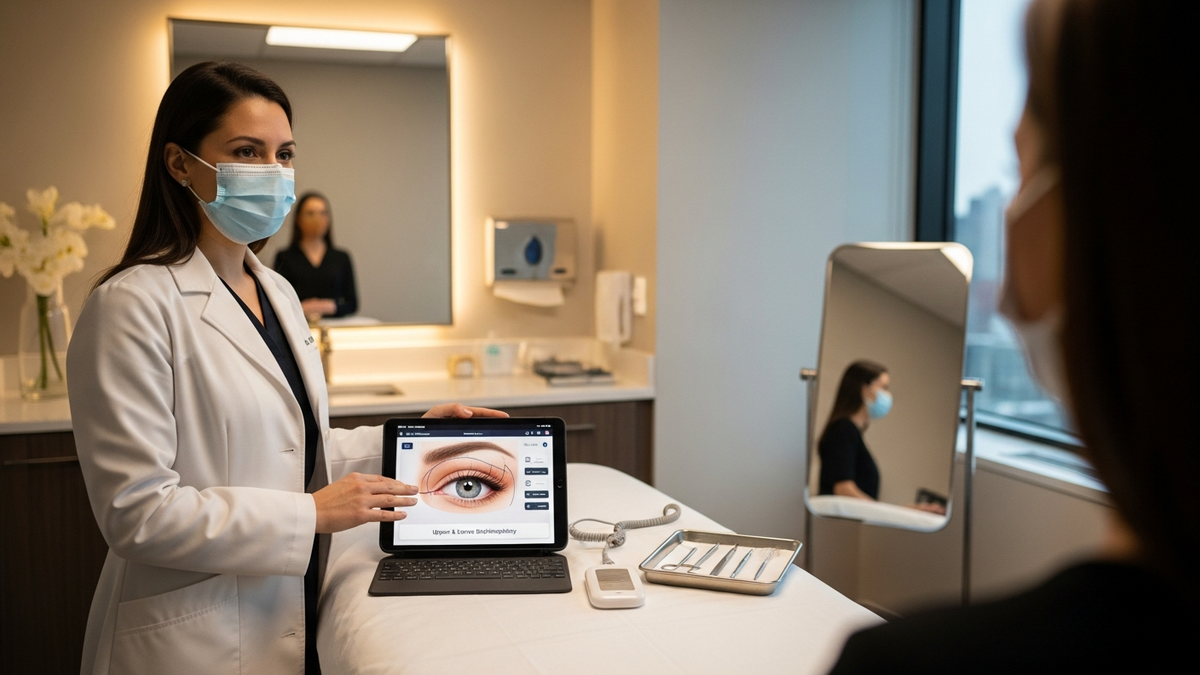
Although every practice has its own process, a thorough blepharoplasty NYC consultation typically includes:
- Medical history review (including eye conditions, allergies, prior surgeries, and medications)
- Eye and eyelid examination to evaluate skin, fat, and eyelid mechanics
- Discussion of goals (subtle rejuvenation vs. more dramatic reshaping)
- Review of options including upper only, lower only, or combination surgery
- Photographs and measurements used to plan incision placement and symmetry
- Risk and recovery counseling so you understand realistic outcomes
Because eyelid surgery is highly personalized, it’s important to choose a surgeon who emphasizes education and sets expectations clearly.
Is Blepharoplasty Right for You?
Blepharoplasty may be a good fit if you have:
- Upper lid skin that creates hooding or a tired appearance
- Lower lid puffiness or excess skin
- Under-eye concerns that persist despite lifestyle changes
- Realistic expectations for natural, balanced rejuvenation
It may be less suitable if you have certain untreated eye surface problems, significant dry eye, or conditions that require stabilization before surgery. A careful preoperative evaluation helps reduce risk and improve outcomes.
How Long Do Blepharoplasty Results Last?
Blepharoplasty results are not permanent in the sense that aging stops—but they can be long-lasting. Many patients enjoy years of refreshed appearance because eyelid aging is addressed at the structural level.
Factors that influence longevity include:
- Your baseline tissue quality and degree of laxity
- How your surgeon balances skin removal with support and contour
- Sun exposure and skincare habits
- Genetics and overall aging rate
Blepharoplasty NYC Recovery: Timeline and What You’ll Feel
Recovery varies by individual and whether you have upper only, lower only, or both. That said, most patients plan around a predictable early healing window.
First 48 hours
Swelling and bruising are common, particularly around the under-eye area. Many patients experience tightness or mild discomfort, which is typically managed with prescribed medications and cold compresses as directed.
Days 3–10
Swelling begins to settle gradually. Bruising may still be visible, but many people can return to light activities depending on comfort and surgeon guidance.
Weeks 2–4
Most visible swelling continues to improve. You’ll likely notice your eyelid shape becoming clearer as healing progresses. Scar maturation takes longer, but early incision healing is usually well underway during this period.
Beyond 1–3 months
Fine details continue to refine. Final contour and subtle texture changes typically stabilize over time.
Actionable recommendation: Plan your schedule with extra buffer time for NYC realities—commutes, meetings, and events. Even if you feel well, your eyes may still look swollen under certain lighting.
Common Risks and Side Effects (and How Skilled Planning Helps)
Every surgical procedure has risks. While many patients heal smoothly, it’s important to understand potential concerns so you can make an informed decision.
Possible side effects include:
- Swelling and bruising
- Temporary dryness, irritation, or light sensitivity
- Asymmetry during healing
- Scarring (usually minimal and placed to heal discreetly)
More serious complications are uncommon but can include infection, bleeding, or persistent changes in eyelid position. A surgeon’s experience, careful patient selection, and meticulous technique can significantly reduce risk.
Choosing the Right Surgeon for Blepharoplasty NYC
Because the eyelids are such a delicate, expression-rich area, your choice of surgeon matters. When evaluating options, look for:
- Specialized facial plastic expertise and experience with eyelid surgery
- Natural-looking results in before-and-after galleries (with attention to symmetry)
- Transparent communication about goals, limitations, and risks
- Education-first approach that helps you feel informed, not rushed
- Individualized planning based on your anatomy—not a one-size approach
For patients exploring facial rejuvenation options, it can also be helpful to consider how eyelid aging interacts with the brow, midface, and overall facial structure.
How Blepharoplasty Fits Into a Broader Rejuvenation Plan
Some patients benefit from combining eyelid surgery with other head-and-neck rejuvenation treatments. Depending on your exam, a cohesive plan may address multiple areas of aging so the result looks balanced.
For example:
- If brow position is contributing to upper lid hooding, a brow lift may be considered.
- If deeper facial aging is present, some patients explore procedures like a Facelift to improve lower facial laxity and overall youthfulness.
- If you’re considering nasal refinements alongside facial rejuvenation, you may also ask about Rhinoplasty—though this is a separate procedure with its own planning and recovery.
In all cases, the goal is a unified, natural appearance that reflects your anatomy.
Non-Surgical Alternatives (and Why They May Not Replace Blepharoplasty)
Some patients explore non-surgical options first, such as skincare, topical treatments, or injectables. These can improve certain aspects of the eye area—like fine lines or mild volume changes—but they typically can’t fully correct structural issues such as excess eyelid skin, true hooding, or fat pad repositioning.
Actionable recommendation: Ask your surgeon what portion of your specific concerns is structural versus superficial. That answer helps you understand whether blepharoplasty is likely to deliver the results you want.
Preparing for Blepharoplasty: Practical Steps
Preparation can make recovery smoother and help you avoid preventable setbacks.
In the weeks before surgery
- Follow medication instructions carefully (including guidance on blood thinners or supplements).
- Arrange for someone to drive you home and assist you for the first day.
- Prepare your recovery space with clean pillows, cold compresses, and easy-to-reach items.
On surgery day
- Wear loose, front-opening clothing to avoid pulling over the head and face.
- Bring your photo ID and any paperwork your clinic provides.
- Be ready to follow preoperative fasting instructions if anesthesia is planned.
Aftercare Essentials: Protecting Your Results
Aftercare is where small habits have big impact. Your surgeon will provide specific instructions, but common aftercare principles include:
- Use cold compresses as directed to manage swelling early on
- Keep your head elevated to reduce fluid accumulation
- Take medications exactly as prescribed
- Avoid strenuous activity during the early healing phase
- Follow instructions for eye lubrication if dryness is expected
- Attend all follow-up appointments for monitoring and suture care
Why Natural-Looking Eyelid Surgery Requires Experience
Many patients want to look refreshed—not “done.” Achieving that balance depends on technique and an understanding of eyelid anatomy. Skilled surgeons consider how eyelids move with expressions and how tissue removal should preserve the natural eyelid crease and contour.
It’s also why choosing a surgeon who focuses on head-and-neck facial artistry can be advantageous. When surgeons approach the face as a cohesive system—rather than isolated features—eyelid outcomes often look more harmonious.
Frequently Asked Questions About Blepharoplasty NYC
How much does blepharoplasty NYC typically cost?
Pricing varies based on whether you need upper, lower, or both eyelids, the complexity of your anatomy, and the facility and anesthesia requirements. The most accurate estimate comes from an in-person consultation after your surgeon reviews your goals and exam findings.
Will I have visible scars after blepharoplasty?
Incision placement is designed to heal discreetly within natural eyelid creases or along the lash line. While scars can be noticeable initially, they typically fade over time. Your surgeon will provide scar care guidance and follow-up checks.
When can I return to work or social events?
Many patients plan for a short break, especially if their job involves client-facing visibility. Swelling and bruising usually improve over the first 1–2 weeks, but the best timing depends on your healing and comfort level.
Is blepharoplasty safe for people with dry eyes?
Dry eye risk is an important consideration. A qualified surgeon will evaluate your ocular surface health and may recommend lubrication or additional measures before and after surgery. Don’t assume it’s automatically disqualifying—just make sure it’s addressed in the plan.
Can blepharoplasty fix under-eye bags permanently?
It can significantly improve under-eye puffiness caused by excess skin or fat. However, aging continues. The goal is long-lasting refreshment, not stopping time. Your surgeon can explain which of your concerns are most likely to respond well.
CTA: Ready to Explore Blepharoplasty?
If you’re considering blepharoplasty NYC, the next step is an evaluation focused on your anatomy, your goals, and your safety. A thoughtful consultation can clarify whether upper, lower, or combined eyelid surgery is right for you—and what additional facial rejuvenation (if any) could enhance your results.
To learn more about eyelid surgery options, you can review Blepharoplasty. And if you’re currently researching related facial procedures, FlowGeniQ Digest encourages you to compare credentials, ask targeted questions, and prioritize natural-looking outcomes.
Schedule your consultation with a qualified facial plastic and reconstructive surgeon to discuss your concerns, review your medical history, and create a personalized treatment plan.
Professional Disclaimer
This content is provided for general educational purposes only by FlowGeniQ Digest. It is not a substitute for professional advice, diagnosis, or treatment. Readers are advised to consult qualified professionals for personalized recommendations.
Medical Information Disclaimer
This content is provided for general educational purposes only by FlowGeniQ Digest. It is not a substitute for professional advice, diagnosis, or treatment. Readers are advised to consult qualified professionals for personalized recommendations.