Note: This article is written for FlowGeniQ Digest readers who are researching options and want evidence-based guidance before scheduling a consultation.
When you search for the best surgeon rhinoplasty, you’re usually looking for two things at once: a nose that looks harmonious with your face and a plan that respects how your nose actually functions. A truly excellent rhinoplasty outcome is not just “a smaller bump” or “a straighter bridge”—it’s a balance of facial proportion, nasal airflow, skin/soft-tissue characteristics, and surgical precision. In Los Angeles and Beverly Hills, many patients want results that look natural in photos and feel natural in everyday life.
At Hootan Zandifar, MD, FACS—a double board-certified, fellowship-trained Facial Plastic & Reconstructive Surgeon—our approach emphasizes both aesthetic refinement and functional nasal health. Dr. Zandifar focuses solely on head and neck surgery, with particular expertise in functional nasal procedures that can help chronic congestion and sinus-related symptoms. This matters, because the “best surgeon” for rhinoplasty is often the surgeon who understands the nose as an airway first, an aesthetic structure second.
What “best surgeon rhinoplasty” really means
Rhinoplasty is one of the most individualized cosmetic procedures in medicine. Two people can request the same change (for example, “a more defined tip” or “a straighter nose”) and require very different surgical strategies. That’s why the phrase best surgeon rhinoplasty should be interpreted as “the surgeon most likely to deliver results that are natural, safe, and tailored to your anatomy and goals.”
Aesthetic excellence plus functional awareness
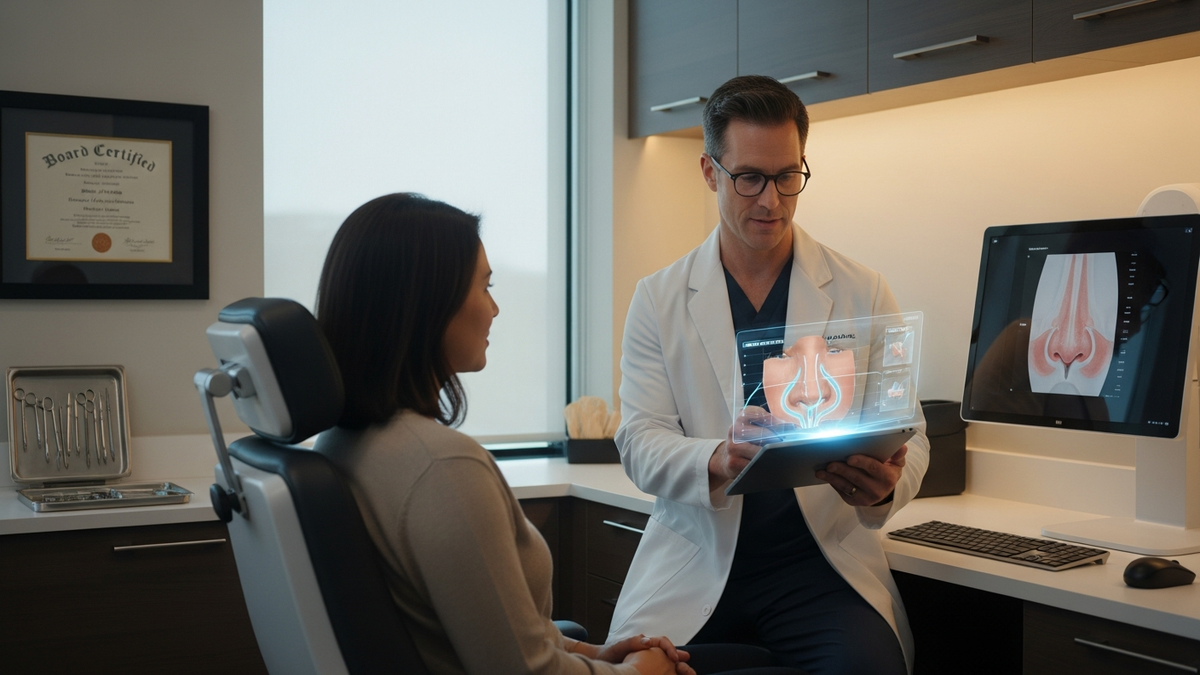
Many patients assume rhinoplasty is purely cosmetic. In reality, the nose is a complex structure that influences breathing, airflow resistance, and—depending on the case—sinus drainage. A surgeon who routinely treats nasal function is more likely to recognize issues like nasal valve collapse, septal deviation, turbinate enlargement, or scar-related airway narrowing.
For patients with chronic congestion, it’s also important to know that rhinoplasty is not always the best first step. In the right circumstances, functional nasal procedures may permanently improve breathing symptoms. Dr. Zandifar offers functional nasal surgery options for patients whose primary concern is obstruction and chronic “stuffy nose” symptoms.
Natural-looking results that match your face
The best rhinoplasty outcomes typically share a few visual principles:
- Proportion: The nose fits your facial features (eyes, cheeks, chin, and overall facial balance).
- Subtle refinement: Many patients look best with carefully reduced prominence and refined contours rather than dramatic “transformation.”
- Tip definition without over-rotation: Tip support and cartilage shaping should create structure while keeping the nose realistic.
- Texture and skin behavior considered: Thick vs. thin skin changes how results appear and how much structural change is visible.
Credentials checklist: how to evaluate the best rhinoplasty surgeon
If you’re trying to identify the best surgeon rhinoplasty for your needs, start with verifiable credentials and training. Then look for evidence of outcomes, communication style, and a patient education approach.
1) Board certification and specialty alignment
Rhinoplasty sits at the intersection of cosmetic surgery and head/neck anatomy. A surgeon who is board-certified in facial plastic surgery and/or otolaryngology/head and neck surgery brings relevant expertise in both structure and function.
Dr. Hootan Zandifar is board certified and fellowship-trained in facial plastic and reconstructive surgery. He completed residency training in Head and Neck Surgery and an exclusive fellowship through the American Academy of Facial Plastic and Reconstructive Surgery (AAFPRS). He is also a fellow of the American College of Surgeons.
2) Experience with both primary and complex cases
Ask whether the surgeon regularly performs:
- Primary rhinoplasty (first-time surgery)
- Revision rhinoplasty (after prior surgery)
- Structural support techniques (for tip stability and airway preservation)
A surgeon’s ability to manage complexity is often a better predictor of quality than how many “before-and-after” photos they post.
3) A functional evaluation—not just an external exam
Strong candidates for rhinoplasty should receive an assessment that includes nasal breathing considerations. You should expect questions about:
- Chronic congestion (one side vs. both)
- Seasonal allergies
- Sinus infections or persistent sinus pressure
- History of septal deviation or nasal trauma
- Symptoms that suggest nasal valve issues (often worse when lying down or during exertion)
4) Transparency about alternatives
The best surgeon rhinoplasty providers don’t oversell. They explain when a different procedure might better address your goals—especially if your main issue is breathing or chronic congestion rather than appearance.
Rhinoplasty vs. functional nasal surgery: choosing the right path
Many patients searching for the best surgeon rhinoplasty are actually dealing with two problems: cosmetic dissatisfaction and functional obstruction. The most successful plans often sequence or combine procedures thoughtfully.
When rhinoplasty may not be the first step
If your primary complaint is difficulty breathing due to structural issues, a functional procedure could improve airflow with less disruption to aesthetic goals. For example, a deviated septum or enlarged turbinates can cause long-term congestion.
Dr. Zandifar provides functional options such as:
- Septoplasty for septal deviation and airflow obstruction. Learn more about Septoplasty and Deviated Septum.
- Inferior turbinate reduction for chronic “stuffy nose” symptoms.
- Nasal valve collapse repair (non-surgical options or surgical approaches depending on severity).
- Balloon sinuplasty or endoscopic sinus surgery for chronic sinus blockage and recurring infections.
How functional treatment can support a better rhinoplasty result
Even when rhinoplasty is appropriate, improving airway mechanics can help ensure your nose looks and feels right. A nose that’s structurally sound and functionally open tends to heal more predictably and can reduce postoperative breathing concerns.
Common rhinoplasty goals—and what the surgeon should discuss
Every patient has a unique baseline, but the most common rhinoplasty requests fall into a few categories. The best surgeon will discuss both the desired appearance and the surgical tradeoffs.
Refining the tip
Tip refinement is often about cartilage shaping, support, and balancing projection/rotation. Your surgeon should explain:
- How much projection you’re likely to achieve
- Whether rotation will change how your nose looks from the side and in motion
- How skin thickness affects visible definition
Straightening the bridge
Bridge changes depend on the cause of asymmetry—bone structure, cartilage alignment, prior trauma, or previous surgery. A strong plan includes careful osteotomies (when needed) and attention to maintaining stable support during healing.
Reducing a hump or prominence
Prominence reduction must be balanced with tip support and overall proportions. Over-aggressive reduction can sometimes lead to structural imbalance or an overly “hollow” look.
Correcting asymmetry
Asymmetry is common and can be subtle or significant. The best surgeon rhinoplasty approach involves precise analysis of nasal lines, cartilage framework, and soft tissue behavior—not just symmetry in static photos.
Improving breathing (functional rhinoplasty)
If your goal includes improved airflow, your surgeon should address nasal valve competence, septal alignment, turbinate size, and—when relevant—sinus and allergy contributors. Dr. Zandifar’s head-and-neck specialization supports a more comprehensive evaluation.
Questions to ask during your consultation (use this checklist)
To find the best surgeon rhinoplasty for you, bring targeted questions. The answers help you judge clinical reasoning, communication, and realism.
About your plan
- What are my primary aesthetic concerns, and what changes are most likely to achieve them?
- Will you address functional issues in the same session, or recommend a staged approach?
- What techniques will you use for tip support and stability?
- What is your approach if I have thick/porous skin or significant tip droop tendencies?
About safety and outcomes
- What are the most common risks for my specific anatomy?
- How do you minimize scarring and irregularities?
- What does recovery typically look like week by week?
- How often do you see patients need revision, and what drives those outcomes?
About experience and evidence
- How many rhinoplasty procedures do you perform annually?
- Can you show results that match my goals (including similar skin thickness and nasal structure)?
- What are your preferred patient selection criteria?
About postoperative care
- What is the follow-up schedule?
- What should I do if I experience persistent swelling, asymmetry, or breathing changes?
- What medications or nasal care regimen will I use after surgery?
What to expect: rhinoplasty recovery timeline (general guidance)
Recovery varies by technique, individual healing, and whether functional corrections are included. However, most patients can anticipate a similar overall rhythm.
First 1–2 weeks
- Swelling and bruising are common, often peaking around days 2–4.
- Splints or internal supports may be present (if used in your plan).
- Most people can return to non-strenuous activities quickly, but you should plan for limited exertion.
Weeks 3–6
- Visible swelling reduces, though subtle changes may continue.
- Tip sensitivity and stiffness can persist.
- Follow surgeon instructions for nasal care and activity restrictions.
Months 3–12
- Refinement continues as tissues remodel.
- Final aesthetic results generally take time—patience is part of the process.
- Functional improvements (if addressed) may also evolve as swelling resolves.
How to maximize your odds of a great outcome
Even with the best surgeon rhinoplasty team, your preparation and habits influence results. Use these actionable recommendations to support healing and reduce preventable setbacks.
Preparation checklist
- Choose a surgeon you trust: your comfort level matters because you’ll need follow-up and guidance.
- Be specific about goals: describe what you like and dislike about your current nose and reference images cautiously (your anatomy is unique).
- Disclose your full medical history: allergies, prior surgeries, bleeding disorders, medications, and smoking/vaping habits.
- Follow pre-op instructions: medication adjustments and timing can reduce complications.
During recovery
- Protect your nose: avoid impacts, follow activity restrictions, and use recommended nasal care.
- Sleep strategically: keeping your head elevated can help reduce swelling.
- Attend all follow-ups: swelling and healing milestones are monitored to catch issues early.
- Don’t rush final assessments: early “looks wrong” feelings can change as swelling settles.
Why head-and-neck specialists can be a smart choice
Many patients underestimate how much rhinoplasty depends on airway anatomy, tissue behavior, and surgical planning. Head-and-neck surgeons—especially those who focus on facial plastic and reconstructive surgery—tend to bring a broader understanding of the nose as a functional system.
Dr. Zandifar’s practice focuses exclusively on head and neck surgery, with a commitment to honest, trustworthy, and compassionate care. That patient-centered approach includes education so you can make well-informed decisions rather than feeling pressured by trends.
Related procedures that may complement your transformation
Some patients pursue rhinoplasty as part of a broader facial rejuvenation plan. While your goals should remain primary, it can be helpful to understand common complementary options.
Facial rejuvenation
If you’re also interested in reducing signs of aging around the eyes or face, you may explore options such as:
- Blepharoplasty for upper and lower eyelid concerns.
- Facelift for sagging skin on the face and neck.
Hair restoration (for overall confidence)
Confidence is holistic. If hair loss is part of your self-image goals, you may also consider a hair transplant or, for eyebrow thinning, an eyebrow transplant.
Finding the best surgeon rhinoplasty in Los Angeles & Beverly Hills
When you’re narrowing down options, avoid decisions based on price alone or on a single “perfect” photo. Instead, look for:
- Consistent results across a range of anatomies
- Clear communication about what can and cannot be changed
- Functional reasoning if you have congestion or breathing concerns
- Education-first consults that respect your questions
Dr. Hootan Zandifar serves patients in Beverly Hills, CA, and brings rigorous training and advanced techniques to each case. If you’re considering rhinoplasty—or if your real priority is breathing—his functional nasal expertise can help determine the most effective treatment pathway.
FAQ: Best surgeon rhinoplasty questions patients ask most
1) What makes a rhinoplasty surgeon “the best”?
The best surgeon rhinoplasty provider combines board-level credentials, specialized training, a track record of natural aesthetic outcomes, and an evidence-based understanding of nasal function. Look for transparency, individualized planning, and realistic expectations.
2) Will rhinoplasty fix chronic nasal congestion?
Sometimes, but not always. If congestion is primarily due to septal deviation, turbinate enlargement, or nasal valve collapse, functional procedures (or a combined plan) may be more effective. A thorough evaluation determines whether rhinoplasty, functional nasal surgery, or both are appropriate.
3) How do I know if I’m a good candidate for rhinoplasty?
Good candidates generally have stable health, realistic goals, and a nasal anatomy suitable for the changes you want. If you have breathing problems, the consultation should include functional assessment—not just cosmetic evaluation.
4) How long until I see my final rhinoplasty results?
Most patients see meaningful improvement within the first few months, but final refinement often takes 9–12 months (sometimes longer). Swelling and tissue remodeling are gradual, so patience is part of achieving the best outcome.
5) What should I bring to my rhinoplasty consultation?
Bring a list of your goals, any prior surgery details, medication and allergy information, and photos that reflect the general style you like (without expecting the surgeon to copy a specific nose exactly). Most importantly, bring your questions—especially about breathing, recovery, and techniques.
CTA: Schedule a consultation to plan your best path
If you’re searching for the best surgeon rhinoplasty, start by scheduling a consultation with a specialist who understands both aesthetics and nasal function. Whether your priority is facial harmony, improved breathing, or both, a personalized plan can help you move forward with clarity.
Next step: Book an appointment with Hootan Zandifar, MD, FACS in Beverly Hills to discuss your goals, nasal health history, and the most effective treatment pathway—whether that includes rhinoplasty or functional nasal surgery.
FlowGeniQ Digest encourages you to research, ask questions, and choose the surgeon who makes you feel informed and supported at every step.
Professional Disclaimer
This content is provided for general educational purposes only by FlowGeniQ Digest. It is not a substitute for professional advice, diagnosis, or treatment. Readers are advised to consult qualified professionals for personalized recommendations.
Medical Information Disclaimer
This content is provided for general educational purposes only by FlowGeniQ Digest. It is not a substitute for professional advice, diagnosis, or treatment. Readers are advised to consult qualified professionals for personalized recommendations.