Source: FlowGeniQ Digest
Looking for a rejuvenated, refreshed appearance without relying on synthetic fillers alone? Autologous fat grafting—also called fat transfer—has become a go-to option for people who want natural-looking volume restoration using their own tissue. In this guide, we’ll break down what autologous fat grafting is, where it’s commonly used in the head and neck, what results to expect, and how to choose a skilled facial plastic and reconstructive surgeon in Los Angeles.
What Is Autologous Fat Grafting?
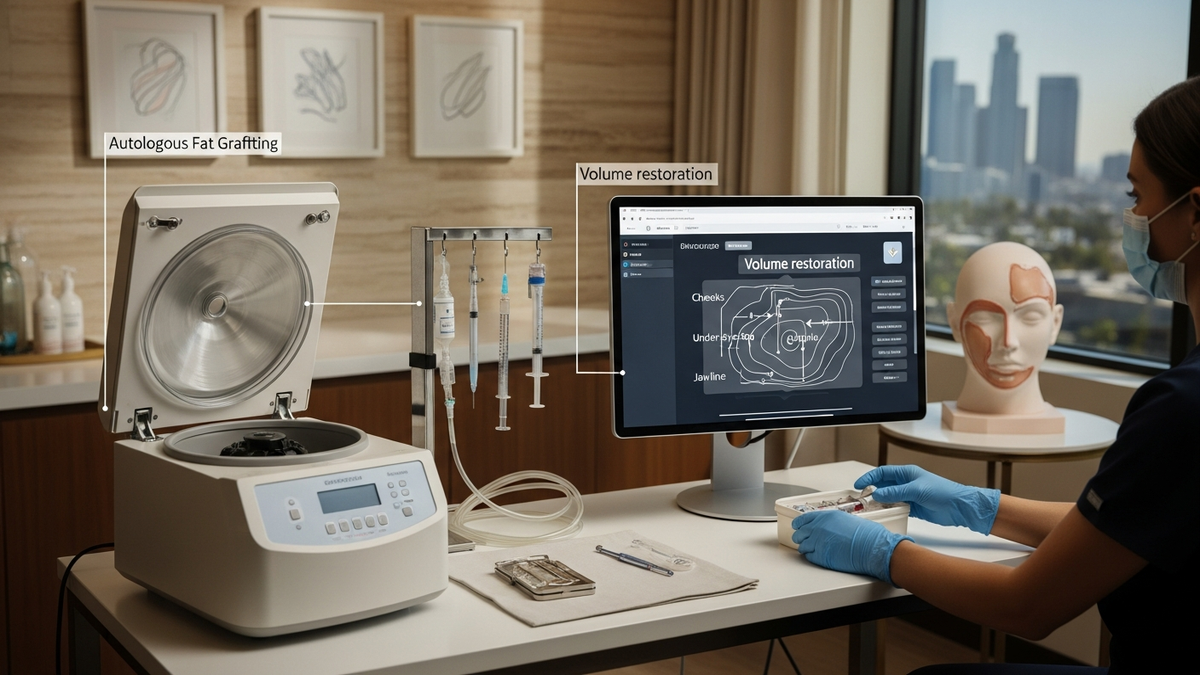
Autologous fat grafting is a procedure that transfers fat from one area of the body to another. “Autologous” means the fat comes from you—typically harvested through liposuction—then processed and injected into the target region to improve volume, contour, or texture.
In facial and head/neck aesthetics, fat grafting is often used to:
- Restore age-related volume loss (cheeks, temples, under-eye support where appropriate)
- Soften folds and hollows
- Improve facial contours after weight loss or prior procedures
- Support reconstructive goals in select cases
Why Fat Transfer Is Often Chosen for a Natural Look
Unlike some temporary fillers, autologous fat grafting uses living tissue. When performed with meticulous technique, the result can be subtle and harmonious—an important goal for patients seeking “you, but refreshed.”
Another advantage is that fat grafting can address volume and soft-tissue contour in a way that may feel more organic than purely injectable materials. That said, it’s important to understand that fat grafting is not a guaranteed “100% take” procedure. Some of the transferred fat may be resorbed over time, which is why careful planning and realistic expectations matter.
Where Autologous Fat Grafting Is Commonly Used (Head and Neck Focus)
Because facial aesthetics are highly dimensional, the best candidates typically have specific concerns that match fat’s ability to restore structure. In a head-and-neck practice, fat grafting may be considered for:
1) Midface Volume Restoration
Age-related changes often begin with midface volume loss, which can affect how the eyes and smile lines appear. Fat grafting may help restore cheek fullness and support surrounding tissues.
2) Temples and Upper Face Contouring
Temples can hollow with age, creating a tired or aged appearance. Carefully placed fat can help create a smoother transition between the forehead and cheek area.
3) Tear Trough Support (Selected Cases)
Some patients pursue fat grafting to improve the look of under-eye hollowness. However, the under-eye area is delicate. Tissue thickness, skin quality, and vascular anatomy all influence the safest approach. A thorough evaluation is essential.
4) Post-Procedure or Post-Weight-Loss Contour Improvements
Fat grafting can sometimes be used to rebalance facial volume after prior cosmetic treatments or significant weight changes.
How Autologous Fat Grafting Works: Step-by-Step
Every surgeon has a technique, but the core workflow is generally consistent. Here’s what the process typically involves:
Step 1: Consultation and Treatment Planning
A qualified facial plastic and reconstructive surgeon will evaluate your anatomy, skin quality, and facial proportions. This visit often includes:
- Medical history review and medication assessment
- Discussion of aesthetic goals and prior procedures
- Assessment of areas of volume loss and tissue quality
- Planning the donor site for fat harvesting
- Setting realistic expectations for graft “take” and timeline
Step 2: Fat Harvesting (Liposuction of the Donor Site)
Fat is typically collected using a minimally invasive technique. Common donor areas include the abdomen, flanks, or thighs—chosen based on where you have sufficient fat and what will provide the healthiest graft material.
Step 3: Processing and Preparation of the Fat
After harvesting, the fat is processed to separate viable fat cells from other components. The goal is to enhance the quality of what will be injected. Your surgeon’s method and attention to handling are key.
Step 4: Injection into the Target Area
Fat is injected in small amounts and precise layers or planes to support integration. Many surgeons use micro-droplet techniques to optimize distribution and reduce the risk of lumpiness.
Step 5: Recovery and Monitoring
Swelling and bruising are expected to some degree. Over weeks to months, the body gradually stabilizes the grafted fat. Final appearance may continue to evolve as healing progresses.
What Results Can You Expect from Autologous Fat Grafting?
Results vary based on factors such as graft technique, patient metabolism, and the specific region treated. In general, patients often notice:
- Early changes: initial swelling can obscure the final contour
- Intermediate changes: some fat resorption occurs; remaining graft volume stabilizes
- Longer-term result: a more refined, natural look after healing and integration
Important: Because fat grafting is biologically active tissue transfer, it may require staged sessions for optimal symmetry or volume restoration. A surgeon who prioritizes patient education will explain the likelihood of needing additional refinement.
Autologous Fat Grafting vs. Dermal Fillers: Key Differences
Many patients compare fat transfer with hyaluronic acid fillers or other injectable products. While both aim to restore volume, they differ in source, longevity, and biological behavior.
Fat Grafting
- Uses your own fat tissue (autologous)
- Involves harvesting, processing, and injection
- May provide longer-lasting structural changes, but volume “take” varies
- Can potentially improve contour and texture in a more tissue-based way
Dermal Fillers
- Uses injected products (not your own tissue)
- Typically quicker office-based procedures
- Predictability can be high depending on product selection
- May require periodic maintenance
The right choice depends on your goals, anatomy, and comfort with a surgical procedure versus repeat injections.
Who Is a Good Candidate for Autologous Fat Grafting?
Ideal candidates typically have:
- Areas of volume loss that align with fat’s ability to restore contour
- Sufficient donor fat for harvest
- Realistic expectations about graft integration and possible staged treatment
- Good overall health and the ability to follow pre- and post-op instructions
Candidacy also depends on medical factors such as smoking status, certain medications, and history of prior surgeries. A thorough evaluation helps determine safety and the best plan for your face and head/neck anatomy.
Potential Risks and Side Effects
Any surgical procedure involves risks. Autologous fat grafting is generally considered safe when performed by an experienced surgeon, but possible complications include:
- Swelling and bruising at donor and recipient sites
- Lumps or irregularities if fat is not distributed or integrated evenly
- Asymmetry as the face heals and graft volume stabilizes
- Fat resorption (partial loss of transferred volume)
- Infection (rare, but possible)
- Scarring at donor incisions
- Cyst formation or tissue reactions (uncommon)
Choosing a surgeon with strong facial anatomy expertise can reduce risk and improve aesthetic outcomes.
Recovery Timeline: What to Plan for
Recovery varies, but understanding typical milestones can help you plan work, social events, and exercise.
First Few Days
- Expect swelling and bruising
- Follow surgeon instructions for compression and wound care at the donor site
- Limit strenuous activity as advised
Week 1–2
- Bruising often improves
- Some firmness may remain where grafts were placed
- Attend follow-up visits to monitor healing
Weeks 3–8
- Contour may continue to refine
- Some degree of volume change is possible as grafts stabilize
- Return to normal activities per your surgeon’s guidance
3–6 Months (and Beyond)
- Final appearance often becomes clearer as integration completes
- Any touch-up planning can be discussed if needed
How to Choose a Surgeon for Autologous Fat Grafting
Because fat grafting is both a science and an art, your selection should be based on more than marketing. Consider these criteria:
1) Facial Plastic and Reconstructive Expertise
Head-and-neck aesthetics require detailed knowledge of anatomy, planes, and aesthetic proportion. Look for a surgeon who focuses on facial and reconstructive work rather than offering a broad range of unrelated procedures.
2) Demonstrated Natural-Looking Results
Review before-and-after images for similar concerns and pay attention to symmetry, transitions between facial regions, and skin quality.
3) Transparent Education and Expectations
A trustworthy provider should explain:
- Where fat is likely to integrate best
- What “take” variability means for your outcome
- Whether staged sessions are recommended
- How they handle irregularities if they occur
4) Safety Protocols and Follow-Up Care
Ask about how they minimize risk, manage medications, and schedule postoperative follow-ups. A structured recovery plan matters.
Autologous Fat Grafting in a Broader Facial Rejuvenation Plan
Many patients don’t need only volume restoration—they may also benefit from complementary facial procedures. While fat grafting addresses soft-tissue contour, other treatments can target skin laxity, wrinkles, or nasal function. For example, patients who also have structural concerns may explore procedures such as Rhinoplasty or nasal airway optimization like Septoplasty (and in some cases, evaluation for a Deviated Septum).
Similarly, if the goal includes rejuvenating the eyes or upper face, some patients may consider Blepharoplasty or even Facelift strategies for skin tightening—depending on anatomy and goals. The best plan is individualized, and your surgeon should coordinate recommendations based on what will deliver the most natural, balanced result.
Frequently Asked Pre-Op Questions (Practical Guidance)
If you’re preparing for autologous fat grafting, these questions can help you feel informed and ready:
- How much fat do you expect to harvest and where? This affects both donor site comfort and recipient volume.
- What technique do you use for processing and injection? Your surgeon should be able to describe their method in understandable terms.
- What is your typical timeline to final results? Clarify when you should evaluate the outcome.
- Will I need more than one session? Ask how they plan for symmetry and volume refinement.
- What should I do (or avoid) before surgery? Smoking, certain supplements, and medication timing can matter.
Patient Education Matters: A Los Angeles Approach to Natural Facial Outcomes
At FlowGeniQ Digest, we emphasize that the best outcomes come from informed decision-making. In Los Angeles, many patients seek advanced anti-aging and rejuvenation options with a focus on natural results—especially in the head and neck area where facial balance is everything.
Dr. Hootan Zandifar, MD, FACS, is a board-certified facial plastic and reconstructive surgeon who focuses solely on cosmetic and reconstructive surgery of the head and neck. Known for an honest, trustworthy, and compassionate approach, Dr. Zandifar prioritizes patient education and natural-looking results tailored to individual anatomy. If you’re considering autologous fat grafting as part of a broader rejuvenation plan, this type of focused expertise can be especially valuable.
Actionable Tips to Support Your Outcome
While you can’t control every biological variable, you can improve your chances of a smooth recovery and a better aesthetic trajectory:
- Follow pre-op instructions carefully. This includes medication guidance, hydration, and any required labs or clearances.
- Choose a healthy lifestyle before surgery. Smoking and poor nutrition can negatively impact healing.
- Plan for time off and support. Swelling and bruising can affect appearance and comfort.
- Attend all follow-up appointments. Monitoring early healing helps catch issues promptly.
- Be patient with timelines. Final results often take months, not days.
Related Procedures Patients Often Ask About
Facial rejuvenation is rarely one-size-fits-all. Patients considering autologous fat grafting sometimes also ask about other head-and-neck procedures depending on their concerns, such as:
- Eyebrow and hair restoration: For patients with eyebrow thinning, an eyebrow transplant may help restore facial framing. For scalp hair concerns, some patients explore a hair transplant option.
- Eye rejuvenation: Blepharoplasty can address excess upper eyelid skin or under-eye puffiness in selected cases.
- Skin tightening: A Facelift may be considered when laxity is a primary driver of aging appearance.
Whether these options are appropriate depends on your goals, anatomy, and priorities—your surgeon can help you decide what combination is safest and most effective.
FAQ: Autologous Fat Grafting
How long do results from autologous fat grafting last?
Results can be long-lasting for the portion of fat that successfully integrates. However, because some resorption is normal, volume may change over time. Many patients maintain benefits for years, and some choose additional sessions for refinement.
Is autologous fat grafting painful?
Most patients experience discomfort and swelling rather than severe pain. Donor-site soreness (where fat is harvested) and recipient-site tenderness are common early on, and your surgeon will provide pain management guidance.
Will my face look lumpy after fat transfer?
Temporary firmness or irregularities can occur during healing. With careful injection technique and proper postoperative care, lumps are less likely. If irregularities develop, prompt follow-up with your surgeon is important.
Can I combine fat grafting with other facial procedures?
Often, yes—depending on your goals and safety considerations. Some patients may benefit from pairing volume restoration with skin tightening or eyelid rejuvenation. Your surgeon will determine what combinations make sense for your anatomy.
Who should avoid autologous fat grafting?
Certain medical conditions, active infections, or lifestyle factors (such as smoking) may affect healing and graft survival. A qualified provider can assess your history and advise on safety and alternatives.
CTA: Ready to Explore Autologous Fat Grafting?
If you’re considering autologous fat grafting for natural-looking volume restoration, the next step is an in-person consultation with a surgeon who understands head and neck anatomy and prioritizes realistic, patient-centered outcomes.
Schedule your consultation to discuss your goals, candidacy, and a personalized plan for rejuvenation—guided by expert education and natural aesthetic principles.
Professional Disclaimer
This content is provided for general educational purposes only by FlowGeniQ Digest. It is not a substitute for professional advice, diagnosis, or treatment. Readers are advised to consult qualified professionals for personalized recommendations.
Medical Information Disclaimer
This content is provided for general educational purposes only by FlowGeniQ Digest. It is not a substitute for professional advice, diagnosis, or treatment. Readers are advised to consult qualified professionals for personalized recommendations.