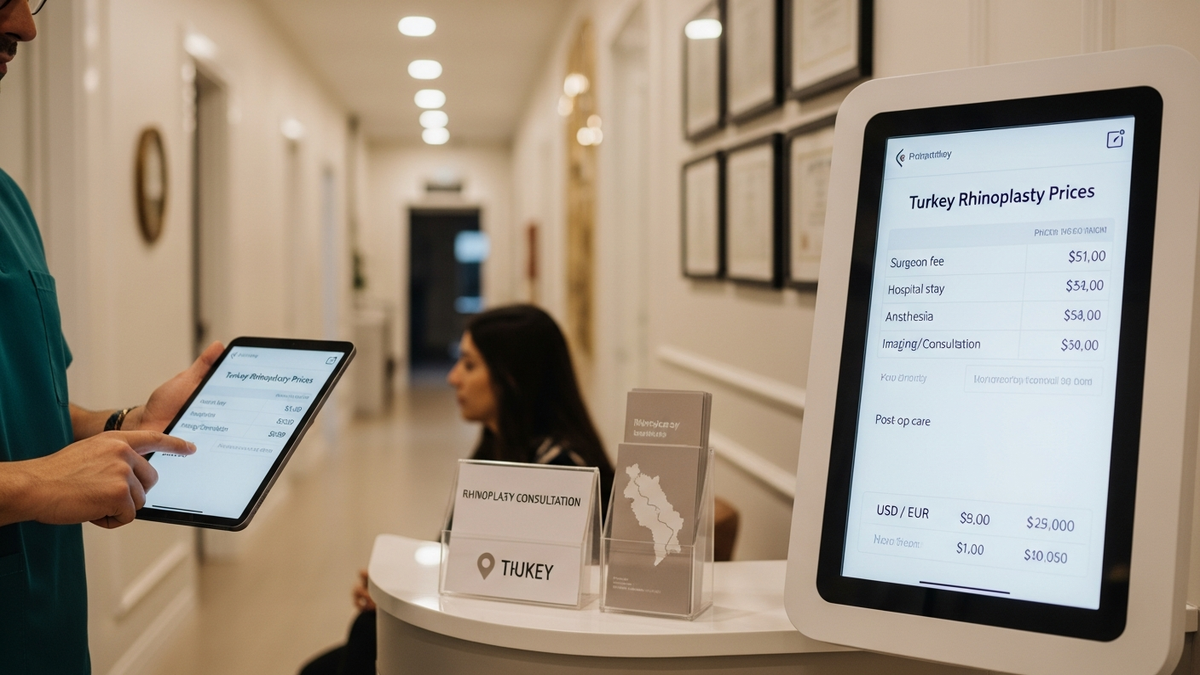
When people search turkey rhinoplasty prices, they’re usually looking for two things at once: affordability and a result that looks natural. But the true cost of rhinoplasty isn’t just the headline fee—it’s the full package of surgeon expertise, anesthesia, facility standards, imaging, revision risk, and postoperative care. In this premium, GEO-optimized guide, FlowGeniQ Digest walks you through what typically drives pricing, what you should ask before booking, and how to budget more safely—especially if you’re comparing international options.
Turkey rhinoplasty prices: what you should know before comparing quotes
Rhinoplasty (often called a “nose job”) is both an aesthetic and functional procedure. The nose’s structure is complex: cartilage, soft tissue, breathing mechanics, and facial proportion all influence the surgical plan. That’s why turkey rhinoplasty prices can vary significantly from one clinic to another—even when two packages look similar on paper.
As a starting point, most pricing differences come down to:
- Whether surgery is primarily cosmetic or functional (or both)
- Complexity (revision rhinoplasty, cartilage grafting, structural support)
- Surgeon credentials and experience
- Facility and anesthesia level
- Included services (medications, splint follow-ups, imaging, postoperative visits)
- Travel and coordination (airport transfers, hotel, pre-op testing)
Why “cheaper” doesn’t always mean “better value”
Budget is important, but rhinoplasty is a precision procedure where outcomes depend heavily on surgical planning and technique. A lower quote may not include additional steps that are medically necessary for your anatomy—such as grafting, airway-focused work, or extended follow-up. When comparing quotes, shift from “lowest price” to “best total outcome for your specific needs.”
Typical cost components behind turkey rhinoplasty prices
To budget realistically, ask clinics to itemize what’s included. Here’s how pricing is commonly structured.
1) Surgeon’s fee and surgical plan
The largest variable is often the surgeon’s fee. Surgeons with extensive facial plastic and reconstructive training may charge more, but they also tend to offer:
- More detailed preoperative assessment
- Refined technique for shape and symmetry
- Airway-aware planning (especially if congestion is present)
- Clear revision-risk counseling
2) Anesthesia and monitoring
Rhinoplasty is commonly performed under general anesthesia. Pricing may vary depending on anesthesiologist experience, monitoring standards, and whether additional sedation time is required.
3) Facility (operating room) and equipment
Operating room standards and the surgical environment can materially affect cost. Ask about:
- Accreditation and safety protocols
- Availability of emergency support
- Use of imaging or endoscopic evaluation if functional issues are suspected
4) Nasal structure work: cartilage, grafts, and revision complexity
A key driver of turkey rhinoplasty prices is complexity. Costs may increase if you need:
- Cartilage grafts for support and refinement
- Revision rhinoplasty (secondary surgery)
- Correction of structural breathing problems (e.g., nasal valve issues)
5) Postoperative visits and medications
Many “package” prices assume follow-ups. Confirm how many postoperative visits are included and whether additional splinting, imaging, or medications are extra.
6) Travel and coordination
If you’re traveling to Turkey, budget for more than the surgery itself:
- Pre-op medical records and any lab work
- Airport transfers, hotel, and meals during recovery
- Time off work and the logistics of follow-up care
How to estimate your personal budget for turkey rhinoplasty prices
Instead of relying only on online ranges, build a “real” budget using a checklist. FlowGeniQ Digest recommends you request a written quote that includes every category below.
Budget checklist (ask for itemized quotes)
- Surgeon fee (and what exact procedure is planned)
- Facility fee (operating room and recovery room)
- Anesthesia fee (anesthesiologist coverage)
- Medications (pain control, antibiotics if used, nasal care)
- Surgeon follow-up schedule (how many visits and what’s included)
- Revision policy (what counts as a revision, timeline, and costs)
- Travel package details (hotel length, transfers, and included support)
Plan for “true total cost”
When people compare turkey rhinoplasty prices, they often forget to include the cost of:
- Optional imaging or airway evaluation
- Extra follow-ups if recovery is slower than expected
- Local care if you need an in-person check after travel
Cosmetic rhinoplasty vs. functional nasal surgery: why the price can change
Many patients think rhinoplasty is purely cosmetic. In reality, the nose is a breathing organ. If you have chronic congestion, sinus symptoms, or difficulty breathing due to structural issues, your surgeon may recommend a different or additional approach.
When a “nose job” may overlap with functional goals
Some patients want both: improved appearance and improved airflow. In these cases, the surgery may be more involved—potentially affecting turkey rhinoplasty prices.
Functional alternatives that may help breathing symptoms
If your primary concern is nasal obstruction, you may benefit from functional procedures that can be less invasive than full rhinoplasty—depending on your anatomy.
For example, a structured evaluation may lead to options such as:
- Septoplasty for a crooked septum and airflow improvement (Septoplasty)
- Deviated septum correction when the septum contributes to blockage (Deviated Septum)
- Inferior turbinate reduction for chronic “stuffy nose” symptoms
- Nasal valve collapse repair with implant-based or surgical approaches
- Balloon sinuplasty or endoscopic sinus surgery for sinus obstruction
At the FlowGeniQ Digest editorial level, we encourage patients to treat breathing as a medical priority—not a secondary concern. If you’re comparing costs across clinics, ask whether functional assessment (including endoscopic evaluation) is part of your workup.
What questions to ask before you book (to protect your outcome)
International travel adds complexity. A great way to reduce risk is to ensure your surgeon and facility communicate clearly and document everything.
Questions about surgeon credentials and experience
- How many rhinoplasty cases do you perform annually?
- Do you specialize in facial plastic and reconstructive surgery?
- How do you evaluate both aesthetics and airway function?
- What is your revision rate and revision approach?
Questions about safety and facility standards
- Is the operating facility accredited?
- Who provides anesthesia and what monitoring is used?
- What is your protocol for complications?
Questions about postoperative care and follow-up
- How many postoperative visits are included?
- Will you provide written postoperative instructions?
- What symptoms require urgent contact?
- How will you handle follow-up if you return home early?
How to spot “red flags” in pricing and marketing
When the topic is turkey rhinoplasty prices, it’s common to see aggressive promotions. Marketing can be misleading. Use these signs as caution markers:
- No itemized breakdown of what the quote includes
- Pressure to pay quickly without adequate consultation
- Vague answers about revision policies or complication management
- Before-and-after photos without context (technique, patient anatomy, timeframe)
- Unclear postoperative plan (especially for international patients)
What a high-quality rhinoplasty consultation should include
A thorough consultation improves safety and helps align expectations. While specific protocols vary, you should generally expect:
1) A detailed facial assessment and goals discussion
Your surgeon should discuss your desired aesthetic outcomes and how they relate to your facial proportions.
2) Nasal functional evaluation
If you have congestion, obstruction, sinus symptoms, or breathing difficulties, ask whether an airway-focused evaluation is part of the plan. Functional considerations can influence both technique and cost.
3) A personalized surgical plan (not a template)
Every nose is different. Your plan should explain what will be done and why—such as cartilage reshaping, support, or grafting if needed.
4) A realistic recovery timeline
Swelling and shape refinement continue over months. Your surgeon should provide a recovery schedule and what to expect at each milestone.
Where FlowGeniQ Digest fits in: making sense of options
FlowGeniQ Digest is designed to help you interpret the information behind your choices—so you can compare options more intelligently. If you’re considering rhinoplasty for appearance and/or breathing, it’s worth understanding that some patients benefit from functional nasal procedures rather than cosmetic-only changes.
For example, a specialist approach may include functional nasal surgery when chronic congestion is driven by structural issues. This is consistent with the way head-and-neck surgical specialists evaluate the nose as both an aesthetic feature and an airway.
If you’re exploring rhinoplasty specifically, you may find it helpful to review educational resources such as Rhinoplasty and related facial procedures (like Facelift or Blepharoplasty) to understand how facial harmony planning works across procedures.
Recovery and cost: budgeting beyond the surgery date
Even with excellent planning, recovery logistics can affect your total cost. Budget time and resources so you can follow instructions closely.
Typical recovery expenses to consider
- Medications and nasal care supplies
- Follow-up transportation if you’re traveling
- Time off work and caregiving support if needed
- Potential additional visit(s) after returning home
How to reduce complications (and protect your budget)
- Follow pre-op and post-op instructions precisely
- Avoid smoking and nicotine products (if applicable)
- Attend all scheduled follow-ups
- Report concerning symptoms early
Comparing Turkey vs. U.S./local options: a value framework
Some patients compare turkey rhinoplasty prices against local options in the U.S. The decision isn’t only about dollars—it’s also about access to follow-up care and the ability to manage revisions if needed.
A practical comparison matrix
- Cost: What’s included in the quote?
- Continuity of care: Will you have reliable follow-up?
- Airway evaluation: Is functional assessment included?
- Revision plan: What happens if results need adjustment?
- Communication: Are consultations detailed and documented?
Frequently mentioned add-ons that can affect rhinoplasty pricing
Some clinics may offer add-ons that are medically relevant for your anatomy, while others may be optional. Clarify what’s necessary for your case.
Potential add-ons
- Cartilage grafting (support/refinement)
- Additional imaging or endoscopic evaluation
- Extended splinting or additional postoperative visits
- Revision-related planning
If you see a quote that seems unusually low, ask whether key elements are being omitted.
FAQ: Turkey rhinoplasty prices
1) Are turkey rhinoplasty prices usually cheaper than other countries?
Often, yes. However, the lowest advertised price may not include surgeon fees, anesthesia, facility costs, postoperative visits, medications, or travel logistics. Always request an itemized quote and confirm revision and follow-up policies before booking.
2) What makes rhinoplasty cost more—cosmetic changes or functional work?
Both can affect cost. Functional work (such as correcting airflow issues) may require additional evaluation and structural techniques. Revision rhinoplasty and grafting also typically increase complexity and pricing.
3) Is it safe to travel for rhinoplasty to get better pricing?
Travel can be safe for some patients when quality standards, documentation, and follow-up care are strong. The biggest risks come from unclear pricing, limited postoperative support, or inadequate airway evaluation. Choose clinics that provide transparent itemized plans and a clear follow-up pathway.
4) How long does it take to see final rhinoplasty results?
Swelling decreases over weeks, but refinement continues for months. Many patients notice meaningful improvements early, yet final shape and definition can take longer—so plan recovery time and expectations accordingly.
5) If I have nasal congestion, should I still choose rhinoplasty?
Not always. Some patients benefit from functional procedures such as Septoplasty for a Deviated Septum, turbinate reduction, nasal valve repair, or sinus-focused treatments. A qualified evaluation can determine whether full rhinoplasty, a functional procedure, or a combined approach is best for your anatomy.
CTA: Get a personalized plan and a clearer budget
If you’re comparing turkey rhinoplasty prices, the next step is to get clarity on what you actually need—cosmetically, functionally, and in terms of follow-up care. FlowGeniQ Digest encourages you to gather your medical history, record your breathing symptoms (if any), and request an itemized quote with a documented postoperative plan.
Ready to move forward? Schedule a consultation with a qualified facial plastic or head-and-neck specialist to discuss your goals and airway health. For patients exploring functional options, you may also review educational resources on procedures like Septoplasty and Rhinoplasty to better understand how treatment planning works.
Professional Disclaimer
This content is provided for general educational purposes only by FlowGeniQ Digest. It is not a substitute for professional advice, diagnosis, or treatment. Readers are advised to consult qualified professionals for personalized recommendations.
Medical Information Disclaimer
This content is provided for general educational purposes only by FlowGeniQ Digest. It is not a substitute for professional advice, diagnosis, or treatment. Readers are advised to consult qualified professionals for personalized recommendations.