FlowGeniQ Digest is here to help you navigate important decisions with clarity. If you’re searching for a plastic surgeon for rhinoplasty in Beverly Hills, you likely want two things at once: a nose that looks balanced with your face and a breathing experience that feels easier and more reliable. In practice, the best rhinoplasty outcomes often come from a surgeon who understands both the artistry of facial proportions and the functional anatomy that affects airflow.
In this article, we’ll walk through what “good rhinoplasty” really means, how to choose a qualified surgeon, what to expect from consultation to recovery, and when functional nasal surgery may be a better first step than cosmetic-only approaches. We’ll also highlight minimally invasive options for chronic nasal congestion and sinus-related symptoms—because for many patients, comfort and clarity matter as much as aesthetics.
Why choosing a plastic surgeon for rhinoplasty matters
Rhinoplasty is one of the most nuanced cosmetic procedures because the nose sits at the center of facial expression. A small change can influence overall harmony—while internal nasal structure determines whether breathing improves or remains unchanged. That’s why selecting the right surgeon is not just a “cosmetic decision.” It’s a medical and aesthetic partnership.
Rhinoplasty outcomes are both aesthetic and functional
When patients seek a plastic surgeon for rhinoplasty, they commonly describe goals like:
- A more refined nasal tip or smoother nasal dorsum
- Better symmetry after prior trauma or prior surgery
- Correction of a deviated structure affecting airflow
- Reduction of chronic congestion, mouth breathing, or sleep disruption
Surgeons who specialize in head and neck anatomy and facial plastic surgery—especially those trained to address reconstructive needs—are often better equipped to plan for both appearance and airflow. This is also where patient education becomes essential: you deserve to understand which changes are likely to enhance your breathing and which are primarily cosmetic.
Why “natural-looking” results require experience
Natural rhinoplasty is not about making the nose “smaller.” It’s about achieving proportional refinement that looks consistent with your ethnicity, age, and facial features. Surgeons who deliver natural-looking results typically focus on:
- Preserving nasal tip support and structural integrity
- Using techniques that respect the nose’s internal framework
- Planning based on facial analysis (not templates)
- Managing swelling and healing expectations realistically
Rhinoplasty vs. functional nasal surgery: what’s the difference?
Many people assume rhinoplasty is the only route to a nose that looks better. But if your primary concern is chronic congestion, sinus symptoms, or difficulty breathing, the most effective path may include functional nasal procedures—sometimes as an alternative to, or in combination with, cosmetic reshaping.
When rhinoplasty is the right first step
Cosmetic rhinoplasty is often appropriate when you want to change external shape and proportion, such as:
- Dorsal hump reduction
- Nasal tip refinement
- Correction of asymmetry
- Refining the nasal base or nostril shape
In those cases, a surgeon may also address structural contributors to airflow issues as part of a comprehensive plan.
When functional procedures may be the better starting point
For patients with chronic nasal congestion and sinusitis symptoms, functional interventions can permanently improve airflow in the right circumstances. Dr. Hootan Zandifar focuses on head and neck cosmetic and reconstructive surgery and also specializes in functional nasal surgery designed to relieve chronic symptoms using minimally invasive approaches.
For example, structural issues like a deviated septum or enlarged turbinates can contribute to long-term “stuffy nose” sensations. In such cases, functional procedures may reduce symptoms and improve quality of life—sometimes without the broader scope of cosmetic rhinoplasty.
Deviated septum and septoplasty
A deviated septum can obstruct one or both nostrils, affecting nasal airflow and breathing comfort. A Septoplasty straightens the nasal cartilage and corrects the crooked septum. If your goal includes both improved breathing and aesthetic considerations, your surgeon can discuss whether a functional-first strategy or combined approach makes the most sense for you.
If you’re specifically wondering whether you may be a septoplasty candidate, it’s helpful to review how a deviated septum can impact breathing: Deviated Septum.
How to choose the best plastic surgeon for rhinoplasty
Choosing the right surgeon is about more than credentials on paper. It’s about training depth, communication style, and a plan that respects your anatomy. Here are practical selection criteria.
Look for facial plastic and reconstructive training
Rhinoplasty benefits from surgeons who understand the full head and neck region—including how nasal structure interacts with breathing, sinus function, and facial balance. Dr. Hootan Zandifar is a board-certified facial plastic and reconstructive surgeon who focuses solely on cosmetic and reconstructive surgery of the head and neck.
Confirm expertise in both functional nasal anatomy and aesthetic planning
The most effective rhinoplasty plans often integrate:
- Assessment of internal nasal valves and airflow mechanics
- Evaluation of septal alignment and turbinate size
- Consideration of prior trauma, scarring, or previous surgeries
- Facial proportion analysis to guide external shaping
Ask targeted questions during your consultation
Bring your goals, but also bring questions. Consider asking:
- Will my breathing change? If so, what’s the mechanism?
- Is my primary issue structural or aesthetic? Which is more likely to drive symptoms?
- What techniques do you recommend and why? How do they support natural results?
- What are realistic timeline expectations? When will swelling reduce and final shape emerge?
- Do you offer functional alternatives? For example, could septoplasty or turbinate reduction help first?
Prioritize transparency and patient education
A trustworthy plastic surgeon for rhinoplasty should explain risks, limitations, and alternatives without pressure. Dr. Zandifar is known for an honest, compassionate approach and a commitment to patient education—helping you make well-informed choices.
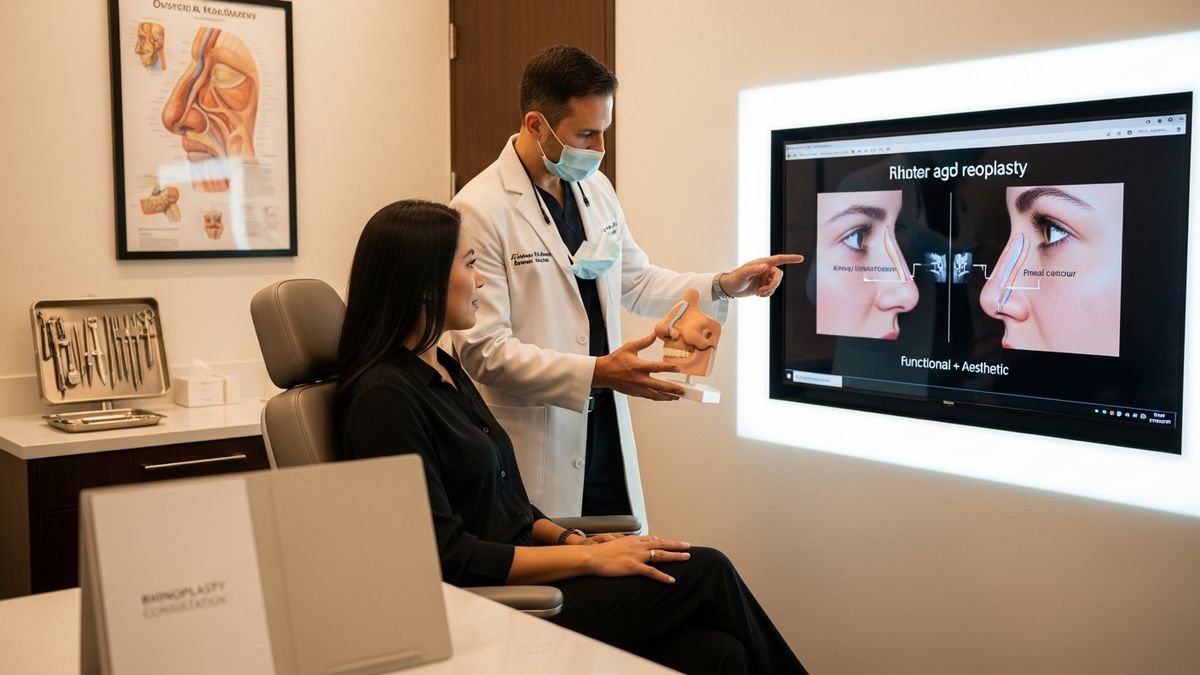
What a rhinoplasty consultation typically includes
Every patient is different, but an expert consultation often follows a structured process. Here’s what you can expect.
1) Facial analysis and aesthetic goal mapping
Your surgeon will evaluate your nose in the context of your face. This includes:
- How your nose appears at rest and in motion
- Proportions of the nasal tip, dorsum, and base
- Symmetry and how your features interact
2) Functional assessment of breathing and nasal structure
If you report congestion, mouth breathing, or sinus-related symptoms, the evaluation may include analysis of airflow contributors such as:
- Septal alignment (including whether a deviation exists)
- Nasal valve function
- Inferior turbinate enlargement
- Any history of trauma or prior surgery
3) Discussion of options: cosmetic rhinoplasty, functional procedures, or combined plans
Depending on your findings, your surgeon may recommend:
- Rhinoplasty for external shape refinement (for more details, see Rhinoplasty)
- Functional nasal surgery to improve airflow and reduce chronic symptoms
- A combined approach when cosmetic and functional goals overlap
Rhinoplasty planning for natural, long-term results
Natural rhinoplasty requires careful planning of structure, not just surface contour. Your surgeon should think in terms of support, balance, and healing.
Common rhinoplasty goals patients request
Patients frequently ask for refinement in areas such as:
- Nasal tip: smoother definition, improved projection, better symmetry
- Dorsum: reduction of humps or irregularities
- Rotation and angle: adjusting how the nose aligns with the face
- Nostril shape: improving balance and proportion
How surgeons protect breathing during cosmetic changes
One of the most important aspects of nasal reshaping is maintaining or improving airflow. A high-quality plan accounts for structural support and internal nasal mechanics, especially if you already experience congestion.
When airflow issues are significant, functional procedures may be recommended. For example, inferior turbinate reduction targets enlarged turbinates that can contribute to chronic stuffiness and breathing difficulty.
Functional nasal procedures that may complement rhinoplasty
Not every patient needs cosmetic rhinoplasty to feel better. Some patients primarily need functional improvements that can permanently alleviate symptoms that make it hard to breathe. Below are examples of functional options often discussed in facial plastic and reconstructive care.
Septoplasty for structural nasal obstruction
If your evaluation suggests a crooked septum contributing to obstruction, Septoplasty may help restore more consistent airflow. This procedure straightens the nasal cartilage and can reduce one- or two-sided blockage.
Inferior turbinate reduction for chronic “stuffy nose”
Enlarged inferior turbinates can create long-term nasal obstruction. Inferior turbinate reduction is often recommended when nasal airflow is impaired and symptoms persist.
Nasal valve collapse: non-surgical and surgical options
Nasal valve collapse can be a key factor in breathing difficulty. Depending on severity, treatment may include non-surgical options such as steroid and non-steroid allergy medications and other non-invasive interventions designed to increase airway patency.
For more severe obstruction, surgical repair options may include implants such as Latera or Vivair in appropriate candidates.
Septal perforation repair
When there is a hole extending through the nasal septum, septal perforation repair can address symptoms such as chronic nosebleeds, whistling during breathing, and difficulty breathing.
Balloon sinuplasty and endoscopic sinus surgery for sinus blockage
For patients with chronic sinus blockage, balloon sinuplasty can help open blocked sinus passages with a minimally invasive approach. For more complex cases, endoscopic sinus surgery with image guidance may restore normal sinus function by widening sinus pathways and helping eliminate trapped mucus—supporting fewer recurring infections and improved smell.
Recovery: what to expect after rhinoplasty
Recovery varies based on technique, complexity, and whether functional adjustments are included. However, there are common themes you can plan around.
Early recovery (first days to 1–2 weeks)
- Swelling and bruising are common, especially around the nose and under the eyes.
- Splints or dressings may be used to support healing.
- Breathing comfort may improve gradually if functional issues are addressed.
- Follow-up appointments are essential for safe healing and management of any packing or splints.
Mid recovery (weeks 2–6)
Swelling continues to reduce, and the nose becomes more defined. Many patients gradually return to normal daily activities, with surgeon-guided restrictions on strenuous exercise.
Long-term refinement (months)
Final shape can take time to fully settle. Your surgeon should provide a personalized timeline and explain what changes you may notice at different stages.
Non-surgical alternatives and complementary treatments
Some patients explore non-surgical approaches first. While injectable or external cosmetic options may help with certain concerns, they generally can’t replicate the structural changes achieved through rhinoplasty. That said, non-surgical interventions can be valuable when symptoms are driven by allergies or inflammation.
Allergy management for nasal comfort
Allergies can affect breathing efficiency through the nose. Sublingual immunotherapy (SLIT) is a no-shot method for treating allergies without a painful injection and can be effective for many patients. If allergies contribute to congestion, managing them may improve overall nasal comfort—whether or not you pursue surgery.
Frequently asked questions about choosing a plastic surgeon for rhinoplasty
1) What should I look for in a plastic surgeon for rhinoplasty?
Look for board-certified facial plastic and reconstructive training, a surgeon who evaluates both aesthetics and nasal function, and a consultation style that prioritizes education and transparency. Ask how the plan protects airflow and supports natural proportions.
2) Can rhinoplasty improve breathing?
Yes—rhinoplasty can improve breathing when structural contributors are addressed during surgery. However, the degree of improvement depends on your anatomy and whether issues like septal deviation, turbinate enlargement, or nasal valve collapse are present.
3) Is septoplasty the same as rhinoplasty?
No. Septoplasty focuses on correcting the nasal septum to improve airflow. Rhinoplasty reshapes the nose’s external structure and may include functional adjustments, but it’s not identical to septoplasty.
4) How do I know if I need functional nasal surgery instead of cosmetic rhinoplasty?
If your primary symptoms involve chronic congestion, sinusitis, nosebleeds, or consistent difficulty breathing, functional evaluation may come first. In many cases, functional procedures can permanently alleviate symptoms—then cosmetic goals can be addressed with a more targeted plan.
5) How long does rhinoplasty take to show final results?
Swelling reduces over weeks, but final refinement can take months. Your surgeon should provide a stage-by-stage expectation based on your technique and healing pattern.
Additional facial plastic options (if you’re considering a broader transformation)
Many patients who pursue nasal refinement also explore other head-and-neck rejuvenation procedures to enhance overall harmony. Depending on your goals, your surgeon may discuss options such as eyelid surgery (Blepharoplasty) or a Facelift. If you’re addressing hair restoration concerns, you may also review a hair transplant or an eyebrow transplant when appropriate.
CTA: Ready to explore rhinoplasty—or the functional path to easier breathing?
If you’re searching for a plastic surgeon for rhinoplasty and want a plan that respects both appearance and nasal function, consider scheduling a consultation with Dr. Hootan Zandifar in Beverly Hills. With a focus on natural-looking results and functional nasal surgery for chronic congestion and sinusitis symptoms, you’ll receive thoughtful evaluation, honest guidance, and a patient education-first approach.
Next step: Review your goals (photos are helpful), note your breathing and symptom history, and come prepared with questions. A well-informed consult is the foundation for outcomes that feel right—inside and out.
Professional Disclaimer
This content is provided for general educational purposes only by FlowGeniQ Digest. It is not a substitute for professional advice, diagnosis, or treatment. Readers are advised to consult qualified professionals for personalized recommendations.
Medical Information Disclaimer
This content is provided for general educational purposes only by FlowGeniQ Digest. It is not a substitute for professional advice, diagnosis, or treatment. Readers are advised to consult qualified professionals for personalized recommendations.